
The Calm Start EduNanny Ultra Low Ratio and Near Home Promise for Singapore First Thousand Days December 2024 to December 2027

EduNanny Singapore: Rethinking the Beginning of Care for the Youngest Citizens
In a city that moves fast, the quality of the very first years defines the rhythm of the years that follow. EduNanny by BUTLER offers a bold, research-informed approach to infant care and childminding—an ultra-low 1:3 infant-to-caregiver ratio, modern environments, and a blended model of Centre-Based and Home-Based care. This article delves into the EduNanny philosophy, practical guidance for families, and actionable steps to access high-quality early care for Singapore’s youngest learners.

What is EduNanny? A Clear, National Vision for Beginning Care
EduNanny is a national social initiative and ECDA Childminding Pilot partner designed to elevate infant care and childminding across Singapore. Its core commitments include:
- Ultra-low ratio: 1 caregiver to 3 infants, enabling close observation, timely response, and deeper trust.
- Blended model: a careful mix of Centre-Based and Home-Based environments to fit diverse family needs.
- Islandwide access: operating Monday to Friday, 7 a.m. to 7 p.m., with supports that travel with families.
- Affordability and trust: starting from $33 a day, with CDA/Baby Bonus payments, and transparent governance, including CCTV innovation that respects dignity.
- Professional development and livelihoods: a Maximum Employment Mandate to professionalize and dignify caregiving roles.
This structure aims to provide calm, secure, and beautifully human starts for infants, while building a reliable, community-focused backbone for families and neighbors alike.

The Four Fresh Lenses: Pillars That Shape EduNanny
Below are four pillars that guide every decision, from the layout of a room to the cadence of a caregiver’s day. Each pillar includes practical, real-world applications for parents and caregivers in Singapore.
1) See, Slow, Serve: The Three-Beat Loop of Attentive Care
This framework treats the infant’s earliest signals as a meaningful score. Its three steps are:
- See: observe breath patterns, hand movements, eye gaze, and the rhythm of cries.
- Slow: pause to interpret what the infant is showing—hunger, fatigue, curiosity, or comfort needs—without rushing to a conclusion.
- Serve: respond with precise actions—adjust lighting, offer the bottle, modify positioning, or mirror a coo to acknowledge the infant’s state.
Practical implications for families:
- In a home-based setting, create a simple observation log for caregivers to record daily signals and responses, helping parents understand their child’s patterns over time.
- Encourage caregivers to narrate actions aloud during routine care, so parents learn from how attention is delivered (e.g., “I’m offering a sip of water when you pause to breathe”).
- For parents, practice mindful checking-in: before picking up, pause to interpret the last cry or cue, reinforcing the See-Slow-Serve loop at home.
Academic anchors integrated into this pillar include Bowlby’s secure base, Pikler’s respect for movement, Montessori’s prepared environment, Vygotsky’s scaffolding, and Piaget’s sensorimotor exploration—applied in daily routines to foster calm and momentum in development.
2) The Safety Weave: Designing Calm, Preventing Risk, Building Trust
Safety is more than a policy—it is a woven fabric of decisions that surrounds the child. EduNanny’s Safety Weave covers five interlocking elements:
- People: Ultra-low 1:3 ratio ensures caregivers have the bandwidth to spot hazards before they arise.
- Place: Floor-level learning zones, rounded edges, breathable spaces, and layout sightlines to reduce blind spots.
- Process: A daily “calm cycle”—predictable routines that lower cortisol, reduce startle responses, and promote easy exploration.
- Proof: CCTV innovations that provide transparent updates to families while preserving privacy and consent.
- Preparation: Ongoing training in safe sleep, feeding, hygiene, and movement for a full day’s care from 7 a.m. to 7 p.m.
Practical tips for parents and centers:
- Ask about room design: Are play zones clearly defined? Are outlets protected? Are materials child-appropriate and non-toxic?
- Inquire about the calm cycle: What routines are in place to help infants settle after transitions (e.g., outdoor time before nap, consistent feeding cues)?
- Review CCTV policies: How is footage shared, on what cadence, and how is consent obtained and maintained?
EduNanny’s Safety Weave extends across both Centre-Based and Home-Based models, ensuring consistent standards regardless of setting.
3) Sixty‑Second Studios: Micro‑Adventures that Build the Brain
Infants learn in short bursts. The Sixty‑Second Studios concept translates to dozens of daily micro-adventures that become developmental building blocks:
- Movement: gentle rolls, reaching for safe ribbons, supported sits—movements that respect the body’s readiness.
- Language: narrating with full sentences, naming feelings and objects, maintaining warm, predictable prosody, and following the infant’s lead.
- Social: repeated moments of presence and return—peekaboo as rehearsal for trust and reciprocity.
- Sensory: simple, beautiful materials (wood, cloth, gentle contrasts) to create a knowable world without overstimulation.
- Rest: treating sleep as curriculum, supporting memory consolidation and physical repair.
Practical home application:
- Structure daily “micro-sessions” of 60–120 seconds focused on one theme (movement, language, or sensory play), spaced through the day to maintain engagement without overwhelming the child.
- Use a simple toy rotation in the home to promote exploration—soft blocks, fabric scarves, and safe mirrors encourage curiosity while maintaining safety.
- Record short videos of daily interactions (with consent) to review progress with caregivers and adapt activities to the child’s development trajectory.
Outcome expectations include stronger attention spans, smoother transitions, emerging gestures, and a more transparent sense that the world is knowable and safe.
4) Joy as a System: Measuring What Matters, Protecting What Works
Happiness in infancy is a protective factor that supports learning, resilience, and social bonding. EduNanny’s Joy as a System focuses on measurable, meaningful indicators:
- Emotional tone: Are caregivers’ faces soft, responsive, and predictable in pace and tone?
- Rhythm: Is the day paced for tiny nervous systems—neither hurried nor stalled?
- Belonging: Are families greeted by name? Do caregivers remain consistent across days? Are rituals familiar?
- Voice: Do babies hear ongoing babble, coos, and laughter, with adult responses that match the infant’s intent?
Practices to safeguard joy:
- Transparent communication: daily notes, short video highlights, and secure parent portals keep families connected without overwhelming them.
- Distance support: tele-consults for feeding or sleep questions and coaching that respects family culture and preferences.
- Culture of praise: celebrate small milestones, acknowledge caregiver skill, and involve families in development planning.

Why Childminding—And Why Now?
In a fast-moving city, early care becomes the anchor that steadies daily life for families. EduNanny offers:
- Continuity of care: An anchor for working parents who need reliable, flexible arrangements aligned with real work hours.
- Infant-centric perspective: Care that prioritizes the child’s individuality, not just supervision.
- Community health: A network of trusted caregivers who support neighborhoods and build social capital.
EduNanny provides two main pathways:
- Centre-Based Childminding: Shared, modern environments designed for collaborative exploration and safety.
- Home-Based Childminding: Intimate settings that feel like a trusted home while upholding professional standards.
Affordability matters, and EduNanny offers accessible options with CDA/Baby Bonus support. Excellence, convenience, and dignity drive every decision.

How EduNanny Works: Availability, Quality, and Trust
EduNanny’s model is designed for real family life across Singapore:
- Hours: Monday to Friday, 7 a.m. to 7 p.m.—to align with typical work schedules and caregiving needs.
- Locations: Islandwide access through Centre-Based locations and Home-Based care within community premises, with distance supports.
- Investment in care: A robust program of caregiver training, modern environmental design, and a steadfast commitment to the 1:3 ratio.
- Transparency and trust: CCTV-enabled updates and clear policies that protect both child safety and family privacy.
To families evaluating options, this means you can expect:
- Clear communication rhythms (notes, videos, and updates).
- Consistent caregiver teams across weeks to build strong relationships.
- Environment that supports safe exploration and age-appropriate challenge.

Who, What, When, Where, and How: Why This Matters for Singapore
Who: Infants from birth to three years, their families, and the caregivers whose craft shapes these early days.
What: High-trust, ultra-low-ratio childminding that blends science with compassion—1:3 care, floor-based environments, Sixty‑Second Studios, and a Safety Weave designed, trained, and measured.
When: Monday to Friday, 7 a.m. to 7 p.m.—the practical hours for modern family life.
Where: Across Singapore—centre locations, home premises, and distance supports that travel with families, offering islandwide access with a personal touch.
How: Through a national pilot with clear standards, ongoing training, and transparent tools—CCTV innovations, daily communication, and accessible fees (CDA/Baby Bonus)—alongside a professionalized workforce with a true 1:3 promise.

A Covenant, Not a Service: The Promise of EduNanny
The earliest care is a covenant with a child’s future. EduNanny commits to whole-child development through:
- Consistent, responsive caregiving that respects each child’s pace.
- Calm, safe environments that invite curiosity and resilience.
- Joyful, measurable progress that families can trust and celebrate.
- A scalable model that preserves dignity, supports families, and sustains caregivers’ careers.
As you consider the next steps, remember that every gentle response builds neural pathways, every safe room protects curiosity, and every consistent face creates a bridge to language, friendship, school, and citizenship.

Who, What, When, Where, and How—Putting the EduNanny Model into Practice
To make this model actionable for families in Singapore, here is a practical framework you can use when engaging with EduNanny or any high-quality childminding partner:
- Who: Identify the child’s age, temperament, and development milestones to discuss appropriate activities and caregiver support.
- What: Seek a clear explanation of the 1:3 ratio, safety practices, and how Sixty‑Second Studios are integrated into daily routines.
- When: Confirm operating hours, vacation policies, and the consistency of caregiver assignments.
- Where: Tour centre spaces and observe a home-based setting if possible; assess layout safety and materials.
- How: Review onboarding, training standards, CCTV use policies, and channels for ongoing parent communication.

Practical Guidance for Parents: Before You Choose a Childminder
Use these concrete steps to evaluate options and prepare your family for a positive early care experience:
- Ask about the daily rhythm: How are feeding, nap, and play times structured? How does the caregiver balance energy levels with learning opportunities?
- Request a trial period: A 1–2 week onboarding where you observe interactions, ask questions, and review daily notes.
- Review safety training records: Inquire about safe sleep policies, hygienic practices, and movement safety (e.g., baby-wasing and floor-time safety).
- Inspect the environment: Look for clean, organized spaces with safe surfaces, age-appropriate materials, and clear sightlines for caregivers and infants.
- Evaluate communication tools: How often will you receive updates, and through what channels? Are you comfortable with CCTV transparency and privacy policies?
- Assess inclusion and culture: Ensure staff respect family languages, customs, and routines; ask about routine consistency and caregiver stability.

Guidance for Caregivers: Building a Lifelong, Purposeful Career
- Professional development: Engage in ongoing training on safe sleep, infant cues, language-rich interactions, and responsive care.
- Career pathways: Seek roles with clear skill requirements, wage progression tied to competencies, and opportunities to advance within the 1:3 framework.
- Wellbeing and burnout prevention: Access supervision, peer discussion groups, and mental health supports to sustain high-quality care.

For Neighbours and Communities: The Social Value of Quality Childminding
EduNanny’s model invites neighbors to participate in a broader civic craft—care that is both personal and public-spirited. Community engagement can take several forms:
- Volunteer visits that expose infants to diverse social interactions in safe, supervised ways.
- Community events that showcase development milestones and caregiver education sessions for families.
- Public conversations about safety, privacy, and the role of early education in building inclusive neighborhoods.

Visit, Observe, and Engage: Your Next Steps
If you’re a parent seeking reliable, compassionate care for your infant, or a caregiver exploring a profession with purpose, consider these practical steps:
- Visit EduNanny’s official sites: EduNanny.com and Childminding.EduNanny.com to learn more, review availability, and understand eligibility.
- Schedule a guided tour of a Centre-Based location and discuss a Home-Based option to identify your preferred setting.
- Ask for a sample day plan, caregiver profiles, and a transparent cost breakdown to compare with other providers.
- Request references from families who have participated in the pilot and learn from their experiences.

Conclusion: A Humble Beginning That Builds a Bright Future
The earliest years are not merely care; they are a covenant that shapes neural patterns, habits, and confidence. EduNanny invites families to See, Slow, and Serve; to weave safety into daily life; to design micro-adventures that translate into lifelong learning; and to measure joy so that it can be defended and sustained. By offering Centre-Based and Home-Based options, reinforced by robust distance supports, EduNanny aims to make the first years of Singapore’s youngest citizens calm, secure, and beautifully human—an economy of care that returns dividends across generations.
If you are ready to learn more or register, visit EduNanny.com and Childminding.EduNanny.com. We are ready Monday through Friday, 7 a.m. to 7 p.m., islandwide—ready to welcome your child, steady your day, and honor the first years with the care they deserve.
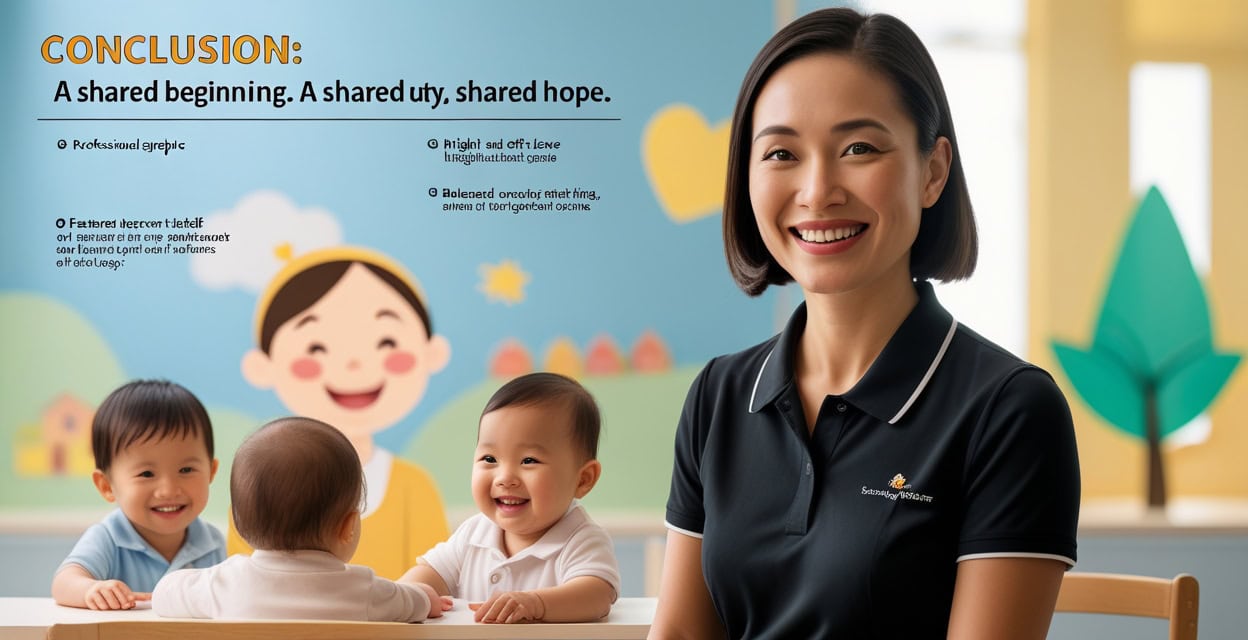
Conclusion: A Shared Beginning. A Shared Duty. A Shared Hope.
Let us build a future where every infant grows with a trusted caregiver, in a safe space, guided by thoughtful routines, joyful interactions, and a public spirit that makes quality care a community standard. This is EduNanny’s invitation to families, caregivers, neighbors, and policymakers alike: join us in this quiet revolution of early childhood care that respects dignity, supports livelihoods, and anchors Singapore’s youngest hearts in a world that notices, waits, and serves.
For further inquiry, schedules, and enrolment, visit EduNanny.com and Childminding.EduNanny.com. We look forward to welcoming you and your child into a beginning that promises calm, learning, and growth.
SEO keywords: #EduNannySingapore, #InfantCareSingapore, #UltraLowRatio, #ChildmindingPilot, #EarlyChildhoodDevelopment
Note: This article is optimized for WordPress with clear section headers and accessible HTML structure to support readability, navigation, and search visibility while remaining faithful to EduNanny’s mission and framework.
Ready to Experience Excellence?
Transform Your Family’s Journey
Discover Singapore’s leading infant care and childminding services. Expert guidance for your little one’s first thousand days.