From Kneel to Kindle A Civic Vision for Safe Joyful Infancy in Singapore with EduNanny
Introduction: What is EduNanny?
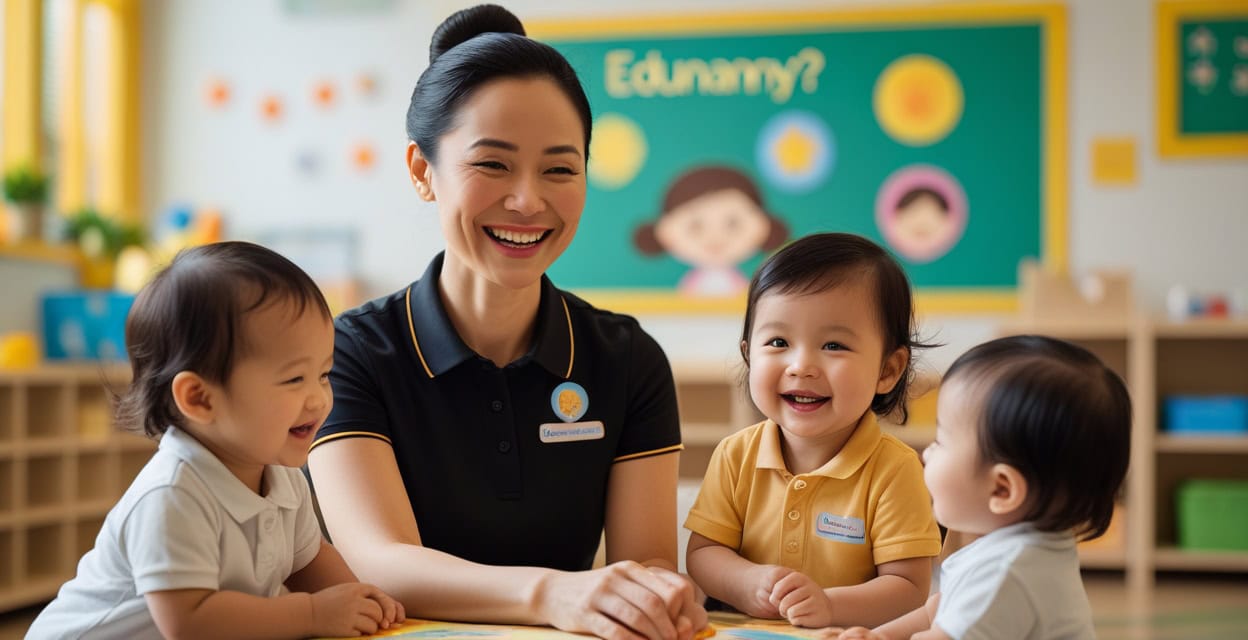
EduNanny by BUTLER is more than a service; it is a living promise to deliver world-class infant care and childminding that is near, trust-rich, and human-scale across Singapore. Our practice weaves together the best of developmental science—from Montessori’s respect for autonomy and agency to Piaget’s discovery-led cognition, from Vygotsky’s social scaffolding to Bowlby and Pikler’s attachment and gentle movement, and from Malaguzzi’s image of the competent child to Erikson’s secure identity moments and Spock’s practical warmth. This is a practical philosophy translated into daily actions: care from 7am to 7pm, islandwide, in community centres and home premises, and even at a distance when families need flexible support.
As part of the ECDA Childminding Pilot—a National Social Initiative with a Maximum Employment Mandate—EduNanny creates dignified caregiving roles in neighbourhoods so that care is not only available but embedded in community networks. Our model blends centre-based, home-based, and distance-enabled options with a deliberately small ratio, modern layouts, and transparent partnership with families through CCTV and clear communication. We offer affordability from about $33/day, because excellence should be accessible, not exclusive. Learn more at EduNanny.com and Childminding.EduNanny.com.
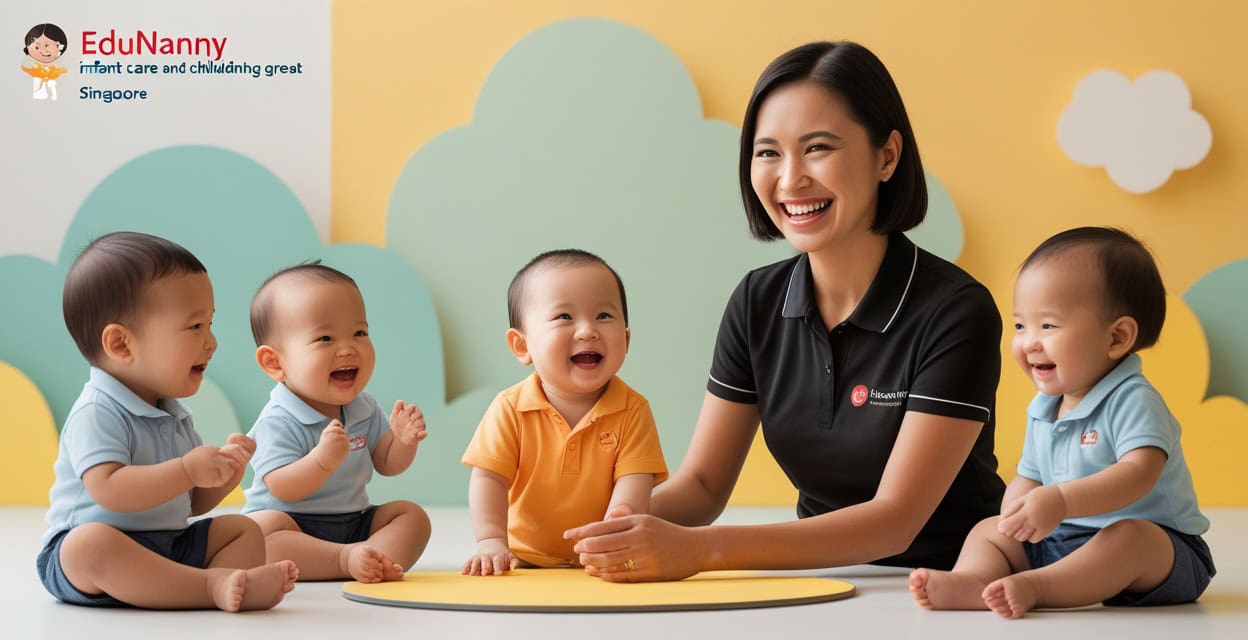
How EduNanny Makes Infant Care and Childminding Great in Singapore
We reframe infant care as a civic craft and a family partnership. Our focus is to keep children close to home, preserve trust at eye level, and maintain excellence in the quiet, essential details. We excel by doing three things—consistently—across every setting:
- Bring care to where families live, work, and travel—minimising disruption to routines, reducing transitions, and providing steadier experiences for infants.
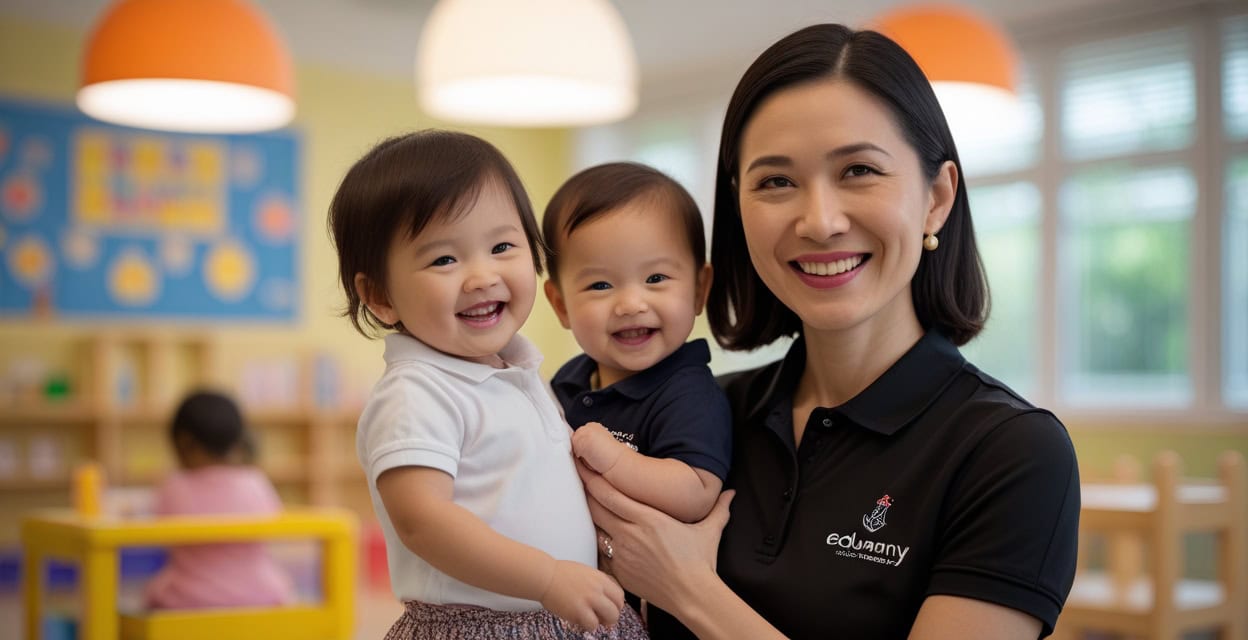
- Maintain a deliberately small ratio—1 adult to 3 infants—so secure attachment, language growth, and motor development receive unhurried attention.
- Turn transparency into daily practice—open-view CCTV, clear routines, and minute-to-minute observation notes so parents are not only informed but included in every step of their baby’s learning journey.
Four Topics at the Heart of Our Practice
1) Pedagogy: Kneel, Keep, Kindle
Our pedagogy is a posture, not a fixed curriculum. It translates into daily rituals that are tangible for parents to observe and participate in.
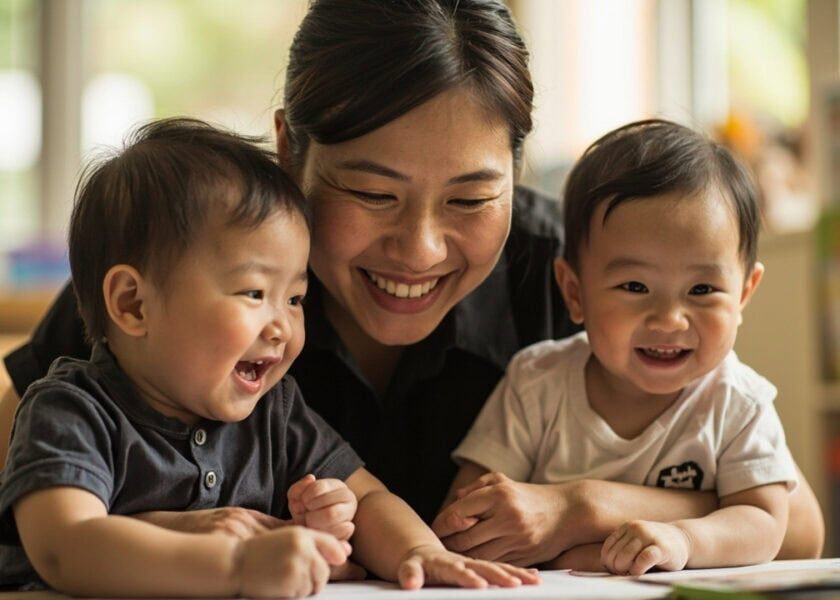
- Kneel: Meet infants at their level—physically, emotionally, and cognitively. Eye-level engagement communicates, “You are seen.” The floor is the laboratory; the caregiver’s knee is the podium. This is where Montessori’s autonomy and Pikler’s respectful movement breathe life.
- Keep: Protect rhythm—sleep, feed, play, pause—because predictability builds trust. Scaffolding happens within familiar patterns (Vygotsky), and predictability fosters initiative (Erikson).
- Kindle: Spark curiosity with simple, rich materials—rattles with varied textures, mirrors for self-awareness, low shelves for choice. Froebel’s insight that play is the highest form of learning guides us, and Malaguzzi’s hundred languages remind us that every sound, gesture, and gaze is a valid path to learning.
Practical guidance for parents:
- Observe a caregiver kneeling beside your baby during playtime and note how language is used to label actions (e.g., “You reached for the red ball”).
- Ask about daily rhythms: nap windows, feeding routines, and quiet time. Consistency often matters more than the precise activities.
- Encourage home activities that mirror this posture—eye-level play, simple turn-taking games, and naming emotions during routine interactions.
2) Safety: The Triangle of Assurance—Design, Diligence, Dignity
Safety transcends compliance; it is a culture. We build safety through design, disciplined practice, and respectful care.
- Design: Modern rooms with purposeful zones—sleep, feed, exploration—minimise cross-stimulation and hazards. Surfaces are firm for early motor development; sightlines are open for continuous supervision. Tools are stored with purpose, not as trophies.
- Diligence: Precise protocols cover hand hygiene, sanitisation, bottle handling, sleep checks, safe-carry and safe-sleep practices, emergency drills, and ongoing incident-prevention review. Innovation CCTV adds accountability and strengthens partnership with families.
- Dignity: Safety without dignity is control; safety with dignity is care. We narrate actions before touch, seek permission cues, and read infant signals. We never rush a feed or force a nap. Psychological safety remains paramount—infants experience the world as gentle and predictable.
3) Development: The Eight Daily Invitations
Infant development is an arc of tiny triumphs. We design eight simple invitations that scale from birth to age three, ensuring each micro-milestone has a place to land.
- Reach: Low-hung toys and graspable objects to build hand-eye coordination.
- Roll: Open floor space and gentle prompts for rolling, crawling, and pulling up.
- Rhyme: Songs, fingerplays, and book-browsing to seed phonemic awareness and language joy.
- Relate: Peekaboo, mirroring, and named emotions to grow social referencing and empathy.
- Rest: Protected, unhurried sleep hygiene to consolidate memory and growth.
- Repeat: Revisiting mastered skills to strengthen neural pathways and confidence.
- Refresh: Outdoor time, natural light, and sensory resets to aid regulation when possible.
- Recall: Caregiver “story-back” of the day’s highlights so babies hear their experiences named and valued.
How this translates at home: translate each invitation into a simple daily cue—e.g., after a morning feed, a 5-minute tummy-time session with a soft mirror, followed by a story and a cuddle. This mirrors Piaget’s sensorimotor learning and supports Bowlby’s secure base through a consistently attentive adult.
4) Happiness and Purpose: Joy is a Signal, Not a Bonus
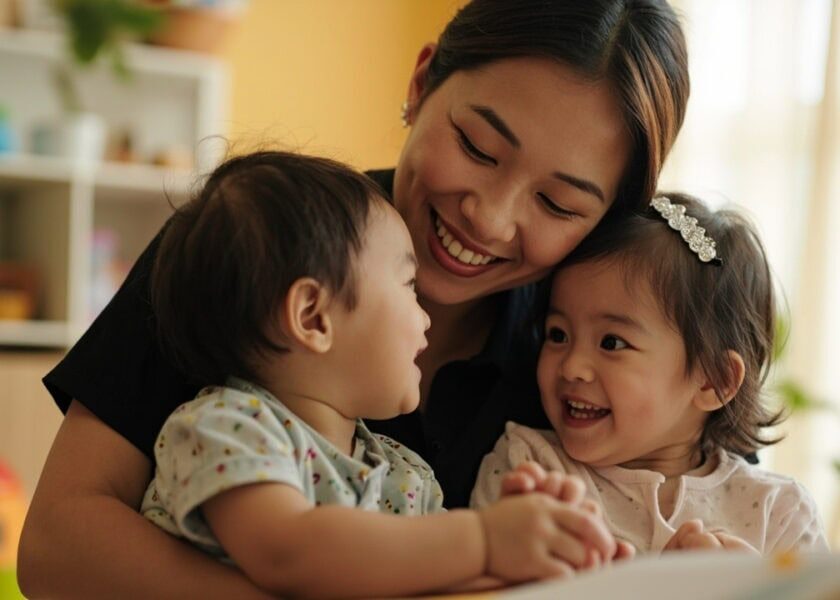
Happiness in infancy is information, not entertainment. A calm gaze, rhythmic babble, relaxed limbs, and a playful reach signal secure attachment and healthy arousal. Our caregivers train to read joy as a vital sign and to tune the environment to sustain it.
- Protect unfragmented periods of deep play that foster focus and imagination.
- Slow handovers in the morning and evening to bridge home and care with ease.
- Embed families in the loop with daily notes, video windows, and brief coaching conversations at pick-up.
The purpose of childminders is to be the attentive bridge between home and the wider world—never replacing family, always extending family. At our best, we translate cues into understanding, preserve culture and language through small rituals, and transmit trust by being consistently present, kind, and excellent.
A Practical Explainer: Why Our Structure Works in Singapore
Centre-Based
Designed spaces with small groups, strong supervision, and daily peer learning for caregivers. Centre-based care offers a shared community rhythm for families who thrive on structured routines and social exposure for infants.
Home-Based
Gentle, near-home settings with quieter soundscapes and reduced travel time. Home-based care supports continuity with a familiar caregiver and is especially valuable for sleep-sensitive infants and families seeking neighbourhood proximity.
Distance
When a child is home sick or a parent is teleworking, we provide remote check-ins, developmental guidance, and virtual settling support so routines stay intact and parents feel supported.
Hours and Access
Monday–Friday, 7am–7pm, islandwide—so working families can plan with predictability and confidence.
Affordability and Support
Fees payable by CDA/Baby Bonus, with options starting from about $33/day. Inclusion is a value, not an afterthought.
Transparency and Partnership
Innovation CCTV, daily observation notes, and family conferences—because trust grows when nothing is hidden and parents are consistently included.
Jobs with Dignity
As part of the ECDA Childminding Pilot, EduNanny offers meaningful, professional roles with training, progression, and community pride—turning caregiving into durable, respected work.
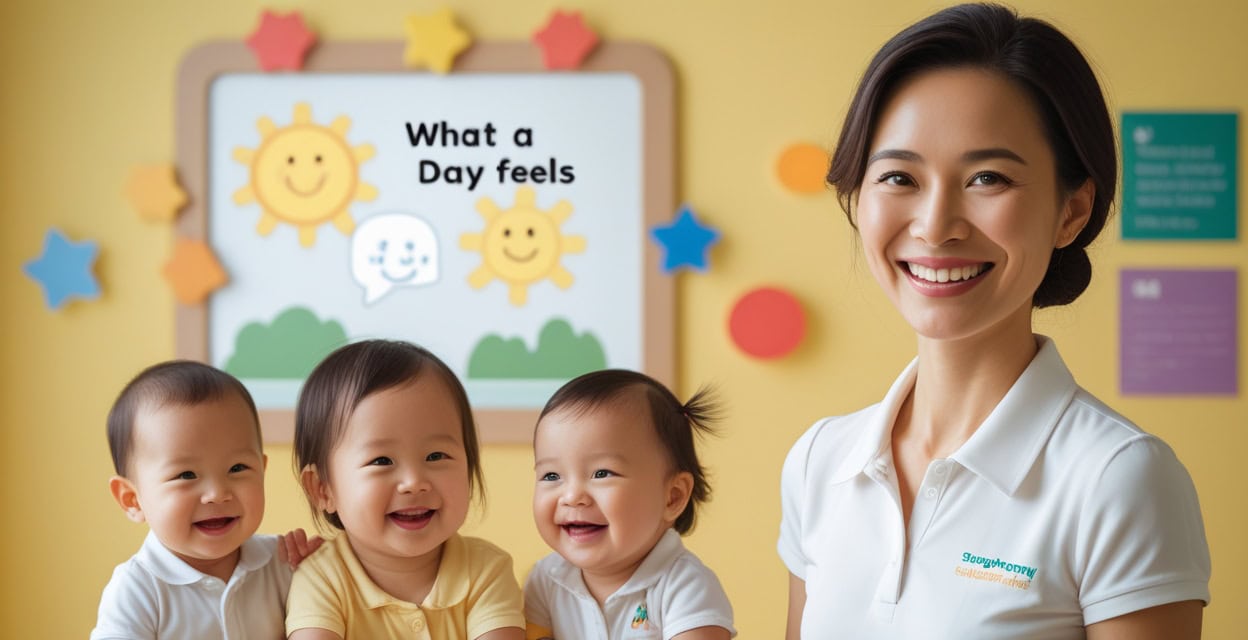
What a Day Feels Like
A typical day unfolds with quiet, intentional care:
- Mornings begin softly with eye-level greetings and a handover story from parent to caregiver.
- A named plan guides the day: “We’ll try two short naps, a tummy-time stretch after the first feed, and some song-time with Jia and Aarav.”
- The room hums with unhurried attention as caregivers kneel, infants reach and roll, and lullabies accompany gentle routines.
- Afternoon outings—where possible—include naming clouds and colours and a calm return for a nourishing feed.
- At pick-up, caregivers share not just a child, but a narrative: what the infant tried, what they loved, and where they showed courage.
Trust flows both ways when routines are predictable and moments of joy are noticed and celebrated together.

Why Childminding Matters—Who, What, When, Where, How
- Who: Childminding matters to infants who need constancy, to parents who need partners, to caregivers who deserve professional dignity, and to a nation that treats early care as public infrastructure.
- What: It is the daily conversion of science into tenderness—attachment, language, regulation, and motor growth—delivered through a 1:3 ratio, modern design, and transparent practice.
- When: The first thousand days are a window of opportunity where neural pathways are malleable and trust is built—careful, unhurried care matters most then.
- Where: Near home and in community spaces across Singapore—centres, homes, and distance-enabled formats—so families can plan lives with confidence.
- How: Through Kneel–Keep–Kindle pedagogy, the Safety Triangle of Design–Diligence–Dignity, the Eight Daily Invitations, and a family-partnered model powered by innovation CCTV and daily notes.
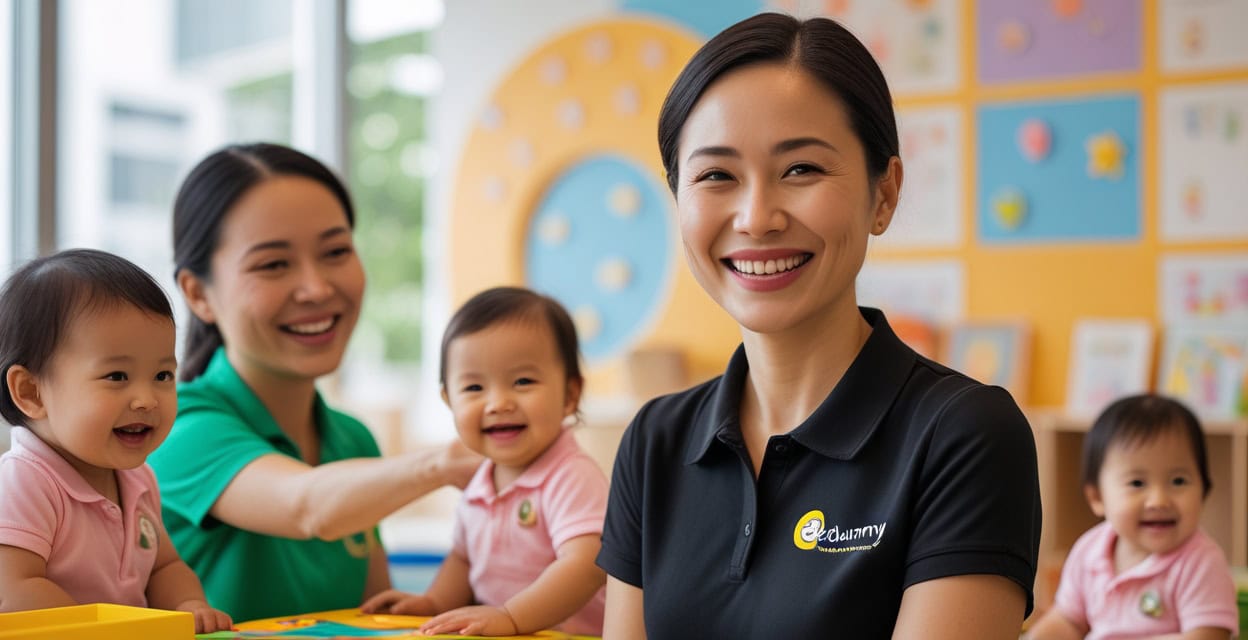
The EduNanny Philosophy and Purpose
Our philosophy is simple: every infant is a person; every moment is a language; every routine is a relationship. Our purpose is to hold those truths steady so parents can work without worry, infants can grow without hurry, caregivers can serve with pride, and neighbourhoods can trust the rooms where their youngest citizens begin.
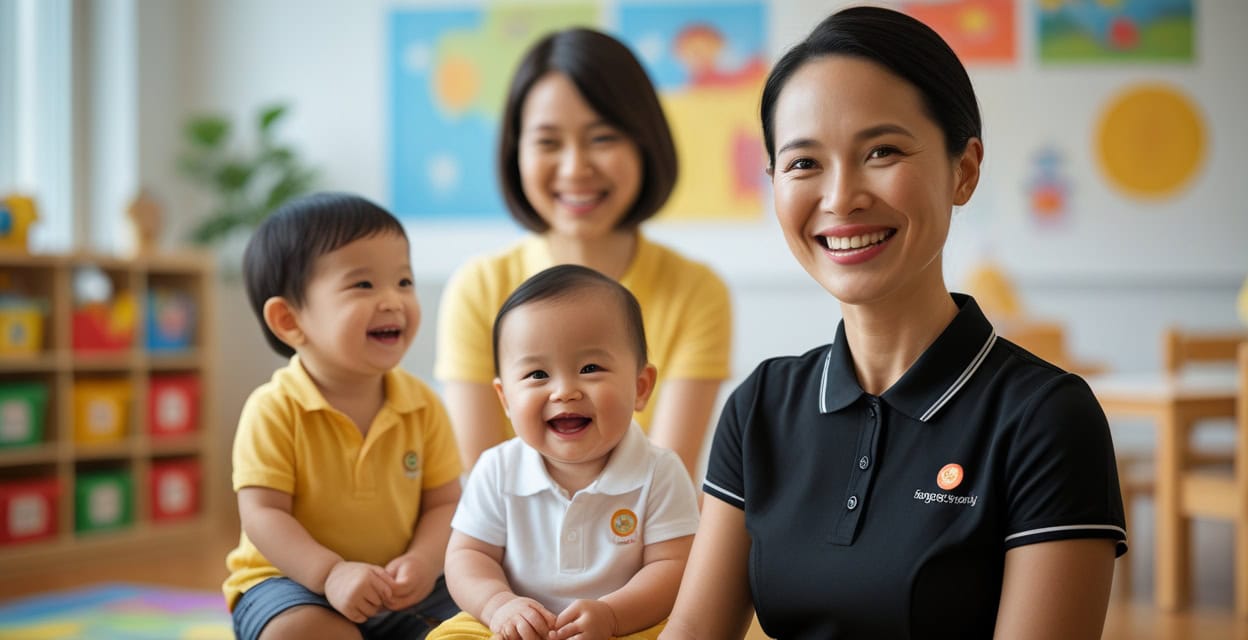
The Benefits You Can Count On
- Excellence and quality at human scale.
- Centre-Based, Home-Based, and Distance options for true convenience.
- Affordability from $33/day; fees payable by CDA/Baby Bonus.
- Monday–Friday, 7am–7pm, islandwide Singapore.
- In community and home premises with modern layouts.
- An excellent 1:3 infant ratio for safety and attuned care.
- Innovation CCTV and transparent daily communication.
- EduNanny by BUTLER, under the ECDA Childminding Pilot—a National Social Initiative with a Maximum Employment Mandate.
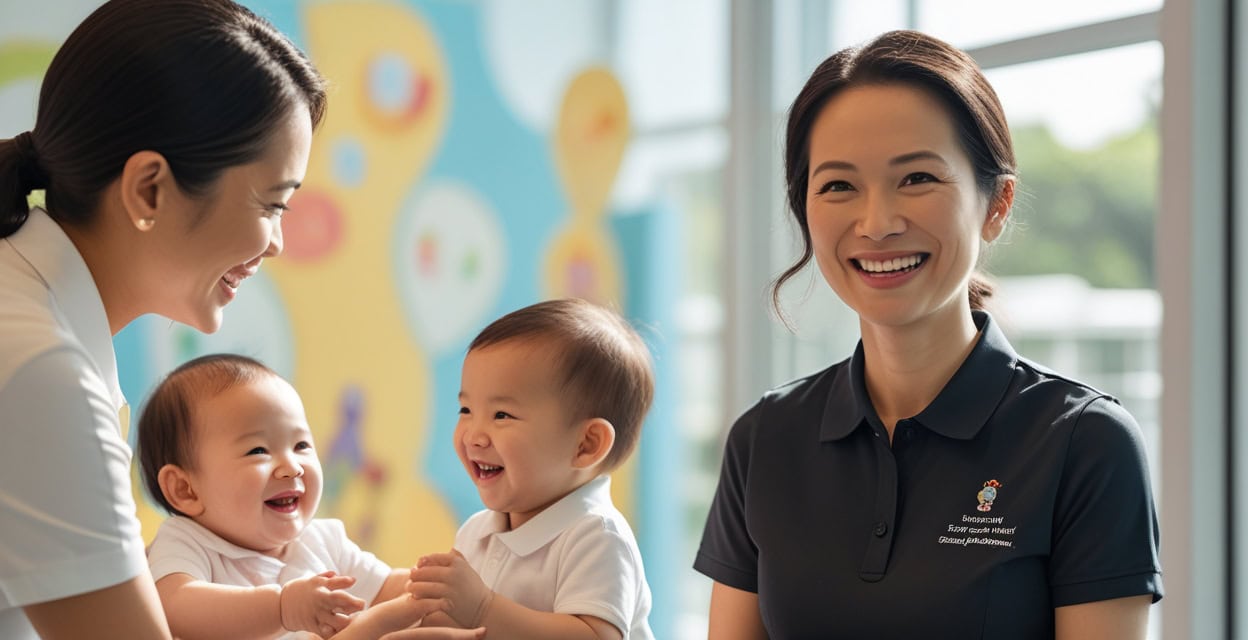
Call to Partnership
If you believe, as we do, that the future begins in the first small rooms, join us. Visit EduNanny.com or Childminding.EduNanny.com. Choose centre-based, home-based, or distance support that fits your family. Let us kneel beside your child, keep their rhythms safe, and kindle their curiosity—so that the first thousand days write a story of calm confidence, joyful discovery, and belonging.

Conclusion
At EduNanny, we measure success by quiet, daily truths: a child who reaches out and finds a trusted hand already there; a parent who rests easy because their child’s world feels safe and seen; a caregiver who grows in dignity through skilled, compassionate practice; and a neighbourhood that trusts the rooms where its youngest citizens begin. The future of Singapore’s early childhood care is built in these rooms—centered in community, anchored in evidence, and sustained by care that is both excellent and human. Join us in making beginnings beautiful, steady, and extraordinary.
[#EduNanny, #SingaporeChildcare, #InfantCareSingapore, #EarlyChildDevelopment, #OneToThreeRatio]Ready to Experience Excellence?
Transform Your Family’s Journey
Discover Singapore’s leading infant care and childminding services. Expert guidance for your little one’s first thousand days.