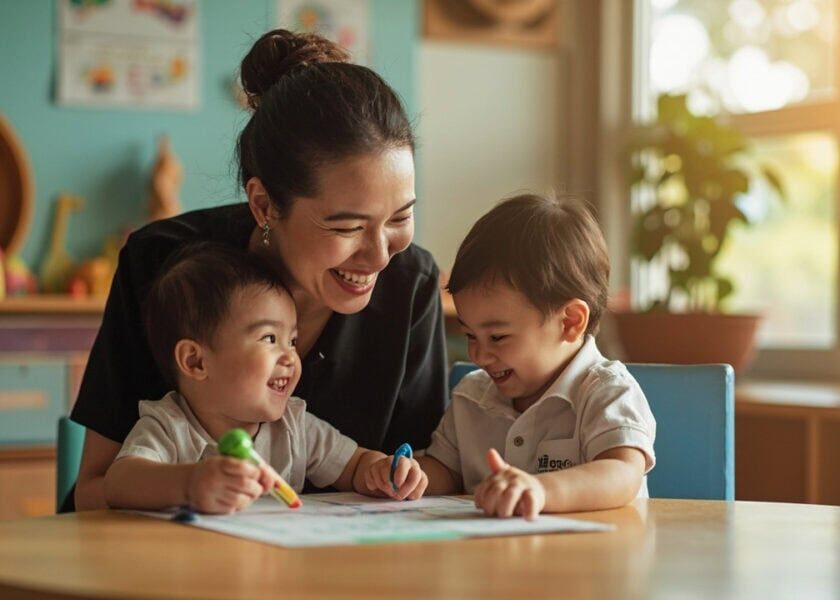
Hands Close Horizons Wide A Public Promise to Singapore Infants Through EduNanny One to Three Pedagogy

Hands Close, Horizons Wide — A Singapore Speech on EduNanny’s Standard for Infant Care and Childminding
EduNanny by BUTLER is built on a simple, radical belief: the first thousand days of life are not a private struggle for families to shoulder alone—they are a public promise we make together. This article expands that vision into practical guidance for parents, caregivers, and policymakers alike, offering actionable steps, real-world EduNanny insights, and concrete examples you can apply in daily life to support early childhood development in Singapore.
Introduction: What EduNanny Is, and Why It Matters Now
We deliver that promise near home, through a professional network of centre-based and home-based childminding, with islandwide hours that match the rhythm of working Singapore. We combine heart, science, and civic purpose so that infants experience calm safety, joyful curiosity, and trustworthy relationships every day. In a dense, fast-moving city, the distance between home and dependable care can feel longer than it looks on a map. EduNanny closes that distance by bringing professional care into neighbourhoods, keeping ratios small enough to truly see each child, and making transparency a design feature, not an apology.
Practical takeaway for families: seek care options that balance intimate attention with professional safeguards. Look for spaces that place infants at eye level, accessible within walking distance, and supported by clear training, modern environments, and convenient, parent-friendly systems.

What EduNanny Is, and How It Works in Singapore
EduNanny operates Centre-Based and Home-Based Childminding to meet families where they are, with clean, modern layouts and safety-by-design environments. An ultra-low 1:3 infant ratio ensures that attention is observable in every minute. Hours run Monday to Friday, 7am to 7pm islandwide, so care aligns with real commutes and real jobs. A Distance support layer provides secure digital check-ins, coaching, and continuity when a parent is on the move. CCTV supports transparent practice and reflective learning, under strict privacy and safeguarding protocols. Education and childminding are embedded in public policy through participation in the ECDA Childminding Pilot as part of a National Social Initiative that also advances a Maximum Employment Mandate—creating dignified neighbourhood jobs and stable, skilled work close to families. Care remains affordable (from $33/day) and payable via CDA/Baby Bonus, because access is a safety feature, too.
- Centre-Based and Home-Based options to match family life.
- Ultra-low 1:3 infant ratio for observable, relational care.
- Islandwide hours 7am–7pm to accommodate shifts and commutes.
- Distance support with secure digital check-ins and continuity coaching.
- Innovation in CCTV for transparency and coaching, with privacy safeguards.
- Affordability supported by CDA/Baby Bonus.
- Public-interest alignment through ECDA Pilot and Maximum Employment Mandate.
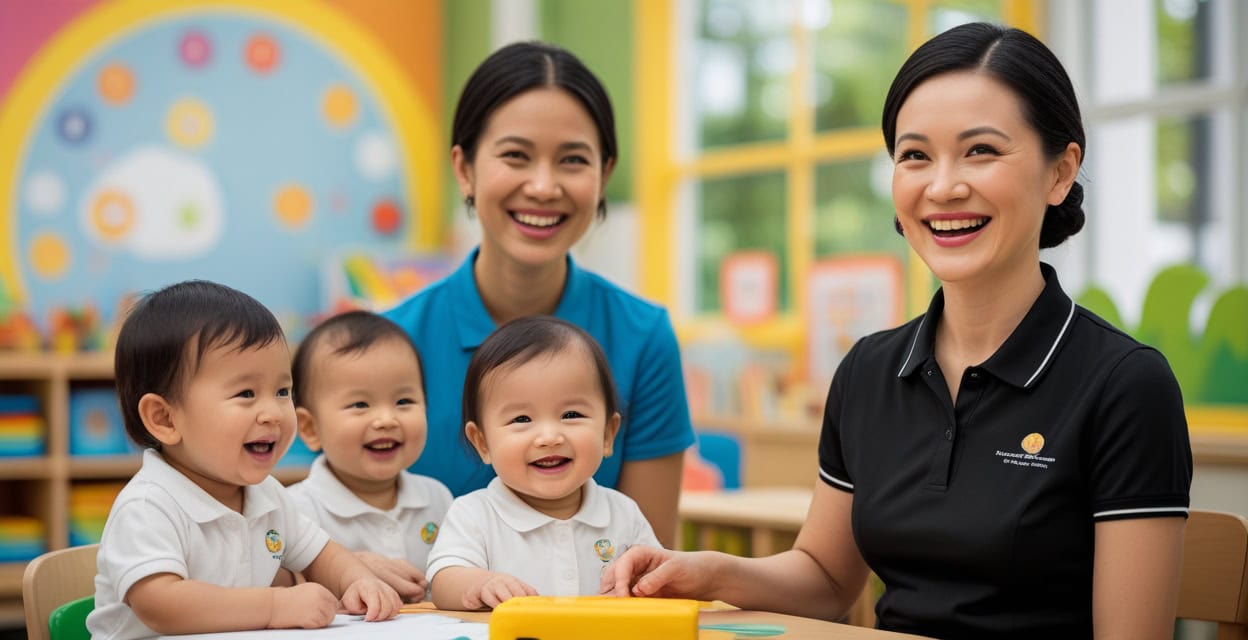
Five Topics for a New Standard
The following pillars translate research into daily practice. Each topic includes practical applications, sample routines, and questions families can ask centres or home-based providers to gauge quality and alignment with best practice.
1) Pedagogy at Eye Level: The Attentive Minute
The world’s best infant pedagogy is quiet and precise. It looks like a caregiver who kneels instead of towers; who waits a second longer; who names feelings before fixing problems; who follows the infant’s line of sight as if the child were a co-researcher. We draw from Montessori, Pikler, Vygotsky, Bowlby, and Erikson—translated into daily, observable practice.
- Notice–Name–Nurture: Adopt a simple routine: when a cue arises, name the experience, then suggest the next step. Example: “You’re reaching for the red block. Let’s bring it closer together.”
- Care-as-Curriculum: Treat routine care moments as learning opportunities—nappy changes, feeding, settling—with language-rich narration and predictable sequences that build neural connections for calm exploration.
- The Floor as Studio: Maintain low, accessible spaces where infants can explore gravity, grip, gaze, and early communication without overstimulation. Use purposeful materials that invite action and repetition.
- One-Minute Curriculum: Implement micro-activities (two-language finger rhymes, tummy-time storytelling, peekaboo with intentional pauses) that accumulate into durable developmental trajectories.
Practical tip for parents: mirror these practices at home—get on the floor with your child, narrate actions, pause to listen, and follow their lead for a minute before introducing a new activity. Create a predictable rhythm that becomes a source of security and curiosity.
2) Safety as Architecture, Ritual, and Culture
Safety is more than a checklist; it is a system that anticipates, reduces, and responds. EduNanny’s safety model rests on design, training, and transparency.
- Design: Spaces with sightlines, gated zones, cleanable surfaces, age-graded materials, and safe-sleep rooms with individual cots and firm mattresses. Maintain consistent temperature and ventilation to prevent discomfort and illness.
- Ratios and Routines: 1:3 ratios enable continuous supervision and relationship-building. Time-stamped routines for handwashing, sanitising, and toy rotation reduce cross-contamination and confusion during transitions.
- Training: Caregivers trained in infant first aid, CPR, safe sleep, choking response, allergies, and emergency evacuation. Regular refreshers keep skills current and relevant.
- Innovation and Integrity: CCTV is used for coaching and parent transparency, with robust privacy protections and clear incident reporting plus root-cause learning to prevent recurrence.
- Health Practices: Clear sick-child policies, rapid referral networks with community clinics, and proactive communication to protect families and staff.
What to ask when evaluating safety: What are your sick-child policies? How do you handle emergencies? How is CCTV used, and who can view footage? How often are safety drills practiced, and what is the plan for temporary relocations if a centre must close?
3) Development as a Whole: Body, Brain, and Belonging
Infants grow in layers: sensorimotor mastery, language emergence, and social-emotional trust. A holistic approach supports durable development across domains, with family partnership at the center.
- Motor: Progressive floor-time routines, safe grasp-and-release activities, and obstacle courses that encourage crawling and walking; caregiver narration emphasizes intention and effort.
- Language: Serve-and-return conversations, songs and stories in multiple languages, baby signs for routines, and rich caregiver talk during care moments to build vocabulary and social listening.
- Cognitive: Cause-and-effect play, simple sorting activities, object permanence games, and treasure baskets that enable safe exploration without constant interruption.
- Social-Emotional: Predictable caregivers, predictable routines, and quick repairs after small lapses to reinforce secure attachment.
- Observation and Partnership: Daily notes, photo observations, monthly snapshots, and co-set developmental goals with families—adjusting strategies as children grow.
Practical tip: create a family-development notebook. Record milestones, interests, and a few goals each month. Share progress with your caregiver to align home and centre activities and to ensure consistency in approach and language.
4) Happiness and Calm as Measurable, Teachable Outcomes
Joy is not an afterthought—it is planned, tracked, and teachable. Calm, confident children are more curious and resilient learners. Use clear indicators and family-friendly practices to sustain happiness and regulate stress.
- Secure Base Indicators: Does the infant glance back at the caregiver during exploration? Do they return for reassurance during transitions? Are rapid recoveries observed over time?
- Rhythm, Not Rush: Protect nap windows, feeding cues, and predictable transition rituals. A well-paced day supports learning and reduces fussiness.
- Culture and Comfort: Incorporate family music, songs in heritage languages, and familiar comfort objects to anchor a sense of belonging and reduce stress.
- Parent Wellbeing: Convenience, clarity, and cost should support families, not punish them. When parents feel supported, infants experience less stress and more secure attachment.
Practical tip: track a simple happiness index weekly—examples include “child smiles more often, naps are longer, distress signals decline.” Use this to adjust routines and communicate progress with caregivers.
5) The Purpose and Profession of the Childminder
Childminding is nation-building done quietly. EduNanny honors this craft and builds a career ladder to match it, turning care into a respected profession with paths for growth and leadership.
- Role and Respect: Childminders are developmental partners who translate science into daily practice, not interchangeable helpers.
- A Pathway, Not a Gig: Supervised practice, mentorship, certifications, and progression from childminder to lead, trainer, and centre coach.
- Maximum Employment Mandate: Creating stable, dignified, near-home jobs that support families and communities, especially for women re-entering the workforce.
- Community Weaving: Childminders serve as trusted anchors who link families to resources, monitor early concerns, and celebrate daily wins that strengthen social fabric.
Practical tip for families: ask about professional development opportunities for carers, supervision structures for ongoing learning, and how centres support career progression for educators to stay engaged and motivated.
What Makes EduNanny Practically Better for Families
- Excellence and Quality: Evidence-led practice, ongoing training, and transparent operations.
- Centre-Based, Home-Based, and Distance: Flexibility to mix formats as life needs shift, without sacrificing continuity of care.
- Convenience: Islandwide locations and hours that align with real-life schedules, reducing commute stress and saving time for families.
- Affordability: Competitive pricing from $33/day with CDA/Baby Bonus support to improve access.
- Safety and Trust: Ultra-low 1:3 ratio, CCTV transparency for coaching and accountability, and safety-by-default design in every space.
- Public Spirit: Participation in ECDA Pilot and alignment with national initiatives that dignify care work and strengthen neighbourhoods.
- Access: Facilities in community and home premises with simple enrolment via EduNanny.com and Childminding.EduNanny.com.
A Day in the Life, Seen Through an Infant’s Eyes
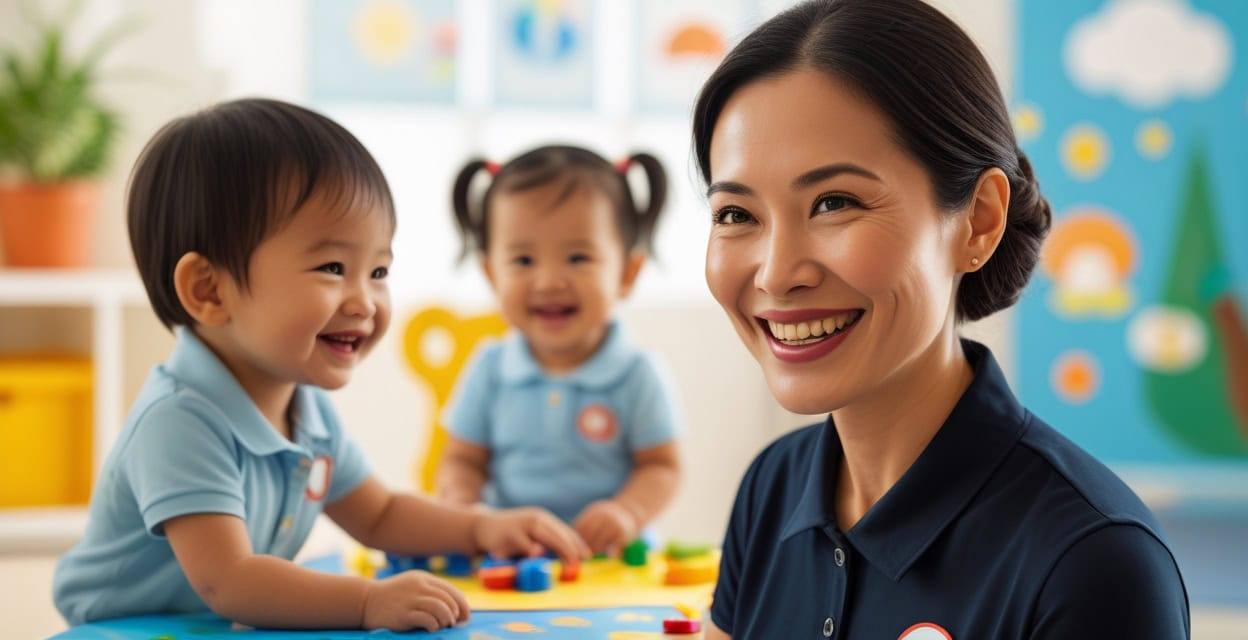
Morning: I am greeted by name. My caregiver kneels; their face is soft; the room smells clean and calm. We sing a hello that I recognise. My bottle arrives with eye contact and gentle narration. I feel my body soften.
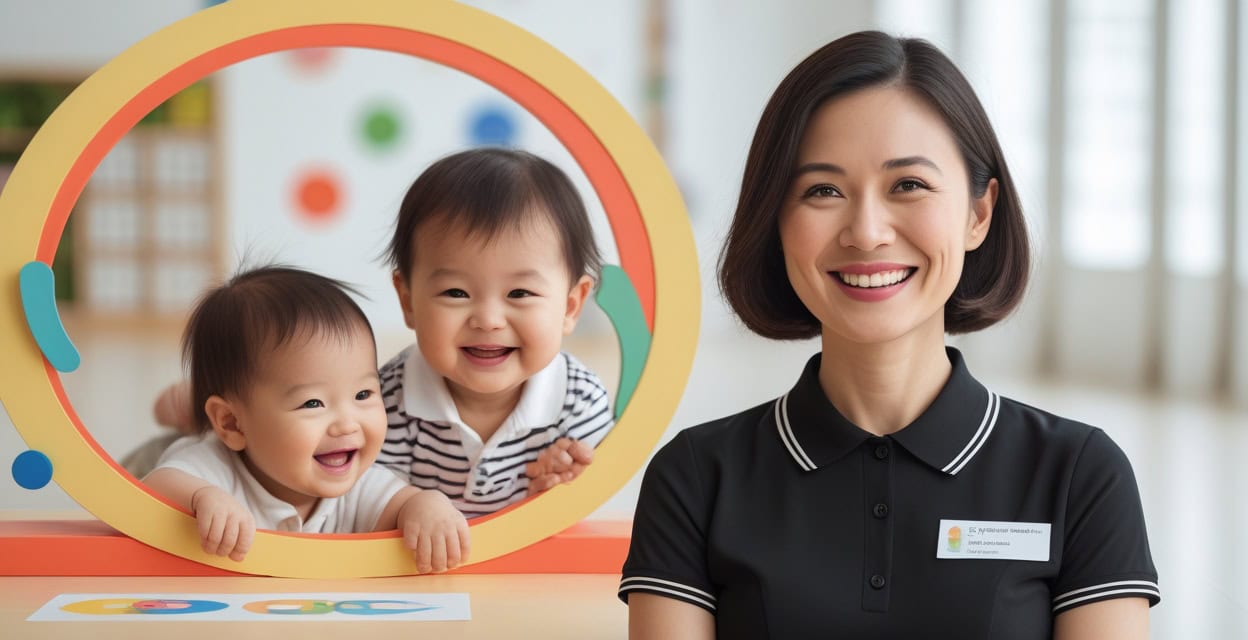
Mid-morning: I roll toward a wooden ring. She waits, gives me space, and names my effort: “You are working hard.” I keep trying, and she cheers for the try itself.
Late morning: We explore a picture book about faces. She copies my sounds and expands my language with a simple question, “What do you hear?” I am heard, and I respond.
Afternoon: I nap in a cot that is mine and mine alone. When I wake, she remains nearby for a moment so my brain can rejoin the room. I feel ready to re-engage and belong.
Evening handover: My parent learns what I explored and how I felt, not just what I ate. We share a small smile and a sense of belonging to a close, supportive circle.
Conclusion: Who, What, When, Where, and How Childminding Matters
Who — Infants who learn the world is safe, adults who are steady, and communities that weave trust into daily life; parents who deserve reliability, affordability, and respect for work; childminders whose craft is recognised as a profession with training and pride.
What — Childminding that is safe by design, developmental by intention, and joyful by daily practice; a public ethic that treats the first thousand days as shared infrastructure, not private luck.
When — Monday to Friday, 7am–7pm, across the most formative window, matching the rhythms of city life and the needs of working families.
Where — Near home, in community and home premises, islandwide across Singapore; spaces designed for infants’ bodies and minds: modern, clean, and calm.
How — Through an ultra-low 1:3 infant ratio that sustains relationships; through trained, supported childminders practicing minute-by-minute attunement; through CCTV transparency and safety protocols that prevent problems before they start; through affordability from $33/day and CDA/Baby Bonus options that make access real; through flexible centre-based, home-based, and distance supports that adapt to family life; and through participation in the ECDA Childminding Pilot as a National Social Initiative aligned with a Maximum Employment Mandate that dignifies care work and strengthens communities.
The philosophy and purpose of EduNanny are simple to say and exacting to deliver: protect the calm, practice the science, honour the bond, and make it available to every neighbourhood. When we do this—steadily, humbly, and at scale—Singapore gains something priceless: children who feel safe enough to be curious, parents who feel supported enough to breathe, and caregivers who feel respected enough to stay and grow.
Hands close. Horizons wide. That is the EduNanny promise.
Visit EduNanny.com or Childminding.EduNanny.com. Tour a centre, meet a home-based childminder, or schedule a distance consultation. If you are a caregiver ready to turn your gift into a profession, we are hiring. If you are a parent seeking trust you can feel, we are here.
Thank you—for your time, your faith, and for the everyday love that, minute by minute, builds a nation.
SEO keywords: [#EduNannySingapore, #InfantCareSingapore, #EarlyChildhoodDevelopment, #ChildmindingStandards, #SingaporeFamilies]
Ready to Experience Excellence?
Transform Your Family’s Journey
Discover Singapore’s leading infant care and childminding services. Expert guidance for your little one’s first thousand days.