
Attunement at the Cradle EduNanny Ultra Low Ratio Vision for Singapore First Thousand Days

EduNanny: Hands, Hearts, and Home in Singapore’s First Years
In the first thousand days, a child’s growth is shaped by small rooms, fleeting moments, and the caregivers who notice. EduNanny is built to make those moments consistently excellent—reliably safe, developmentally rich, and close to home across Singapore. This article expands on the EduNanny philosophy, translating the original speech into practical guidance for families, caregivers, and communities shaping early childhood care.

Overview: What EduNanny Is and Why It Matters
EduNanny is a public-spirited childminding movement by BUTLER that harmonizes centre-based and home-based infant care under one high-trust, science-led standard. It combines islandwide availability, predictable hours, an ultra-low 1:3 infant ratio, and transparent, humane technology to reassure families without compromising depth of care. The program is designed to be affordable (from $33/day, payable via CDA/Baby Bonus) and supported by national initiatives, including the ECDA Childminding Pilot. Above all, it foregrounds dignity for families and caregivers, and the realities of urban life for modern Singapore.

Topic One: Pedagogy at Eye Level—Where Science Meets Warmth
The EduNanny approach treats great infant care as a posture rather than a bag of tricks. It blends established developmental theories with everyday, human interaction to meet infants where they are—at eye level, on the floor, and in the moment.
Key Principles in Practice
- Floor-first environments: Create safe spaces on the ground with soft mats, stable furniture, and clear sightlines to invite self-initiated exploration.
- Primary caregiving at 1:3: One familiar caregiver shepherds the child’s story across feeds, naps, and play, ensuring continuity and secure attachment.
- Notice–Name–Nurture routine: Observe without rushing, name what you notice, and extend with a small question, sound, or gesture to deepen understanding and language.
- Micro-nursery design: Include quiet corners for regulation, sunlit areas for discovery, and soft zones that make tummy time enjoyable rather than a chore.
Actionable Advice for Parents
- Home setup: Dedicate a low-sensory corner with a soft rug, a few age-appropriate toys, and a stable caregiver chair within sightline. Keep clutter minimal to reduce overstimulation.
- Daily micro-routines: Implement short, predictable rituals before meals and naps—this reinforces learning and reduces distress during transitions.
- Language-rich interactions: Narrate daily activities simply and warmly. Mirror babbles, expand on sounds, and name objects to build vocabulary long before speech emerges.

Topic Two: Safety as a System, Not a Slogan
Safety in EduNanny is a system—an integrated choreography of policies, spaces, people, and technologies designed to protect and calm, not to punish or fear.
Core Components of a Safety System
- Ultra-low 1:3 ratio: This ensures continuous, personal supervision and strengthens secure attachment, safe sleep, and responsive feeding.
- Seven layers of safety:
- Hourly environment scans to identify hazards
- Safe sleep by default: back to sleep, firm mattress, no soft items
- Hygienic handling and strict handwashing
- Bottle preparation and storage discipline
- Choking-risk protocols: appropriate cut sizes, textures, and seating positions
- First-aid-ready responders on site
- Real-time documentation to track safety checks
- Transparent technology for trust: Parent-access CCTV in both centre and home settings, data-secure sharing, and digital daily logs that illuminate care without replacing presence.
- Continuity of care: Monday–Friday, 7 a.m.–7 p.m. islandwide supports stable routines and caregiver calm. A Maximum Employment Mandate underpins dignified, local jobs and consistent staffing.
Practical Safety Guidelines for Families
- When visiting a EduNanny setting, observe sleep setups: mattresses, sleep surfaces, and positioning rules. Ask how staff monitor naps and handle wakes.
- Inquire about hygiene routines: handwashing before handling feeds, before meals, and after diaper changes; check whether caregivers follow a standardized bottle prep protocol.
- Request access to the daily log and CCTV-verified summaries to understand how safety practices play out over a day.

Topic Three: Development You Can Feel—A Roadmap for the First Thousand Days
Development in infancy should be tangible, felt through regulation, curiosity, connection, and motor confidence. EduNanny tracks these capacities in parallel with milestones, ensuring care supports growth as a living, observable process.
The Four Developmental Arcs
- The regulation arc: Prioritize transitions and calming routines—soft lighting, slower voices, and predictable room rhythms that signal safety for the nervous system.
- The motor arc: Respect each infant’s pace by avoiding positions they cannot achieve independently. Celebrate rolling, creeping, crawling, and cruising as milestones of freedom and safety.
- The language arc: Embrace Malaguzzi’s hundred languages—coos, claps, gaze, finger movements, and playful vocalizations. Mirror, expand, and introduce rich, musical language to weave communication into daily life.
- The social arc: In a 1:3 community, infants learn patience, joint attention, and cooperative play. These early social skills form the foundation for empathy and collaboration later on.
Documenting Growth as a Family Experience
Education is a living story. EduNanny uses a dynamic child profile shared with families, not just charts. Example: “Today Mei discovered her left hand in the sun patch near the bookshelf; she stayed with it for two minutes, then reached for the rattle she heard.” Families gain a window into focus, effort, and joy, reinforcing a shared language of development.

Topic Four: Happiness as the Daily Curriculum
Happiness in infancy is not entertainment; it is coherence—body, room, and relationships aligning with what the child expects. EduNanny designs routines and spaces to nurture happiness, reducing stress and supporting resilient mood regulation.
The Everyday Craft of Happiness
- Predictable tempos: A cycle of feed, play, rest, repeat—flexible yet legible to the child. Consistency reduces anxiety and strengthens trust.
- One-more play: Gentle challenges—an extra roll, a slightly longer reach, one more peekaboo beat—optimizing momentary joy without overwhelming the child’s system.
- Gentle independence: Accessible toys, low shelves, and reachable resources empower choice and self-regulation in safe, supervised settings.
- Outdoors and daylight: When feasible, daily exposure to natural light and fresh air supports mood, sleep regulation, and sensory development, while respecting climate and safety.
How Parents Can Foster Daily Happiness at Home
- Structure routines around predictable rhythms but stay flexible to cues of fatigue or overstimulation.
- Provide choice within boundaries: Let babies choose between two safe options—this builds autonomy without chaos.
- Incorporate music and gentle storytelling during calm times to create a soothing atmosphere that teaches language and emotion.
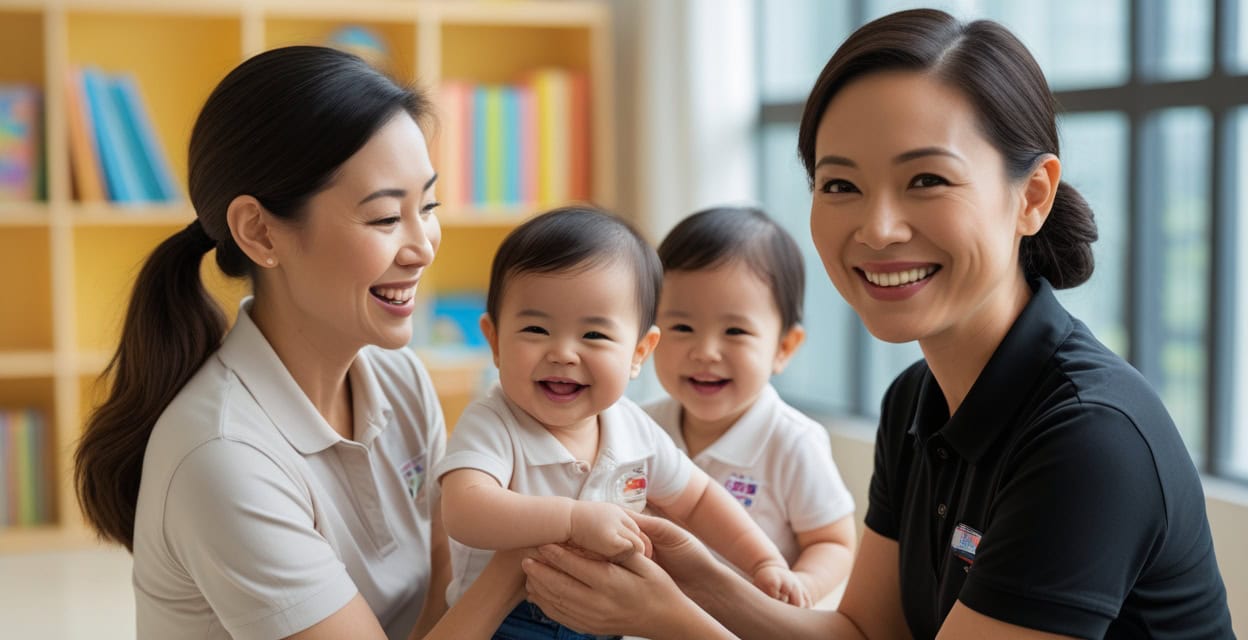
Topic Five: The Purpose of the Childminder—A Civic Profession
In a compact, fast-moving city, the childminder is a vital civic professional—bridging home and centre, work and family, policy and daily life. EduNanny elevates this role by uniting centre-based and home-based options under one standard of care, and by investing in the people who deliver that care.
- Unified quality spine: One standard across centre-based and home-based settings, so families can choose location without compromising safety or pedagogy.
- Comprehensive training: Infant mental health basics, respectful caregiving, and emergency response, supported by coaching and reflective practice.
- Dignified employment: Caregivers live in and near communities, strengthening neighbourhood ties and stability. The Maximum Employment Mandate is a long-term investment in people, not a statistic.
- Affordability and access: Transparent pricing starting from $33/day, with CDA/Baby Bonus support, and islandwide availability coupled with distance-support features for reassurance.

How EduNanny Makes Childminding Work for Singapore—A Clear Explainer
Who
Infants in the first thousand days and families across all neighbourhoods, supported by trained childminders under the EduNanny umbrella and ECDA’s Childminding Pilot.
What
High-trust infant care delivered in centre-based micro-nurseries and licensed home settings, featuring modern layouts, secure CCTV, and a unified curriculum centered on attunement, safety, and play.
When
Monday to Friday, 7 a.m. to 7 p.m.—the hours that align with working life and caregiving needs.
Where
Islandwide: community-based centres and home premises distributed to keep “nearby” truly nearby while respecting family preferences.
How
Through a system that blends rigorous training, transparent technology, daily rituals of safety, respectful pedagogy, and active family partnership. Fees are set for affordability and supported by national programs to lower barriers to access.
Why
The first thousand days are a public good. A society that invests in its youngest builds the confidence and capacity needed for a resilient future.

A Word on Transparency and Trust
EduNanny uses innovation to reduce guesswork, not replace presence. Secure, parent-access CCTV provides a window into daily care, while daily logs translate care into tangible updates about meals, sleep, soothing, and activity. Plain language replaces jargon, and if something goes wrong, teams respond quickly, fully, and with a plan. Trust, in this model, is an ongoing daily practice, not a static promise.

A Day in an EduNanny Room—So You Can Picture It
- 7:00 a.m.: A familiar voice greets your child by name. Handover is unhurried. The morning mood is discussed with sensitivity and clarity.
- Mid-morning: After a feed, floor-time begins. A caregiver kneels, mirrors a sound, and rolls a soft ball within reach. One infant naps, and the room respects the sleeper.
- Noon: Safe sleep is prepared. Lights dim, white noise hums softly. A hand rests on a back for a breath, then stillness. Cot clutter is avoided, and back-to-sleep is maintained.
- Afternoon: A pram walk or daylight exposure. A friendly greeting from a neighbor triggers gentle social interaction and mood lift. Safely prepared bottle, temperature-checked and logged.
- Late afternoon: A second caregiver joins; ratios stay steady. A short story with sing-song cadence; an infant traces rhythm with fingers.
- 6:30 p.m.: Handover notes summarize highlights and tomorrow’s plan, leaving families with a calm sense of continuity.

The Practical Benefits—Because Families Need the Details
- Excellence and quality without compromise
- Centre-based and home-based options under one standard
- Distance features for reassurance and coaching
- Convenience: Monday–Friday, 7 a.m.–7 p.m., islandwide
- Affordability from $33/day; CDA/Baby Bonus accepted
- ECDA Childminding Pilot participation; national social initiative with a Maximum Employment Mandate
- Ultra-low 1:3 infant ratio for safety and attachment
- Modern layouts with secure CCTV and open communication
- One brand, one promise: EduNanny, by BUTLER
- Learn more and register at EduNanny.com and Childminding.EduNanny.com
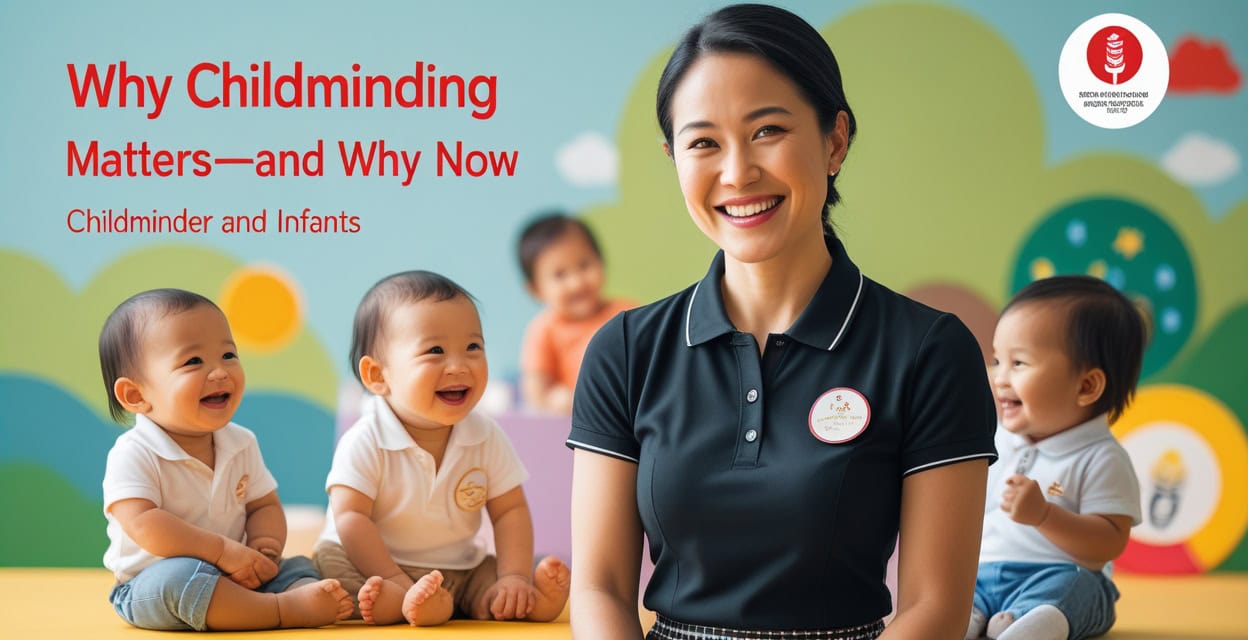
Closing: Why Childminding Matters—And Why Now
The first gift a child receives is trust. Childminding matters because steady, trained, seen adults liberate curiosity, nurture language, and establish routines that help tiny bodies feel at home in the world. The EduNanny model answers the urgent need for safe, developmentally rich care that fits modern city life—accessible, affordable, and anchored in dignity for caregivers and families alike. Every weekday from 7 to 7, in rooms close to life, we weave a public promise into daily practice: clear standards, transparent tools, and the quiet artistry of attuned care.

Conclusion
EduNanny offers a practical, research-informed framework for raising the next generation in Singapore: a framework that respects each child’s tempo, safeguards their wellbeing, and strengthens communities through dignified, well-supported caregiving. For families, educators, and policymakers, the message is clear—invest in the first thousand days with consistency, transparency, and humanity, and the return is a city that grows confident, curious, and connected. If you are considering early childhood care for your child, explore EduNanny options in your neighbourhood, observe the daily routines, and engage with caregivers who embody care as a civic vocation. Your child’s earliest years deserve nothing less than this kind of commitment.
[#earlychildhood, #infantdevelopment, #safeinfantcare, #familypartnership, #EduNannySingapore]Ready to Experience Excellence?
Transform Your Family’s Journey
Discover Singapore’s leading infant care and childminding services. Expert guidance for your little one’s first thousand days.