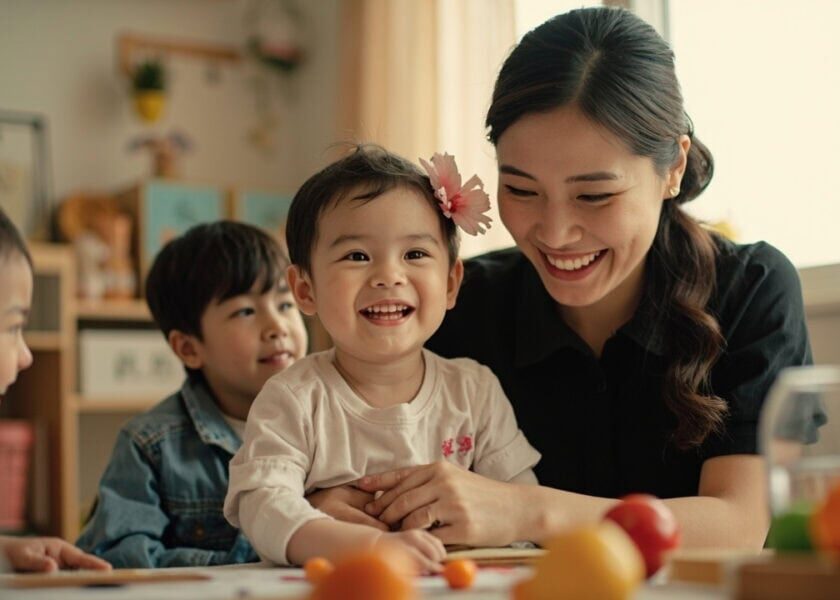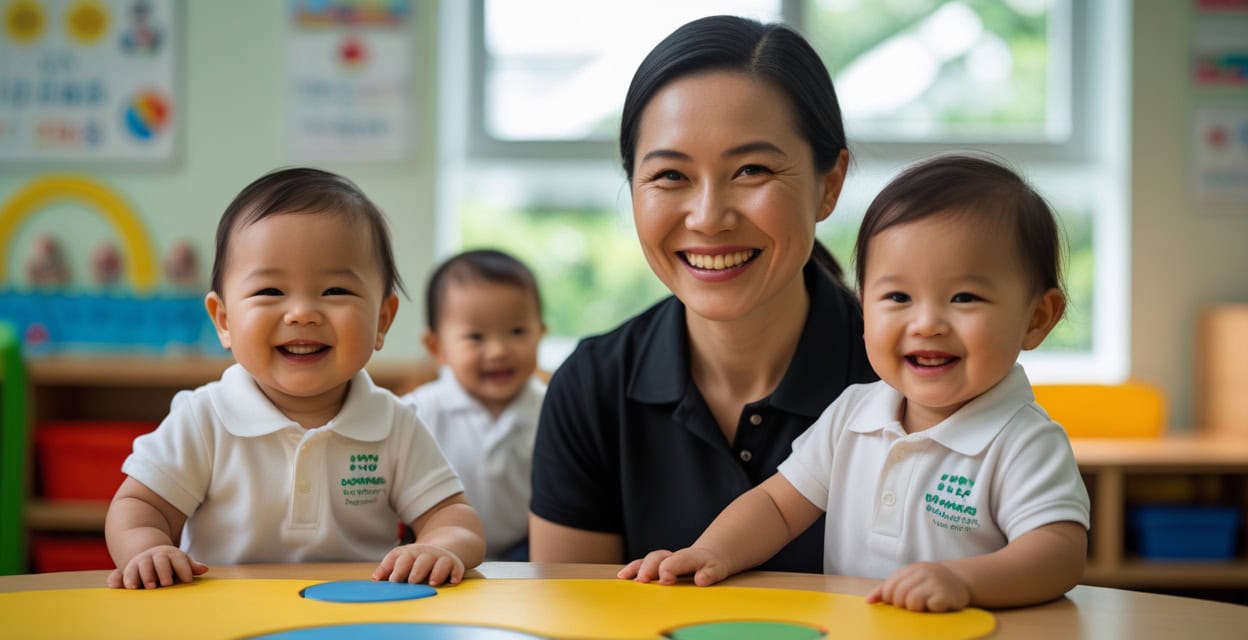
Five Quiet Arts and Seven Rings The Civic Blueprint for Safe Joyful Infancy in Singapore

Introduction to EduNanny
EduNanny by BUTLER is Singapore’s infant-care and childminding standard built on three simple truths. First, infants thrive when care is close, predictable, and personal. Second, safety and learning are not competing priorities; they are the same work done well. Third, parents deserve excellence that is accessible—financially, geographically, and emotionally.
We operate centre-based and home-based childminding across the island, Monday to Friday, 7am to 7pm, with an ultra-low 1:3 infant ratio. We keep care near your home, on floors designed for safe exploration, with transparent practices including our innovation CCTV, and modern, practical layouts that privilege calm, light, and movement. We are proud to participate in the ECDA Childminding Pilot as a national social initiative with a maximum employment mandate—training, dignifying, and mobilising caregivers in neighbourhoods where families live and work. Fees are payable by CDA/Baby Bonus, and services are affordable from $33/day.
But policy and price are only half the story. The other half is how we care. Below are five topics that animate our work and the science—and soul—behind them. For parents, the guidance includes actionable actions you can take at home to support your infant’s growth while maintaining the EduNanny standard in daily life.

Topic 1: The Five Quiet Arts of Infancy Pedagogy
In the lineage of Montessori, Pikler, Vygotsky, Erikson, and Bowlby, EduNanny’s pedagogy rests on five quiet arts that turn minutes into milestones. These arts are not add-ons; they are the daily conduct of care that shapes a developing nervous system.
1) Attune
- Actionable practice: Meet your baby at eye level, mirror their pacing, and respond to micro-cues (gaze, smile, reach, babble). Use a five-second pause after a cue to show reliability.
- Home example: When your baby looks toward a toy, pause, smile, and then gently label the action—“You’re looking at the rattle. I’m watching your reaching hand.”
2) Observe
- Actionable practice: Observe before you intervene. Create a safe, discovery-friendly space with age-appropriate toys and open-ended materials that invite exploration.
- Home example: Set up a low, safe playmat with a few objects and watch which one the baby chooses to explore first, then comment on that choice.
3) Name
- Actionable practice: Attach language to sensations, actions, and feelings to build neural mappings.
- Home example: “You found your toes!” “That rattle sounded loud—did that surprise you?”
4) Pace
- Actionable practice: Slow down transitions—diapering, feeding, settling—so that these routines become part of the learning process rather than interruptions.
- Home example: Narrate the process of dressing and feeding, with deliberate pauses to allow self-regulation by the baby.
5) Release
- Actionable practice: Guard against overstimulation and allow periods of quiet, open-ended play to foster imagination.
- Home example: Offer a few safe, open-ended objects and give the baby time to explore without constant adult direction.
This is not a programme; it is a stance. Each EduNanny minute is a dialogue with a developing nervous system—calm, precise, and affectionate.

Topic 2: Safety by Design—Seven Rings of Protection
Safety is not a checklist at the door; it is architecture, ritual, and culture. Our model brings seven rings of protection to every infant and family. These rings translate into daily routines you can apply at home and in a centre setting.
1) Environment
- Practical actions: Create low, soft, uncluttered spaces; establish floor-level learning zones; use secure gates; anchor furniture; cover sockets; conduct daily hazard sweeps.
- Home example: Childproof by decluttering high-risk items within reach and creating a dedicated safe play area with age-appropriate shelves and mats.
2) Sleep and Settling
- Practical actions: Safe-sleep practices; firm, flat surfaces; no soft bedding; respect individual sleep cues; quiet zones to reduce cortisol spikes.
- Home example: Establish a consistent sleep cue sequence (dim lights, soft hum, gentle pat). Respect the baby’s unique sleep window rather than forcing a wake time.
3) Hygiene and Health
- Practical actions: Hand hygiene on entry and between routines; sanitised surfaces and toys; illness policies aligned with public health guidance; label and sterilise feeding equipment.
- Home example: Create a simple “sanitation protocol” for feeding gear and frequently touched toys; keep a rotation of clean items accessible.
4) Supervision and Ratio
- Practical actions: Maintain an excellent 1:3 ratio at all times; line-of-sight care; conduct dynamic risk assessments during floor play; avoid leaving water or food exposed where infants can reach.
- Home example: When supervising play, position yourself in view and keep transitions gentle to maintain attention and safety.
5) Training and Drills
- Practical actions: Caregivers trained in infant CPR/first aid, choking response, allergy management, incident reporting, and emergency evacuation drills.
- Home example: Learn basic infant CPR through certified courses and practice regularly with family members who participate in daily caregiving.
6) Transparency and Technology
- Practical actions: Use secure, privacy-conscious monitoring; clear communication with families about daily care, sleep, and feeds; maintain data integrity.
- Home example: Use a simple daily log for feeding and sleep that both caregivers and families can reference, ensuring alignment and trust.
7) Governance and Improvement
- Practical actions: ECDA-aligned procedures; incident reviews; family feedback loops; continuous professional development; unannounced internal audits.
- Home example: Establish a monthly family feedback conversation to review routines, safety practices, and infant progress.
Safety, for EduNanny, is quiet confidence—baked into the design, expressed in the routine, and measured in the baby’s calm breathing.
Topic 3: The Minute-Miracles Curriculum—Development Without Rush
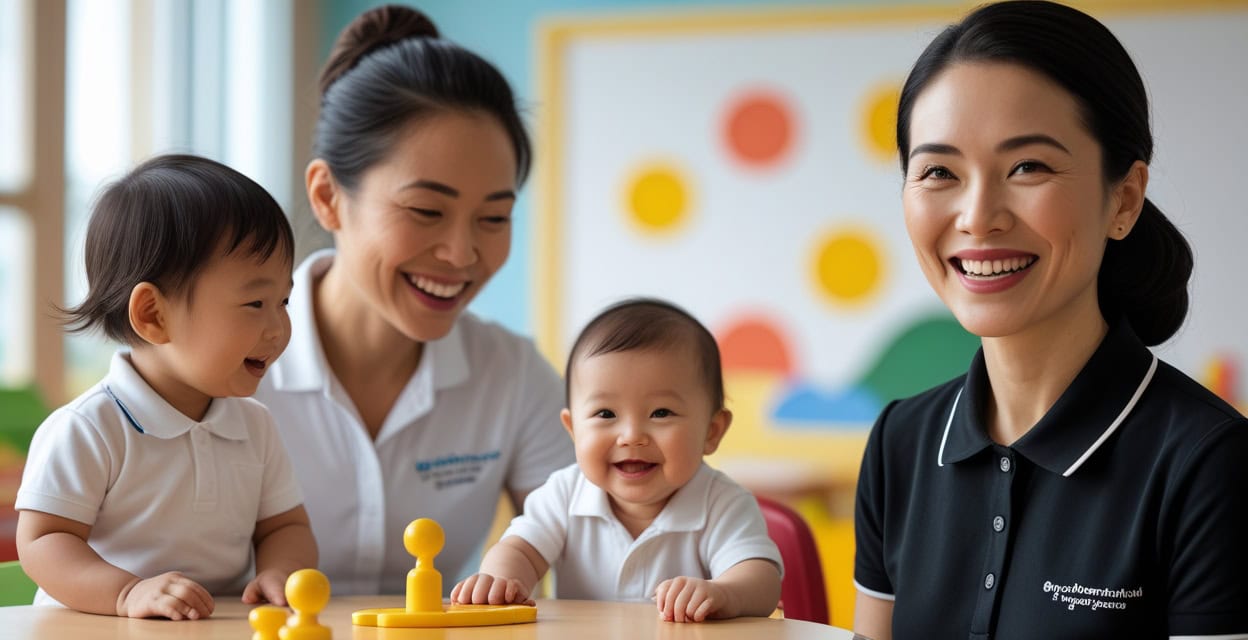
Development is not a race. It is a sequence of invitations infants accept when they are ready. Our “Minute-Miracles” approach turns everyday care into neural nourishment across four domains. The goal is to offer frequent, meaningful opportunities for growth without hurried expectations.
Sensorimotor and Physical
- Practical guidance: Free movement on firm mats; low mirrors; reachable objects to encourage midline crossing; tummy-time in short, safe intervals; safe, barefoot grip.
- Home example: Create a weekly obstacle course using pillows and blankets that invites crawling and standing with support, gradually increasing challenge as the baby grows.
Language and Cognition
- Practical guidance: Narrated caregiving; songs and rhythms in multiple languages; infant-directed speech; object permanence games; cause-and-effect play with open-ended materials.
- Home example: Narrate daily routines, sing simple bilingual songs, and use toy sets that demonstrate cause-and-effect interactions (pushing a button to make a toy move).
Social and Emotional
- Practical guidance: Consistent primary caregiver; predictable routines; emotion-coaching language; tiny repair rituals after upsets; secure base for independent exploration.
- Home example: Maintain a stable caregiving rotation where feasible; use a private moment to help the baby co-regulate after a distressing moment.
Executive Beginnings
- Practical guidance: Turn-taking (peekaboo as early governance); simple choices (two bibs, one decision); waiting moments embedded in care (first we wipe hands, then we eat).
- Home example: Offer two safe clothing choices and let the baby “choose” while the caregiver guides decisively, reinforcing autonomy with supportive prompts.
A typical morning might look like this: a soft handover with shared cues, unhurried floor play under close supervision, responsive feeding with pauses for attunement, pram-free outdoor air when appropriate, and a gentle settling to sleep. No screens, no hurry, no noise-for-noise’s sake—only the serious work of growth wrapped in tenderness.

Topic 4: Joy as a Daily Practice—Engineering Belonging
Happiness in infancy is safety in action. Our “joy engineering” is subtle yet powerful, shaping the daily climate of care and learning for the child and the family.
Rituals
- Practical actions: Morning “hello” songs, tiny goodbye waves, whispered appreciation for mealtime cues. Rituals transform time into trust and predictability into belonging.
- Home example: Create a simple goodbye ritual with a special wave or phrase that signals the caregiver’s return, helping the baby understand routine and continuity.
Climate
- Practical actions: Natural light, measured sound levels, gentle scents or none, caregivers moving slowly and speaking softly, predictable textures in toys and fabrics.
- Home example: Set a calm feeding area with soft cushions, consistent lighting, and a comfortable chair for parent-baby interaction sessions.
Choice
- Practical actions: Allow infants to make simple choices to foster dignity and self-regulation.
- Home example: Let the infant choose between two safe teething accessories or two outfits during dressing time, validating their participation.
Community
- Practical actions: Care near home invites grandparents, siblings, and neighbours into the care web in appropriate ways; babies sense and benefit from a wider circle of support.
- Home example: Schedule supervised interactions with a trusted grandparent or caregiver to reinforce a consistent, shared language of care.
Children are not vessels to be filled with excitement; they are persons to be joined. Joy is the feeling of being accompanied.
Topic 5: The Civic Profession of Childminding—Purpose and Promise
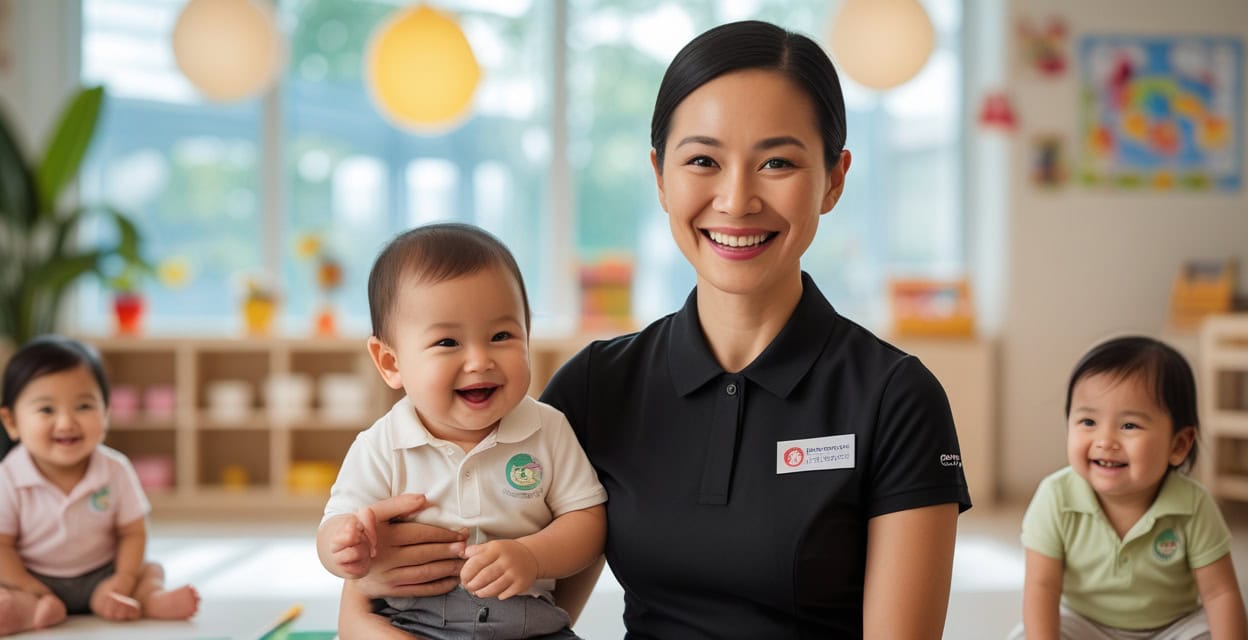
What is a childminder in the EduNanny frame? A professional of presence. Not a substitute parent, not a babysitter, but an educator of attachment who holds three duties:
- To the Infant: regulate, respect, and reliably respond.
- To the Family: partner, communicate, and protect culture (sleep, feeding, language, values).
- To the Community: uphold safety standards, model inclusion, and expand local employment and dignity in care.
Under the ECDA Childminding Pilot, EduNanny advances a maximum employment mandate—training Singaporeans in neighbourhoods, lifting skills and livelihoods, and anchoring care as civic infrastructure. When caregivers are respected and supported, infants receive better, steadier care. This is family policy expressed as a daily welcome at the door.

How EduNanny Makes Infant Care and Childminding Great in Singapore
- Excellence and Quality: Evidence-based methods, continuous coaching, reflective practice, and ongoing professional development.
- Centre-Based and Home-Based: Choose the setting that best fits your infant and routine—both meet the same standards, tools, and oversight.
- Distance Support: Virtual parent coaching, feeding consultations, and developmental check-ins when home circumstances require flexibility.
- Convenience: Islandwide availability, Monday–Friday, 7am–7pm; near-home placements reduce travel stress and keep babies in their own rhythms.
- Affordability: From $33/day; fees payable by CDA/Baby Bonus; fair, transparent pricing.
- Safety You Can See: Innovation CCTV; modern layouts; low infant density; clear hygiene protocols; emergency-ready teams.
- Transparent Pilot, Public Purpose: ECDA Childminding Pilot; a national social initiative; maximum employment mandate; data-driven improvements delivered locally.
A Day in the Life: A Brief Vignette
At 7:42am, Mei arrives a little sleepy. Her caregiver kneels, matches her gaze, and waits. Mei leans in. Only then does the handover begin. Her father shares that Mei woke twice; they align on a shorter first wake window. On the floor, Mei gravitates toward a soft cylinder—she pushes, it rolls, she follows. Laughter. At 9:20, she rubs her eyes; the caregiver narrates, dims the light, hums a familiar tune, and Mei drifts into a safe sleep on a firm surface. After lunch, there’s a short spell outdoors in shade, then unstructured play inside with a friend—two sets of hands trading a wooden ring back and forth, practising patience. At 6:05pm, her mother arrives to a concise debrief: feeds, sleeps, mood, one new skill, one small challenge. Tiny minutes; real growth.
Why this works is not mysterious. Bowlby teaches us security. Piaget reminds us of stages. Vygotsky shows us the power of the nearby challenge. Montessori and Pikler give us trust in free movement. Erikson asks us to protect basic trust so that later autonomy and initiative can take root. We honour them by practising well, not by posting quotes.

Concluding: Who, What, When, Where, and How—Why Childminding Matters
Who
- Infants aged 0–36 months, their families, and the professionals who stand watch with care. Our teams are trained, supervised, and supported; our families are partners, not clients.
What
- High-trust, ultra-low-ratio childminding that blends safety, attachment, and early learning—centre-based, home-based, and distance-supported.
When
- Monday to Friday, 7am–7pm, all year—because workdays are real and infants’ rhythms matter.
Where
- Islandwide, in community and home premises designed for floor-level exploration, with clear sightlines, quiet sleep zones, and practical modern layouts.
How
- Through attuned caregiving, safety by design, continuous training, transparent technology, and a national social initiative that honours caregivers and parents alike. Fees are accessible and payable via CDA/Baby Bonus to widen the doorway of quality.
And Why
- Because every tiny citizen deserves a reliable circle of adults; because parents deserve peace of mind and proximity; because a nation is built in the way it greets its youngest each morning.

Call to Partnership
If you believe, as we do, that excellence in infancy is the foundation of everything that follows, come closer. EduNanny invites you to explore a centre, meet a home-based team, schedule distance coaching, or simply ask us your hardest questions. We are here Monday to Friday, 7am to 7pm, islandwide, so that your workday aligns with your baby’s best day.
EduNanny by BUTLER is not just a service. It is a promise kept—quietly, carefully, minute by minute—until trust becomes second nature, joy becomes routine, and potential becomes visible. Thank you for letting us help cradle the future, one small hand at a time.
Practical next steps for parents and caregivers:
- Contact EduNanny to schedule a centre tour or home-based observation to see the safety rings in action and observe the Minute-Miracles Curriculum in practice.
- Ask about the 1:3 infant ratio policy, the ECDA Pilot details, and available distance coaching sessions to tailor care to your family’s needs.
- Review your home routines and identify one quiet art you can practice daily (Attune, Observe, Name, Pace, Release) to begin aligning at-home care with EduNanny principles.
- Consider the affordability pathway: confirm CDA/Baby Bonus eligibility and explore transparent pricing options to ensure sustained access to high-quality care.
- Engage with caregivers and families in your neighbourhood to foster a community of support that models inclusion and shared responsibility for our youngest citizens.
Keywords and themes to guide your search and planning: Early childhood care, infant development, Singapore childminding, ECDA, caregiver training, ultra-low ratio, attunement, safety by design, home-based childcare, centre-based care, maternal and child health, parental peace of mind, civic caregiving, family policy, transparency in care, developmental milestones, family engagement, bilingual language exposure, co-regulation, open-ended play, risk assessment, preventive care.
SEO keywords: [#EarlyChildhoodCare, #InfantDevelopment, #SingaporeChildminding, #ECDA, #EduNanny]
Ready to Experience Excellence?
Transform Your Family’s Journey
Discover Singapore’s leading infant care and childminding services. Expert guidance for your little one’s first thousand days.