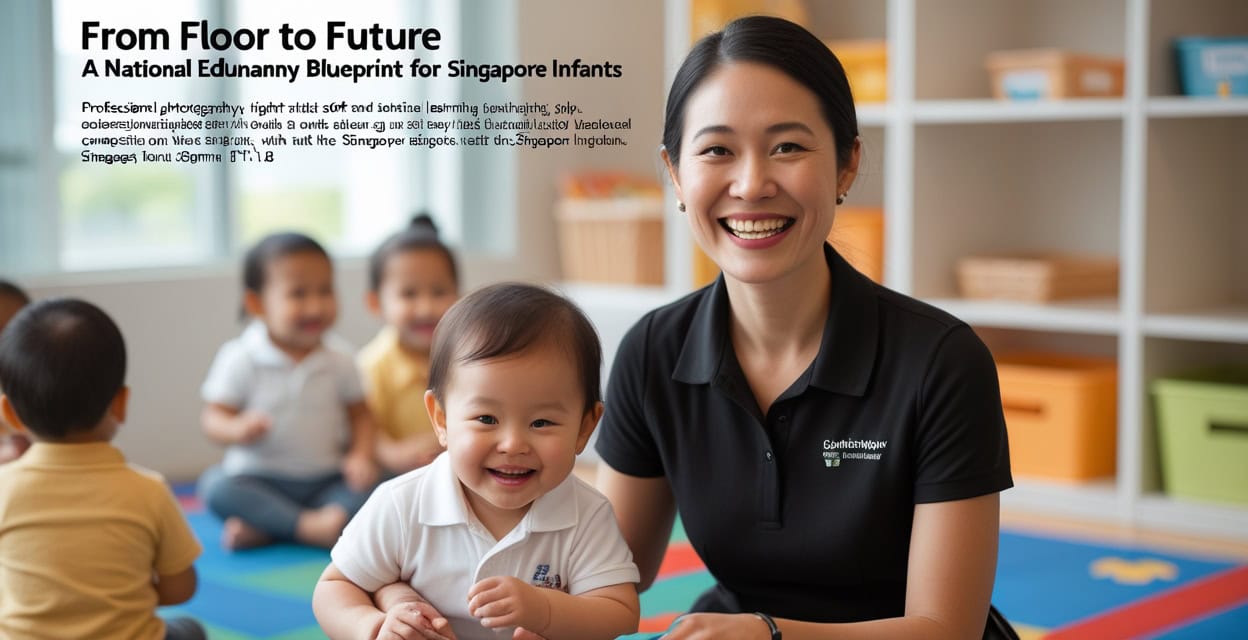
From Floor to Future A National EduNanny Blueprint for Singapore Infants
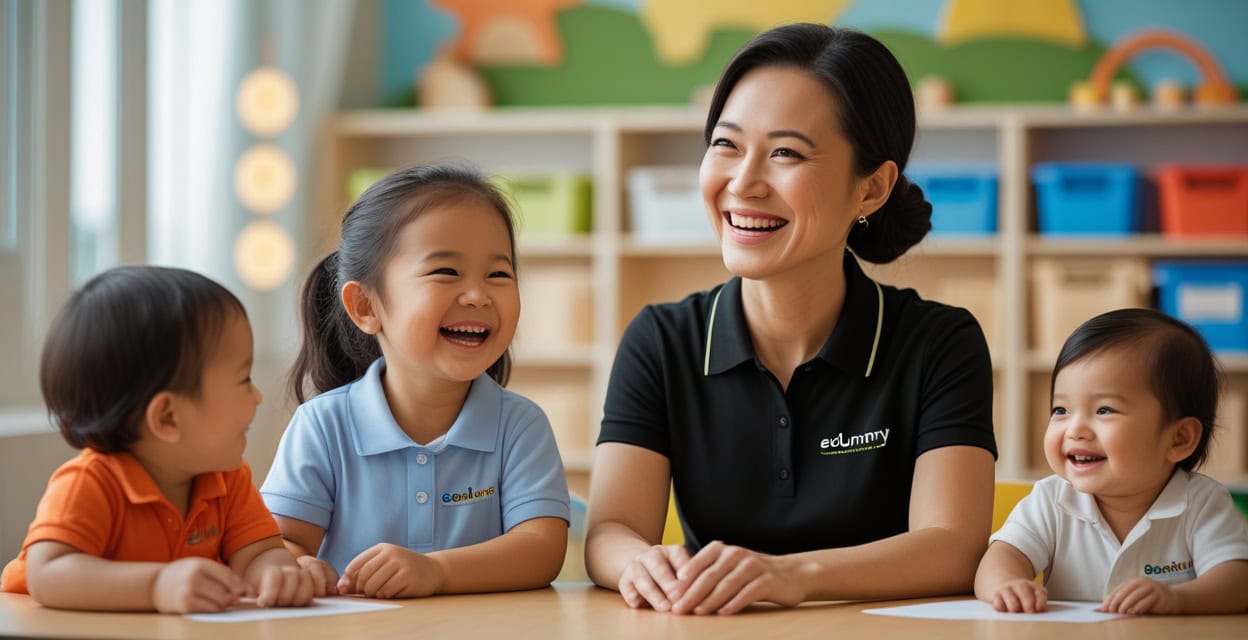
EduNanny: A Standard for Singapore’s Infants
Ladies and gentlemen, partners, parents, educators, and friends of Singapore’s youngest citizens—this is a call to reimagine infant care as a national discipline. EduNanny by BUTLER stands at the intersection of science and care, turning daily routines into meaningful development. This article translates a powerful speech into a practical, WordPress-ready guide for parents and educators who want to act on the ideas of safe, attentive, and developmental infant care.
What follows is an in-depth exploration of how EduNanny’s model works in practice: its pedagogy, safety architecture, developmental philosophy, family partnerships, and the systems that make islandwide access possible. It also offers concrete advice for parents seeking to partner with professional childminders and for caregivers aiming to elevate their craft.

Our pedagogy: a responsive science made practical
Floor-first development and spaces that invite movement
- Why floor-based design matters: Inspired by Emmi Pikler and Maria Montessori, EduNanny spaces place infants on low mirrors, firm mats, and safe grasp points. Open floor plans invite rolling, reaching, crawling, cruising, and eventual walking—because freedom of movement is a cornerstone of healthy brain development.
- Practical tips for parents at home: Create a safe, uncluttered play area on the floor with a soft rug, a few age-appropriate learning objects, and a mirror at infant eye level. Rotate materials weekly to sustain curiosity and support attention.
- Attunement–label–expand in action: Caregivers observe signals, name the experience, and gently extend learning within the child’s zone of proximal development. This approach builds language and self-regulation in a baby-friendly scale.
- What families can do: When your child signals hunger, tiredness, or curiosity, narrate the moment simply at eye level, then wait. A 60-second pause can become a powerful learning loop that strengthens trust and communication.
Purposeful play and real-world provocations
- Provocations that spark discovery: Soft rattles isolating sound, treasure baskets with real-world textures, water trays for cause and effect. Play is not busywork; it is a scaffold for sensorimotor exploration and early problem-solving.
- Practical guidance for parents: Build your home play activities around simple, everyday materials—soft fabrics, safe containers, and household items that invite exploration. Narrate, label, and pause to let your child respond.
Micro-cycles: turning routine into learning
- 60-second learning arcs: Observe, mirror, name, and extend in short, repeatable cycles. Even diaper changes and transitions become opportunities to practice patience, turn-taking, and rhythm.
- Example from daily care: During a diaper change, describe the actions, smile at the baby, and briefly pause to invite a response—this small ritual supports social exchange and self-regulation.
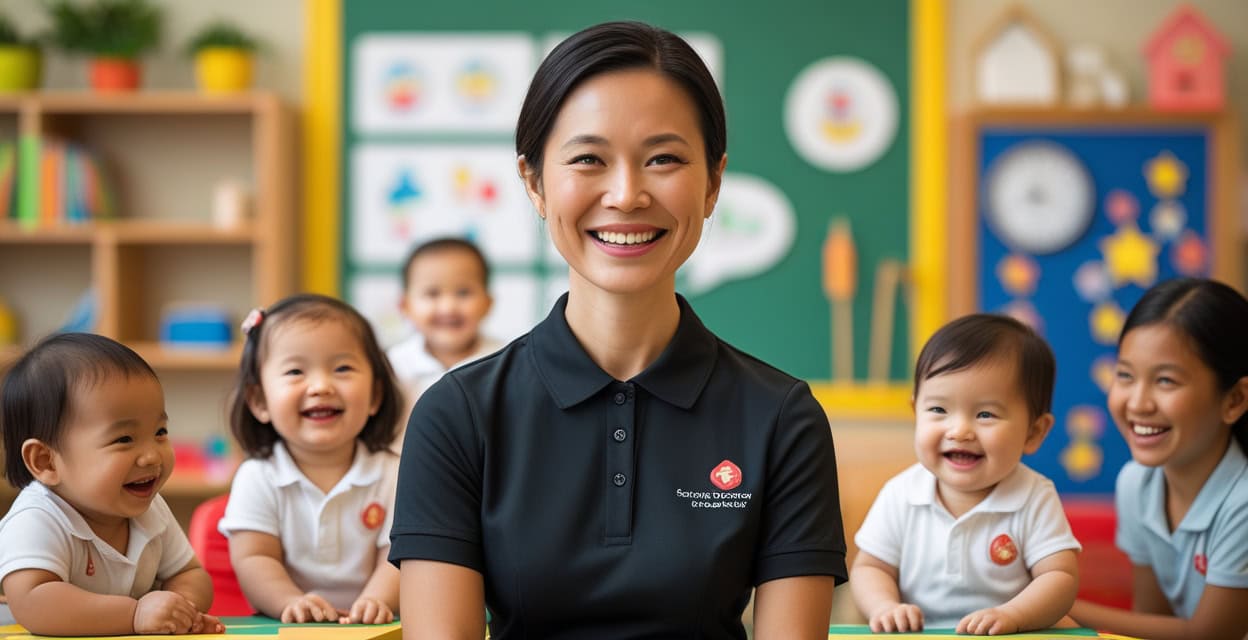
Safety by design: safety first, every day
Architecting prevention into every space
- Environmental safeguards: Rounded corners, secured furniture, low-to-the-ground layouts, finger-safe hinges, blind-cord management, and clear sightlines for caregivers are standard features—not extras.
- Safe sleep as a standard: Firm flat cot, back-lying position, no loose items, appropriate room temperature, and consistent routines to support healthy sleep patterns.
The 1:3 covenant: attention that supports every cue
- Why ratios matter: A trained childminder for every three infants means subtle hunger cues aren’t missed, calm transitions are maintained, and each child receives attunement and timely care.
- Implementation tips for families: When choosing care, ask about staff-to-child ratios, observation practices, and how mentors ensure each child’s needs are met in real time.
Transparency and privacy-safe CCTV
- Purpose and safeguards: CCTV is used to mentor practice, not to police it. Footage is privacy-protected, stored securely, and accessible to families and supervisors in a controlled manner.
- What families should expect: Regular, opt-in updates and clear policies on what is recorded, who can view it, and how footage informs improvements in care.
Comprehensive caregiver training
- Core competencies: First aid, infant CPR, safe sleep, choking response, hygiene protocols, health monitoring, and developmental screening form the baseline.
- Practice principles: Caregivers scan the room every 20 seconds, rotate positions to maintain sightlines, and document health and mood changes immediately. Families receive transparent reports and coaching when needed.

Development that respects pace and potential
Rhythms that grow brains
- Balanced daily rhythms: Consistent wake windows, responsive feeding, unhurried play, safe sleep, and outdoor time when possible support nervous system regulation and curiosity.
- What this means for families: Expect predictable routines that reduce stress for both child and caregiver, and seek care settings that respect a child’s internal tempo as much as the calendar.
Guarding language density and social reciprocity
- Language-rich routines: Narrate care activities, name objects, describe actions, and engage in back-and-forth communication to build vocabulary and social skills.
- Family practice: Sing, read, and talk with your infant in your family’s language or dialect. Include gestures and tempo that match your child’s processing pace.
Arts, senses, and identity
- Integrating the arts: Texture boards, gentle percussion, high-contrast visuals for newborns, and family photos at infant height help cultivate identity and aesthetic attunement long before formal art exposure.
- Home ideas for parents: Create a small “gallery” wall of family faces, textures, and simple artworks at baby-eye level to invite exploration and pride in belonging.
Measuring what matters
- Well-being and involvement: Use observation frameworks to track safety, engagement, and mood. When involvement dips, adjust invitations; when well-being lags, review sleep, feeds, and relationships.
- Practical steps for caregivers: Maintain simple logs of nap times, feeds, mood, and notable cues. Share trends with families to co-create responsive routines.
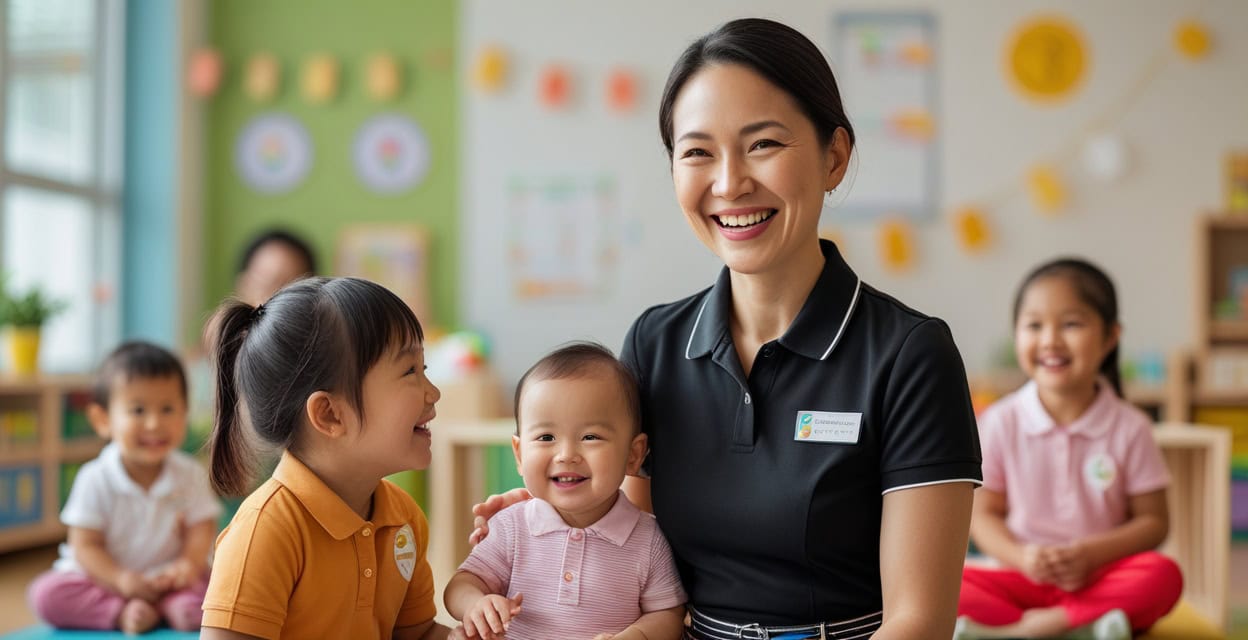
Happiness and belonging: daily practice
Safety, calm, and predictable routines
- The happiness formula: Safety in the body, calm spaces, and caregivers who know each child’s micro-rituals—swaddle preferences, feeding angles, nap songs—create a foundation for joy and trust.
- Daily routine tips for parents: Ask about a child’s “micro-ritual” when you arrive—this helps you align at home and maintain continuity.
Family partnership as a core practice
- Relationship conferences: Start with mutual understanding—cue preferences, routines, and any special needs. Weekly notes celebrate growth moments, not just milestones.
- Practical family actions: Maintain an open channel for feedback, share a short note after the day, and use a shared calendar to coordinate feeding or nap expectations during transitions.
Avoiding the rush: honoring beginnings
- Unhurried handovers: The morning handover is a warm, extended moment that sets the tone for the day. This is where trust begins and separation anxiety, if present, is soothed.
- Home–center continuity: When transitioning between home and center, maintain consistent cues, songs, or objects that reassure the child and simplify the move for families.
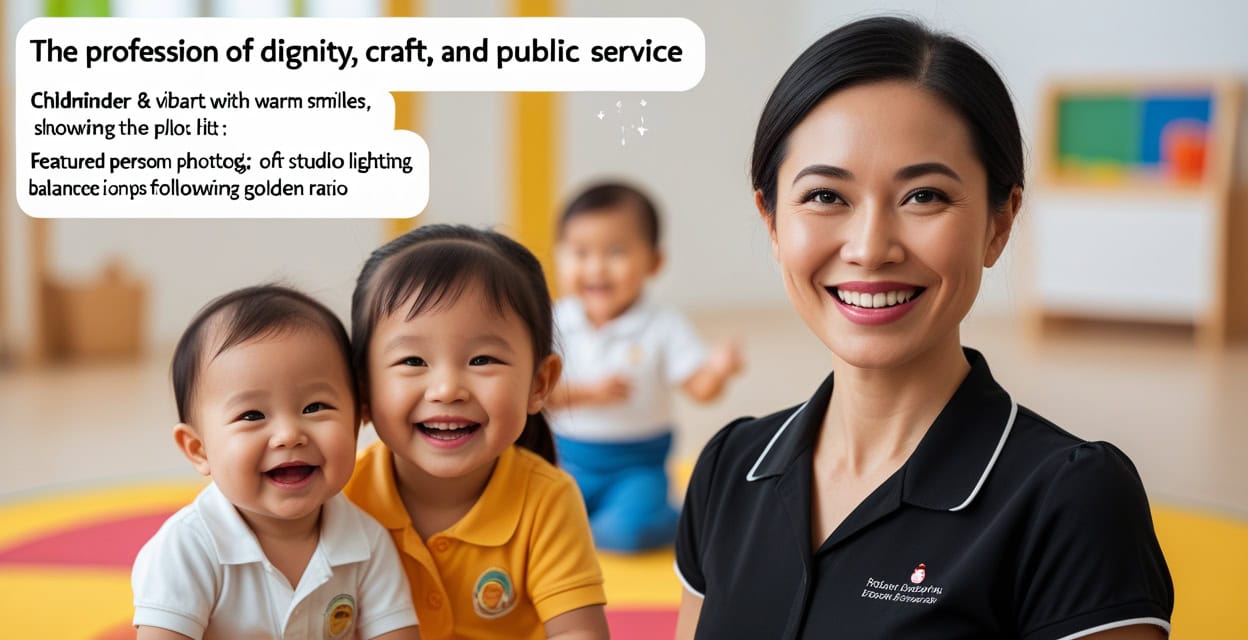
The profession of childminding: dignity, craft, and public service
Childminding as a profession and public service
- Craft and duty: Caregivers bring keen observation, disciplined safety, warm attunement, and culturally grounded partnership with families across Singapore’s neighborhoods.
- Career pathways: EduNanny’s model emphasizes recruitment, training, mentoring, and progression to build a robust workforce that grows with expertise and compensation.
Economy of care: good jobs, good care
- Economic alignment: Quality infant care should be affordable without sacrificing the quality of care. EduNanny seeks to balance official support with fair wages and professional development for caregivers.
- What families gain: Reliability, consistency, and professional care that respects family culture and routines.
National alignment: ECDA and the social initiative
- Policy context: The model aligns with Singapore’s ECDA (Early Childhood Development Agency) initiatives, positioning childminding as a national capability with structured training and oversight.
- Practical impact for families: Families benefit from standards, transparency, and access to consistent care across neighborhoods.
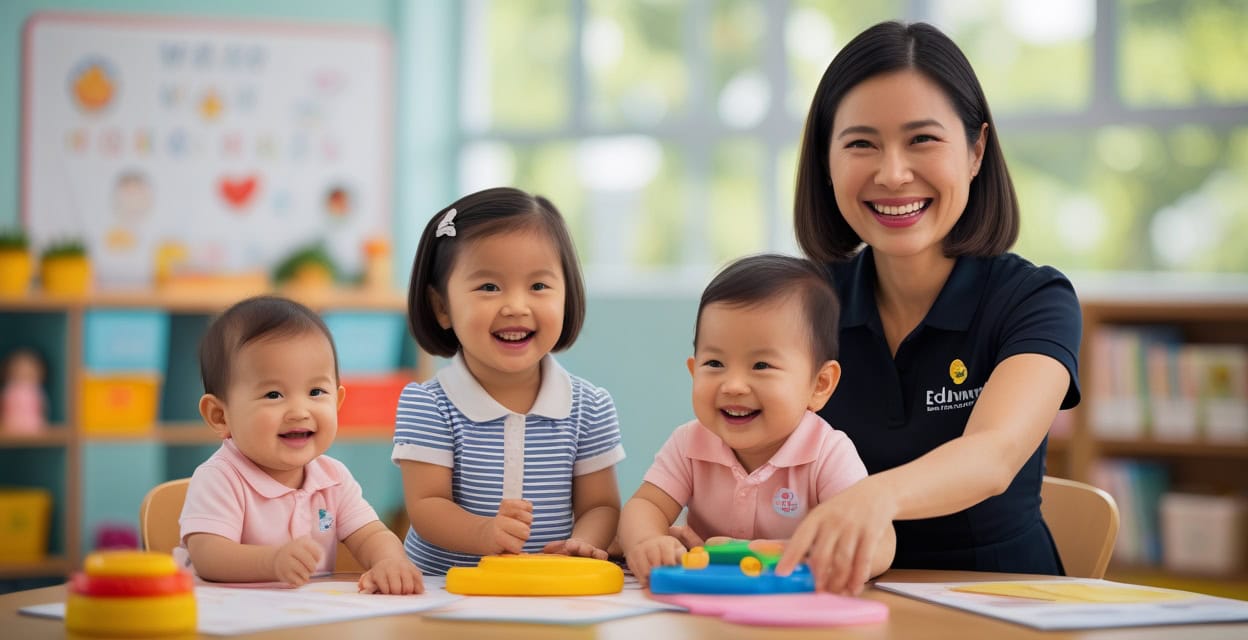
How EduNanny works islandwide: practical access and services
- Multiple modes, one standard: Centre-based childminding for those seeking structured hubs and home-based childminding for care embedded in neighborhoods, plus distance coaching for transition support.
- Availability: Monday to Friday, 7am–7pm, islandwide, with caregiver support both on-site and remotely as needed.
- Designed for everyday life: Modern layouts, soft acoustics, washable materials, pram-friendly access, breastmilk-safe storage, and stroller parking designed to run calmly at full capacity.
- Affordable and transparent pricing: Fees start from $33/day with CDA/Baby Bonus applicability where eligible; clear invoices and no surprises.
- Trust through transparency: CCTV for transparency, daily updates, clear emergency protocols, and visible caregiver-to-child ratios on-site and in-app.
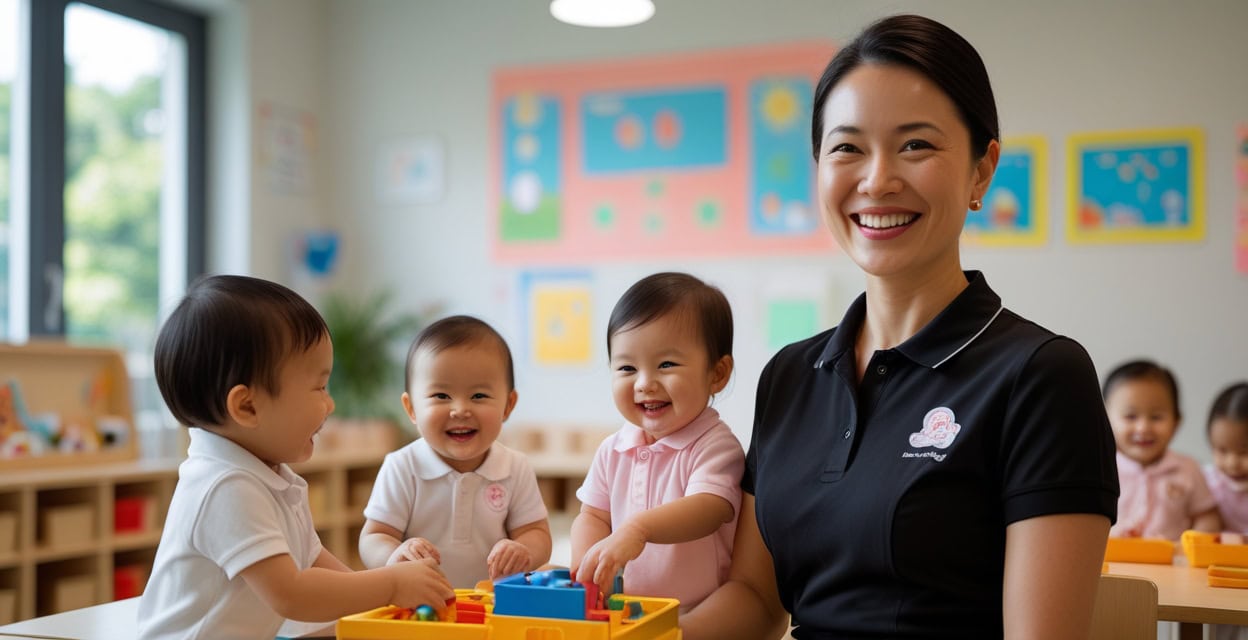
A day in the life: a concrete itinerary
- 7:15am: Arrival is a warm handover, not a drop-and-run. Parents are greeted at the door, night notes are shared, comfort is checked, and the infant is settled with a familiar cue.
- 8:00am: Slow, sensory floor play with gentle rattles, a mirror, and a caregiver’s narration of small discoveries.
- 9:30am: Safe sleep ritual—dim lights, soft hum, the same sequence every day to support the nervous system’s need for consistency.
- 11:00am: Bottle or solids per family plan, paced and upright, with relational feeding as a cornerstone.
- Afternoon: Outdoor shading when possible; indoor texture play; caregiver storytelling in the family’s mother tongue when feasible; tempo-appropriate music for infant processing.
- 5:30pm: Gentle handover with a concise summary: joyful moments, challenges, and watch-list for tomorrow.

What parents gain—and what Singapore gains
- Trust and time: Transparent spaces and caregiver engagement allow parents to reclaim time with reassurance about safety and development.
- Flexible options: Centre-based or home-based care, near work or home, with coaching support for transitions when needed.
- National impact: A trained professional workforce, improved livelihoods for caregivers, and a generation of children entering preschool with secure attachments and ready minds.

EduNanny benefits at a glance
- Excellence as baseline: Quality care as the default, not an upgrade.
- Two modes of care: Centre-based and home-based options to fit family life.
- Distance support: Coaching and guidance to support families remotely when needed.
- Convenient hours: Monday–Friday, 7am–7pm, islandwide.
- Affordability and incentives: From $33/day; CDA/Baby Bonus eligible where applicable.
- 1:3 ratio: A disciplined standard ensuring attentive care.
- Transparency through CCTV: Privacy-safe, mentorship-oriented use of footage.
- Modern, calm spaces: Layouts engineered for safety and quiet focus.
- Professional leadership: EduNanny by BUTLER, with ongoing training and mentorship.
- Learn more: EduNanny.com and Childminding.EduNanny.com for spaces, rates, and plans.
Answering the essential questions—why childminding matters now
- Who: Infants from birth to three, working families balancing love with work, and professional childminders building a craft that shapes futures.
- What: A rigorously designed, relationship-first model of care that turns daily routines into developmental opportunities—attachment, language, movement, and self-regulation.
- When: The first thousand days—the period when brain architecture is most plastic and most amenable to positive influence.
- Where: In walkable neighborhoods and thoughtfully designed centers across Singapore—integrated with family life and community rhythms.
- How: With disciplined ratios, trained professionals, safety engineered into spaces, play designed for real brains, transparent operations, and pricing that supports access to quality care.

Our philosophy, simply put
- Seen before managed: Every infant deserves reverent attention and observation before any routine is imposed.
- Routines as lessons: Each caregiving moment can teach trust, language, and independence.
- Caregivers as teachers and bridges: Professionals who honor family culture and guide early development with warmth and discipline.
- Neighborhoods as cradle of excellence: Local communities fortified by prepared, compassionate care that respects diverse needs.
- Beginnings shape nations: The first three years are the surest path to a confident, curious, capable citizenry.

Conclusion
EduNanny is not just a service; it is a standard. It is the quiet courage to slow down long enough to do the most important work on earth well. It offers center-based and home-based options, supported by distance coaching, all anchored by a professional by your child’s side—eye level, attentive, and unhurried. If you seek care that is safe, warm, and wise; priced to be within reach; and designed to travel with your family across Singapore, EduNanny invites you to explore, ask hard questions, and visit spaces that embody this vision. By partnering with families and communities, EduNanny aims to turn minutes into meaning and to ensure Singapore’s future begins with beginnings that are secure, curious, and hopeful.
To take the next step, talk with EduNanny about your child’s needs, tour nearby spaces, and meet the caregivers who will become trusted partners in your child’s earliest years. Because in the end, childminding is the art of turning minutes into meaning—and in those minutes, Singapore’s future takes its first confident steps.
_visit EduNanny.com or Childminding.EduNanny.com to learn more and to schedule a tour._
[#infantcare, #earlychildhooddevelopment, #Singaporeeducation, #childminding, #EduNanny]Ready to Experience Excellence?
Transform Your Family’s Journey
Discover Singapore’s leading infant care and childminding services. Expert guidance for your little one’s first thousand days.