Eye Level Attunement and the Listening Hand Building the Civic Care of Singapore First Thousand Days
Introduction: A Stewardship Beyond the Headline
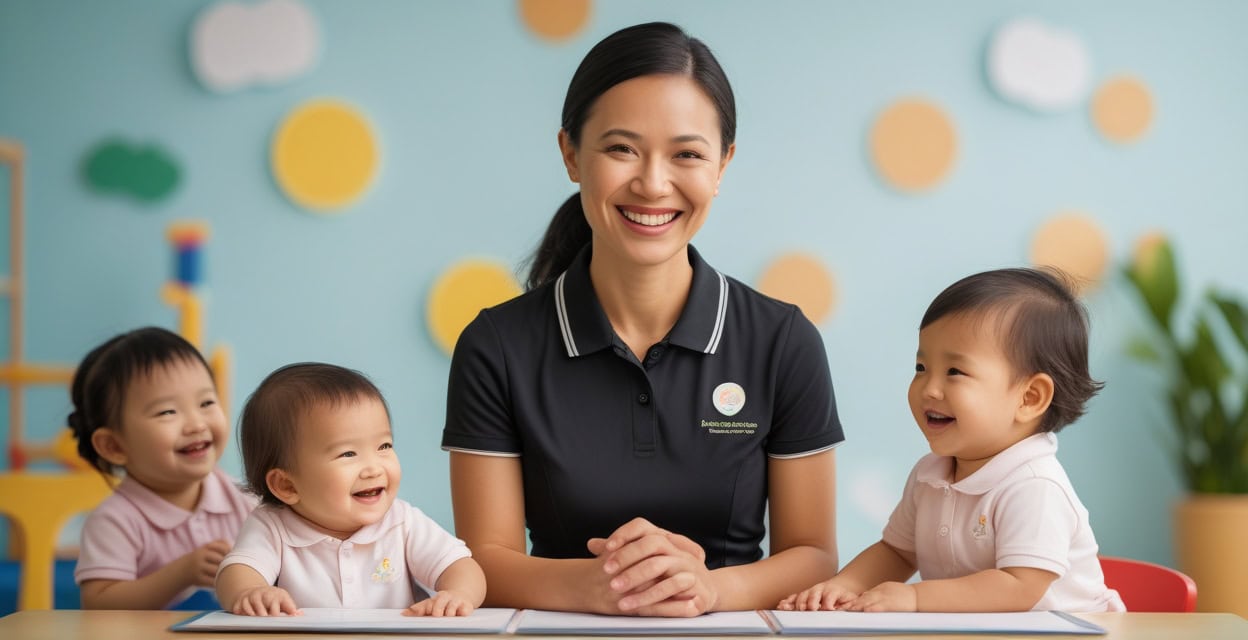
Thank you for lending your hearts and your attention to a subject that decides far more than any headline: the first years of a child’s life. If you have ever paused at a doorway to listen to a baby breathing, if you’ve ever knelt to meet a toddler’s gaze and felt the room grow quieter, you know this truth—infant care is not a service; it is a stewardship. EduNanny is a Singapore-born, science-led, heart-forward childminding movement built for the real lives of modern families. Our model is grounded in the ECDA Childminding Pilot and the belief that developmental care should be accessible, transparent, and deeply relational.
In this long-form article, we expand on the EduNanny approach with practical guidance for parents, caregivers, and communities. You’ll find actionable ideas, real-world examples from our practice, and steps you can take to nurture your child’s learning, safety, and joy every day.
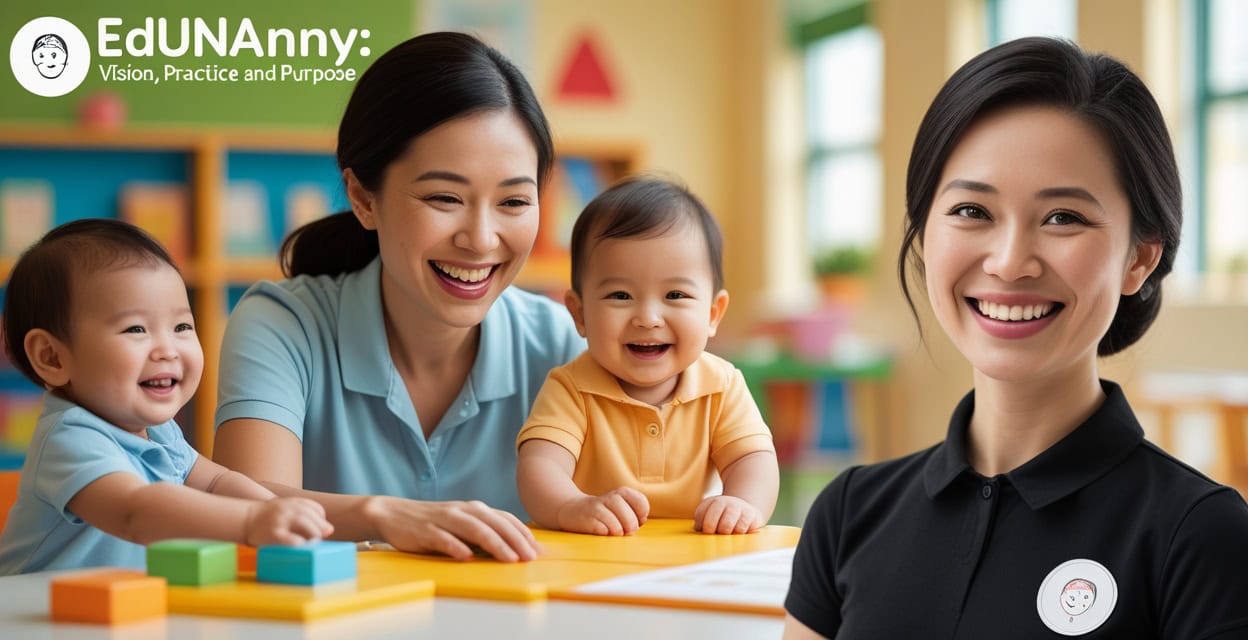
EduNanny: Vision, Practice, and Purpose
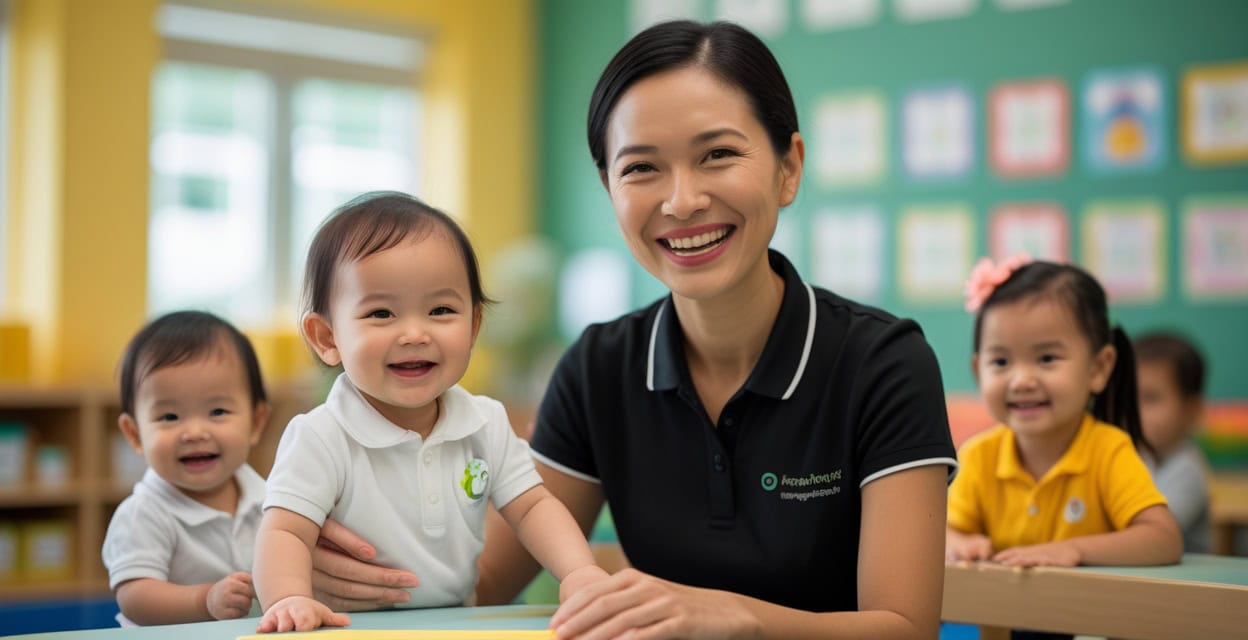
EduNanny, operated by BUTLER, delivers centre-based and home-based childminding islandwide in Singapore, with an ultra-low 1:3 infant ratio, transparent CCTV, modern layouts, and an evidence-driven practice. Our promise is simple: excellence you can feel, safety you can see, development you can measure, and joy you can hear. We exist to transform infant care from a routine into a civic practice—one that builds empathy, curiosity, language, and self-regulation from the very first days.
Five guiding ideas shape every decision we make. Think of them as steady lights in a child’s first constellation of care:
- Topic One: The Neighborhood Studio of Learning. Learning happens through relationships, not rigid schedules. Every moment can become a learning sequence when care routines are narrated and responsive.
- Topic Two: Safety by Choreography. Safety is designed into space, routines, and people—the choreography of daily life, observed and refined with transparency.
- Topic Three: Development as a Living Arc. Attachment, sensorimotor mastery, language, and early executive function emerge most powerfully when the environment supports self-generated movement and dialogue.
- Topic Four: Happiness as a Daily Practice. Joy comes from predictable rhythms, meaningful nutrition, outdoor exploration, and respected caregiver professionalism.
- Topic Five: The Vocation and Public Purpose of Childminding. Skilled civic work that bridges families, workplaces, and communities—delivering public value through compassionate, competent care.
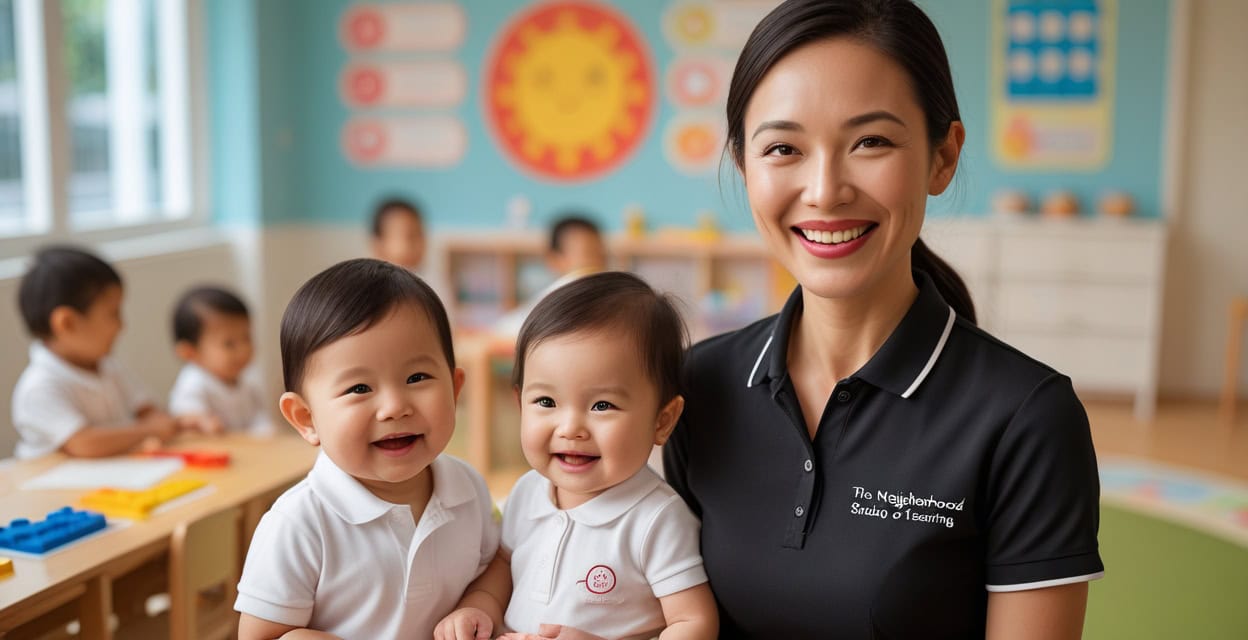
Topic One: The Neighborhood Studio of Learning
The micro-curriculum of moments
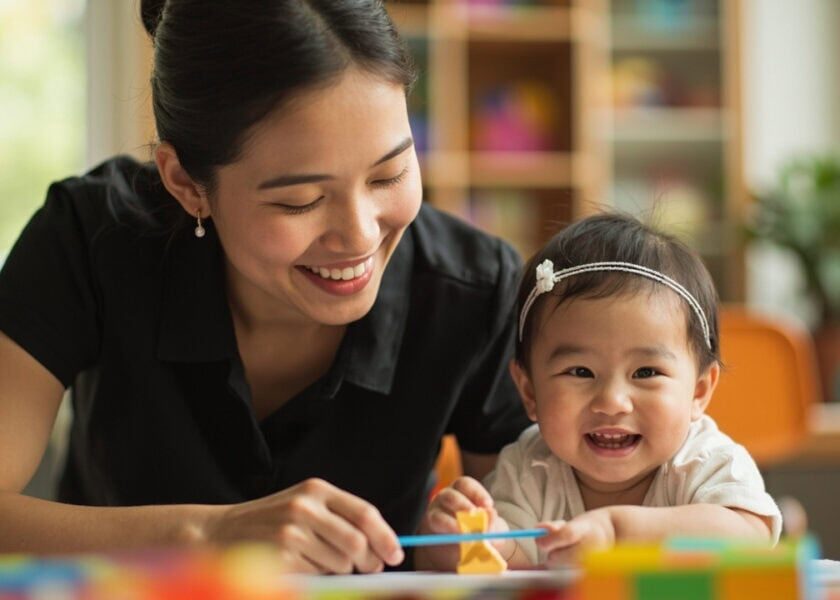
Transform care routines into language-rich learning. For example, during a diaper change, narrate sensory details and invite infant responses: “Warm water on your feet. Your toes curl—let’s slow down. I’ll wipe your toes, one by one.” This turns each routine into a two-way conversation that supports vocabulary, sensation, and trust.
The 3-seat circle
- With a 1:3 ratio, one caregiver can truly read and respond to an infant. This triad—child, carer, and context—creates a high-fidelity loop for attention and growth.
- When possible, pair caregivers to maintain continuity across the day, so that a child experiences familiar faces and consistent communication.
Scaffolding without rush
- Let infants initiate movement and exploration. Place objects to invite reach and scoot gently toward new experiences; avoid forcing milestones.
- Offer open-ended materials (soft blocks, fabric scarves, simple boards) and describe actions your child can imitate—this builds problem-solving and agency.
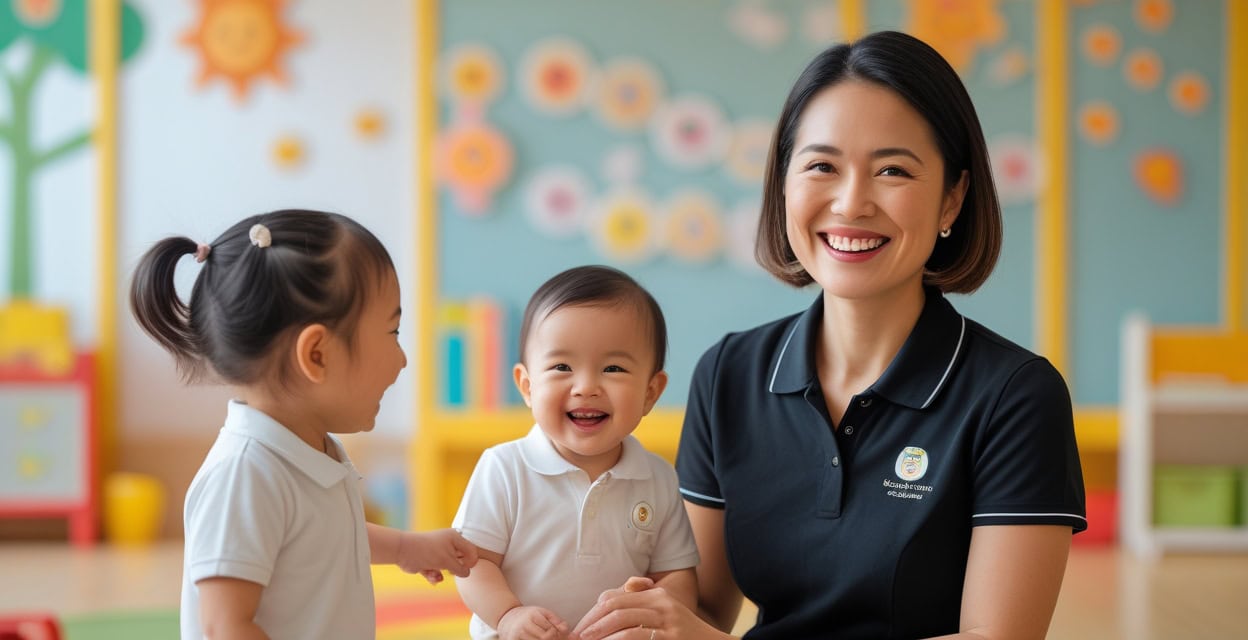
Topic Two: Safety by Choreography
Space that thinks
- Design floor plans with quiet sleep zones and active exploration areas, ensuring clear sightlines and rounded, breathable materials to reduce injury risk.
- Set furniture heights to caregiver ergonomics to prevent fatigue and missed cues—ergonomics matter for safety and responsiveness.
The four-layer watch
- Attentive adults in the room;
- Continuously recorded CCTV for transparency;
- Daily environment sweeps for cleanliness and safety;
- Routine drills for medical and evacuation readiness.
Predictable tempo
- Establish consistent greetings, transitions, and caregiver pairings to help nervous systems settle and learning to flourish.
- Maintain calm environments that reduce cortisol and support curiosity and regulator skills.
Clean as care
- Hygiene is part of the performance. Practice milk safety, hand-washing rituals as routines, and gentle cleansing that respects infant skin.
- Teach and model hygiene as an everyday family value—reliable and gentle.
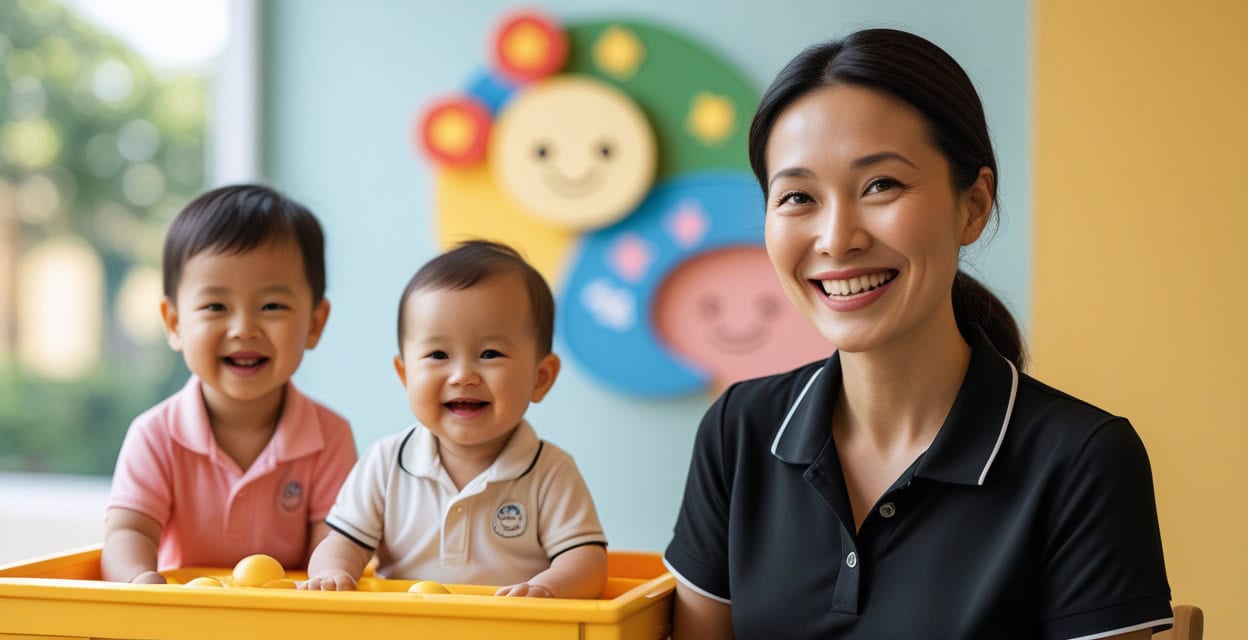
Topic Three: Development as a Living Arc
Attachment first
- Prioritize eye-level engagement, responsive soothing, and caregiver continuity to support secure attachment—the foundation for exploration.
- Expect more reach, babble, and curiosity when safety feels present and consistent.
Sensorimotor mastery
- Encourage free movement on safe floors with open-ended objects that invite rolling, crawling, standing, and cruising.
- Provide infant-friendly furniture, mirrors, and safe textures to support multisensory learning.
Language blooms in dialogue
- Use rich, responsive talk, infant-directed speech, and shared attention to grow vocabulary and social understanding.
- Avoid reliance on flashcards; let caregivers name objects, describe actions, and narrate play to maximize language-rich environments.
Executive function seeds
- Even in infancy, introduce short waits and simple choices to foster self-regulation: “banana or pear?” or “Would you like to nap now or after a story?”
- Model turn-taking in interactions with peers and adults to build early impulse control.
Family partnership
- Align sleep, feeding, and play with home routines. Distance coaching can support travel days or teleworking, ensuring developmental consistency across settings.
Topic Four: Happiness as a Daily Practice
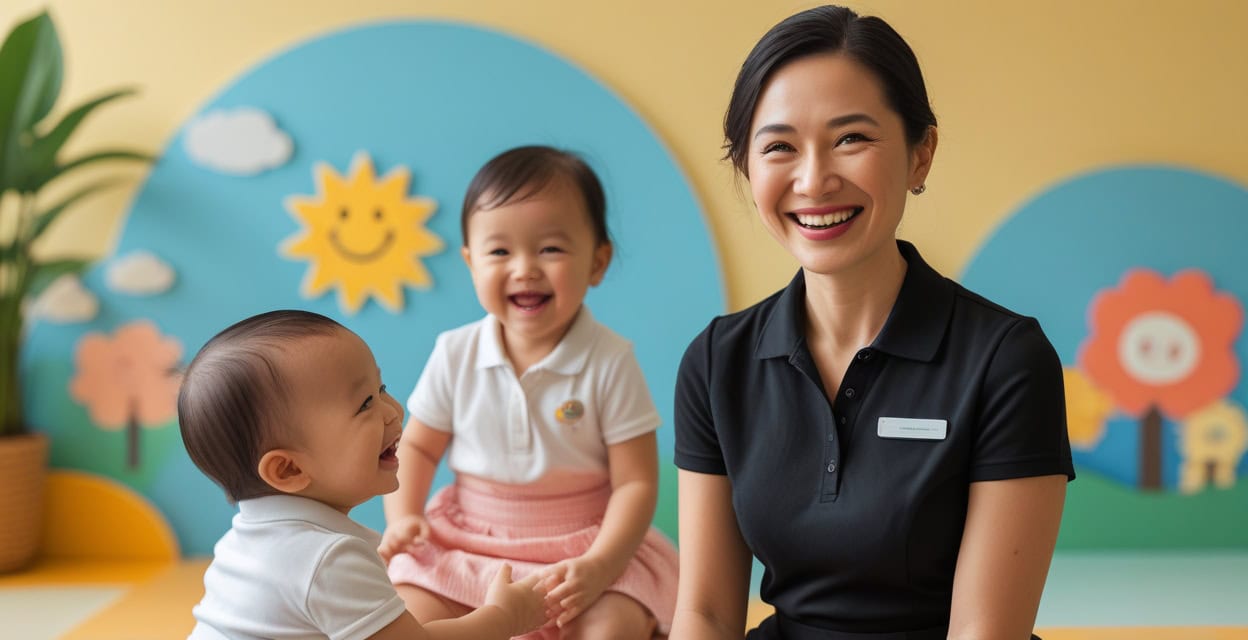
Rhythms that restore
- Plan nap windows and feeding times to reduce stress and prepare for exploration.
- Provide slow, predictable transitions to lower cortisol and improve readiness for new experiences.
Nutrition that nourishes learning
- Coordinate feeding plans with pediatric guidance to support brain development and gut comfort.
- Choose nutrient-dense, easily digestible options that support growth and energy for learning.
The joy of outdoors
- Utilize parks, void decks, and outdoor spaces to provide diverse sensory input—shade, breeze, birdsong—to soothe and stimulate.
- In Singapore’s climate, balance indoor and outdoor time to maintain comfort and curiosity.
Play with purpose
- Rotate materials for novelty, keep clutter low for focus, and let infants lead play to boost motivation and agency.
- Document and celebrate small milestones to reinforce a positive sense of competence.
Care for caregivers
- Invest in ongoing training, mentorship, and professional respect for educators. A supported caregiver creates a thriving learning room.
- Encourage reflective practice: quick daily debriefs, caregiver circles, and peer feedback to improve care quality.
Topic Five: The Vocation and Public Purpose of Childminding
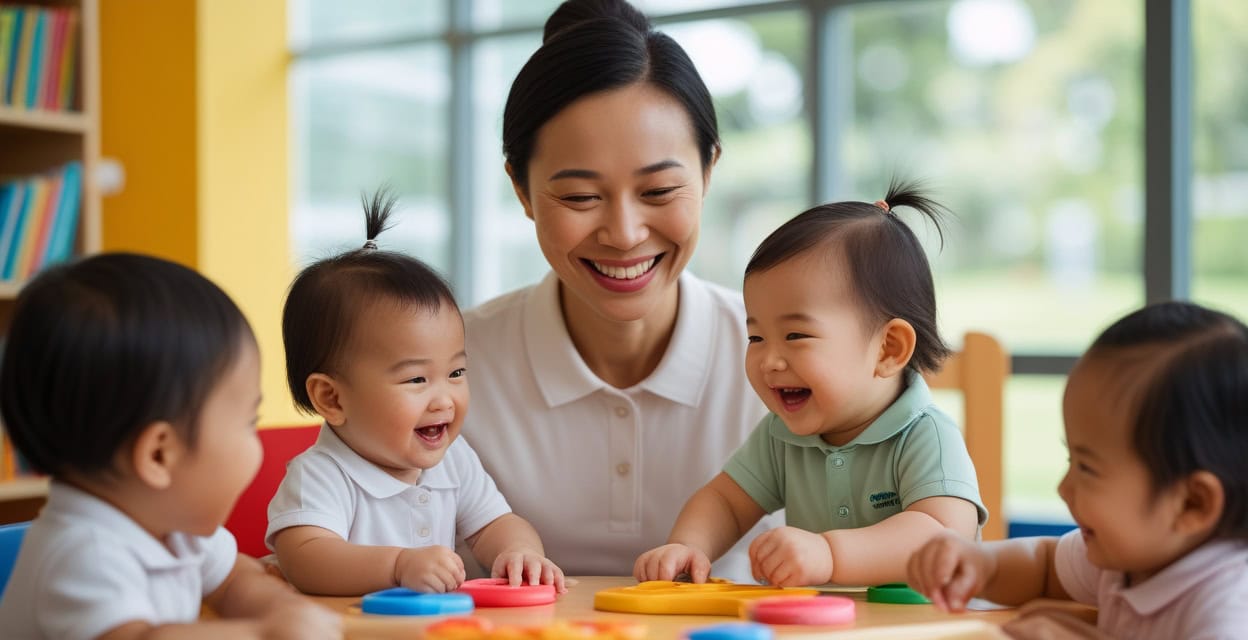
A bridge for working families
- Operate with consistent hours (e.g., Monday–Friday, 7am–7pm) and islandwide coverage to meet the real pace of life in Singapore.
- Offer flexible options—centre-based, home-based, and distance-enabled care—to accommodate diverse family structures.
Employment with meaning
- Professionalize caregiving as a respected vocation with clear career paths, training, and advancement opportunities.
- Highlight the economic and social value of quality infant care as a public good.
Transparent trust
- Use CCTV to provide transparency while preserving privacy and emotional safety. Ensure families understand how footage is used and stored.
- Maintain open channels for parent feedback and continuous improvement of practices.
A national ethic
- Investing in the first thousand days yields empathy, self-regulation, language, and problem-solving—traits essential to a diverse society.
- Showcase how early care contributes to stronger families and resilient communities.

What EduNanny Offers, Clearly and Practically
- Excellence and quality across centre-based and home-based childminding, with distance support when needed
- Affordable access from $33/day; fees payable by CDA/Baby Bonus and more
- Monday–Friday, 7am–7pm coverage, islandwide Singapore
- In-community and home premises; modern, child-centered layouts
- Ultra-low 1:3 infant ratio for safety, responsiveness, and learning
- Innovation-driven transparency with CCTV for families
- EduNanny by BUTLER, participating in the ECDA Childminding Pilot—a national social initiative
- Learn more or register at EduNanny.com and Childminding.EduNanny.com
A Word on Method: The Listening Hand
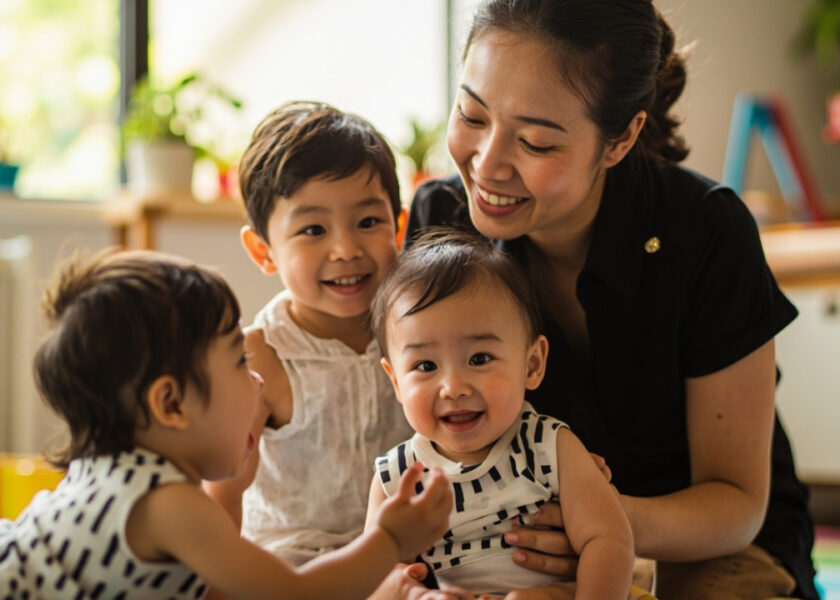
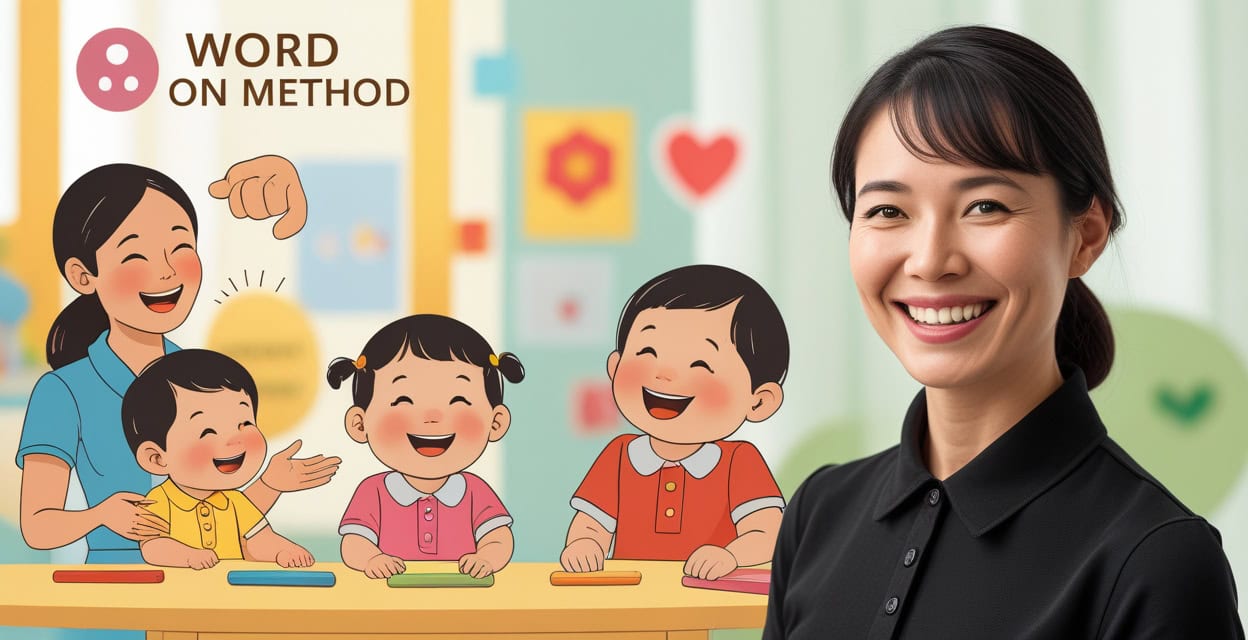
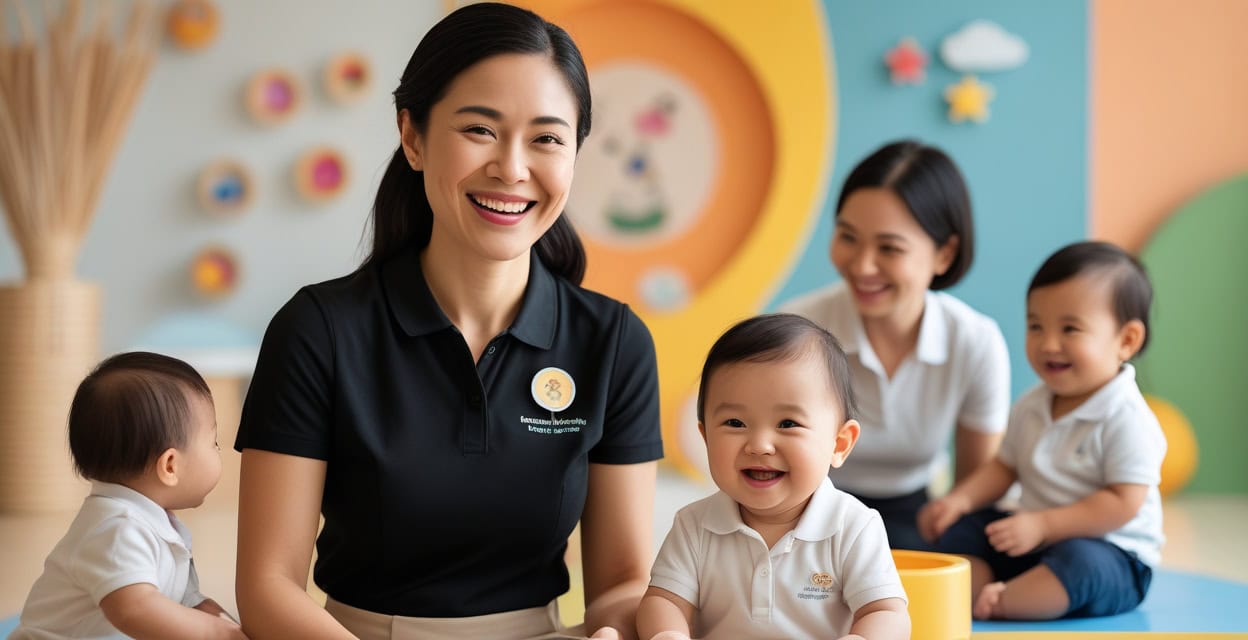
You will see our carers crouch rather than tower, narrate rather than command, and wait rather than rush. You will see careful hands that lift with permission, eyes that ask before they act, and voices that follow a child’s breath rather than override it. We call this “the listening hand.” It is how safety, development, and joy become one practice.
A Day in an EduNanny Room, In Three Scenes
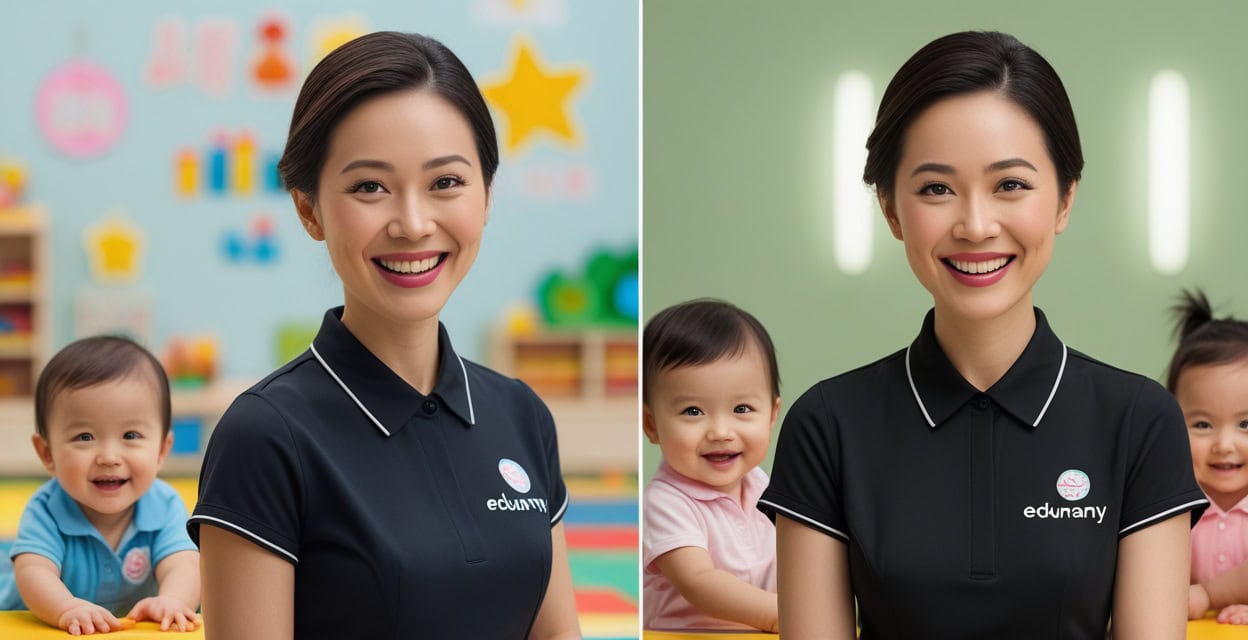
- Morning welcome: A named greeting, a warm hand to the chest, and a gentle handover ritual. Parents leave knowing there is continuity, not a cliff.
- Midday weave: Unhurried feeds, floor play with simple objects, caregiver narration, and outdoor breeze if weather allows. You’ll hear soft laughter, not loud entertainment.
- Evening return: A clear, concise briefing—sleep, feeds, diapers, new milestones observed—plus one specific story from the day. Trust is built in details.
Why This Matters—Who, What, When, Where, and How
- Who: Infants and families, including mothers returning to work, fathers finding their caregiving voice, grandparents seeking partnership, and communities that value gentleness with grit.
- What: Care that treats safety as choreography, learning as relationship, and joy as routine. This is professional early development, not babysitting.
- When: The first thousand days—the critical window for neural pathways, attachment styles, and temperament formation.
- Where: In homes, HDB neighborhoods, community spaces, and thoughtfully designed centers—close to where families live and work.
- How: Through a 1:3 ratio, trained carers, clear routines, modern environments, transparent technology, and a partnership that travels home with you.

The Philosophy and Purpose We Stand On
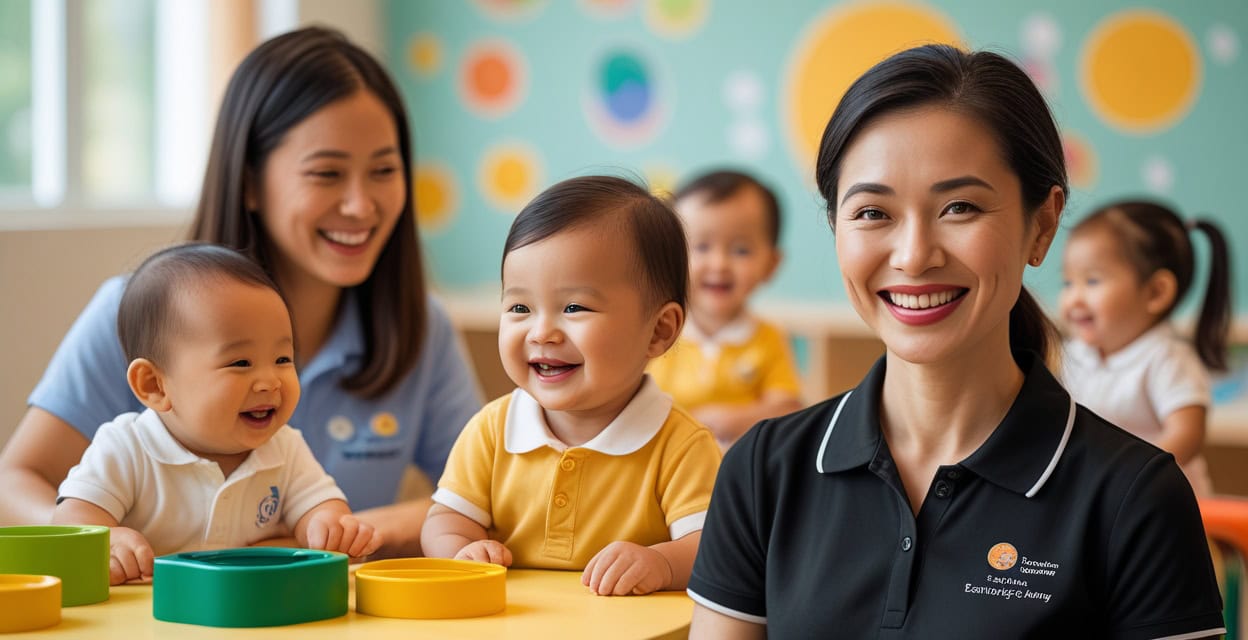
EduNanny believes attention is infrastructure. When a professional is beside a child at an effective ratio, we do more than care—we lay civic foundations: empathy, patience, curiosity, and confidence. We believe love is teachable, safety is designable, and joy is repeatable. Families deserve convenience without compromise and affordability without anxiety. The nation’s future begins in the room with your child; our job is to meet it at eye level.
To Parents, Caregivers, Policymakers, and Partners
To parents: you are not outsourcing love—you are expanding a village. To caregivers: you are not a stopgap—you are a cornerstone. To policymakers and partners: you are not funding a cost—you are investing in character. We invite you to align with a model where beginnings matter and every day is a chance to build a better tomorrow.
Closing Promise: Beginnings That Lead to Possibility
If you entrust your infant to EduNanny, you will get more than a slot and a smile. You will receive a daily craft of care—elegant in its simplicity, disciplined in its safety, relentless in its respect for your child’s pace—offered by adults who understand that the smallest moments are the largest scaffolds. Because one day, that child will carry Singapore’s story forward. Our responsibility is to help those first lines be steady, warm, and full of possibility.
Visit, Enroll, or Partner with EduNanny
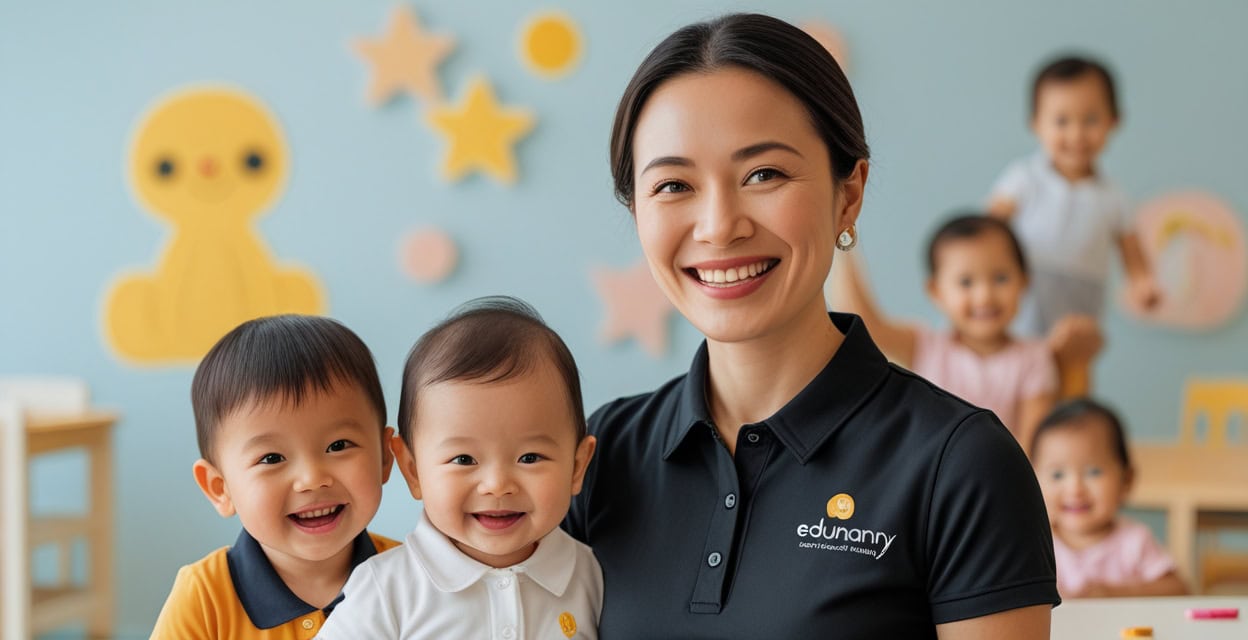
To learn more or begin your enrollment journey, visit EduNanny.com and Childminding.EduNanny.com. We are ready when you are—Monday to Friday, 7am to 7pm—across this island we all call home.
Keywords and Call to Action: Learn more about early childhood development, infant care best practices, Singapore childminding, 1:3 caregiver ratio, transparent CCTV, family partnership in care, early learning through play, safe and joyful care,EduNanny, BUTLER, ECDA Pilot, childminding Singapore
[#keyword1, #keyword2, #keyword3, #keyword4, #keyword5]Ready to Experience Excellence?
Transform Your Family’s Journey
Discover Singapore’s leading infant care and childminding services. Expert guidance for your little one’s first thousand days.