Near Home and Heart A Civic Blueprint for Singapore First Thousand Days by EduNanny

Introduction: A Quiet, Mighty Promise for Singapore’s Children
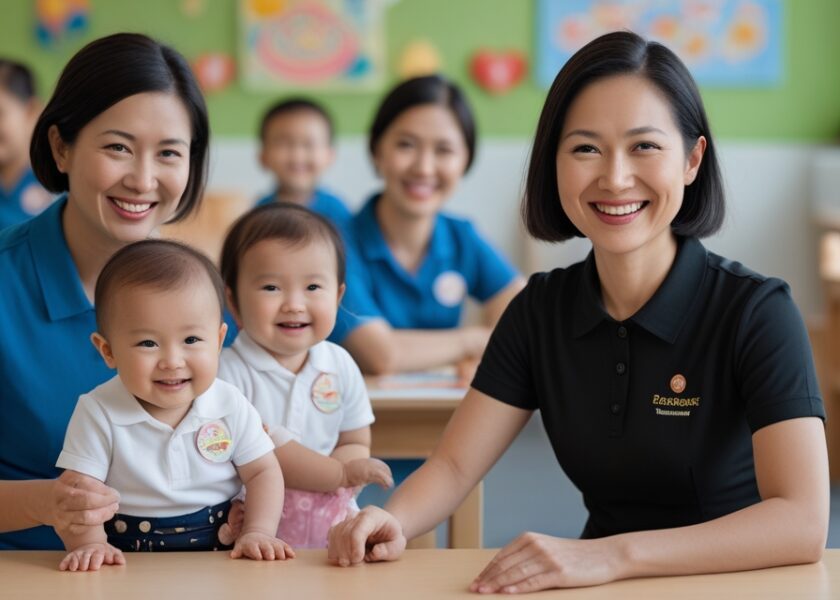
In a city that runs on precision and purpose, EduNanny presents a deeply human promise: infant care that is close to home, rigorous in safety and pedagogy, gentle in tone, and joyful in daily practice. We call this childminding with civic heart—a model that honors science, respects culture, and meets families where they live and work. This is more than care; it is a social infrastructure that supports families, caregivers, and communities alike.
The EduNanny Vision: Childminding as Civic Infrastructure
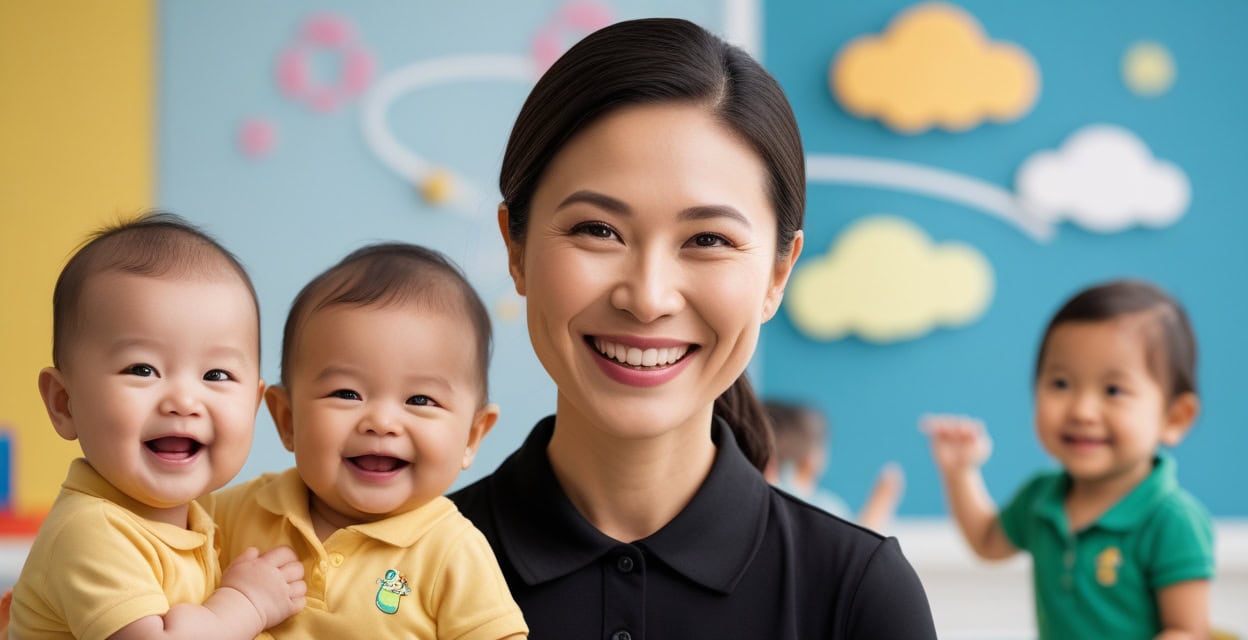
EduNanny by BUTLER operates Monday to Friday, 7am to 7pm, across island-wide Singapore. We offer centre-based and home-based childminding with a 1:3 infant ratio, floor-level, safety-forward environments, and accountable transparency through secure CCTV. Our model is designed to be convenient and affordable—fees from $33/day and payments via CDA/Baby Bonus—while extending distance support so families remain engaged and informed. We are proud to participate in the ECDA Childminding Pilot as a National Social Initiative with a Maximum Employment Mandate, creating meaningful neighborhood jobs while delivering high-quality care.
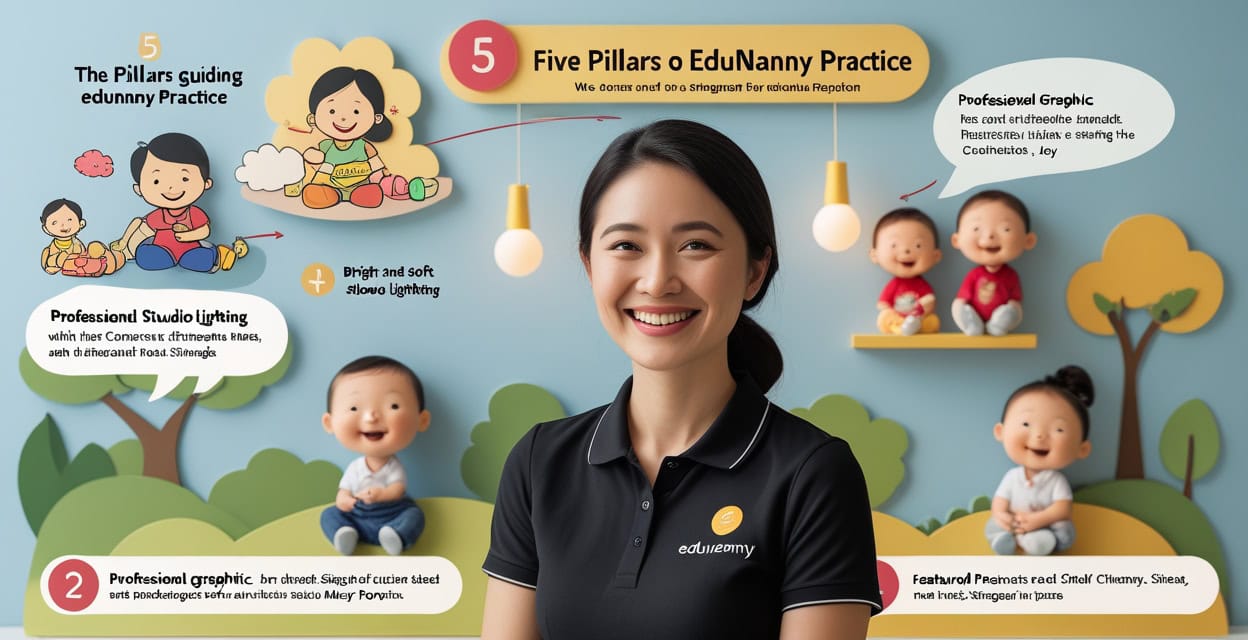
The Five Pillars Guiding EduNanny Practice
1) The Attentive Triangle: Child, Carer, Context
Infant pedagogy at EduNanny begins with a disciplined sequence we teach every caregiver: Settle, See, Serve. This approach unites the child’s needs, the caregiver’s actions, and the surrounding context into a coherent, responsive practice.
- Settle: Create a calm baseline by using a soft voice, grounded posture, and a floor-level space with breathable sleep surfaces, clear paths, and age-appropriate provocations. Calming is a safety technology, not a luxury.
- See: Observe cues—gaze, reach, breath patterns, micro-expressions—to discern readiness. Pause before intervening so responses align with the child’s signal, not the caregiver’s agenda.
- Serve: Offer the smallest, most helpful input—an open palm to support a roll, a mirrored sound to invite cooing, a gentle prompt to sustain attention—and then step back to let the child integrate. Over time, these micro-scaffolds build motor competence, emotional regulation, and problem-solving.
Practical takeaways for parents:
- Observe how caregivers respond to a child’s cues during drop-off and routine transitions.
- Ask about how Settle-See-Serve is implemented across different age groups.
- Partner with teachers by sharing your child’s cues at home (e.g., preferred lullaby, calm-down strategies) to maintain continuity.
2) Safety by Design, Safety by Ritual
Parents deserve systems as robust as their expectations. EduNanny blends environment design, daily choreography, and verified documentation to safeguard infants.
- Prepared Spaces: Floor-level play zones, soft edges, secure shelving, dedicated hygienic nappy areas, and sleep spaces with firm, flat mattresses and no loose bedding, aligned with safe sleep principles.
- The Four P’s: Prepare, Prevent, Protect, Prove.
- Prepare: Pre-opening safety checks; water-temp checks; outlet and cord audits; toy sanitization logs.
- Prevent: Maintain 1:3 ratios, clear line-of-sight, risk controls for transfers, and correct babywearing techniques.
- Protect: Real-time hazard flags, allergy alerts on staff badges, two-person handover protocols.
- Prove: CCTV oversight, digital incident logs, and parent-accessible daily reports.
- Sleep and Health: Back-to-sleep, supervised tummy time, routine checks for temperature and respiration; hygiene routines include handwashing choreography, bottle labeling, sterilization verification, and surface rotation schedules.
Practical home guidance:
- Discuss with caregivers the daily safety rituals and how they document incidents or concerns.
- Ask for a simple at-home safety checklist you can mirror during drop-offs and pick-ups.
3) Sixty-Second Sparks: A Micro-Pedagogy for the First Thousand Days
Infants learn in pulses of attention. Our micro-pedagogy creates brief invitations—Sixty-Second Sparks—that fit a baby’s natural rhythms and multiply throughout the day. Each spark targets one or more developmental streams:
- Sensory Stability: Gentle light-dimming, high-contrast textures, and safe vestibular experiences to aid sensory integration.
- Gross Motor: Floor-level holds, rolling prompts, cruising routes, and soft obstacle paths to encourage movement.
- Fine Motor: Grasp-and-release trays, finger isolation songs, and safe transfer stations to build small-muscle control.
- Language and Reciprocity: Face-to-face vocal play, name-gaze pairing, and multilingual lullabies that reflect Singapore’s linguistic heritage.
- Early Autonomy: Routines performed with the child—offering a choice like “this cloth or that cloth” to foster agency.
With a 1:3 ratio, caregivers can deliver dozens of these purposeful moments per child each day. Practical home applications:
- Copy the micro-spark idea at home: turn a routine into a 60-second learning moment (e.g., “two more squeezes of the rattle to explore cause and effect”).
- Record a short video of your child during a spark to review with caregivers for consistency.
4) Joy as a Vital Sign
Joy is not mere entertainment; it is a measurable indicator of well-being and healthy development. EduNanny follows a simple loop: Calm → Connection → Curiosity.
- Calm: A room that hums with gentle predictability supports settling and readiness to learn.
- Connection: Warm eye contact, named touch, and consistent voices create a secure base for exploration.
- Curiosity: With calm and connection, children explore, test hypotheses, and learn through play.
Practical signs of joy to watch for:
- Settled entry into the space with relaxed body posture.
- Engaged, sustained attention during play sequences.
- Contented rest and relaxed gaze after interactions.
Home and caregiver collaboration tips:
- Share simple joy indicators with your caregiver—e.g., preferred play songs, comforting rhythms, or favorite textures.
- Incorporate short, consistent routines that promote calm transitions between activities at home and in the center.
5) The Civic Purpose of Childminding
Childminding is not a fallback; it is public infrastructure that supports families, caregivers, communities, and the nation.
- For Families: Centre-based and home-based options near home or work; predictable hours; ongoing updates; and affordable fees from $33/day, payable via CDA/Baby Bonus.
- For Caregivers: A Maximum Employment Mandate that creates dignified, islandwide roles with professional training, mentorship, and clear career pathways.
- For Communities: Neighbourhood-based care that reduces travel, strengthens local ties, and invites intergenerational participation; safety is enhanced by local familiarity and accountable oversight.
- For Singapore: Reliable infant care supports workforce participation, gender equity, fertility decisions, and public trust—a national project that begins with the first thousand days.
EduNanny’s stance on civic impact is practical: care that is visible, measurable, and worthy of a nation’s ambition through active participation in public pilots and transparent governance.
What Makes EduNanny Different in Practice?
- Excellence and Quality: Rigorous training in infant attunement, safe sleep, food safety, and micro-pedagogy, with ongoing coaching and surprise audits to maintain standards.
- Centre-Based, Home-Based, and Distance Support: Flexible options to match family needs, with secure digital check-ins and guidance for part-time caregivers at home.
- Innovation with Accountability: Encrypted CCTV for transparency, thoughtful environment design, and data-informed routines that protect privacy while earning trust.
- Islandwide Convenience: A network of pods across neighborhoods to shorten commute times and maximize quality time with children.
- Affordability with Access: Transparent pricing from $33/day, CDA/Baby Bonus accepted, flexible scheduling, and clear cost structures to reduce monthly stress.

A Brief Portrait of a Day at EduNanny
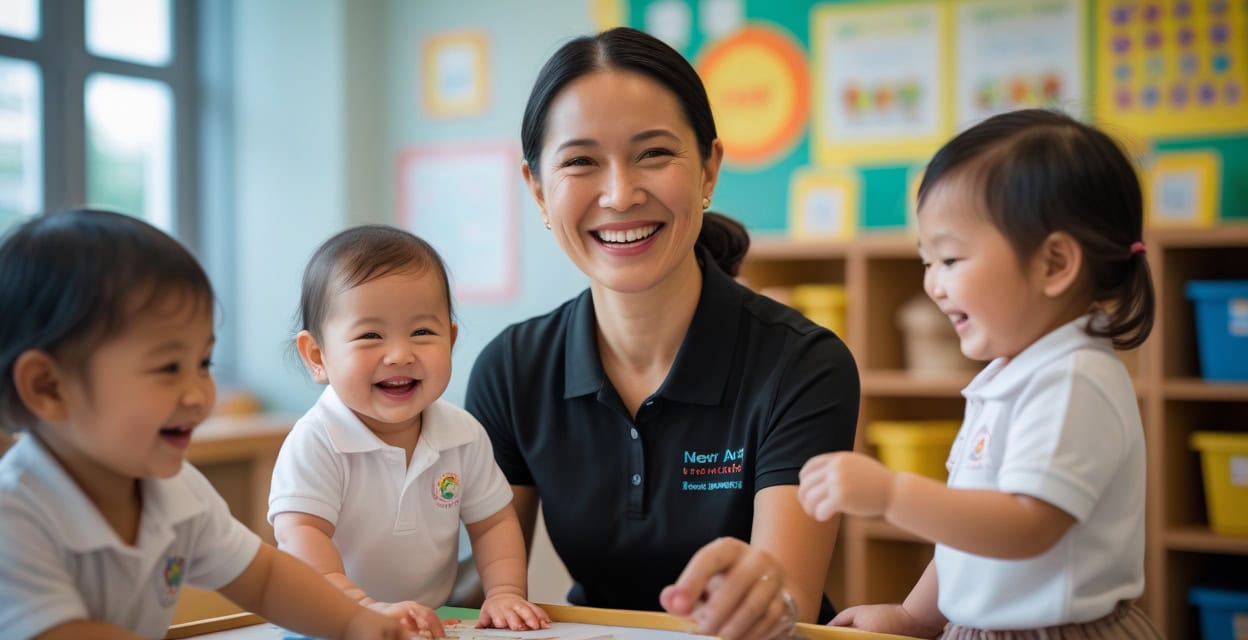
A baby arrives just after 7:45am. We greet her by name at eye level. Shoes off; hands washed; bottle labeled; sleep cues reviewed. The room is ready—soft mats, fresh cloths, rotated objects sanitized and set. She is calm. We pause, then invite a Sixty-Second Spark: the caregiver mirrors her coo, then waits. She coos back, eyes bright. Micro-learning begins.
Mid-morning features tummy time as a gentle journey—hand under her sternum, a soft rock, a reachable toy that rewards effort. Feeds follow paced-bottle protocols; naps use back-to-sleep with ventilation and temperature checks. Afternoon brings song and story in multiple languages, reflecting Singapore’s heritage, with English, Mandarin, Malay, and Tamil lullabies.
At day’s end we hand over not just an infant, but a narrative: photos and notes of naps, feeds, nappies, sparks, and smiles. Parents feel connected because the care is near—near home, near heart, near a trusted professional.
Getting Started: How to Engage with EduNanny
If you are a family considering EduNanny, here are practical steps to begin:
- Visit EduNanny.com and Childminding.EduNanny.com to explore centre-based and home-based options.
- Schedule a tour of a nearby centre or a vetted home premise to observe the Settle-See-Serve process in action.
- Ask about the 1:3 infant ratio in practice, safety documentation, and how “Sixty-Second Sparks” are integrated into daily routines.
- Discuss CDA/Baby Bonus eligibility and the payment options that fit your family budget.
- Join a pilot or information session to learn how the ECDA Childminding Pilot interacts with your family’s needs.
Conclusion: A National Promise in a Child’s First Thousand Days
The first thousand days are not merely a developmental window; they are a national wager. When trust is built, brains grow; when safety is prioritized, exploration flourishes; when joy is nurtured, resilience follows. Childminding is not a service we purchase; it is a shared promise we keep—an daily choreography of presence and purpose that is near-home, near-heart, and near the future we seek for every Singaporean child.
As we begin this journey, we invite families, caregivers, and communities to participate in EduNanny’s mission: to treat infants with dignity, parents with respect, and caregivers with the professional standing their calling deserves. To learn more, visit EduNanny.com and Childminding.EduNanny.com. Consider center-based or home-based options in your neighborhood, and join us in a pilot that makes high-quality care both visible and achievable for all.
Together, let us begin each Singaporean child with a steady hand, a listening heart, and a room prepared for discovery. In those small beginnings, a bright nation is quietly born each day.
SEO keywords: [#keyword1, #keyword2, #keyword3, #keyword4, #keyword5]
Ready to Experience Excellence?
Transform Your Family’s Journey
Discover Singapore’s leading infant care and childminding services. Expert guidance for your little one’s first thousand days.