Presence as Public Infrastructure EduNanny Attunement for Safe Joyful Infancy and National Leadership

EduNanny: A Promise Grounded in Science, Safeguarded by Practice, and Animated by Love
Thank you for gathering around a simple idea with extraordinary reach: the way we care for our infants is the way we build our future. EduNanny by BUTLER stands not to sell a service, but to extend a promise—one grounded in science, safeguarded by strong practice, and animated by love. The earliest years are not a narrow prelude to “real learning.” They are learning. They are identity. They are nation‑building in miniature.
EduNanny exists to turn everyday care into lifelong confidence. By combining child development theory with a standard of safety and presence you can see, measure, and trust—across centre‑based settings, home‑based settings, and distance support that meets modern family life where it is. We operate Monday to Friday, 7am to 7pm, islandwide across Singapore, with an uncompromising 1:3 infant ratio, open layouts for visibility, secure family‑view CCTV, and affordable fees supported by CDA/Baby Bonus. We serve a public mission as part of the ECDA Childminding Pilot and a broader National Social Initiative with a Maximum Employment Mandate that dignifies the profession and strengthens communities. This is not daycare as a holding pattern. This is relational pedagogy, safety by design, and joyful development made visible.
The Attentive Triangle—Infant, Carer, and Environment
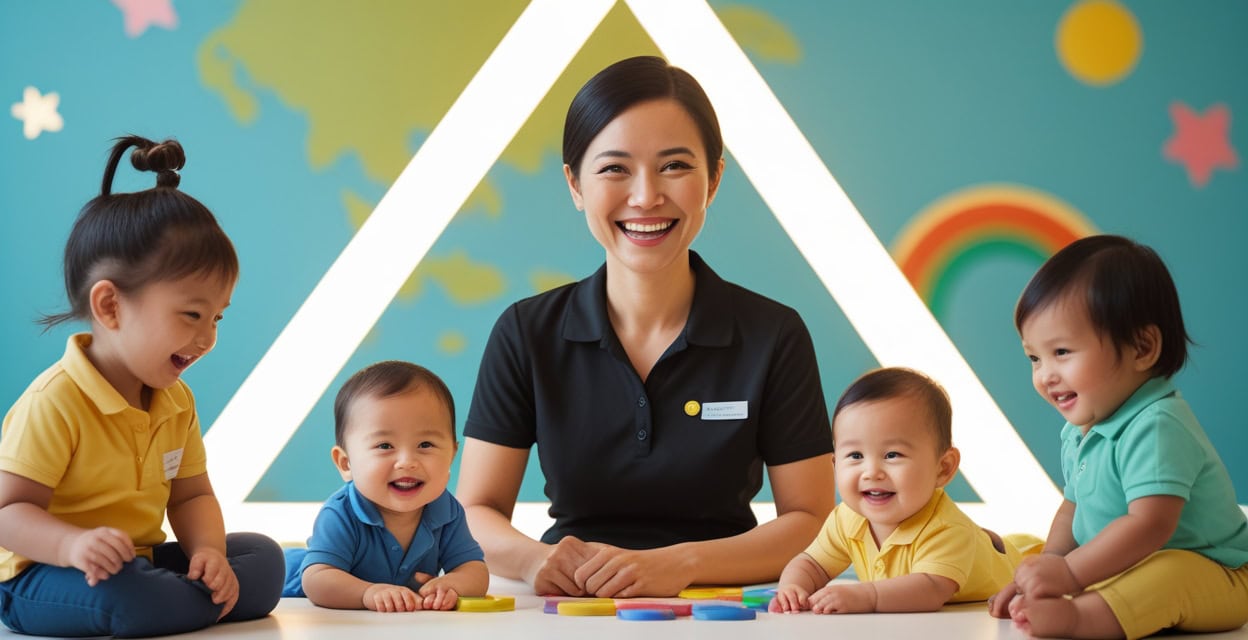
Great infant care is not entertainment; it is attunement. EduNanny trains childminders to work inside an “Attentive Triangle,” where the carer’s gaze, the infant’s cues, and the environment’s invitations are in continuous conversation.
- See, Say, Support: Carers SEE tiny cues (a foot flex before a roll, a glance toward a rattle), SAY what the baby might be feeling or seeking (“You’re looking hard at that bright ring; shall we touch it together?”), and SUPPORT with just‑enough help. This is Vygotsky’s scaffolding for the diapered set.
- The Floor is the First Classroom: Inspired by Pikler, we favour safe floor‑level movement, stable furnishings, and open sightlines. Babies do not need constant repositioning; they need time, trust, and space to discover their bodies.
- A Prepared Environment for Non‑Walkers: Montessori’s prepared environment becomes soft mirrors for self‑recognition, low shelves for reachable choices, and light baskets of real objects—wood, fabric, metal—so infants can study the world through weight, temperature, and sound.
Practical home‑practice ideas for parents:
- Set up a low, safe play area with open visibility to caregivers. Use a mat, a small mirror, and age‑appropriate objects at arm’s reach.
- Narrate daily actions as they occur: “We are washing hands now; you are touching the blue cup; you chose the red block.”
- Offer real materials (wood, cloth, metal) in simple, reachable arrangements to invite exploration and safe experimentation.
Safety Woven In—From Policy to Habit
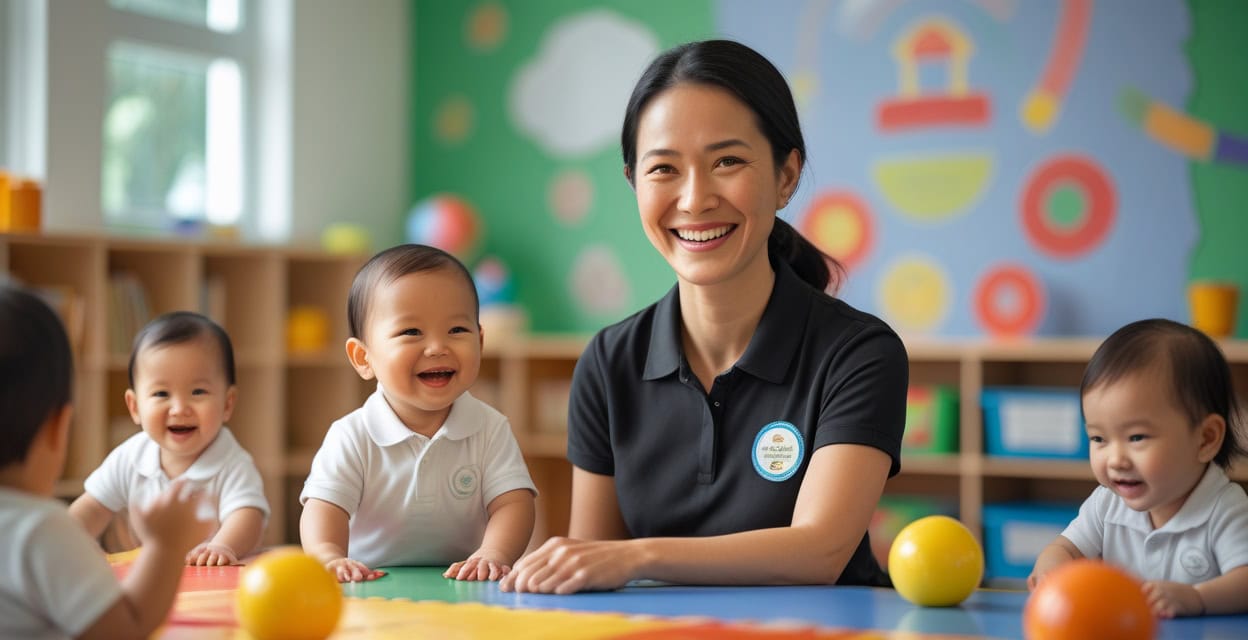
Safety is not a checklist item; it is a choreography you can watch. EduNanny designs safety into architecture, ratios, routines, and culture.
- Modern open layouts, low partitions, and floor‑level supervision provide clear sightlines and quiet acoustics that help regulate babies’ nervous systems.
- The 1:3 Promise: One trained carer for three infants—consistently maintained to ensure attention and timely response.
- Supine sleep with clear airways, controlled temperature and humidity, sterilized bottle prep, paced feeding to honour hunger cues, careful weaning, and strict cross‑contamination controls.
- Infant first‑aid, choking response, and evacuation drills practiced, logged, and reviewed—preparing for the minimal emergency moments we hope never come.
- Family‑view CCTV and accessible daily journals invite partnership, trust, and ongoing conversations about safety and care quality.
Actionable parenting steps:
- Ask prospective carers to walk you through a typical day focused on safety routines, nap environments, and feeding practices.
- Observe the layout of spaces: are there clear sightlines, uncluttered floors, and safe, age‑appropriate furniture?
- Request access to the daily diary and be prepared to discuss any concerns with the carer promptly.
Development You Can Feel—From Sensation to Story
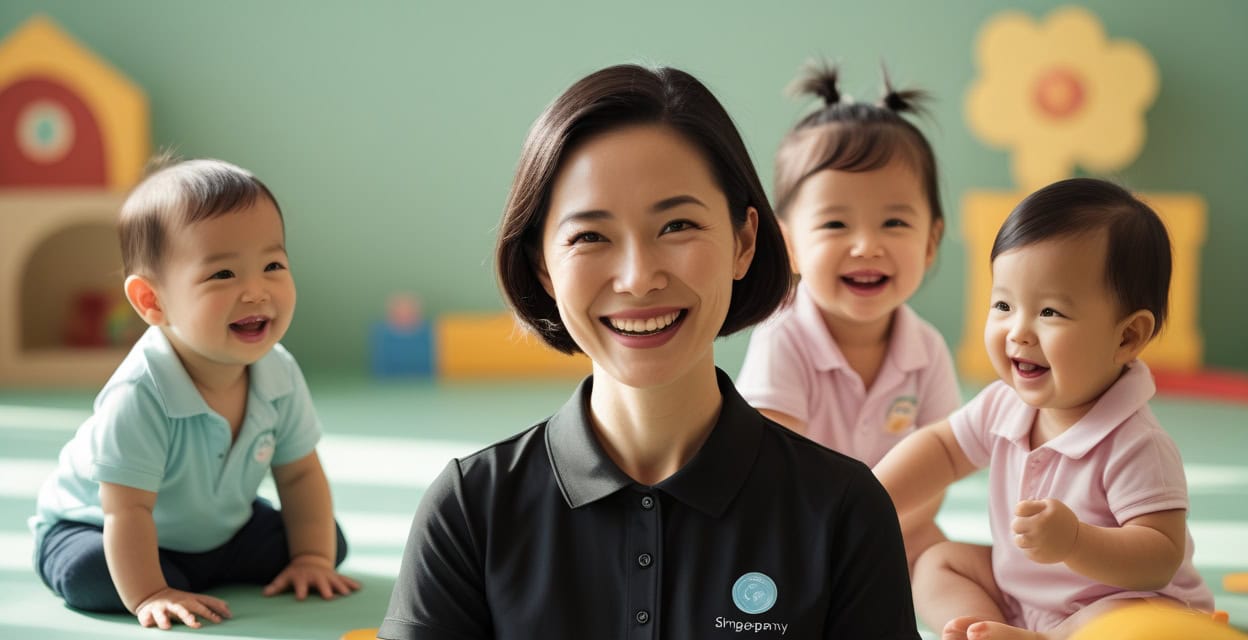
No infant learns “on schedule.” Infants learn in rhythm. EduNanny keeps the music steady and the stage well lit.
- Sensorimotor Mastery: Daily opportunities for reaching, grasping, kicking, rolling, crawling, and cruising—without equipment that restricts natural movement. Movement experience builds the brain’s balance and coordination.
- Language in the Everyday: Constant narration, responsive back‑and‑forth vocal play, baby sign as a bridge, songs that match mood, and interactive story time as dialogue.
- Emotional Regulation: Predictable routines and attuned comfort help babies build stress‑recovery cycles. Mirror the baby’s feelings, name them, and move together toward regulation.
- Culture and Connection: Embrace Singapore’s multilingual heritage through songs, lullabies, textures, and stories, letting children hear the city’s heartbeats as their own.
Home‑practice ideas to boost development:
- Describe everyday actions and respond to sounds, faces, and gestures with warmth and curiosity.
- Introduce simple sign language (e.g., “more,” “eat,” “sleep”) alongside spoken words to support early communication.
- Balance individual play with social play in small, stable groups to foster peer learning and social comfort.

Joy as a Developmental Right
Happiness in infancy is not a perk; it is the engine of learning. EduNanny treats play as serious work and mastery as a source of momentum.
- Play is Serious Work: Curated challenges—almost out of reach, a lid turning with effort, two cups making a new sound—cultivate curiosity and perseverance.
- The Hundred Languages of the Very Young: Listen for multiple languages of expression—gaze, grip, babble, rhythm, stillness—and respond in the child’s language.
- Regular carers, stable groups, and warm rituals create secure bases from which infants dare to explore and learn.
Ways to cultivate joy at home:
- Schedule predictable playtimes with a focus on new textures and simple problem‑solving tasks.
- Use musical activities and rhythm to support language development and memory.
- Maintain consistent goodbye rituals to reinforce security and continuity.
The Calling of the Childminder—A Public Profession
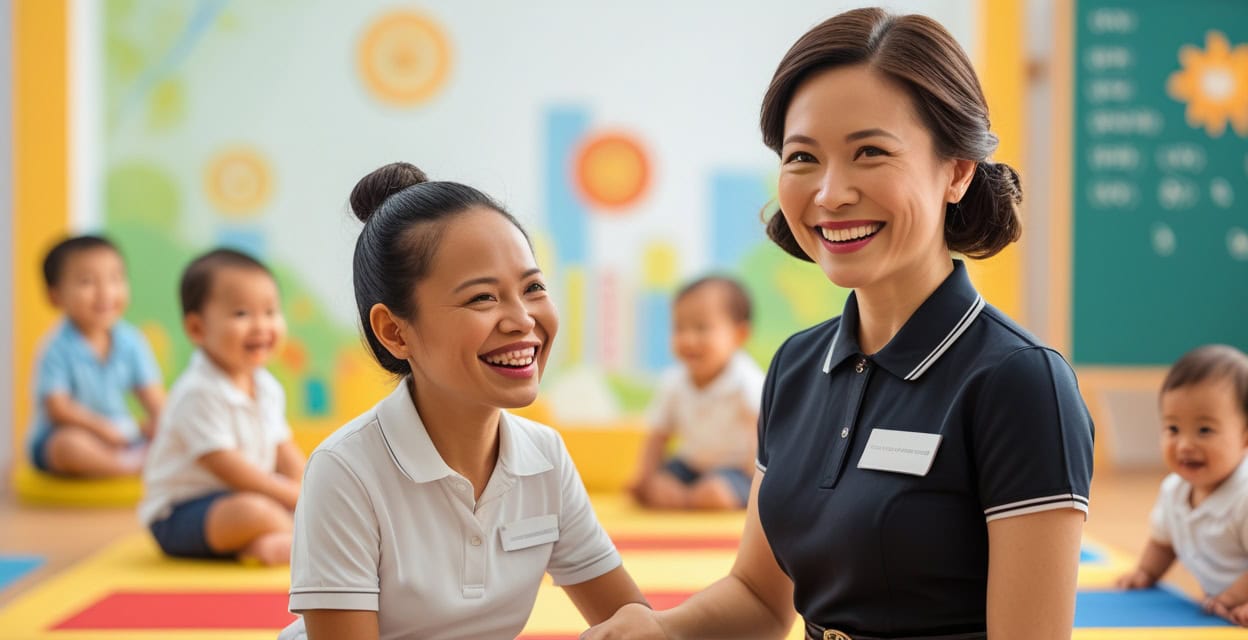
To be a childminder is to be entrusted with one of the most formative bonds outside the family. EduNanny advocates for professional dignity, training, and community support this calling deserves.
- Learning Profession: Ongoing coaching, observation debriefs, developmental seminars, and reflective practice embedded in the work week.
- Partnership with Parents: Daily notes that are truly conversational, monthly mini‑conferences, and distance touchpoints for traveling families.
- A public commitment to meaningful roles for Singaporeans across centre‑based, home‑based, and distance‑support educators—ensuring care careers are respected, sustainable, and proud.
Parents can support this professional community by:
- Engaging in regular feedback sessions and asking for concrete examples of child progress and safety practices.
- Participating in professional development opportunities offered to carers when available, and encouraging carers to pursue certifications.
What Makes EduNanny Uniquely Singaporean?
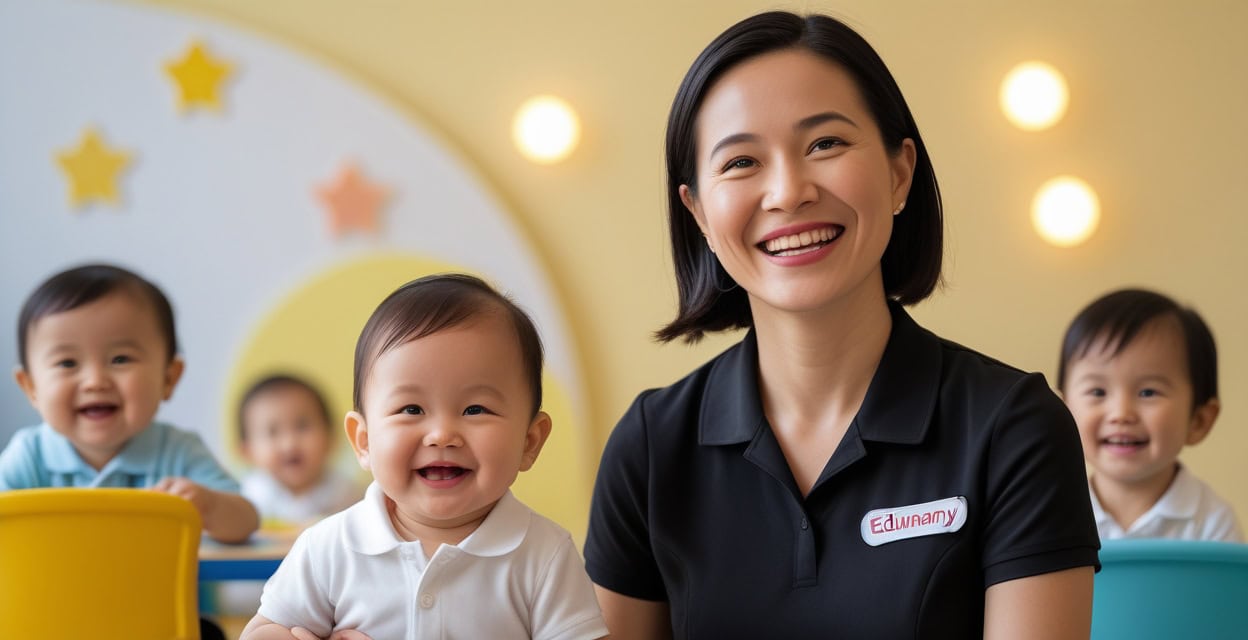
- Monday to Friday, 7am–7pm.
- Centre‑based and home‑based options islandwide, near transport and work corridors.
- Fees from $33/day, with CDA/Baby Bonus payment options.
- Operates under the ECDA Childminding Pilot with audits, compliance, and continuous quality improvement.
- Family‑view CCTV, simple digital journals, and distance coaching that supports at‑home routines.
- Modern layouts that reduce overstimulation, prevent bottlenecks, and keep carers’ attention on the baby.
How Our Pedagogy Shows Up in a Day
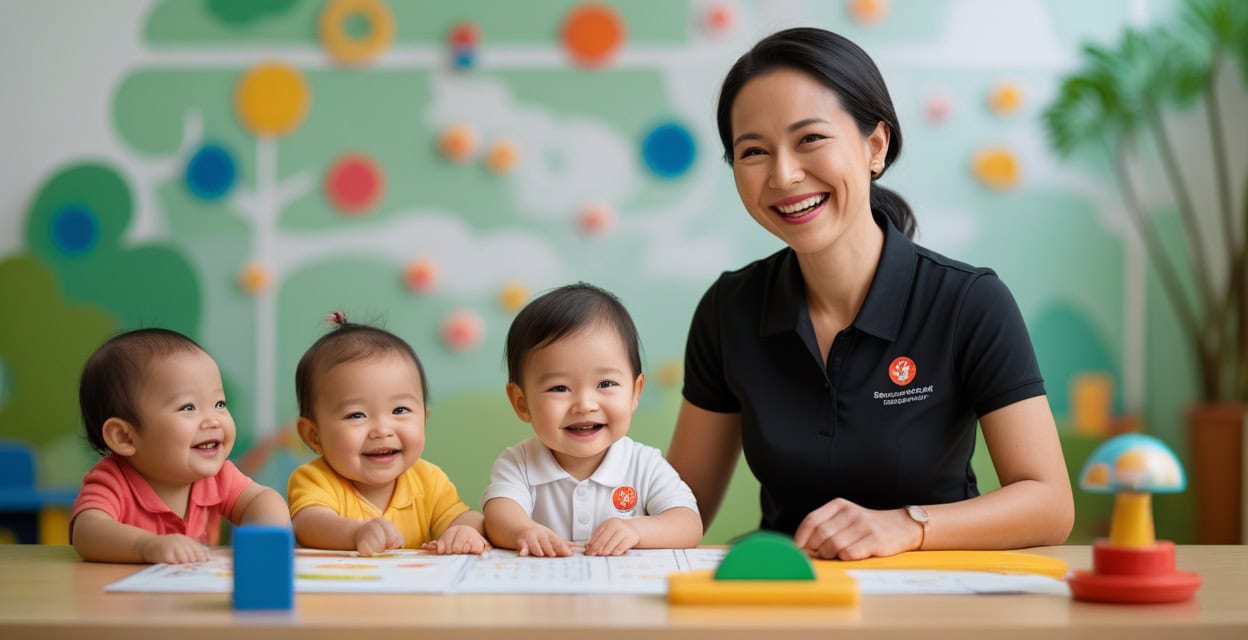
- Greet at the child’s pace, narrate handovers, and acknowledge parental feelings to start the day with security.
- Diapering, feeding, and settling as “lessons” in language, bodily autonomy, and trust—lifting only with consent and readiness.
- Short, repeated explorations—textures, sounds, and movements—that build neural pathways.
- Sleep environments that respect circadian cues, protect airway safety, and reset overstimulated systems.
- End-of-day recaps that reinforce continuity for child and parent, building predictability and peace.

For Working Parents in Today’s Singapore
Singapore’s city life demands flexible, dependable care. EduNanny supports families through multiple models and transparent practices:
- Purpose‑built neighbourhood hubs with modern layouts, low density, and stable peer groups.
- Approved, audited homes offering intimacy and convenience for families who prefer smaller settings.
- Virtual coaching and daily routine planning for families who need guidance at home.
Practical tips for working parents:
- Ask about daily communication formats: What information will you receive, and how often?
- Involve carers in routine planning for sleep, feeding, and daily activities—co‑create your child’s schedule.
- Prepare a simple at‑home routine to mirror the care setting, fostering consistency across environments.
Why This Matters to Singapore
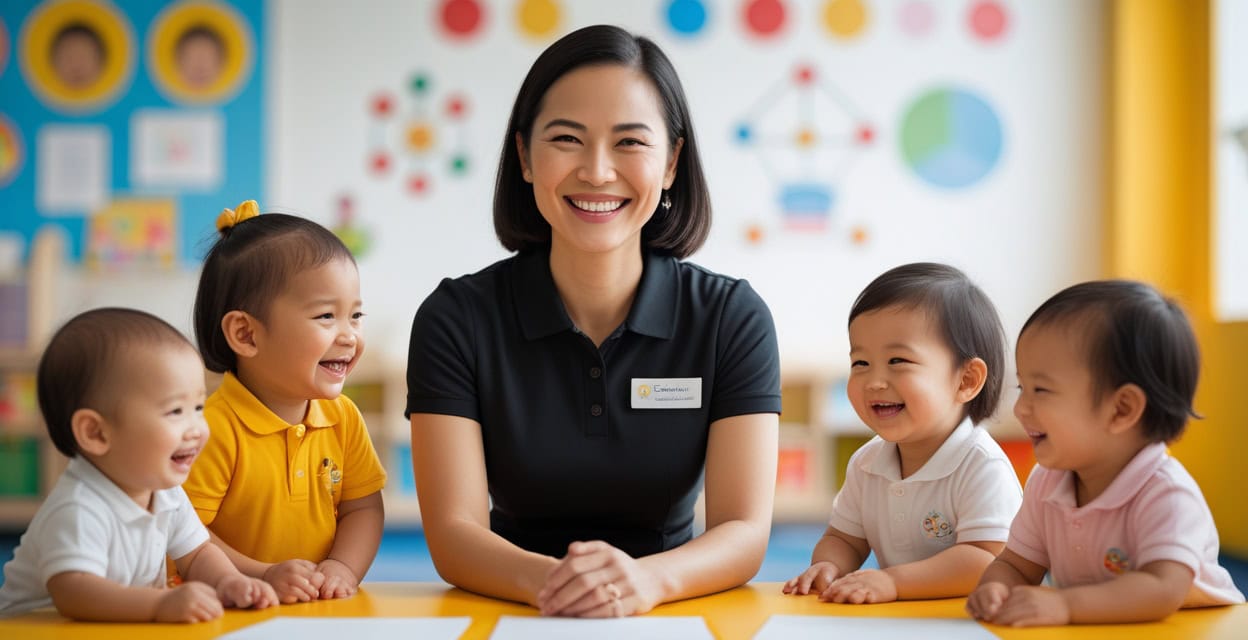
Care is not only private love; it is public infrastructure. When infants experience attuned, safe, joyful care, they enter preschool ready to engage, primary school ready to persist, and adulthood ready to contribute. When carers are respected and well trained, we create good jobs that stabilise families and catalyse neighbourhoods. When parents find dependable, affordable care near work and home, fertility choices become freer, work becomes more productive, and social trust grows.

Conclusion: Presence at the Center—Cradling Possibility
EduNanny’s philosophy is simple and ambitious: put presence at the centre, and everything else will follow. Presence is how safety becomes second nature. Presence is how language takes root. Presence is how joy spills into curiosity, and curiosity matures into competence. Presence is how a city of five million remembers it was once a crib, a cuddle, and a quiet song.
If this vision resonates with your hopes for your child—and for our nation—I invite you to continue the conversation with us. Visit EduNanny.com and Childminding.EduNanny.com. Walk our spaces. Meet our carers. Watch the way we wait for a baby to be ready before we lift. You will see the difference, and your child will feel it.
This is how we cradle possibility, together—one attentive minute at a time, one safe room at a time, one confident child at a time. Thank you.
SEO Keywords: [#infant care Singapore, #early childhood development, #childminding, #Montessori prepared environment, #parent-provider partnership]
Ready to Experience Excellence?
Transform Your Family’s Journey
Discover Singapore’s leading infant care and childminding services. Expert guidance for your little one’s first thousand days.