
Calm Beginnings and Curious Minds The EduNanny Vision for Singapore First Years

Introduction: An Audacious Idea for Singapore’s First Years
Good evening, parents, grandparents, childminders, neighbours, and friends. The first years of life are not a waiting room for childhood; they are childhood itself. When we dignify those years with intelligent care, careful safety, and everyday joy, we dignify the future of Singapore. EduNanny is a Singapore-grown childminding movement guided by science, shaped by community, and measured by the calm in a child’s breath. This long-form article invites you into a practical, editor-grade view of how high-quality infant care, delivered with heart and rigor, can transform families and communities.

The EduNanny Approach: A Culture of Care
The Five Quiet Arts: A Pedagogy You Can Feel, Not Just See
Each infant arrives as a conversation already in progress, speaking with eyes, breath, fingers, and tiny pauses. We teach our childminders five quiet arts to meet that conversation with skill and heart, translating science into everyday practice:
- Settle: Co-regulate to calm the system. Slow ourselves, soften transitions, and arrange spaces to reduce visual noise. Practical tip: create a dedicated calm corner with dim lighting and a familiar object from home to anchor a moment of rest.
- See: Read cues with precision—hunger signals, fatigue whispers, overstimulation flickers. A seen child becomes a secure child. Practical tip: maintain a simple cue chart at the care station and review it at shift changes.
- Support: Scaffold just beyond what a child can do alone. Offer the next reachable challenge without rushing. Practical tip: break tasks into micro-steps and celebrate small successes in real time.
- Share: Place our bodies at floor level, eyes at infant height, and keep play within reach. Practical tip: rotate safe, open-ended objects weekly to sustain curiosity without overwhelming the infant.
- Shape: Close cycles with consistency—predictable feeds, safe sleep, and meaningful rituals. Practical tip: establish simple rituals that mark transitions (e.g., “wash-then-wonder” after a meal) to build trust.
These five arts synthesize global research into an everyday practice that any childminder can master and any parent can observe. They form the heart of EduNanny’s approach to infants from zero to three years old—right where families live and work.
Safety by Choreography: Peace of Mind Built Daily
Safety is not a poster on a wall; it is a choreography performed hundreds of times a day with unfailing care. We choreograph safe practice into daily life:
- Environment: Modern layouts with clear sightlines, anchored furniture, gated thresholds, floor-level learning zones, hazard-mapped storage, and ongoing temperature/air-quality checks.
- Sleep: Back to sleep, firm mattress, no loose items, room-in yet cot-alone when appropriate. We log every sleep cycle and maintain safe light and sound levels.
- Hygiene and Health: Frequent handwashing, separate zones for milk and solids, sanitised surfaces, and illness protocols. Track nappy patterns, hydration, and subtle mood changes that can preface illness.
- Movement and Transport: Safe strollers and carriers, brakes engaged by habit, lifts when possible, and no loose items near cots or mats.
- People and Protocols: 1:3 ratio, identity-verified handovers, secure CCTV for transparency and training, drills for fire/medical/evacuation, and daily safety audits.
We help you never wonder about safety—because you will know the answer, every day.
From Reflex to Relationship to Readiness: The Arc of Development
Infancy unfolds in concentric circles—body, bond, language, and world. EduNanny tailors care to the arc of each child, meeting them where they are and guiding them toward the next milestone:
- 0–6 months: Support free movement on the floor, head control, rolling, early reach, and sensory foundations. Narrate care moments, echo sounds, and bathe the day in faces and gentle talk.
- 6–12 months: Cultivate stable sitting, crawling, and early gesturing. Peekaboo becomes memory work; name-and-point becomes proto-language. Support safe self-feeding as readiness emerges.
- 12–24 months: Scaffold cruising and walking within safe bounds; encourage early problem-solving. Expand words and signs; model sharing and turn-taking with simple phrases.
- 24–36 months: Tune into purposeful play, early self-help skills, and toileting readiness with respect. Embrace small frustrations as resilience training.
Across all phases, EduNanny partners with families through daily notes that explain what the child experienced, enjoyed, and practiced—not just what was “done.”
Joy as a System: The Everyday Culture of a Happy Infant
Happiness in infancy is engineered, not left to chance. A well-designed care system balances rhythm, language, play, and family belonging:
- Sensory Diet: A balanced mix of quiet and lively activities, bright and dim textures, indoor and outdoor time, solo exploration with warm company.
- Language: A bilingual or multilingual approach that alternates languages naturally; rhymes, storytelling, and talk-rich narration of daily care.
- Play: Fewer, meaningful objects; real materials; ample floor time; outdoor experiences when possible; photos and stories of the child’s day to reinforce memory.
- Family Inclusion: Respect and incorporate family rituals, lullabies, and greetings. Belonging is a family affair and a community practice.
Joy is not an accident; it is engineered through careful attention to the right small things.
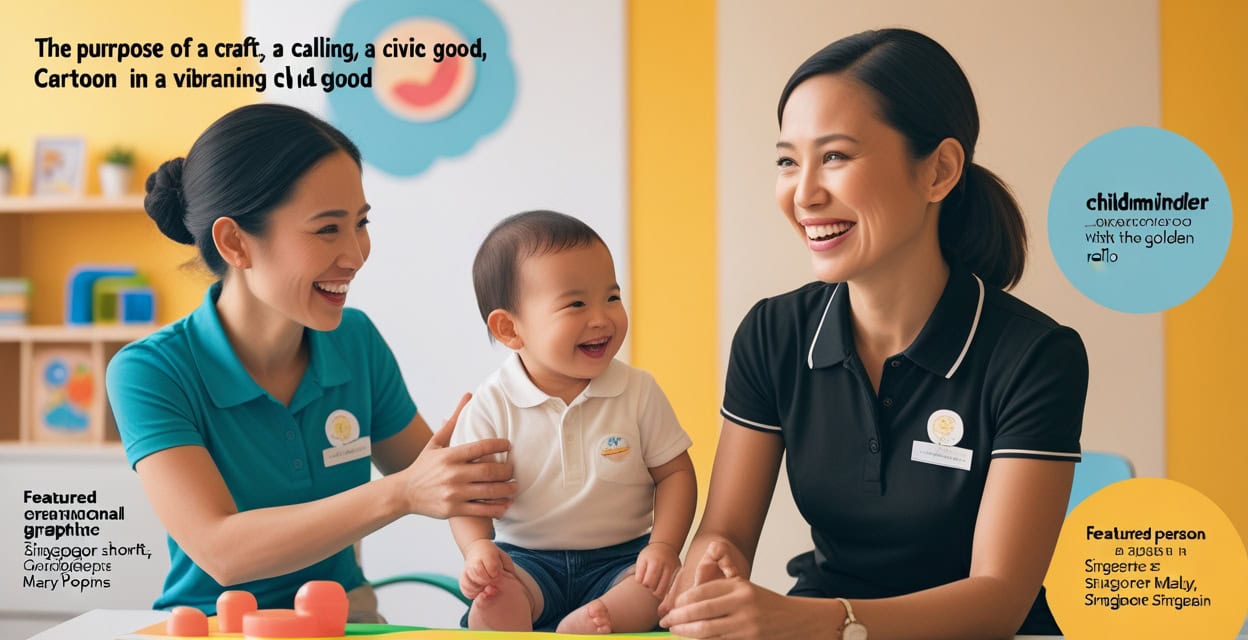
The Purpose of the Childminder: A Craft, A Calling, A Civic Good
The childminder is not a fallback plan; the childminder is a professional. EduNanny invests in this profession because the work is nation-shaping. Through the Maximum Employment Mandate, we create dignified jobs, ongoing training, and clear career pathways. We honour caregivers who bring wisdom from their own families and neighbourhoods, pairing that wisdom with the best of developmental science. In this way, care becomes local, accountable, and proudly professional.

What EduNanny Offers—Simply and Clearly
- Settings designed around your life: Centre-Based Childminding and Home-Based Childminding, with distance support for coaching or interim care solutions.
- Hours that match real schedules: Monday to Friday, 7am–7pm, islandwide across Singapore.
- Safety and trust built in: 1:3 infant ratio; modern, safety-led layouts; secure CCTV; rigorous training and daily audits.
- Accessibility without compromise: Convenient locations near work and home; affordable options from $33/day; fees payable via CDA/Baby Bonus.
- A public mission: EduNanny by BUTLER participates in the ECDA Childminding Pilot as a National Social Initiative, aligning family needs with workforce opportunity and child development outcomes.
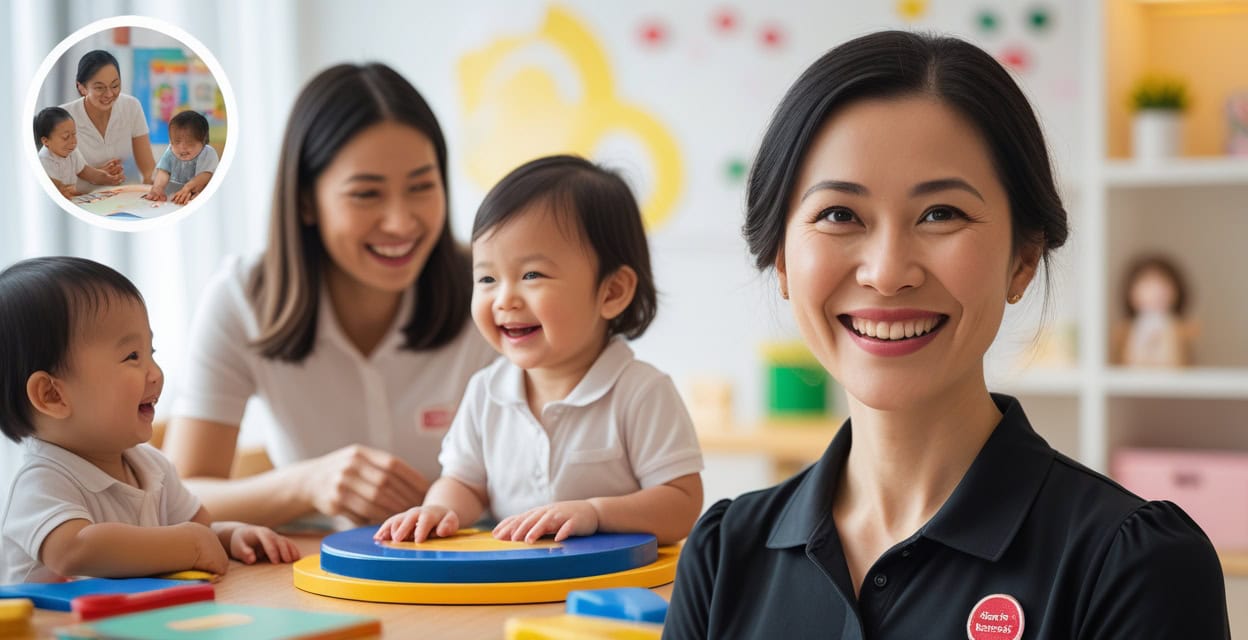
Practical Guidance for Parents: Implementing EduNanny Principles at Home
Parents can extend EduNanny’s principles into home life to support continuity of care and development between care settings. Use these practical steps to create a home environment that mirrors the EduNanny approach:
- Establish consistent daily rhythms: Regular wake times, feeds, play, and sleep windows help regulate a child’s nervous system. Create a simple visual timetable at home for caregivers to reference.
- Co-regulate during transitions: When going from play to care meals or to a nap, use a calm voice, predictable actions, and gentle touch. Expect and name emotions to build emotional literacy.
- Read infant cues in real-time: Train caregivers and family members to interpret signals such as gaze shifts, body tension, and facial expressions. Respond with a “settle-first” approach.
- Design safe, rich play spaces: Floor-time zones with reachable toys, soft mats, and age-appropriate objects. Rotate materials to sustain curiosity without clutter.
- Foster language development: Narrate daily activities in home languages, describe actions, and name objects. Read aloud together daily and reinforce gesture-word associations.
- Involve families in rituals: Invite family members to share songs, lullabies, and bedtime routines; incorporate them into the childminding setting to build a sense of belonging.
- Monitor safety with simple checklists: Use a short daily safety checklist for home routines—wipe surfaces, check water temperatures, store small objects out of reach, and ensure safe sleep practices.
- Document and share progress: Encourage daily notes or photo updates highlighting key milestones, interactions, and new skills to strengthen parent-childminder collaboration.

Choosing a Childminding Partner: A Practical Guide for Parents
When considering EduNanny or any partner, use these criteria to assess fit and quality:
- Ratios and safety: Confirm a 1:3 infant ratio, secure CCTV, and staff training programs. Ask how safety drills are practiced and logged.
- Age-appropriate environments: Inspect the physical space for safe layouts, padding, and uncluttered zones designed for exploration and rest.
- Communication: Look for transparent daily notes, regular feedback, and open channels with families. Request sample daily update formats.
- Staff qualifications and support: Inquire about caregiver training, professional development plans, and pathways to career advancement.
- Affordability and access: Understand pricing, subsidies, and how CDA/Baby Bonus credits are applied. Ensure options meet your budget without compromising quality.
- Compatibility with family routines: Check whether the setting offers flexible hours, weekend options, or distance support for interim care needs.

Touring a Space and Starting a Trial Day: A Step-by-Step
To evaluate EduNanny or any provider, request a tour and a trial day. Use this checklist during visits:
- Observe staff–infant interactions: Do caregivers respond promptly, calmly, and warmly?
- Assess routines: Are feeding, sleep, and play times structured yet flexible to the child’s needs?
- Inspect safety practices: Are play areas clean, hazards minimized, and supervision visible?
- Engage with the community: Talk to other families and caregivers about their experiences and outcomes.
- Ask for feedback: Request a sample daily report and discuss how parent input is integrated into care plans.

Daily and Weekly Examples: Practical Schedules for 0–3 Years
Below are example schedules that reflect EduNanny principles. Adapt them to your family’s needs and the micro-studio environment.
- 6–12 months: Structured meals with safe self-feeding, supervised tummy time, sitting practice with supported toys, crawling exploration, reading, short power-down moments, bedtime stories.
- 12–24 months: Walks and climbing within safe zones, language-rich activities (naming, gestures), social play with peers, simple puzzles, lunch and rest, outdoor time if feasible.
- 24–36 months: Potty readiness activities, more complex pretend play, turn-taking games, navigating simple chores (washing hands, tidy-up), family routines integrated into daily.

Touring EduNanny: What to Expect During the Visit
During your visit, look for evidence of the following:
- A calm, organized environment with safe, accessible materials for infants.
- Clear routines that are explained and demonstrated with confidence.
- Open communication channels and a welcoming atmosphere for families.
- Visible commitment to safety protocols, including logs and drills.

Closing: Why Childminding Matters—A Reflective Ending
The child who feels secure at nine months grows into the student who explores boldly at nine years and the citizen who stands steady at nineteen. When we organize a nation’s care around human attention—through trained, respectful professionals, thoughtful design, transparent technology, and strong family partnerships—we build a future that is secure, curious, and joyful. EduNanny exists to make that attention possible. We settle, see, support, share, and shape—day after day, minute after minute—until calm becomes a child’s habit and curiosity becomes their second nature. If this vision resonates, step forward with us. Tour a space, meet a childminder, ask hard questions, and enrol for a day, a month, or a season of your child’s earliest growth. Let us do together what no family should have to do alone: build a beginning worthy of potential.
Singapore, our future is breathing in bassinets tonight. Let us keep that future secure, curious, and happy—one attentive moment at a time.
EduNanny exists to make that attention possible. We settle, see, support, share, and shape—day after day, minute after minute—until calm becomes a child’s habit and curiosity becomes their second nature. With excellence as our standard, quality as our measure, and community as our compass, we offer families a safe harbour and infants a joyful launch.
SEO keywords: [#EduNannySingapore, #InfantCareSingapore, #EarlyChildhoodDevelopment, #SingaporeChildminding, #1to3Ratio]
Ready to Experience Excellence?
Transform Your Family’s Journey
Discover Singapore’s leading infant care and childminding services. Expert guidance for your little one’s first thousand days.