

EduNanny Singapore Elevating Infant Care and Early Learning Through Anchor Align Allow and the One Minute Curriculum

EduNanny Singapore: Elevating Infant Care and Early Learning
Good evening, parents, caregivers, partners, and friends. This space invites you into a thoughtful, practical vision for how a nation treats its youngest citizens. EduNanny is an islandwide care movement and service built in Singapore, for Singapore. By integrating science, compassion, and clean design into everyday childminding, we aim to transform care into confidence and confidence into a brighter Singapore. Below is a deeper, practical exploration of what this means for families and caregivers—and how to put these ideas into action in your home and community.

Topic 1: A Pedagogy You Can Feel—Anchor, Align, Allow
Anchor: Safety and Predictability as the Foundation
Infants learn best when they feel secure. Establish predictable routines, greet at eye level, narrate what you’re about to do, and respect the infant’s pace. Practical steps you can apply today include:
- Start with a consistent greeting ritual each morning and the same settling routine after naps.
- Create a calm pre-activity cue: announce the next action (e.g., “We’re going to explore the red ball now.”).
- Design spaces with clear zones—carefully arranged, safe, low-distraction areas that invite exploration without overwhelming sensation.
Align: Serve-and-Return for Language and Thought
Align is about matching adult attention to infant intention. When a baby looks, vocalizes, or reaches, respond promptly with warmth, words, and gentle action. This builds memory, language, and social connection.
- Offer a simple verbal pause after a child’s attempt: “You found it—train track! Let’s put it here.”
- Practice naming feelings and expanding language during routines—comfortable vocabulary grows with real moments.
- Maintain a steady relational rhythm: frequent, meaningful exchanges throughout the day.
Allow: Space for Exploration and Purposeful Play
Allow creates room for curiosity. Design floor-level zones, provide open-ended objects, and repeat activities that nourish mastery. See a six-month-old practicing tummy-time as a scholar of motion, just as an older child is a scholar of books.
- Use safe, open-ended toys (mirrors, texture boards, simple stacking blocks) to encourage problem solving.
- Structure play so that repetition leads to mastery—one skill at a time, with gentle progression.
- Frame daily routines as learning opportunities: diapering, feeding, and settling become moments for discovery.
The One-Minute Curriculum: Turning Cues into Growth
Our daily One-Minute Curriculum turns tiny cues into broad development. Practice this sequence repeatedly:
- See the signal. Notice a cue—eye contact, a reach, a babble.
- Say what you see. Narrate the moment clearly and warmly (e.g., “I see you looking at the red rattle.”).
- Support the next step. Provide a gentle prompt or extension (e.g., “Let’s explore how it moves when you shake it.”).
Practical examples: diapering becomes a chance to name body parts and sensations; feeding becomes a dialogue about hunger cues; settling becomes a collaborative moment of calm and trust.
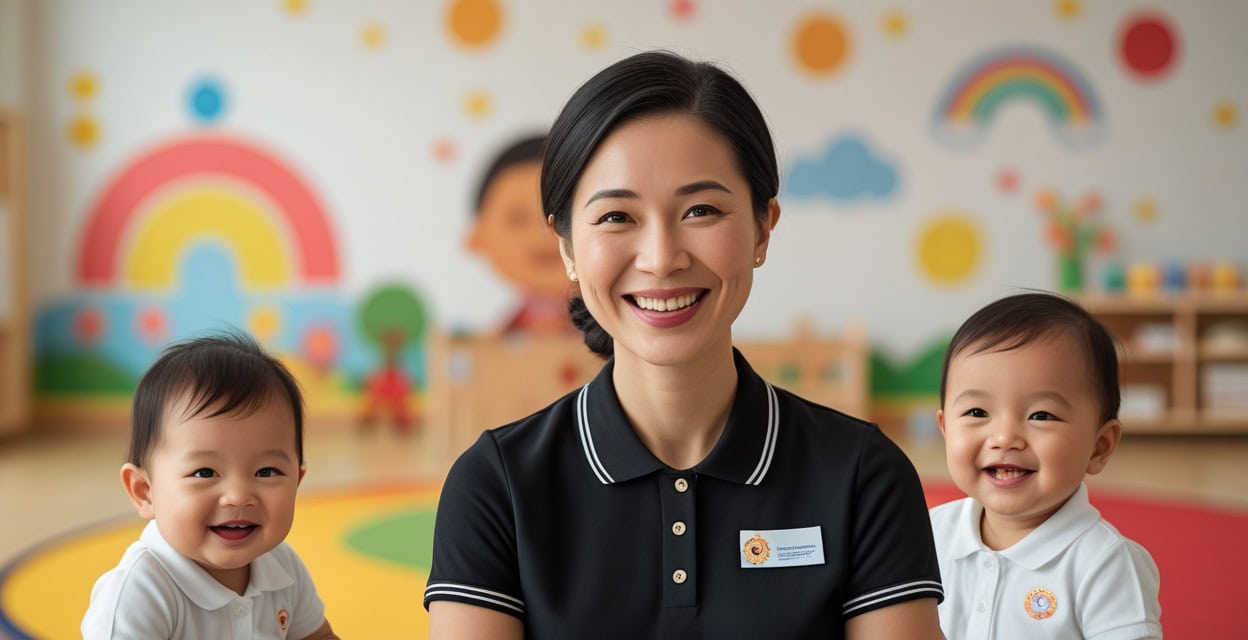
Topic 2: Safety Without Shadows—Design, People, Process
Design: Safe, Transparent, Welcoming Environments
- Modern layouts with sightlines, soft edges, and low shelving to reduce hazards and empower carers to monitor at a glance.
- Sleep spaces with firm surfaces, no loose items, supine positioning, and quiet breathing checks.
- Cleaning protocols that are non-toxic and clearly documented; ventilation and air quality considerations for comfort and health.
- Visibility that builds trust: thoughtful use of CCTV for oversight while protecting privacy through strict policies and access controls.
People: The 1:3 Promise and Ongoing Professional Growth
- 1:3 caregiver-to-infant ratio to ensure focused attention, early intervention when needed, and meaningful relationships.
- Rigorous vetting, background checks, infant-first-aid certification, safe-sleep training, and continuous supervision.
- Reflective practice: regular reviews and coaching that sharpen judgment, intuition, and relational skills beyond technique alone.
Process: Clear, Immediate, Accountable
- Arrival health checks, allergy-aware meal prep, bottle labeling and handling, temperature logs, and safe transport procedures.
- Incident reporting that is immediate, clear, and accountable, with follow-up actions and parental notifications.
- Regular drills for fire and medical scenarios, plus a culture where speaking up about safety is valued and protected.

Topic 3: Growth That Sticks—Development Across the First Years
Our developmental frame is whole-child and evidence-led, focusing on six interwoven domains that guide daily practice and parent conversations.
1) Attachment Security
- Gentle transitions, consistent carers, and responsive touch build trust and security that underpins exploration.
- Practical tip: establish a “base carer” routine for the first few weeks of enrollment to help the infant learn consistency.
2) Sensory Integration
- Controlled tactile play, varied textures, gentle soundscapes, and lighting that supports focus without overstimulation.
- Practical tip: rotate sensory materials weekly to maintain novelty while preserving calm.
3) Motor Development
- Floor time for rolling and crawling; scaffolds for cruising; thoughtful grasp challenges to refine fine-motor control.
- Practical tip: create an age-appropriate obstacle course on the floor to encourage safe exploration and gross motor skills.
4) Language Nutrition
- Warm narration, songs in multicultural tongues, gesture-plus-word routines, and joint attention games.
- Practical tip: introduce small, daily “language moments”—naming objects during routine tasks and singing simple, repetitive songs.
5) Early Self-Regulation
- Predictable routines, positive limits, and carers who co-regulate rather than control.
- Practical tip: use a consistent soothing sequence (gentle touch, quiet talk, and a transitional object) to help a child regain calm after overstimulation.
6) Social-Emotional Beginnings
- Turn-taking, mirroring, and small choices that grow agency and empathy.
- Practical tip: offer two age-appropriate choices during meals or play to foster autonomy without confusion.
Age-Appropriate Milestones: Recognizing Growth Moments
- 6 months: A baby rolls toward a rattle; the carer names the effort, waits, and celebrates the reach. This moment blends strength, language, and confidence.
- 12 months: A toddler toddles between a shelf and a caregiver, practicing independence with a safe “base.”
- 24 months: A small conflict over a block becomes a lesson in naming feelings, offering alternatives, and gentle waiting—cultivating early social skills.

Topic 4: Joy as a Metric—Happiness That Teaches
Happiness is not a bonus; it is a pathway to learning. EduNanny’s Joy Protocol centers on routines and practices that regulate and delight, while fostering development.
- Soft landings: a consistent morning hello and a familiar settling ritual to start the day with calm.
- Music and movement: daily rhythm, finger plays, and culturally resonant songs that support regulation and joy.
- Mealtimes with dignity: unhurried feeding, responsive cues, and opportunities for self-feeding practice.
- Outdoor minutes where feasible: fresh air and space to move help nerves settle and attention widen.
- Rest architecture: a soothing sleep environment with individualized sleep plans respectful of each infant’s needs.
- Gentle closures: thoughtful evening handovers that help families carry the day’s story home in words they understand.

Topic 5: The Calling of a Childminder—Purpose, Partnership, and Place
Childminders are not “extra hands.” They are guardians of rhythm and translators of development. EduNanny sees their role as threefold:
- To dignify the small: a thousand careful touches that become trust and belonging.
- To partner with families: daily briefings, monthly growth notes, and responsive communication channels so parents feel informed, not left guessing.
- To strengthen community: close-to-home caregiving that honors Singapore’s languages, foods, and festivals—so belonging begins at the beginning.
As a National Social Initiative, EduNanny also supports working people and the broader economy. The Maximum Employment Mandate helps create stable, meaningful jobs in local neighborhoods, uplifting skills and livelihoods while delivering exceptional infant care.

EduNanny Delivers for Singapore Families—Practical, Transparent, Close to Home
- Two modes of care: Centre-Based Childminding in purpose-built studios, and Home-Based Childminding for intimate, near-home caregiving.
- Distance and digital support: video check-ins, growth updates, and timely messaging—providing presence without sacrificing convenience.
- Hours that fit working realities: Monday to Friday, 7am to 7pm.
- Islandwide access: a network designed so most families can reach a site on foot or by public transport.
- Affordability and ease: fees from $33/day, payable by CDA/Baby Bonus where eligible.
- Transparency and trust: CCTV innovation with clear processes and a 1:3 ratio that remains a steadfast standard.
- Clean, modern design: spaces that soothe; layouts that empower carer attention and infant curiosity without obstruction.
- A learning-led culture: every carer coached in Anchor–Align–Allow; every routine transformed into relationship and growth.
- One simple gateway: EduNanny.com and Childminding.EduNanny.com to view options, book tours, enrol, or apply to join the caregiving team.
A Brief Word to Parents Weighing Choices
If you are comparing options for your baby, consider these three questions as a practical guide:
- Can my baby be seen, heard, and comforted within seconds? This reflects the 1:3 ratio and staff training in responsive care.
- Is the environment designed for safety you can verify, not simply trust? Look for thoughtful layout, clear processes, and CCTV transparency with privacy protections.
- Will ordinary moments be turned into learning without rushing childhood? Assess the pedagogy and heart behind daily routines—how play, language, and caregiver interactions unfold.

Why Childminding Matters, and Why Now
Infants, parents, and carers form the first team in a child’s life. Reliable, loving routines wire the brain for trust, language, and resilience. The early years matter—from the first handover in the morning to the last goodnight at home—every minute teaches. Close-to-home care, modern design, and transparent practice allow families to access quality care without sacrificing connection to community and culture.
- Who: Infants, parents, and carers—your trusted team from the very start.
- What: Consistent routines that build neural pathways for language, emotion regulation, and social confidence.
- When: From morning handover to bedtime routine—learning through every moment.
- Where: In community residences and modern centres across Singapore—close, familiar, and safe.
- How: A 1:3 promise, trained professionals, transparent practice, and a curriculum rooted in daily life.

Closing
EduNanny is building more than care slots. We are cultivating a culture that treats the earliest years as a public good worthy of excellence. We dignify the people who care for our children, prioritize convenient access without compromising quality, and uphold affordability without eroding standards. If this vision speaks to you—whether you are ready to enrol, tour a centre, explore home-based care, or begin a career in childminding—visit EduNanny.com or Childminding.EduNanny.com. Ask hard questions. Walk our spaces. Meet our people. See the difference a 1:3 promise makes when it is lived, not merely printed.
For every parent who must leave for work with a steady heart, and for every infant who deserves joy and safety as a birthright, EduNanny stands ready—centre-based, home-based, and close to you—Monday through Friday, 7am to 7pm, across Singapore.
Let us raise a generation whose first lessons were care, whose first language was trust, and whose first teachers were the best of us. Thank you.
SEO Keywords: [#keyword1, #keyword2, #keyword3, #keyword4, #keyword5]