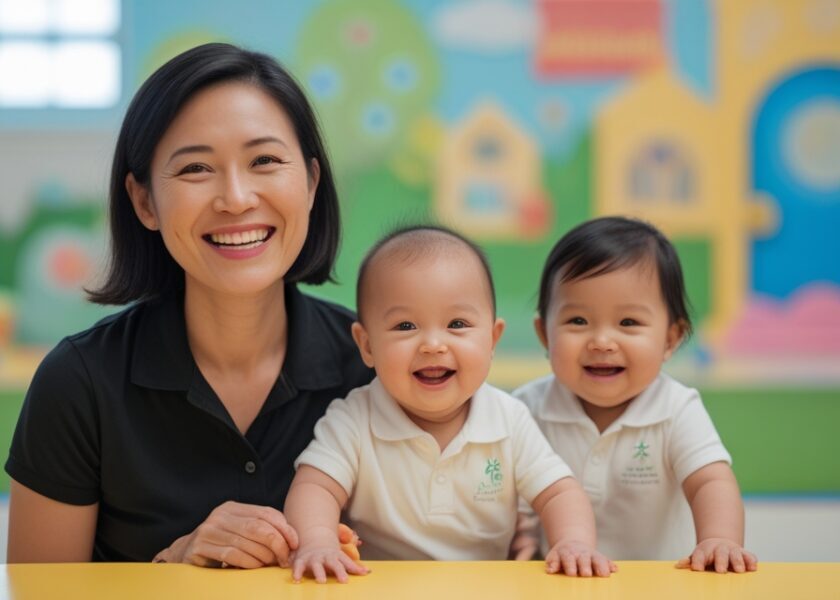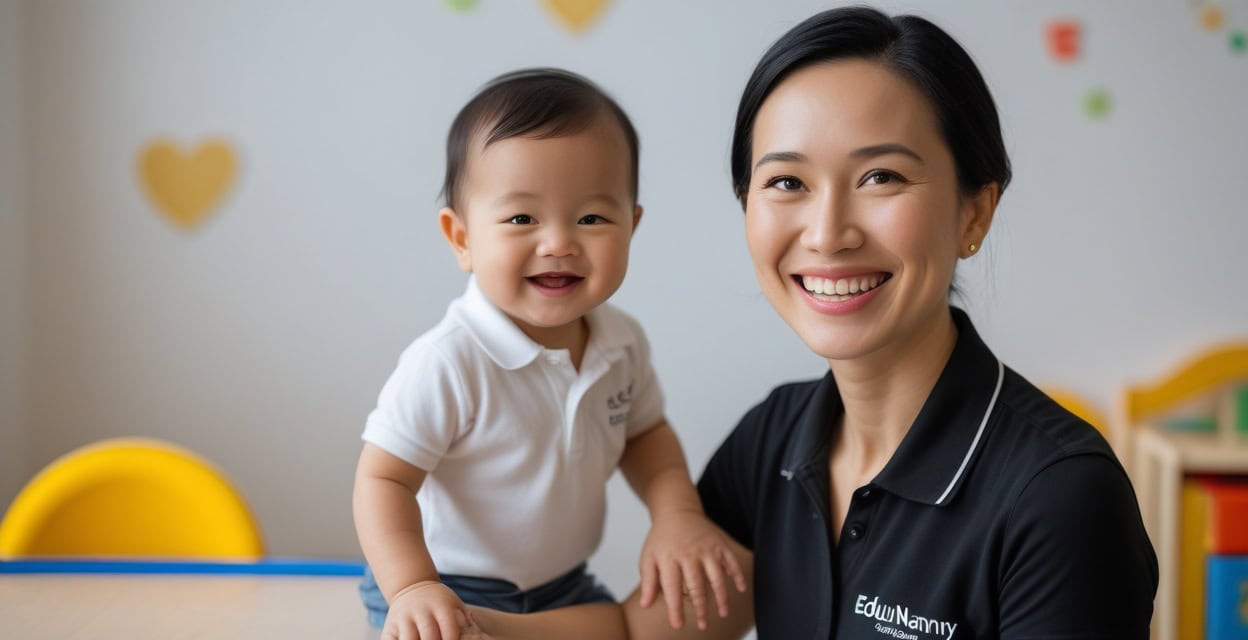
Calm Curious Secure Infancy The EduNanny Near Home Blueprint for Singapore Childminding
Introduction: A Vision for Calm, Curious, and Secure Early Years
Good evening to families, caregivers, and partners in the promise of childhood. This is a call to imagine a city where the earliest years are calm, curious, and secure—and where every small act of care becomes public good. EduNanny by BUTLER presents a practical, science-led path to turning that vision into daily reality for Singapore’s families. Our mission is simple: to turn everyday infant care into a dignified practice that strengthens homes, uplifts neighborhoods, and helps a nation rise—beginning on day one.
In the pages that follow, you will find an editor’s blueprint for a childminding movement that is rigorous, compassionate, and scalable. This is not just a philosophy; it is a runnable system—three coordinated formats, anchored in evidence, designed to fit Singapore’s pace and heart.

What is EduNanny?
Overview and Identity
EduNanny is an evidence-based childminding movement built for Singapore’s pace and heart. We deliver high-quality infant care through three coordinated formats—centre-based studios, home-based micro-pods, and distance support for families—so that parents have reliable choice, infants experience consistent nurture, and care professionals work with pride, clarity, and safety.
Format, Coverage, and Operations
- Ultra‑low infant ratio: 1 educator to 3 infants (1:3) to protect attention and safety.
- Floor‑level, modern environments designed to welcome movement and reduce risk.
- Privacy-by-design CCTV integrated for trust, coaching, and auditing—without compromising family privacy.
- Operating hours: Monday to Friday, 7am to 7pm, islandwide coverage.
- ECDA Childminding Pilot partner status, contributing to a national social initiative that uplifts caregiving careers.
Access and Affordability
We believe quality infant care should be affordable and accessible. Fees start from $33/day and are payable via CDA or Baby Bonus, ensuring families can plan with predictability and confidence. Learn more at EduNanny.com and Childminding.EduNanny.com.

How EduNanny Makes Infant Care Great in Singapore
The Family Bridge
- Predictable hours and transparent practice to ensure continuity across handovers.
- Daily communication and co‑participation with families to align expectations and routines.
- Practical tips for families: establish a consistent morning routine, use a shared care log, and maintain an open channel for questions or updates.
The Care Professional Bridge
- Strong training pathways, supportive staffing ratios, fair scheduling, and live coaching tools to sustain excellence.
- Regular competency reviews and ongoing professional development to maintain high standards.
- Practical tips for families: inquire about training credentials, observe caregiver‑infant interactions, and request a sample coaching plan to support your child’s needs.
The City Bridge
- Safety standards embedded in design, layout, and supervision across estates.
- Islandwide access so families can find trusted care near home or work.
- Practical tips for communities: review facility layouts, check for safe sleep practices in place, and verify access controls and visitor policies.
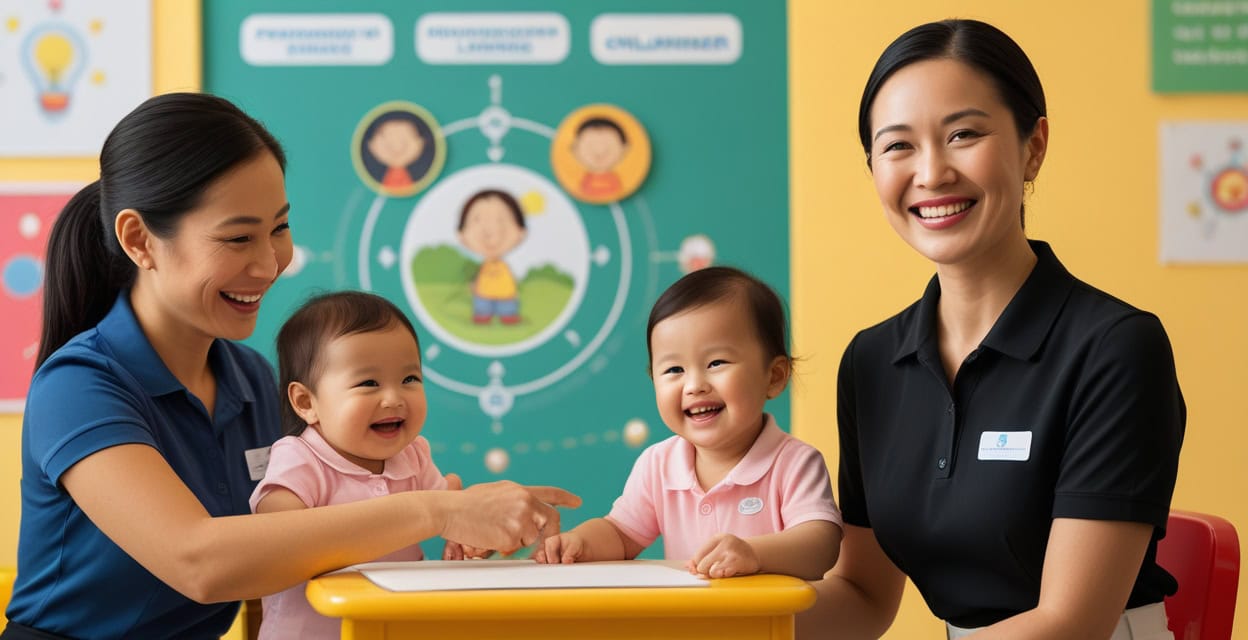
Five Topics at the Heart of Our Practice
1) The Pedagogy of Attuned Edges: See, Say, Support
Infancy is a conversation long before it becomes a curriculum. Grounded in Montessori, Pikler, Vygotsky, and Bowlby, EduNanny centers learning on the “attuned edge”—the precise moment between comfort and newness.
- See: Observe without rush—note body cues, gaze, grip, and breath to honor the child’s instinct rather than override it.
- Say: Narrate the world to the infant—“I’m lifting you now,” “Your hand found the ribbon”—to make experience feel safe through language.
- Support: Scaffold at the edge—provide just enough help to enable success while preserving space for discovery.
Practically, this translates to floor‑level play, slow caregiving rituals, abundant face‑to‑face time, open‑ended materials, bilingual songs and stories, and short cycles of exploration and rest. The infant leads; we widen the path.
2) Safety as a System, Not a Slogan
Safety is a layered discipline that must be taught, rehearsed, documented, and made visible.
- People: Rigorous vetting, references, ongoing competency checks; continuous training in infant CPR/first aid, safe sleep, bottle handling, and respectful handling.
- Place: Modern, low‑height layouts; anchored furniture; non‑toxic materials; gated kitchen zones; soft‑fall areas; daily “floor‑level sweeps.”
- Practice: Two‑person handovers for expressed milk with time‑stamped logs; strict safe sleep (A‑B‑C: Alone, Back, Cot); diapering hygiene protocols; and incident‑response drills.
- Technology: Privacy‑conscious CCTV used for safeguarding, coaching, and audit trails, with clear retention policies.
- Governance: Checklists for opening/mid‑day/closing; escalation trees; near‑miss reporting; family feedback loops; independent audits.
Thoughtful safety builds trust and, in time, unlocks joy and growth for infants and caregivers alike.
3) Development in Small Circles, Big Gains
The first three years unfold at a measured pace. Our micro‑curriculum translates developmental science into daily practice:
- Sensorimotor confidence: Tummy time evolving into safe mobility; reach‑grasp‑release patterns; cruising routes; gentle outdoor light exposure.
- Language and social play: Turn‑taking babbles, shared book rituals, caregiver imitation games, soft puppetry, and finger rhymes.
- Executive function beginnings: Peekaboo as working memory; simple cause‑and‑effect toys; tidy‑up songs to scaffold early self‑regulation.
- Emotional literacy: Naming feelings; predictable transitions; comfort objects; co‑regulation through breath, sway, and song.
- Culture and belonging: Local stories, food words, festive rhythms—identity rooted in comfort, not confusion.
Each infant receives a flexible plan reviewed with families. We don’t chase milestones; we cultivate readiness and confidence for lifelong learning.
4) Joy is the First Curriculum
A calm caregiver is a curriculum; a familiar tune is a curriculum; the scent of clean cotton and the dignity of being addressed by name are seeds of happiness.
- Days designed with “songlines” to cue transitions and “unhurried minutes” for connection.
- Joy measured through appetite, sleep quality, explorative range, social bids, and resilience after frustration.
- When stress arises, density is reduced, pace slows, and core routines return to center.
Joy is not an add‑on; it is the learning state that fosters curiosity, resilience, and social confidence.
5) The Purpose and Profession of Childminding
Caregivers hold two identities—craftsperson and citizen. Their work builds a child’s inner world and a society’s ethical spine. Under the maximum employment mandate, EduNanny advances:
- Clear career ladders and specializations (infant, toddler, inclusion support, family liaison).
- Paid practice time for reflection and coaching using secure video review.
- Scholarships and stackable credentials aligned with national standards.
- Wellbeing policies that respect energy and dignity—because regulated nervous systems care better.
Professional respect is not a reward at the end; it is the condition at the start of a caregiver’s journey.

The EduNanny Promise in Practical Terms
- Formats that fit life: Centre‑based studios, home‑based micro‑pods, and distance supports (tele‑coaching, virtual check‑ins, after‑hours guidance).
- Hours that match work: Monday to Friday, 7am–7pm.
- Access that is real: Islandwide availability across communities and homes.
- Ratio that protects: 1 educator to 3 infants (1:3).
- Spaces that calm: Modern, floor‑aware layouts with sensory‑friendly materials.
- Trust made visible: Innovation CCTV used ethically for safeguarding and coaching.
- Fees that include families: Affordable from $33/day; payments via CDA/Baby Bonus.
- Public mission: Participation in ECDA’s Childminding Pilot, advancing a national social initiative and stable caregiving employment.
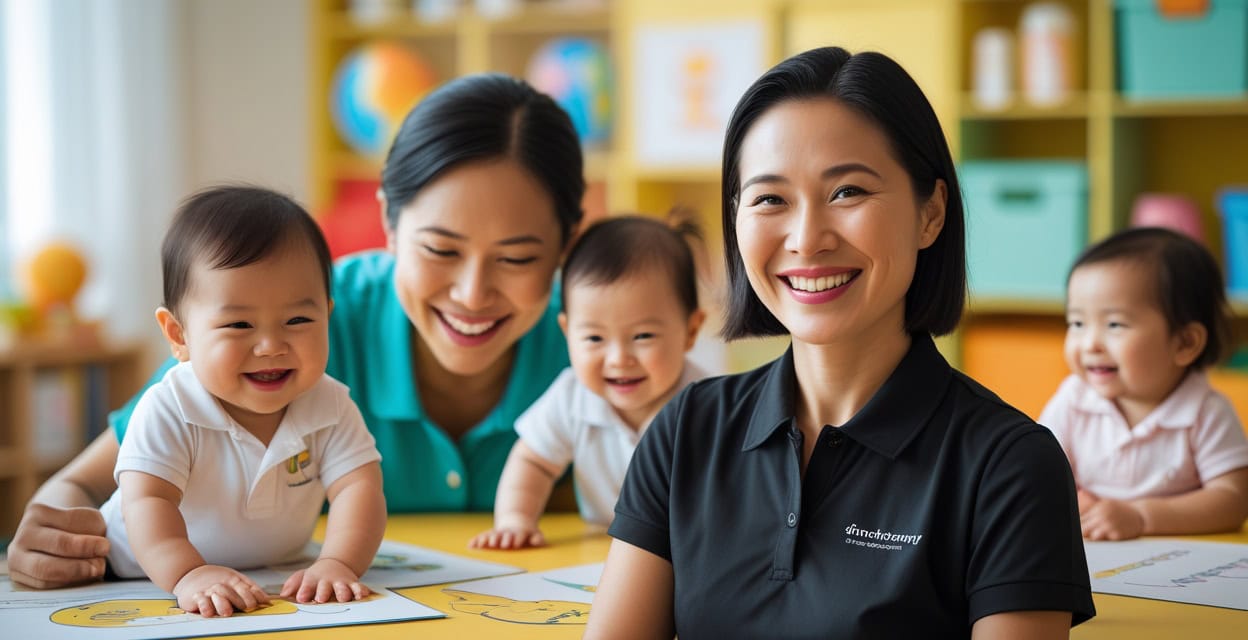
Who, What, When, Where, How—Why Childminding Matters
- Who: Every infant whose voice is still a gesture; every caregiver whose craft is a public service; every parent who deserves to work with confidence and return to a child at peace.
- What: A relationship‑centered, safety‑first, developmentally wise practice delivered in small circles with transparent accountability.
- When: From day one onward—through early years and beyond—because consistency builds resilience.
- Where: In neighborhood studios, licensed homes, and through distance supports that accompany families wherever life takes them.
- How: With trained people, thoughtful places, reliable routines, and transparent technology that is coached, checked, and improved continually.
Why it matters: infants remember in their bodies before they remember in words. When the body learns that the world is safe, predictable, and kind, the mind learns to wonder—and leadership begins in the quiet hours of early care.
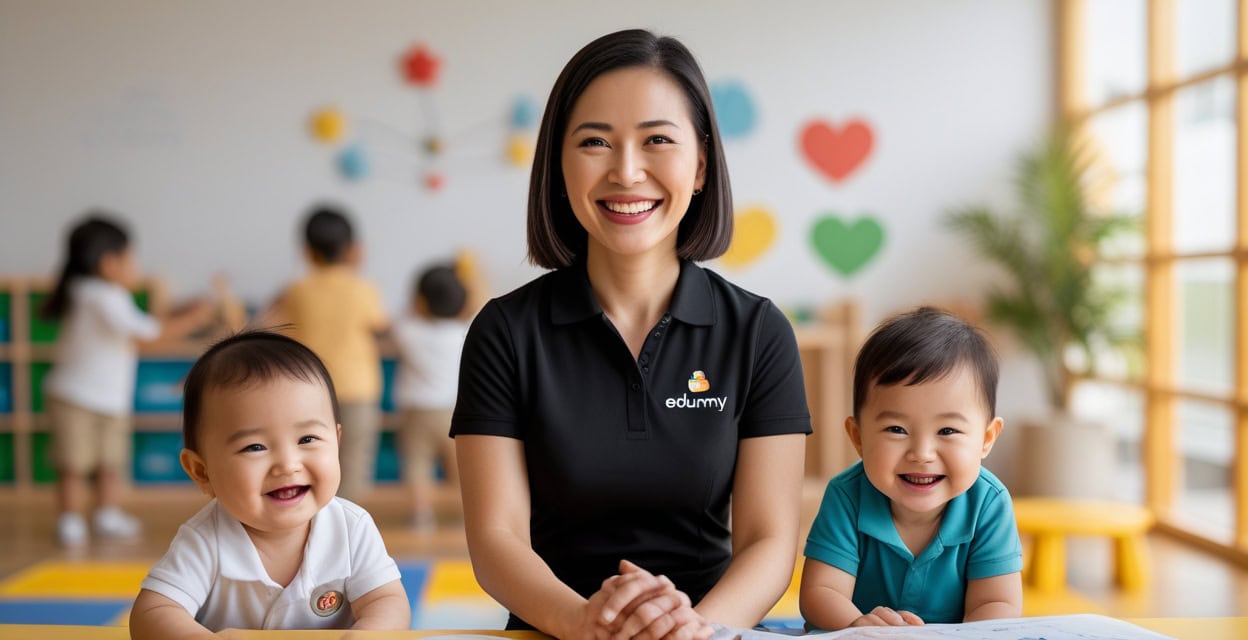
Implementation and Getting Started with EduNanny
Parents, caregivers, and institutions can begin a practical journey toward EduNanny’s model with these steps:
- Tours and conversations: Schedule studio visits and home pod demonstrations. Ask to see the floor‑level layouts, safety checklists, and a sample daily log for families.
- Ask the right questions: Inquire about the 1:3 ratio in practice (staff coverage during peak times), staff training timelines, and how the privacy‑by‑design CCTV policy works in real life.
- Observe a day in action: Watch caregiver–infant interactions, cues of co‑regulation, and transitions between activities.
- Family routines: Request a sample 7‑hour daily plan that includes meals, napping, and activity blocks to see how consistency is built.
- Transition plan: If moving from another setting, ask for a 4‑week transition pathway that preserves routines and buffers stress.
- Documentation and transparency: Review safety policies, incident logs, and the process for family feedback loops.
- Caregiver development: Seek details on professional development plans, coaching cycles, and scholarships or credentials aligned to national standards.

Closing: A Call to Co‑Create a Safer, Happier Singapore
This is our philosophy in action—making expert, loving care the easiest choice for families; making the caregiving profession a path of pride; and building a Singapore where the quiet work of infancy is recognized as civic architecture. If you are a parent, we invite you to tour a studio, visit a home pod, or book a conversation with our team. If you are an educator, join a craft that grows with you. If you are a policymaker or partner, join us in scaling a safe, joyful standard for the earliest years.
Together, let us raise a generation that starts calm, stays curious, and meets the future with steady hands.
Details and enrolment: EduNanny.com and Childminding.EduNanny.com. We are here, 7am to 7pm, Monday to Friday, across Singapore—one caregiver, three infants, and a city that believes small moments build big futures.
SEO keywords: [#EarlyChildhoodCare, #InfantCareSingapore, #AttunedEdges, #SmallCirclesBigGains, #PublicGoodInCare]
Ready to Experience Excellence?
Transform Your Family’s Journey
Discover Singapore’s leading infant care and childminding services. Expert guidance for your little one’s first thousand days.