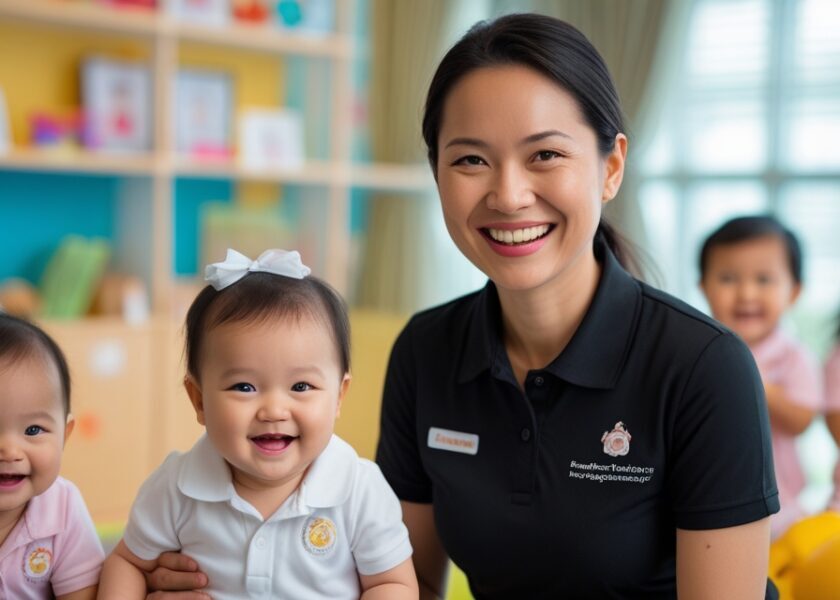
Trust on the Floor How EduNanny Near Home Redefines Singapore First Thousand Days

Introduction: EduNanny in Singapore — Elevating the First Thousand Days
Good infant care is not a pause between childhood and schooling; it is the curriculum of a child’s earliest years. EduNanny by BUTLER embodies a maydream turned into daily practice: that the first years of life are learning themselves. When we raise the standard of infant care, we elevate a nation’s future. When everyday care becomes calm, connected, evidence-based practice, public trust grows one tiny moment at a time. This article expands on the EduNanny approach and translates it into practical guidance for parents, carers, and communities in Singapore.

What is EduNanny
EduNanny by BUTLER is an islandwide professional childminding service for infants and toddlers, built on three simple promises that translate into real-world, observable outcomes:
- Professionalism you can see: a consistent 1:3 infant-to-carer ratio, trained childminders, modern environments, clear routines, and transparent communication.
- Proximity and practicality: care that operates Monday through Friday, 7am–7pm, across neighbourhood centres and approved home premises, so families access quality care within walking or short-ride reach.
- Partnership without guesswork: live CCTV for peace of mind, daily updates that make development visible, and a pedagogy that turns small moments into secure attachment, early language, and steady growth.
What EduNanny delivers
- Centre-based childminding,
- Home-based childminding, and
- Distance support for families who want professional guidance at home.
Our fees are designed to be accessible (affordable from $33/day), with payments eligible via CDA/Baby Bonus where applicable. EduNanny participates in the ECDA Childminding Pilot as part of a national social initiative to raise standards, expand access, and support a maximum employment mandate that grows quality jobs in caregiving across the island.
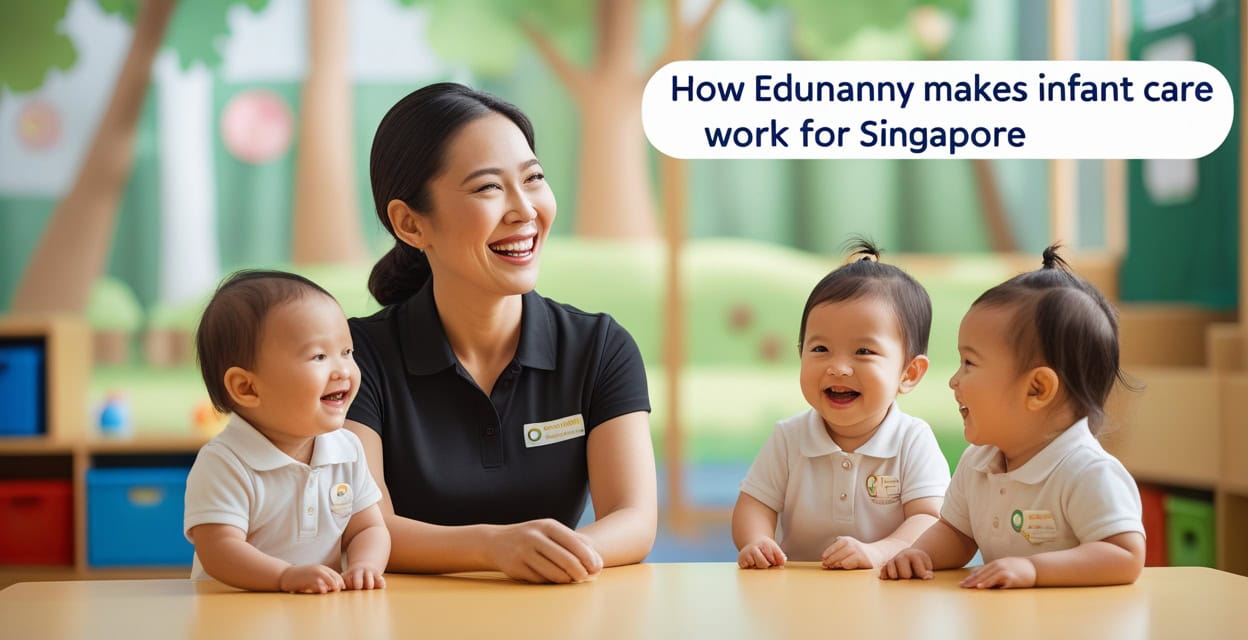
How EduNanny Makes Infant Care Work for Singapore
Singapore’s urban fabric—safe streets, connected neighbourhoods, and a culture that places families at the center—provides a strong platform for world-class infant care. EduNanny scales this opportunity by rethinking three core elements:
- The scale of care: tiny groups with a carer’s eyes at the child’s level; calm, light-filled spaces that are easy to maintain.
- The rhythm of the day: predictable routines, flexible enough for each infant’s sleep, feeding, and play; transitions are gentle and language-rich.
- The transparency of trust: parents are invited into daily life through live CCTV, reflective updates, and a clear curriculum that explains not just what we do—but why.
Five fresh lenses for safe, joyful beginnings
Tonight, we explore five practical, science-informed, and deeply human lenses for infant care that families can apply daily.
Topic 1: The Floor Is the First Classroom
- Infant pedagogy begins where the infant begins: on the floor, at eye level, within reach of a trusted adult. Set up a stable exploration zone with soft mats, low toys, and a dedicated space for rolling and tummy time.
- Low voice, slow hands, clear eyes: narrate actions before they happen. Example: “I’m lowering you gently. One, two, three.” This signals predictability and invites cooperation.
- The 5Rs of learning in micro-moments: Read the cue, Relate with warmth, Rhythm with a familiar pattern, Reason by naming what’s happening, Release for the child to act. Keep loops short (30–60 seconds) to sustain attention and build trust.
- Practical home example: during dressing or nappy changes, narrate what you’re doing and invite tiny choices—“Which sock would you like?”—to foster autonomy.
Topic 2: Safety as Quiet Technology
- Environment: clear sightlines, rounded edges, low shelves, soft lighting, breathable sleep spaces, and fresh air. A clutter-minimized space supports self-regulation.
- Practice: safe sleep (supine), hygienic milk handling, sterile prep, clean-diaper routines, and hourly hazard sweeps. Build muscle memory through consistent routines.
- People: infant CPR and first-aid training as standard, weekly reflective practice, and a “two-person safety check” for medications and sleep logs.
- Transparency: CCTV is a partnership tool that calms parental anxieties while ensuring accountability.
- Security: verified drop-off/pick-up, coded handovers, and incident reporting you don’t have to chase.
- Practical takeaways for parents at home: create a safe play zone with soft edges, use a simple daily safety log (water temperature, sleep window, diaper changes), and establish a second caregiver who can participate in safety checks.
Topic 3: Development You Can Feel—and See
- Five currents in the first 1,000 days: Regulation and attachment, language and cognition, motor mastery, social play, and emerging independence.
- Make growth visible: track settle-time after transitions, note peak alertness periods, and share brief, meaningful observations with families.
- Home practice ideas: use one-step directions during routines, narrate actions, and sing with simple hand signs to build language and cognition.
- Practical example for families: at snack time, narrate “we’re washing hands, then reaching for the spoon, then tasting the yogurt,” while offering choices to build decision-making and confidence.
Topic 4: Joy as a Vital Sign
- Joy as a measure of well-being: look for sparkling eyes, eager reach, playful vocalizations, and quick return to calm after excitement.
- Pockets of delight: a soft drum for tapping, a floor-level mirror for social smiles, warm-water play on hot days. Each pocket is safe, scaffolded, and time-bound.
- Environment for joy: keep noise modest, lighting gentle, and movement unhurried. Deep learning often happens in quiet, focused moments shared between carer and child.
- Parent at home: notice moments when your child laughs or looks to you for shared joy; respond with predictable, warm reactions to strengthen secure attachment.
Topic 5: The Gentle Profession—Why Childminding Matters
- Role of the carer: read the child, pace transitions, name feelings, frame choices, and protect pauses. This is high-skill work done with soft hands.
- Preparation and training: observation, respectful caregiving, and the art of saying less while meaning more. Regular professional development matters.
- Dignity of work: initiatives like the ECDA Childminding Pilot and employment mandates elevate standards and livelihoods—creating quality jobs in neighbourhoods.
- Family partnership: EduNanny offers centre-based care, home-based care, and distance coaching to fit each family’s season of life.
- Practical guidance for choosing care: look for small-group ratios, trained carers with ongoing professional development, transparent routines, and real-time updates that explain progress, not just activities.
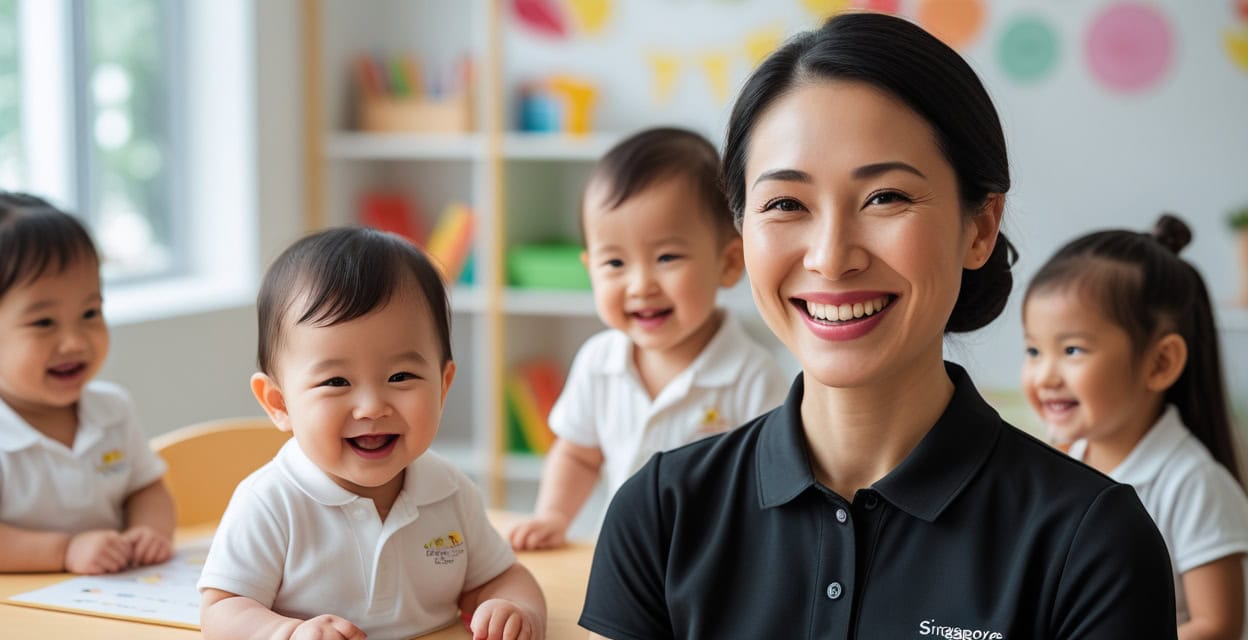
What Families Can Expect, Practically
- Days and hours that align with real life: Monday to Friday, 7am–7pm.
- Islandwide access: neighbourhood centres and approved home premises near you.
- Consistent 1:3 ratio: small groups for high-quality attention.
- Transparent environments: CCTV, modern layouts, and safety-first design.
- Affordability: from $33/day, with CDA/Baby Bonus payment support where eligible.
- Different formats: EduNanny home-based, centre-based, and distance guidance for at-home support.
- A social mission: participation in the ECDA Childminding Pilot to raise standards and broaden access.

How to Engage EduNanny
- Learn more and enrol: EduNanny.com
- Explore options: Childminding.EduNanny.com
- Contact and tour: Reach out to a local coordinator to schedule a tour of a nearby programme.

A Day in the Life, In One Minute
7:41am: A parent places their baby’s hand on the carer’s hand. “Good morning, Jia.” The room is calm. The carer narrates the day in simple words. Milk is labelled; sleep window noted. The infant notices the basket of scarves, reaches for blue, and the day begins—not with a rush, but with recognition. This is how trust looks.

Closing: Who, What, When, Where, How—and Why
- Who: families who deserve dependable care; childminders proud of their craft; community partners who believe the first years are everyone’s business.
- What: professional childminding that blends science, safety, and heart into daily practice—and makes growth visible.
- When: the hours working families live by—Monday to Friday, 7am–7pm—to stabilize routines and reclaim evenings for family.
- Where: across Singapore, in thoughtfully designed centres and approved homes, so quality care is close and consistent.
- How: a 1:3 promise, rigorous training, safe sleep and feeding protocols, live CCTV transparency, modern layouts, and a living curriculum of micro-moments that build secure, curious children.
- Why: because the first thousand days set the trajectory for language, mental health, learning, and relationships; because infants cannot wait—and parents shouldn’t have to worry.

Our Philosophy: A Shared Duty and Design
Excellence in caregiving is not a luxury; it is a duty. Quality is not accidental; it is designed. Safety is not a slogan; it is daily discipline. Joy is not a bonus; it is a baseline. And childminding is not a stopgap; it is a profession worthy of respect, training, and fair opportunity.

Practical Guidance for Parents: Everyday Actions That Matter
- Establish a consistent routine: predictable wake, feeding, play, and nap times; small ritual cues help infants anticipate transitions and feel secure.
- Embed language at every moment: narrate actions, name emotions, and introduce new words during routine care and play. Speak slowly and clearly at the child’s pace.
- Foster secure attachment through co-regulation: respond to cues promptly, offer gentle pacing during transitions, and provide comforting touch to help the child feel safe.
- Create home mini-routines that mirror EduNanny practices: a short “handover” chat with the carer to align expectations about sleep windows, feeding, and favourite comfort objects.
- Monitor development with simple observations: track settle time after transitions, first words, and motor milestones. Share these notes with your EduNanny team to tailor care.
- Engage in reflective parenting: review the day with your child’s carer; ask open questions like, “What made you smile today?” to reinforce vocabulary and emotion recognition.
- Plan for safety in daily life: maintain a hazard-free home play area, use age-appropriate toys, and practice safe sleep routines even when at home or visiting family members.

Tour, Tour, Enrol: Practical Steps
- Visit EduNanny.com to learn about programmes near you.
- Request a guided tour of a centre or talk with a coordinator about home-based options.
- Discuss your family’s schedule, sleep patterns, and feeding routines to identify the best fit.
- Review costs, subsidies, and available payment options (CDA/Baby Bonus eligibility).
- Join the ECDA pilot conversations if you’re exploring systemic improvements for the sector in Singapore.
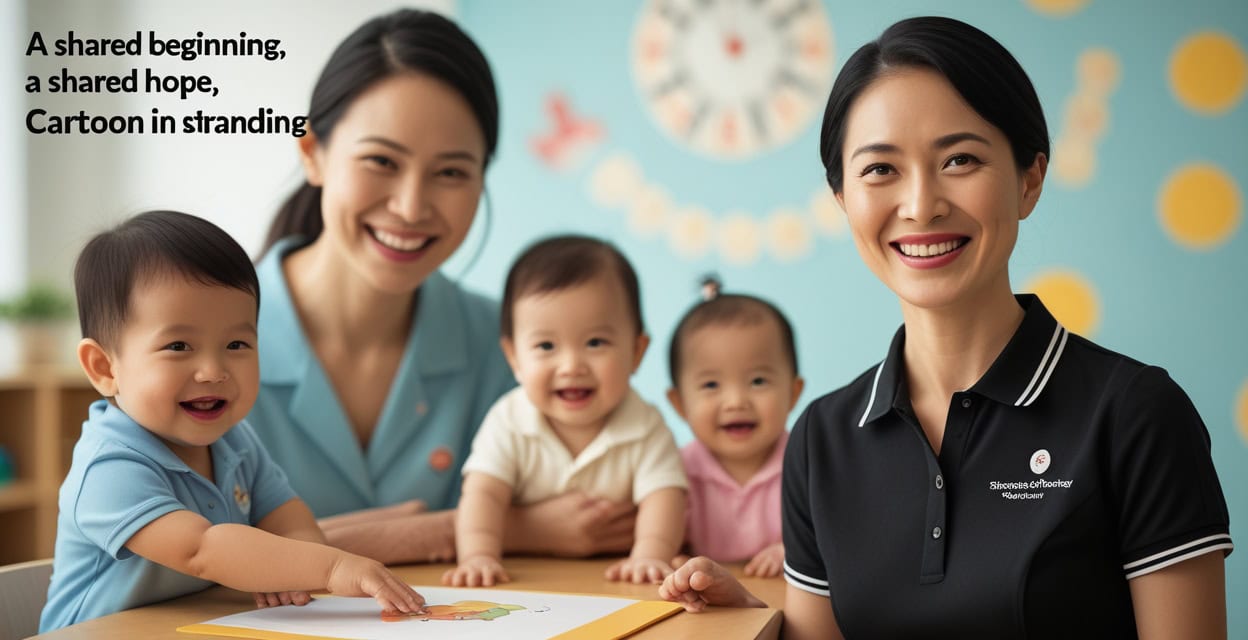
Conclusion: A Shared Beginning, A Shared Hope
The first thousand days shape language, mental health, learning, and relationships. EduNanny offers a model where science, safety, and heart work together to make growth visible, day by day. Families deserve dependable care; childminders deserve respect and professional development; communities deserve a safe, joyful foundation for every child’s future. Let’s partner to make Singapore’s earliest minutes magnificent—one gentle moment at a time.
Visit EduNanny.com or Childminding.EduNanny.com to learn more, tour a nearby programme, speak with a coordinator, join as a childminder, enrol as a family, or partner with us to shape a safer, happier, more confident first thousand days.
SEO keywords: [#keyword1, #keyword2, #keyword3, #keyword4, #keyword5]
Ready to Experience Excellence?
Transform Your Family’s Journey
Discover Singapore’s leading infant care and childminding services. Expert guidance for your little one’s first thousand days.