
EduNanny Singapore The Living Blueprint for Safe Joyful Infant Care and Near Home Childminding Across Island Communities

EduNanny Singapore: A New Standard in Infant Care and Childminding
Good morning, parents, caregivers, partners in policy, and friends. This article expands on the mission and practice of EduNanny by BUTLER, translating a national vision into everyday excellence for Singapore’s youngest citizens. Built for islandwide access and rooted in rigorous safety, pedagogy, and human connection, EduNanny brings together centre-based and home-based care to shorten the distance between home and high-quality early childhood experiences. Here you will find actionable guidance, real EduNanny insight, and practical examples to help families, caregivers, and communities make informed decisions about infant care and childminding.

Five Pillars of EduNanny Practice
First: The Pedagogy of Attuned Micro-Moments
Infants learn through millions of small exchanges. At EduNanny, we translate attachment theory, prepared environments, and social development into daily choreography that parents and educators can observe and participate in.
- Serve‑and‑return dialogue: Treat coos, gazes, and gestures as the child’s first curriculum. A baby reaches; we respond. A pause invites waiting with presence. Build trust by recognizing and language‑marking these moments.
- Respectful caregiving (Pikler-inspired): Unhurried diaper changes, narrated movements, eye‑level touch, and mindful transitions—caregiving that becomes learning rather than interrupting learning.
- Sensorimotor invitations: Floor time with short, safe challenges, treasure baskets with varied textures, and simple blocks to explore grasp, balance, and coordination—paced to the child’s state.
- Hundred languages of learning: Music, light, texture, rhythm, and movement to spark curiosity—delivered in short, meaningful moments that suit early development.
- Bilingual rhythms: Gentle Mandarin rhymes, Malay lullabies, Tamil fingerplays, and English storytelling woven into the week—balanced to avoid overstimulation while supporting language development.
Actionable tip for parents: keep a tiny “moment log” for a week. Note one micro-moment each day—like a successful eye contact during bottle feeding or a new gesture. Share it with EduNanny staff during updates to support the child’s evolving narrative.
Second: Safety as a Daily Ritual, Not a Poster
Safety is the backbone of trust. Our 1:3 ratio, CCTV transparency, and routines form a living system of protection and reassurance.
- Sleep safety by design: Firm sleeping surfaces, supine positioning, individual sleep logs, airflow checks, and real-time interval checks to ensure safe rest.
- Feeding integrity: Labeled bottles, allergen protocols, sterilization cycles, and paced feeds that respect satiety cues.
- Environment scanning: Hazard mapping by zone (floor, reach, line of sight) with daily checklists and monthly drills to prevent accidents before they happen.
- Hygiene and health: Rigorous hand hygiene, high-touch surface sanitization, and clear policies for exclusion and return‑to‑care communicated to families.
- Emergency readiness and transparency: Rehearsed routes, contacts, and roles; ready communication templates; CCTV used as a learning and accountability tool—shared with families to build trust without interrupting infant experience.
Practical note for families: request a safety briefing with your EduNanny educator team, including a tour of sleep areas, feeding spaces, and how CCTV data is used to improve safety while preserving child comfort.
Third: Development as a Rhythm You Can Feel
The earliest task is trust, and development unfolds as a daily rhythm. Our educators craft individual care plans that listen to the child, not a generic timetable.
- Motor development: Short, frequent floor time windows, age-appropriate challenges, and avoidance of confined spaces that restrict movement.
- Language development: Close-talk narration during routines (diaper changes, feeding, play), responsive singing, and reading even to the youngest ears to build receptive and expressive language.
- Social‑emotional development: Consistent primary caregiver assignments, predictable transitions, and co-regulation strategies to support big feelings.
- Sensory development: Balanced sensory diets with soft light, gentle sounds, and varied textures offered with choice, not imposed, to prevent overstimulation.
- Observation and partnership: Brief, intentional notes—two clear sentences—captured moments (new reach, longer gaze, first clap) and shared with families to make development a collaborative journey, not a report card.
Actionable plan: at home, schedule a 10–15 minute daily “play and talk” window with your child, focusing on a single new skill (e.g., stacking cups, imitating sounds). Share observations with EduNanny staff to align home and centre learning experiences.
Fourth: Happiness and Belonging as Measurable Realities
Joy is a signal of regulated nervous systems and well‑held routines. EduNanny builds micro-rituals of happiness that travel with families through the workday.
- Warm greetings: Consistent words and gestures at arrival to anchor the day and provide a sense of safety.
- Mini ceremonies: “Good Morning Sun” greetings, handwashing finger plays, and a farewell song at pick‑up to close the day with care.
- Comfort objects and routines: Identities and security objects are respected and integrated into daily activities, never hidden away.
- Joy markers for educators: Indicators such as relaxed shoulders, open hands, shared smiles, and cue‑based babble bursts that reflect a calm, engaged child.
- Community and belonging: Festival moments, family drop-ins, and caregiver‑parent micro-conferences designed to fit a busy workday and reduce isolation.
Parental tip: create a simple daily “joy log” at home—note one moment of joy each day (e.g., a smile after a cuddle). Share it with EduNanny to reinforce positive patterns across settings.
Fifth: The Vocation of Childminding as a Civic Profession
Childminders are partners in a national promise. Within the ECDA Childminding Pilot, EduNanny invests in people as much as premises, merging research with community practice.
- Training that blends science with culture: Ongoing professional development that merges attachment science with Singapore’s cultural heartbeat, tailored to infant care realities.
- Clear career pathways: Home-based care, centre roles, mentorship tracks, and specialisations (sleep, feeding, inclusive practices) to sustain meaningful careers.
- Fair work and stable schedules: Monday–Friday, 7 a.m.–7 p.m. to align with real workdays, ensuring consistent staffing and predictable routines for children.
- Professional dignity through shared accountability: CCTV as a learning mirror, not just surveillance, to elevate practice and demonstrate transparency.
- Community roots and locality: Prioritising staff from neighbourhoods to build familiarity, trust, and care that reflects local needs and languages.
Practical takeaway: if you are considering a care role, inquire about training modules, mentorship opportunities, and the pathway to a stable, respected career within EduNanny or your local ECDA‑aligned providers.
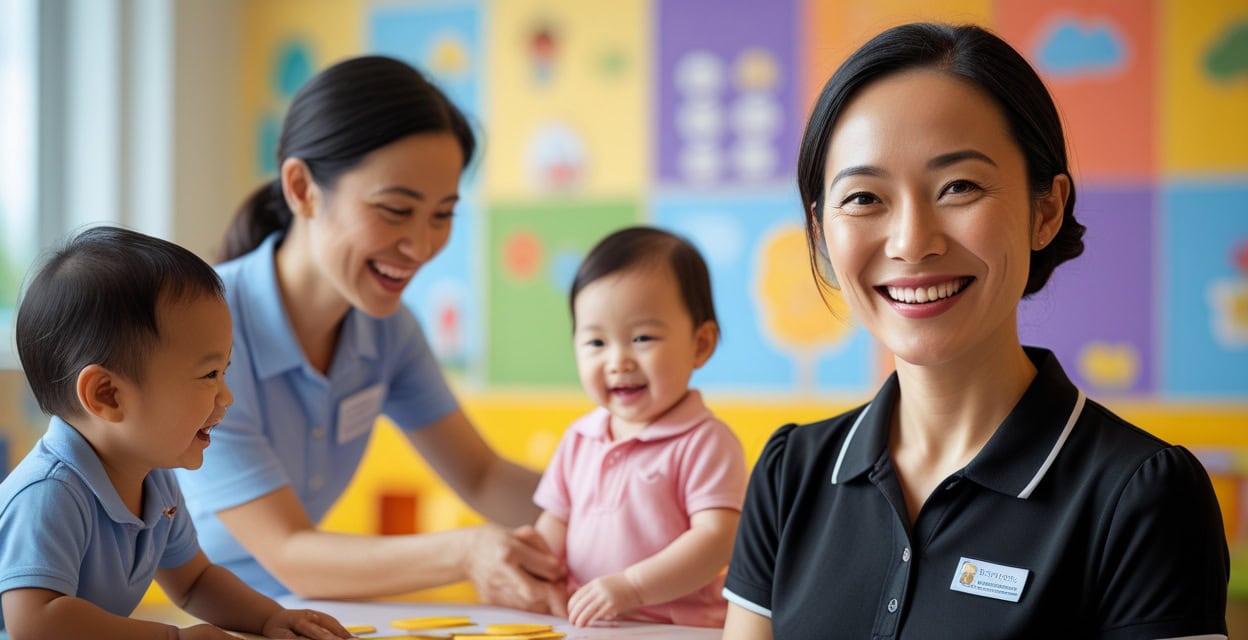
Practical Implications for Families: What It Means in Everyday Life
- Care options: Centre‑based and home‑based childminding to suit your preference, proximity, and work style.
- Islandwide availability: Access to care across communities, reducing travel time and improving consistency in routines.
- Affordability: Access from $33/day, with fees payable by CDA/Baby Bonus, designed to widen participation without compromising quality.
- Hours that reflect real workdays: Monday–Friday, 7 a.m.–7 p.m. operations for predictable schedules and caregiver stability.
- Environment and safety: Modern layouts, sightlines for staff, proper ventilation, and safety‑first design in both centre and home premises.
- Transparency and communication: Secure CCTV, daily updates, and digital notes that keep families informed without interrupting infant experiences.
- Family integration: Daily notes, family events, and micro‑conferences to keep families in the loop and part of the child’s learning journey.
How to Engage with EduNanny: Questions to Ask and How to Decide
- Safety and ratios: How is the 1:3 ratio maintained across shifts? What are the sleep, feeding, and hygiene protocols?
- Staff training and continuity: What training pipelines exist for caregivers? How is staff retention supported?
- Observation and updates: How often are development notes shared? What do two-sentence progress notes look like?
- Home-based vs centre-based differences: How does each setting support language development and attachment bonds?
- Cost and eligibility: What are the exact fees, what subsidies apply, and how are CDA/Baby Bonus claims processed?
- Parent participation: What opportunities exist for family involvement, conferences, and cultural celebrations?
Practical next steps: schedule a tour of both centre-based and home-based EduNanny options, request a safety walkthrough, and ask for a sample daily schedule to compare with your family routine. Bring your child’s current routine, feeding cues, and sleep patterns to the meeting to co-create a plan that honors your family’s priorities.

Conclusion
EduNanny by BUTLER embodies a dynamic approach to infant care and childminding in Singapore: a humane, scientifically informed, and civically minded practice designed to bring high-quality care within reach for every family. By centering attuned micro-moments, daily safety rituals, developmental rhythms, happiness as a measurable reality, and the vocational dignity of caregivers, EduNanny turns everyday routines into a reliable, nurturing curriculum for the first thousand days and beyond. If you seek excellence, proximity, and partnership in your child’s early years, EduNanny invites you to explore centre-based and home-based options, ask hard questions, and become part of a community that believes care is a public good and a personal art.
Visit EduNanny.com or Childminding.EduNanny.com to learn more, compare options, and begin a conversation about your family’s needs. Because when families trust the day, evenings become lighter, and the future becomes clearer.

Call to Action: Join the EduNanny Community
Whether you are a parent seeking the best start for your infant, a caregiver ready to turn your gift into a profession, or a neighbour who believes in humane, high-quality care near home, EduNanny welcomes you. Reach out, schedule a visit, and start a dialogue about safety, pedagogy, and price—so that the promise of every Singapore morning can be kept, one infant, one family, one neighbourhood at a time.
In closing, imagine that morning lift again: a parent’s arms open; an educator’s arms ready to receive. Between those hands lies the future we hope Singapore will become—curious, kind, resilient, and ready. EduNanny exists to keep that promise through everyday excellence in infant care and childminding.
SEO keywords: [#keyword1, #keyword2, #keyword3, #keyword4, #keyword5]