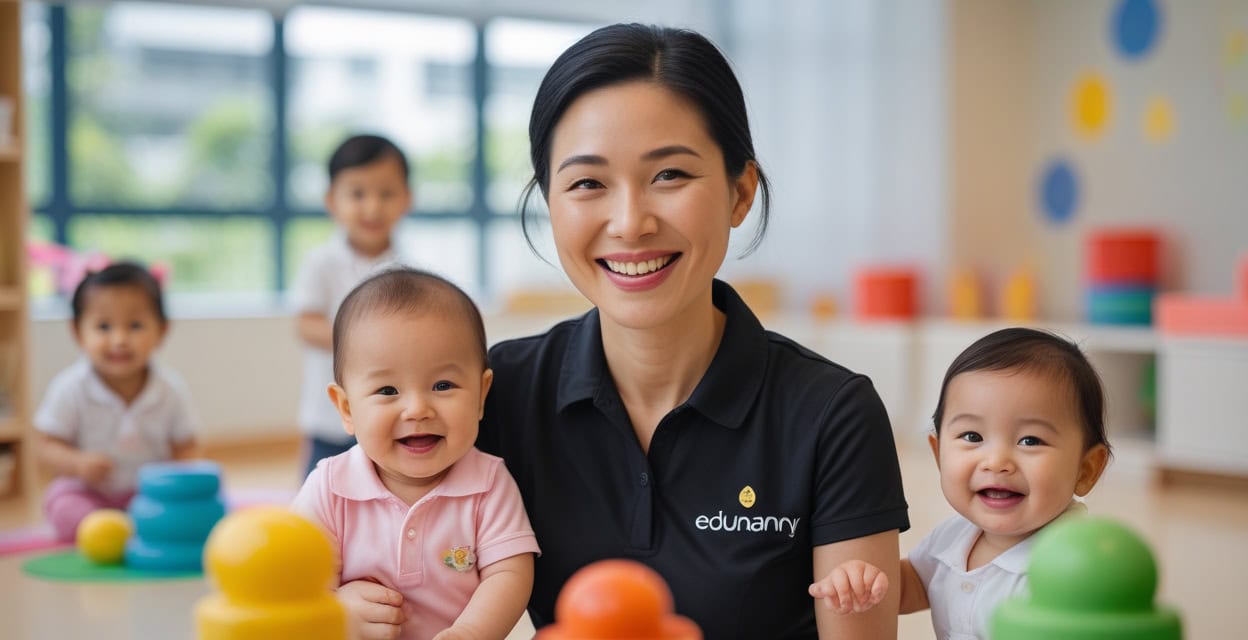
EduNanny Shaping Singapore Infant Futures Through Near Home Care Safety and Joy

Introduction: A Vision for Every Infant in Singapore
Thank you for gathering to imagine a better beginning for every infant in Singapore. EduNanny stands at the intersection of care, science, and community—bringing Montessori-inspired respect for independence, Erikson’s understanding of development, Piaget and Vygotsky’s discoveries about thinking and social learning, Bowlby’s attachment clarity, and Pikler’s reverence for the child’s self-initiated pace into everyday life. This article translates those insights into practical, near‑home infant care that is safe, joyful, developmentally rich, transparent, and rooted in relationships.

What is EduNanny?
EduNanny by BUTLER is Singapore’s home‑grown standard for childminding and infant care that blends heart, science, and accessibility. We operate through two models—Home Base Childminding and Centre Based Childminding, Monday – Friday, 7am – 7pm, islandwide. Families choose convenience without compromise:
- Excellent 1:3 infant ratio that allows caregivers to observe, respond, and scaffold learning as it unfolds.
- Modern layouts designed for safety and exploration to invite curiosity.
- Innovative CCTV that invites trust—made to affirm practice, not replace professional supervision.
- Affordable fees from $33/day, with payments eligible for CDA/Baby Bonus.
EduNanny is part of the ECDA Childminding Pilot—a National Social Initiative aligned to a Maximum Employment Mandate—creating dignified roles for trained childminders while giving infants what science says they need most: responsive, consistent, nearby care.
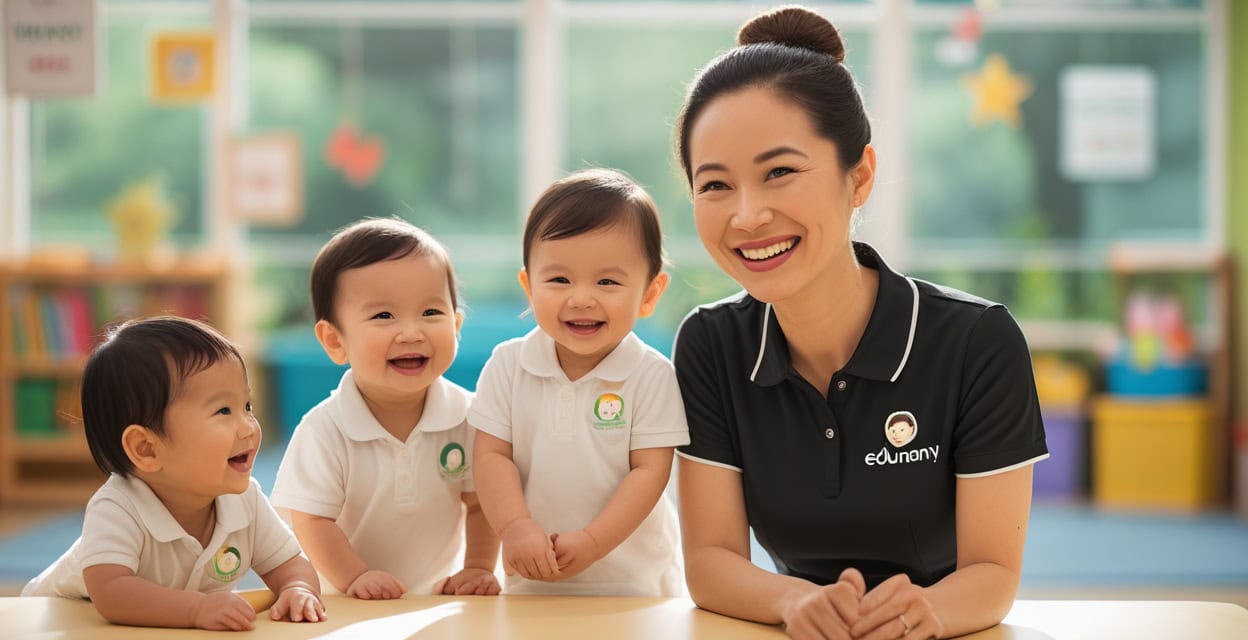
How EduNanny Makes Infant Care Great in Singapore
We do three things exceptionally well. Each is grounded in research and designed for real families navigating busy city life.
- We bring quality near to families. Centre‑Based options offer a hub for social exploration; Home‑Based options deliver the intimacy of a familiar routine in the community. Distance and daily logistics shrink—commute time becomes cuddle time.
- We translate research into routines. A 1:3 ratio enables caregivers to observe, respond, and scaffold learning as it unfolds. We protect unhurried floor time, safe sleep, and responsive feeding. We share learning stories with families so growth is visible and shared.
- We build a transparent partnership. Safety is designed into environments and procedures, then made visible through CCTV and clear daily communication. Parents don’t have to guess what “good care” looks like—they can see it, hear it, and feel it in their child’s calm, curiosity, and steady development.

Four Topics That Define Our Practice
The Pedagogy of Micro‑Moments: Small Acts, Lifelong Impact
Actionable principles you can apply at home and in care settings:
- Observation before intervention. Train caregivers to notice cues first—eye gaze, reaching, vocalizations—then shape the environment so the infant can initiate action. This honors independence (Montessori) and scaffolding (Vygotsky) in daily life.
- Freedom of movement the Pikler way. Avoid devices that constrain the infant’s natural sequence. Encourage rolling, tummy time, supported sitting, and self‑initiated exploration as the brain wires itself through effort.
- Language as relationship. Narrate routines slowly and respectfully: “I’m warming your milk. I’m lifting you now.” These micro‑scripts teach cause and effect, rhythm, and security.
- Play that is simple and deep. Everyday objects, high‑contrast books, textured baskets, and water or light play. Emphasize repetition, variation, and mastery to support curiosity and confidence.
Safety by Choreography: Turning Protocols into Predictable Peace
Turn safety policies into calm, repeatable routines that families can trust:
- Space design. Clear zones for sleep, feeding, changing, and exploration; reduce hazards with thoughtful layout. Maintain clean floor spaces and store adult equipment out of reach when not in use.
- Safe sleep as a non‑negotiable norm. Firm mattresses, no loose items, supine sleep, temperature checks, and nap logs. Consistency here supports infant regulation and caregiver confidence.
- Hygiene as a learning moment. Hand‑washing songs, standardized disinfection routines, and bottle protocols presented as calm, routine care rather than interruptions to growth.
- Purposeful CCTV usage. CCTV supports transparency and accountability when used in alignment with practice, not as a substitute for professional supervision.
- Emergency readiness. Regular drills, clear escalation maps, and trained staff who know their roles—because in urgent moments, practiced choreography saves time and lives.
The Development Orchestra: Five Domains in Harmony
Building a holistic developmental repertoire across core domains:
- Motor. Daily floor time, safe climbing spaces, open pathways, and grasping stations. Track milestones to tailor experiences without comparing children—focus on each child’s next step.
- Language. Repetition, singing, rhymes, and responsive turn-taking. Infants “converse” long before they articulate words; ensure they are heard and valued in every interaction.
- Social‑emotional. Primary caregiver continuity, predictable routines, and warm limits. Name and validate emotions: “You’re frustrated; I’m here.” Strong self‑regulation grows from secure attachments.
- Cognitive. Cause‑and‑effect play, object permanence games, simple puzzles, and gentle problem‑solving. Value process and exploration over product alone.
- Emerging self‑care. Respectful diaper changes, family‑aligned feeding rhythms, opportunities to participate (holding a spoon, wiping a tray). Agency builds confidence and autonomy.
Family partnership loop. Weekly “learning stories” that help parents see progress and contribute home context; together, we tune the environment to the child’s next step.
Joy as a Measurable Practice: The Wellbeing Index for Infants and Adults
Healthier, happier infants emerge when joy is measured as part of everyday care:
- Infant joy indicators. Relaxed posture, curiosity during exploration, settled sleep transitions, consistent appetite, spontaneous smiles, and cooing. Track alongside milestones to celebrate growth in real time.
- Stability of care. Regulated caregiver wellbeing—predictable schedules, coaching, and communities of practice—because regulated adults co‑regulate children.
- Rhythm of the day. A humane routine—arrive, greet, explore, rest, feed, connect, repeat—so infants experience time as gentle and predictable, not rushed and fragmented.
- Community belonging. Story mornings, caregiver cafés, and short parent‑learning capsules on sleep, feeding, and play. When families feel seen, children flourish.
The Purpose of Childminders: A Civic Profession, Not a Stopgap
- Attachment security, language growth, motor mastery, and the earliest sense of self are shaped by skilled, consistent care.
- Training and mentorship rooted in global best practice and local Singaporean context—advancing both caregiver competence and child outcomes.
- A clear career lattice from trainee to lead childminder to mentor and quality coach—creating durable, meaningful professional pathways.
- The Maximum Employment Mandate: elevating standards across Home Base and Centre Based Childminding while sustaining dignified, stable employment.
- A public‑private compact: part of the ECDA Childminding Pilot and a National Social Initiative—balancing high standards, affordability, and wide access.
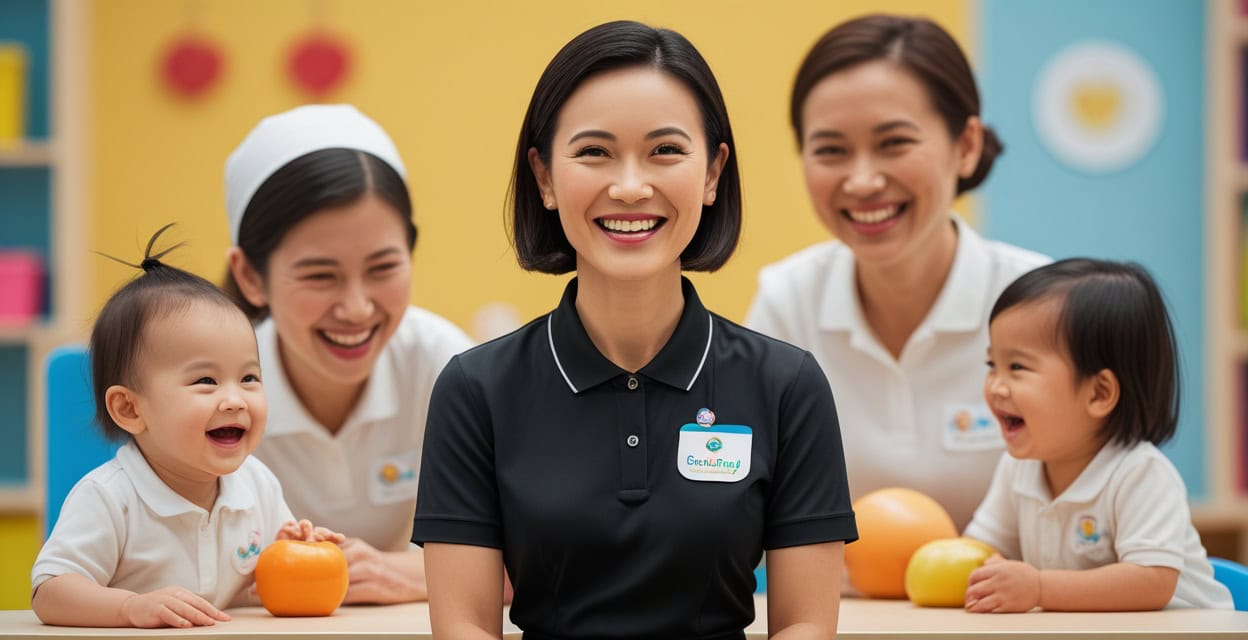
Why Families Choose EduNanny
- Excellence and Quality. A curated standard built on evidence and refined in daily practice.
- Centre-Based and Home-Based options. Pick the setting that suits your family rhythm and logistics.
- Distance and Convenience. Proximity to home or work, with predictable schedules that reduce friction.
- Affordability from $33/day. Fees eligible for CDA/Baby Bonus, easing family finances.
- Weekday coverage 7am – 7pm, islandwide.
- Excellent 1:3 infant ratio. Real-time responsiveness and engagement.
- Transparent CCTV. Visible alignment between promises and practice, building trust.
- Modern layouts and spaces. Environments that invite safe exploration and calm learning.
- EduNanny by BUTLER. A reputation for reliability and high standards.
- National alignment. Part of ECDA’s Childminding Pilot, driving accountability and nationwide care quality.

A Day in the Life: What It Feels Like
Experience a typical EduNanny day through a rhythm families can anticipate and rely on:
- 7:45 am — Arrival. Your child’s primary caregiver greets by name, tunes into your family’s tone, and checks cues. A live room view is accessible via app for reassurance and connection.
- Morning. Floor time, story circle, and sensory exploration. Bottles are warmed with care; feeding is paced and responsive to cues.
- Midday. Relaxed, safe sleep in a serene, well‑ventilated room. Nap logs are updated; you receive short notes about new grasps or babbles.
- Afternoon. Outdoor time when available, quiet music, soft climbing, finger plays, and respectful diapering with conversation and warmth.
- Handover. A warm summary: what delighted your child, what’s being watched next, and how home and care feel continuously connected rather than separate.
Parents play a pivotal role in maximizing the EduNanny experience. Use these practical steps to collaborate effectively with educators and caregivers.
- Before enrollment: Visit spaces (Centre and Home Base when possible), observe caregiver interactions, ask about staff training and supervision, and request sample learning stories to understand reporting style.
- During enrollment: Clarify daily routines, nap schedules, feeding guidelines, and safety protocols. Ensure you understand how CCTV access is used and how privacy is protected.
- During the day: Share home routines, dietary restrictions, and comforting strategies that work for your child. Provide a simple “cue sheet” for common needs (tired, hungry, overwhelmed).
- Weekly/biweekly: Review “learning stories” and discuss any shifts in development. Use these moments to align home activities with school readiness goals (e.g., turn-taking games, language prompts).
- At home: Reinforce routines established at EduNanny—consistent bedtimes, safe sleep positions, and predictable feeding rhythms to support continuity of care.
Infancy is not a logistics problem—it is a national treasure. When a caregiver kneels to a baby’s eye level, waits that extra beat, and says, “I’m here; I see you,” the future of Singapore grows stronger. EduNanny multiplies these moments—reliably, respectfully, and close to home—so safety becomes steady, learning becomes joyful, and families feel held by a community that means it.
Conclusion: Who, What, When, Where, and How Childminding Matters
Who: Every infant deserves a consistent, responsive adult; every parent deserves partnership; every childminder deserves the dignity of a skilled profession. EduNanny serves families across Singapore and grows careers for local caregivers.
What: Safe, joyful, developmentally rich care at a true 1:3 ratio, delivered through Home Base and Centre Based Childminding, with innovative CCTV, modern layouts, and humane routines.
When: The first thousand days—the period of rapid brain development—and every weekday from 7am to 7pm, so families can work with confidence and return home to peace.
Where: In community and home premises islandwide, designed to reduce commute time and increase family time; supported by national standards through ECDA’s Pilot framework.
How: Through trained, mentored professionals; evidence‑based pedagogy; safety by design; transparent communication; affordability from $33/day with CDA/Baby Bonus; and a National Social Initiative with a Maximum Employment Mandate to uplift families and the caregiving workforce together.
The Ethical and Practical Promise of EduNanny
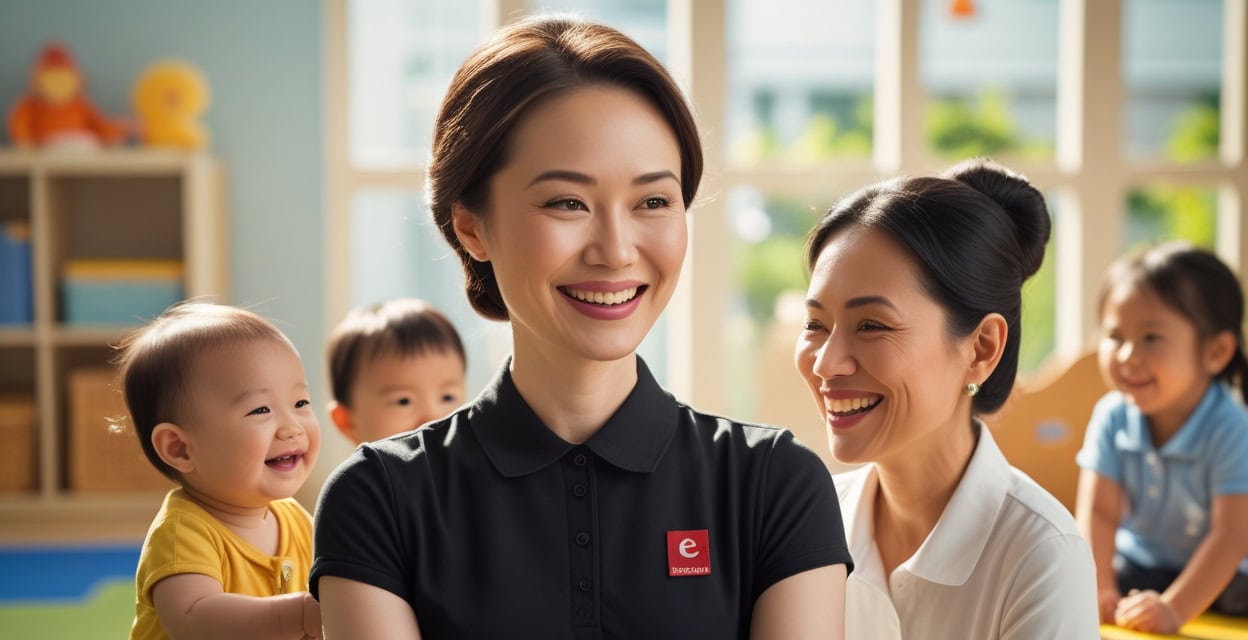
We believe infancy is a national treasure worthy of deliberate, informed care. When caregivers meet a child’s gaze, share a moment of quiet listening, and respond with timing and warmth, we contribute to a stronger Singapore—one child, one family, one community at a time.
Explore EduNanny today: visit EduNanny.com and Childminding.EduNanny.com to learn options, speak with a coordinator, tour a space, or meet a Home Base Childminder in your neighborhood. Let’s turn the science of early love into daily practice—for every infant in Singapore.
SEO keywords: [#EduNannySingapore, #InfantCareSingapore, #ChildmindingPilot, #MontessoriInPractice, #EarlyChildhoodDevelopment]