
EduNanny Near Home Pods December 2024 to December 2027 A Living Curriculum of Safe Joyful Attachment in Singapore

EduNanny: Redefining Infant Care in Singapore
In a nation that sings of progress and pragmatism, the earliest days of life deserve both reverence and a scalable, evidence‑based approach. EduNanny is a movement as much as a service—an ecosystem built to cradle the first years with the rigor of science and the warmth of a trusted neighbor. Grounded in the wisdom of Montessori, Piaget, Vygotsky, Froebel, Malaguzzi, Bowlby, Pikler, Spock, and Erikson, EduNanny treats the first thousand days as public, shared, and absolutely essential. This article expands on what that means in practice for families, caregivers, policymakers, and the communities that form the fabric of Singapore.

What is EduNanny?
EduNanny is Singapore’s near‑home childminding network operating under the ECDA Childminding Pilot (December 2024 to December 2027). It blends Centre‑Based and Home‑Based care while foregrounding innovation, transparency, and the heart of a trusted neighbour. The model prioritises safety, development, and dignity, with a distinctive emphasis on accessibility and equity for all families.
Key characteristics include:
- Islandwide coverage with Monday to Friday, 7am to 7pm availability.
- Ultra‑low infant ratio of 1:3 to ensure attunement and individualized support.
- Modern, purpose‑built layouts in centres and intimate home premises within communities.
- Secure, parent‑view CCTV to support transparency while safeguarding privacy.
- Affordability: fees from $33 per day, with CDA/Baby Bonus payable—delivering excellence without price as a barrier.
- A national social initiative featuring a Maximum Employment Mandate to elevate the caregiving profession and lift both workers and children.
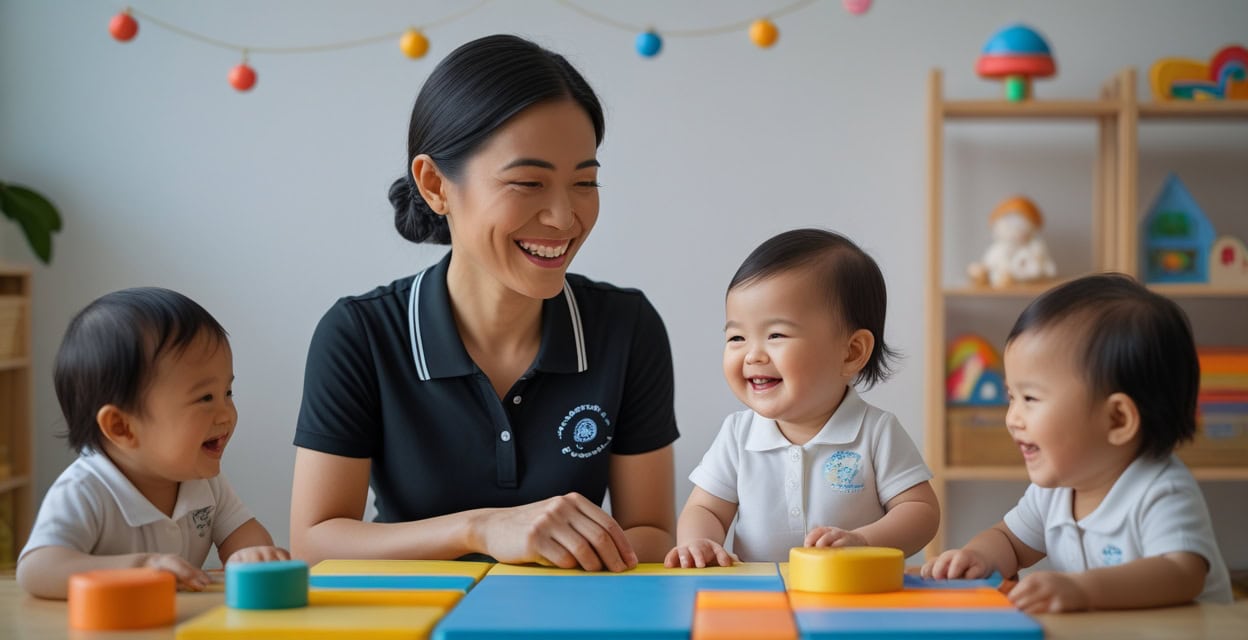
The Attuned Day: Micro‑Rituals That Build a Macro‑Brain
Infant pedagogy is not a worksheet; it is a continuous conversation of presence, tone, and timing. EduNanny translates research into a daily architecture designed to support neural development, secure attachment, and joyful learning.
Practical Framework for Caregivers
- Arrival as relationship: Slow greetings, name recognition, eye‑level positioning, and open hands. Create a tangible trust moment at the door, mirroring Erikson’s early trust formation.
- Care as connection: Diapering, feeding, and napping become unhurried micro‑rituals. Each exchange is a serve‑and‑return, shaping neural architecture through caregiver responsiveness.
- Exploration as autonomy: Floor‑based environments with low mirrors and reachable objects invite self‑directed exploration, aligned with Montessori principles of respect for the child’s competence.
- Language as nourishment: Narrated caregiving and bilingual or multilingual exposure provide a Piagetian and Vygotskian cognitive and social foundation.
The 1:3 ratio is not a luxury; it is a precondition for attunement. With three unique infants, one caregiver can respond to cues, nap needs, and feeding patterns with a rhythm that honors each child’s tempo.
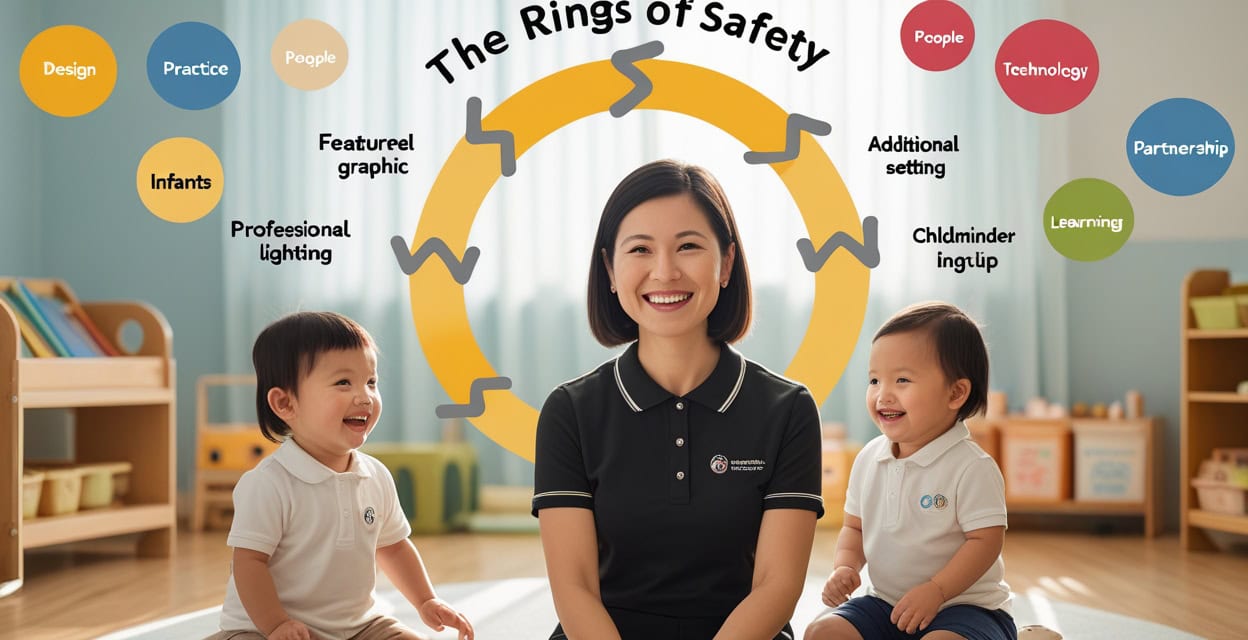
The Five Rings of Safety: Design, Practice, People, Technology, Partnership
Safety is a system, not a slogan. EduNanny organizes safety into five interlocking rings that protect children while empowering families.
Design
- Clear sightlines and zone separation for sleep, feeding, and play to reduce risk and support adult attention.
- Infant‑first materials, age‑appropriate furniture, and safe sleep practices with firm mattresses and properly positioned infants.
Practice
- Rigorous training in choking response, bottle safety, temperature checks, hygiene protocols, hand‑washing choreography, and environmental scanning.
- Regular drills and refreshers to keep safety second nature for caregivers.
People
- Meticulous vetting, reference checks, and ongoing coaching to cultivate a calm, prepared caregiving culture.
- Recruitment prioritizes temperament, values, and a calling for early years work.
Technology
- Secure CCTV supports live observation and post‑incident review while aligning with privacy standards.
- Smart sensors and digital checklists reinforce safety without intruding on warmth and human connection.
Partnership
- Daily logs, transitions, and ongoing dialogue with parents ensure a shared map of wellbeing.
- Parents are treated as co‑authors of the day’s caregiving journey, strengthening trust and consistency.

Development by Design: Turning Science into Everyday Practice
The first thousand days are a symphony of synapses. EduNanny orchestrates each movement with intention, balancing observed science with the art of responsive caregiving.
Movement
- Prioritize free movement over screen time; encourage tummy time as a joyful activity with supported positioning.
- Offer varied opportunities to reach, roll, crawl, and explore in safe, supervised spaces.
Nutrition
- Observe cues, respect hunger and fullness, and collaborate with parents on expressed milk handling or formula preparation with clinical clarity.
- Adaptive feeding schedules that align with each child’s rhythms, not a one‑size‑fits‑all timetable.
Sleep
- Predictable rhythms with flexible timing; create sleep associations that are soothing and developmentally appropriate.
- Darkened rooms, consistent ritual cues, and gentle transitions to foster secure sleep patterns.
Language
- Constant, contingent language exposure—narration of the child’s actions, descriptive talk, and responsive back‑and‑forth interactions.
- Multilingual exposure that respects family linguistic heritage while supporting cognitive development.
Play
- Reggio‑inspired environments with open‑ended materials that invite investigation and symbolic thinking.
- Avoidance of over‑stimulating, closed‑ended toys; prioritize materials that invite multiple uses and imaginative play.
Observation
- Document small leaps in development—rolling, grasping, babbling—with humility and a growth‑minding lens.
- Family conferences review progress with warmth and evidence, not anxiety, focusing on each child’s unique trajectory.

Joy as a Vital Sign: Measuring Happiness with the Same Seriousness as Height and Weight
Emotional well‑being is a predictor of learning, attachment, and long‑term resilience. EduNanny treats happiness as data that guides care, not a soft afterthought.
- Affect monitoring: How quickly a child settles after drop‑off, how readily they initiate play, and how they reconnect with a caregiver when exploring new environments.
- Transitions and rituals: Gentle partings, predictable reunions, and coaching for parents on effective separation routines.
- Caregiver joy and burnout prevention: Balanced schedules, adequate breaks, mentoring, and peer support to maintain a calm, regulated caregiving environment.

The Civic Craft of Childminding: A Profession with Purpose
Childminders are early years artisans, shaping trust and curiosity through presence, voice, and deliberate practice. EduNanny elevates this vocation through structured training, career progression, and a robust social framework.
Training and progression
- Structured micro‑credentials and mentorship programs that acknowledge mastery at every stage of a caregiver’s career.
- The Maximum Employment Mandate as a pathway to professional pride, with meaningful wages and opportunities for development.
Near‑home networks
- Community‑based centres and home premises strengthen neighbourhood ties, reduce travel stress, and improve family well‑being.
- Proximity as a form of equity, ensuring access to high‑quality care regardless of background or circumstance.
Family partnership
- Secure digital updates, photos, and notes that allow families to feel present even when apart.
- Co‑design of caregiving plans that reflect a child’s routines, parental values, and cultural practices.
Distance support
- Tele‑consults for sleep guidance, solids introductions, or sibling transitions—ensuring families never feel isolated.
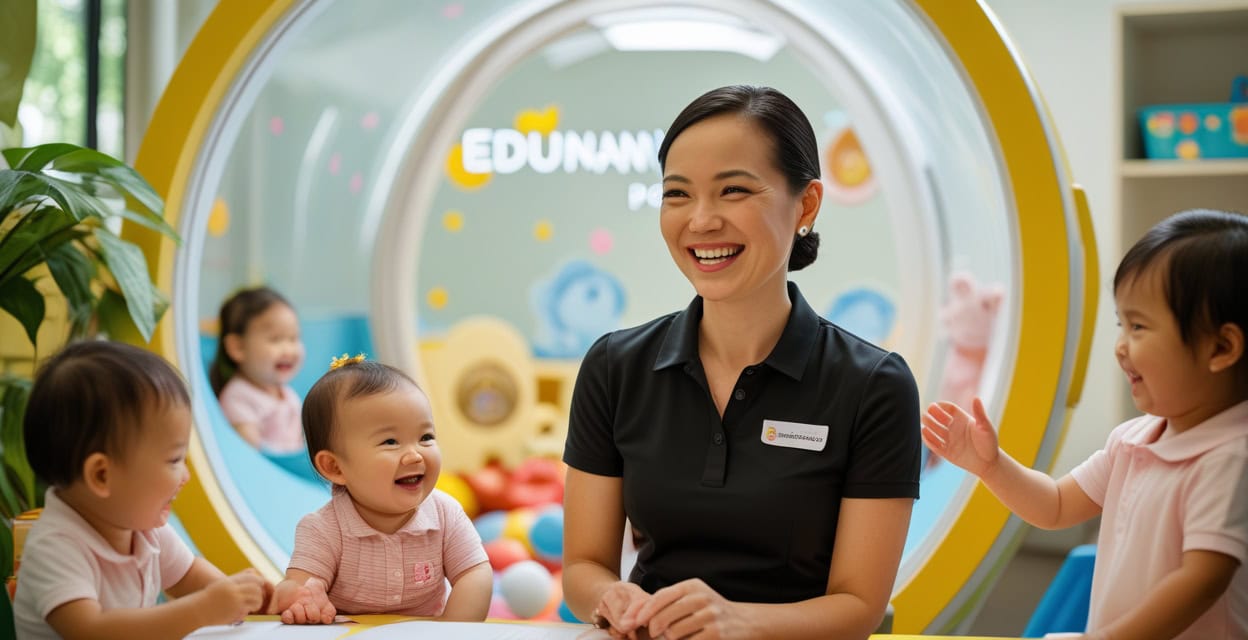
A Morning Inside an EduNanny Pod
Imagine a sun‑lit HDB corridor at 8:02am. A father wheels his daughter into a warm, calming home pod. The caregiver greets her at eye level: “Good morning, Aisha. I’ve been waiting for you.” The father shares a brief note about wake time and feeds. A quick parting ritual—one hug, one song, one wave—and the day begins. Aisha engages with a wooden ring on the floor, narrations guiding her curiosity: “You found the ring. It rolls when you push.” Feeding unfolds slowly and face‑to‑face, a quiet conversation of cues and responses. A nap in a dim, safe room follows, then a stroll outside, the day threaded with moments of discovery and confidence. Each moment is documented with careful attention to what mattered: movement, attempts, laughter, and new sounds like “ba‑ba.” That is pedagogy. That is safety. That is joy. And that is work that deserves national esteem.

Why EduNanny Works for Singapore
- Excellence and Quality: A science‑led, heart‑driven model across Centre‑Based and Home‑Based settings.
- Convenience and Choice: Islandwide access with flexible, community‑based care close to home or work.
- Affordability: Fees from $33/day with CDA/Baby Bonus, ensuring support where it counts.
- Transparency: Secure CCTV and real‑time updates for peace of mind.
- Ultra‑Low Ratios: 1:3 caregiver‑to‑infant attention for attunement that cannot be rushed or faked.
- Modern Layouts: Calm, developmentally wise spaces designed for safe exploration.
- Social Mandate: A national initiative that elevates the profession and strengthens community fabric.
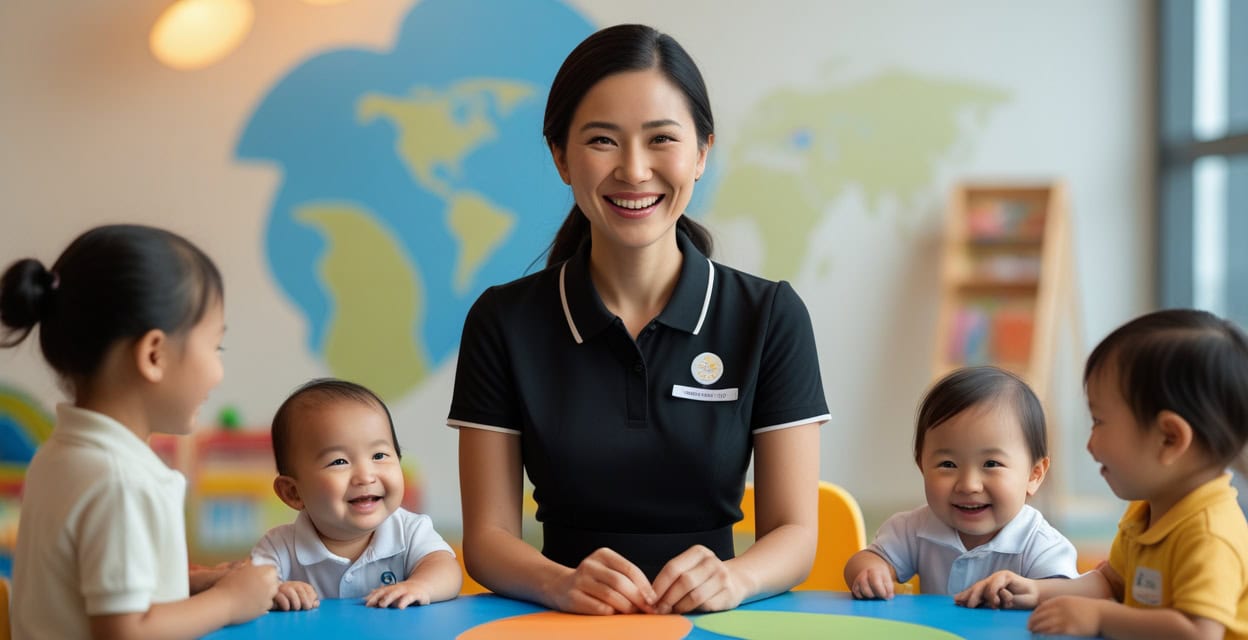
A Note on Culture and Continuity
Singapore’s strength lies in blending tradition with forward‑leaning pragmatism. EduNanny honours cultural care practices—lullabies, languages, feeding customs—within a safety‑first, evidence‑based frame. Peranakan songs, Chinese rhymes, English stories, and Malay lullabies can all coexist in a single morning, creating belonging and pride in the child. This is how a nation sustains social cohesion while advancing developmental science.
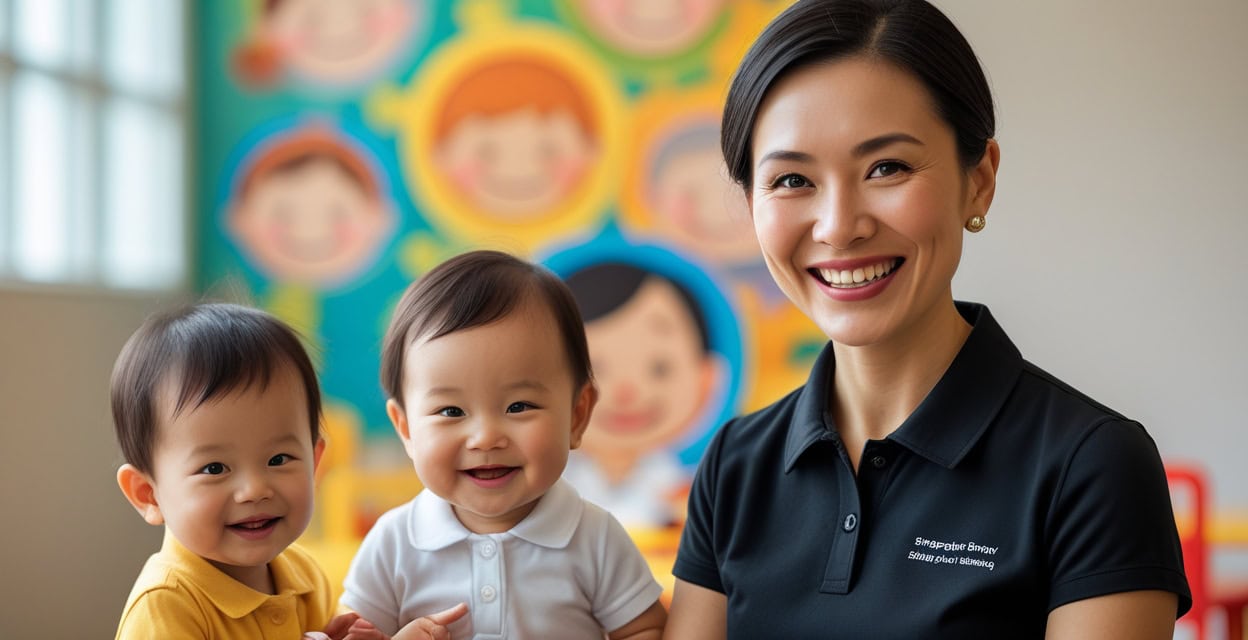
The Purpose We Share
Parents seek safety, presence, soothing, and support for their children; children seek curiosity, kindness, and readiness to learn; childminders seek a calling they can grow within; policymakers and employers seek stability and social value. EduNanny is the bridge across these expectations—between home and work, between evidence and everyday life, between a child’s first cry and a community’s enduring promise.

Conclusion: Why Childminding Matters—and How We Deliver It
To every parent balancing hopes and schedules, to every childminder who steadies small hands and soft voices, and to every leader who understands that tomorrow is written in today’s cradle: EduNanny invites you to join a movement that treats infancy as a public good and dignity as a baseline, not a privilege.
Who: Infants and families across every neighbourhood; childminders who choose care as a calling; a nation that recognises early years as public goods.
What: Attuned, ultra‑low‑ratio childminding that unites safety, pedagogy, and joy in Centre‑Based, Home‑Based, and distance‑supported formats.
When: Monday–Friday, 7am–7pm—consistent, dependable hours for working families and calm rhythms for infants.
Where: Islandwide Singapore, in modern centres and welcoming community/home premises near home or work.
How: Through rigorous training, careful design, responsive routines, secure technology, and a family partnership that treats parents as co‑authors of the day’s caregiving journey.
This is our philosophy: attunement first, always; safety everywhere, not somewhere; joy measured and protected; culture honoured; science embedded; transparency guaranteed; affordability real; employment dignified. This is our purpose: to make the first thousand days not only beautiful but equitable—so every Singaporean child begins life with trust in people, delight in learning, and a felt sense that the world is safe and interesting.
To every parent, caregiver, and policymaker: consider EduNanny not as a single choice but as a societal one—an investment in the earliest years that yields benefits across education, health, and social cohesion for generations to come. Learn more or enroll at EduNanny.com and Childminding.EduNanny.com. EduNanny by BUTLER stands ready to serve.
[#keyword1, #keyword2, #keyword3, #keyword4, #keyword5]