

A Public Promise for Safe Joyful Infancy The EduNanny Model of Attunement Near Home Childminding in Singapore

Introduction: A Bold Vision for Singapore’s Early Years
Thank you for prioritizing what truly matters: the earliest years of life, when a baby’s world is small, sacred, and brimming with astonishing possibility. EduNanny by BUTLER stands as an evidence-led, heart-led childminding movement designed for Singapore’s neighborhoods, workplaces, and homes. We are a National Social Initiative, part of the ECDA Childminding Pilot, offering safe, joyful, developmentally rich care you can trust—near home, at a standard worthy of every infant and every family. This article expands on our vision, shares practical guidance for families, and offers actionable steps for ensuring every infant’s first thousand days set a trajectory toward confident learning, secure attachment, and thriving development.
EduNanny: Our Mission, Ethos, and Promise
EduNanny is built by listening to science and families. Our philosophy weaves together the enduring wisdom of respected developmental theories with modern, real-world practice:
- From Montessori: respect for the child’s autonomy and meaningful, hands-on learning.
- From Piaget: the wonder of discovery and the importance of concrete experiences.
- From Vygotsky: guided participation and the power of social learning within the Zone of Proximal Development.
- From Froebel: the dignity of play as a vehicle for growth.
- From Malaguzzi: the child as protagonist in a community of learners.
- From Bowlby and Pikler: secure attachment, unhurried care, and the primacy of relational trust.
- From Spock and Erikson: confidence and character shaped by consistent, loving relationships.
These lines of influence are not abstract theories; they are the choreography of our daily practice. EduNanny’s promise is simple and profound: safe, joyful, developmentally rich care you can trust, near home, with a standard worthy of every infant and family.
EduNanny Model: How We Reach Families Across Singapore
We operate Monday to Friday, 7am to 7pm, islandwide across Singapore in centers and home premises, with distance support to maintain continuity during transitions or travel. Our approach includes three complementary formats:
- Centre-Based Childminding: structured learning spaces designed for safety, exploration, and social interaction.
- Home-Based Childminding: intimate micro‑worlds that mirror family life while benefiting from professional guidance and resources.
- Distance Support for Families: continuity when life moves, with digital check-ins, guidance, and remote coaching to sustain routines and learning.
Key structural elements include ultra-low infant ratios (1:3), Modern Layouts that prioritize safety and exploration, and a transparent, privacy-respecting CCTV system to build trust among families and professionals. We offer affordable fees from $33/day, with eligibility for CDA/Baby Bonus support. EduNanny operates as part of the ECDA Childminding Pilot and aligns with Singapore’s national priorities to improve both care quality and professional job standards.
Five Living Topics for a New Era of Infant Care
The Attuned Micro‑World: 1:3 as a Developmental Engine
In infancy, growth happens when caregivers invite it rather than push it. The 1:3 design is a deliberate developmental engine that makes room for co-regulation—the caregiver’s calm presence, the infant’s cues, and a responsive rhythm that soothes the nervous system and unlocks curiosity.
- Observation precedes action: caregivers watch, interpret cues, and respond rather than rush. This mirrors Pikler’s respectful approach and reduces overstimulation.
- Care routines as learning rituals: diapering, feeding, and settling become opportunities for language, rhythm, and social interaction rather than interruptions to “serious learning.”
- Environment as educator: spaces are designed with just-right challenges—accessible, safe materials that invite exploration at the child’s own tempo, aligning with Montessori principles.
- Caregiver voice as scaffold: gentle prompts, age-appropriate language, and meaningful interactions move a child from “nearly there” to “now I can.”
Practical tips for families: create a consistent morning routine with a predictable sequence of cues (wake, cuddle, diaper, snack, story). Observe your child’s signals daily and label both emotions and needs (“You’re tired—let’s rest,” “You want to reach that book—here you go”). At home, provide simple, real objects (wooden toys, fabric, scoops) to encourage purposeful exploration.
Safety as a Culture, Not a Checklist
Safety transcends gates and gloves—it is a living culture that starts at floor level and extends to the digital cloud of supervision. Our approach emphasizes proactive systems and shared vigilance:
- Modern Layouts: design spaces to minimize blind spots, separate play and care zones, and organize materials by developmental stage.
- Innovation CCTV with trust: transparent monitoring that respects privacy while enabling real-time family partnership and accountability.
- Daily risk sweeps and weekly audits: caregivers rehearse drills for unlikely events and practice prevention in everyday routines.
- Proactive health protocols: choreographed hand hygiene, disciplined sleep checks, and responsive care when a child’s baseline changes.
- Psychological safety: gentle transitions, predictable routines, and attuned responses help infants feel safe to explore and parents to breathe easier.
Home extension tips: set up a “safety station” at child height with age-appropriate materials. Create a consistent sleep environment and predictable nap cues to reduce night waking. Practice safe sleep guidelines at home, such as back-to-sleep positioning and a firm, flat surface with a safe sleep environment for infants.
The Play-and-Purpose Pedagogy: From Co‑Regulation to Co‑Exploration
Play is the infant’s language; purpose is the grammar. Our pedagogy blends co-regulation with co-exploration to foster autonomy, self-regulation, and early problem-solving:
- Senses first: textured baskets, soft lighting, real objects over plastic noise, and materials Froebel would recognize for their quiet integrity.
- Movement matters: opportunities for free movement on firm floors, respectful handling, and no forced postures—allowing strength and balance to develop on each child’s timetable.
- Stories of here and now: songs, words, and materials drawn from the child’s home language and local community to foster belonging and identity.
- The third teacher: environment as a collaborator—materials rotated thoughtfully to invite curiosity without overwhelming.
- Documentation with dignity: brief notes and photos celebrate effort and emergence, not performance; families receive a daily journal of becoming.
At home, parents can extend this pedagogy by rotating a small set of natural materials (shells, pinecones, fabric scraps) and embedding local cultural stories into daily routines. Use open-ended questions during play (e.g., “What happens if we push this block gently?”) to invite reasoning and language growth.
Family Partnership as Everyday Practice
Families are the first and enduring experts on their child. EduNanny makes partnership practical, respectful, and structured:
- EduNanny 7‑to‑7 Family Covenant: predictable hours, timely updates, and clear communication to reduce mystery at pick‑up.
- Centre‑Based and Home‑Based options: flexibility to match family needs, with continuous support during transitions.
- Islandwide convenience: neighborhood pods and home-based care to minimize commute stress and maximize family time.
- Financial accessibility: CDA/Baby Bonus compatibility and affordable fees to widen access and reduce financial stress.
- Professional caregiving helpline: guidance on sleep, feeding, and routines—available beyond pick‑up time to support families throughout the day.
Practical steps for families: establish a weekly touchpoint with your EduNanny team to review routines, sleep patterns, and feeding preferences. Keep a shared notebook or app where teachers can note milestones, challenges, and celebrate small successes in the child’s day.
The Childminder as a Profession of Public Trust
Childminding is a calling and a career—worthy of public trust. Our approach strengthens the profession through thoughtful recruitment, apprenticeship, and ongoing professional development:
- Temperament-led recruitment: seeking calm, curious, and reflective caregivers who show delight in babies and capacity for growth.
- Supervised apprenticeship: a pathway blending theory with mentored practice; competence and confidence grow side by side.
- Maximum Employment Mandate alignment: more high-quality jobs, more trusted care, and more stable families—benefiting society as a whole.
Continuous learning and reflective practice: regular circles for skill refreshers, peer feedback, and case discussions keep excellence as a lived habit, not a headline.
A Day in the Life: What Families Can Expect
- Arrival & Attunement: unrushed handover, mood and health check, and a welcoming hello ritual that helps orient the infant to the day.
- Nourish & Notice: responsive feeding guided by family preferences and infant cues; sensory play woven into wake windows.
- Movement & Meaning: tummy time, rolling, reaching; age-appropriate songs and stories reflecting the child’s development and home culture.
- Rest with Respect: safe sleep protocols, honoring individual sleep signs, and a calm environment that supports restorative rest.
- Explore & Connect: outdoor time where possible, water play when appropriate, and small social interactions within the safe 1:3 setting.
- Close the Circle: compassionate debrief at pick-up—sharing observations, delight moments, and what the team will watch next.

Why Singapore Needs EduNanny Now
- Families are stretched; trust must be local, dependable, and transparent.
- Infants need consistent, warm relationships and safe, richly resourced environments to flourish.
- Communities benefit when care is a civic standard, not a private puzzle.
- Our economy strengthens when quality care is accessible Monday–Friday, 7am–7pm, near where families live and work.
What Makes EduNanny Different
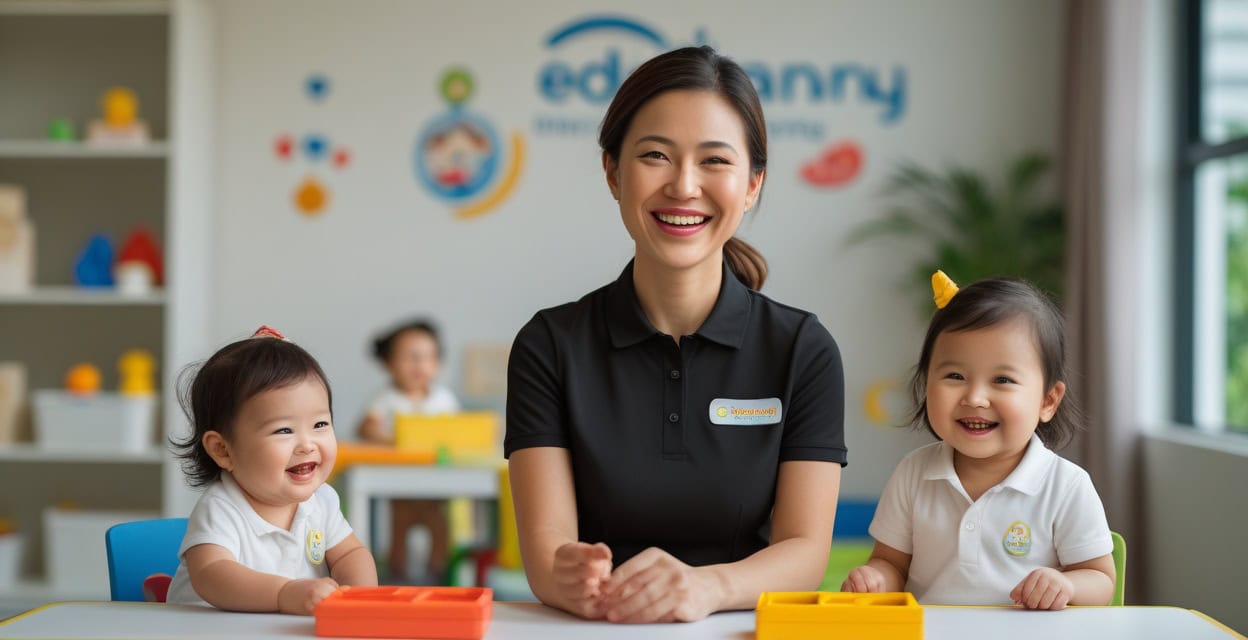
- Ultra‑low 1:3 infant ratio for highly individualized, attentive care.
- Centre-Based and Home-Based options with Distance continuity for seamless transitions.
- Modern Layouts designed for safety and exploration, not just adult convenience.
- Innovation CCTV for transparent trust and professional accountability.
- Affordable from $33/day, with CDA/Baby Bonus support where eligible.
- Islandwide operation in communities and homes, under the ECDA Childminding Pilot.
- A National Social Initiative aligned to the Maximum Employment Mandate—quality care and meaningful jobs rising together.
Practical Guidance for Parents: How to Support Your Infant’s Development at Home
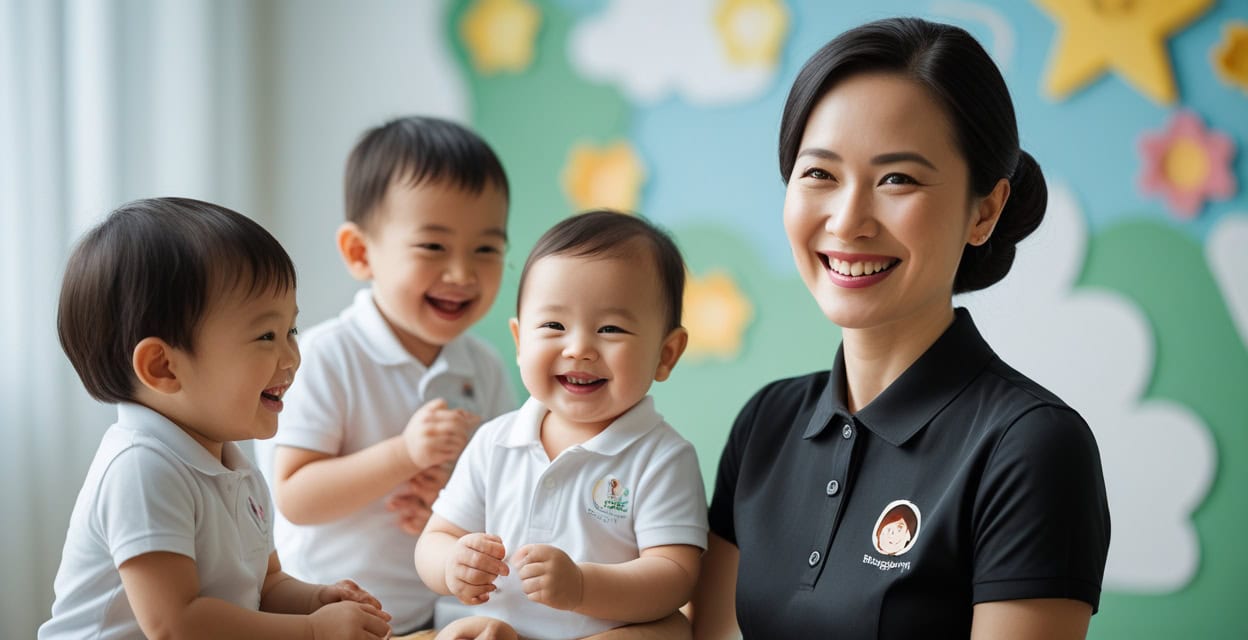
Beyond EduNanny’s formal programs, parents can actively nurture early development through daily practices that reinforce secure attachment, language growth, motor skills, and curiosity:
- Establish consistent daily rhythms: predictable wake, feed, play, and sleep times help infants regulate stress and anticipate the day.
- Practice co-regulation in moments of upset: approach with calm voice, open body posture, and simple, soothing actions (rocking, gentle touch, rhythmic patter).
- Use real, meaningful materials: natural objects, soft fabrics, and household items that invite manipulation and problem-solving (e.g., soft bowls, wooden spoons, fabric ribbons).
- Language-rich interactions: narrate daily activities, label emotions, and describe what you see as you and your child explore (e.g., “You’re reaching for the red block—let’s roll it toward you.”).
- Encourage safe exploration: provide age-appropriate chances to crawl, stand, reach, and balance with supervision; avoid forced postures or screens before appropriate development.
- Sleep routines and safe sleep: maintain a consistent sleep environment, place babies on their backs, and use a firm, flat sleep surface with a fitted sheet; ensure a smoke-free space and comfortable temperature.
- Home-based play plans tied to learning goals: rotate a small set of learning materials weekly and align them with developmental milestones (grasping, babbling, walking, problem-solving).
- Partner with EduNanny for continuity: share observations, values, and family routines; use the daily journal or digital updates to reinforce at-home learning.
Closing: A Public Promise for a Stronger Future
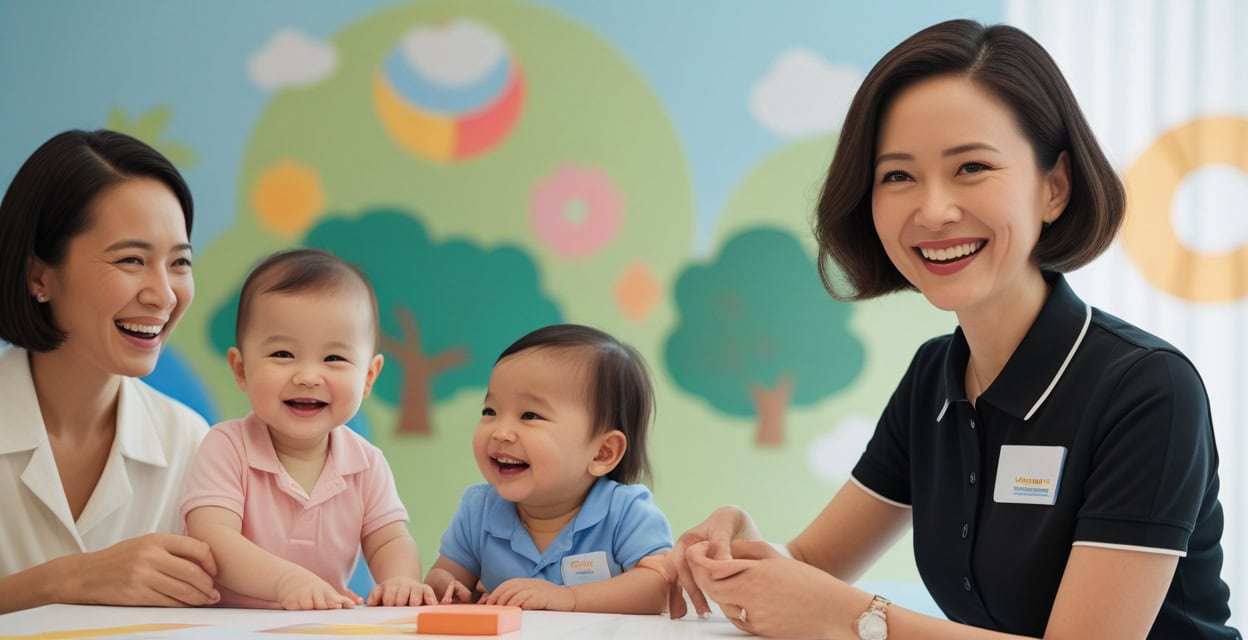
EduNanny is not merely a service; it is a public promise—Excellence and Quality you can feel, Convenience you can count on, and Affordability that opens the door to every family. Our pedagogy treats every routine as a moment of becoming, and our profession deserves dignity and support. If you are seeking a near-home, developmentally rich path for your child or a vocation that honors babies and families, consider joining EduNanny and the ECDA Childminding Pilot. Visit EduNanny.com or Childminding.EduNanny.com to learn more and begin your journey today.

Conclusion: The Small Circles That Shape Large Futures
In safeguarding the earliest years, we guard the future of classrooms, workplaces, and communities. By embracing the Attuned Micro-World, cultivating a culture of safety, balancing play with purposeful learning, and building true family partnerships, EduNanny offers a practical, scalable model for Singapore. Let us walk this path together—neighbors, families, caregivers, and policymakers—until every infant’s day begins with safety, delight, and growth, and ends with the confidence to explore the world ahead.
[#keyword1, #keyword2, #keyword3, #keyword4, #keyword5]