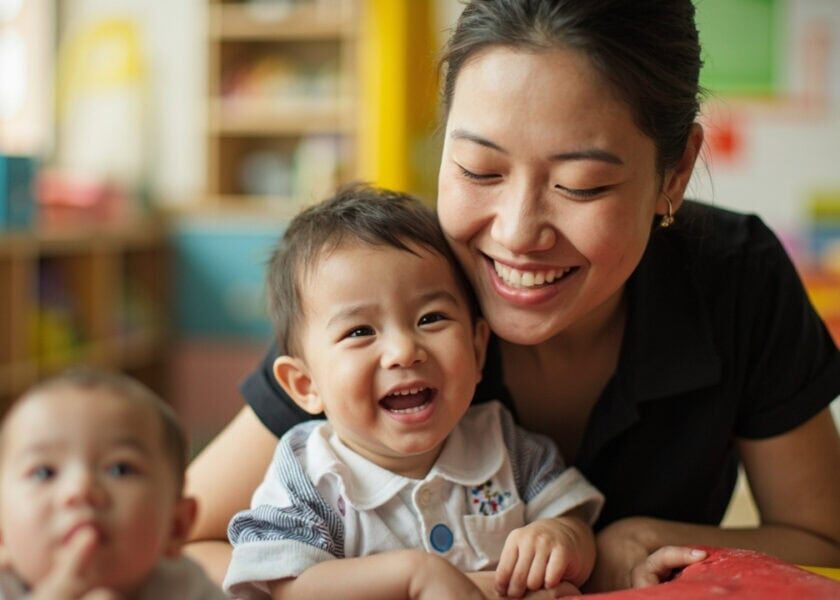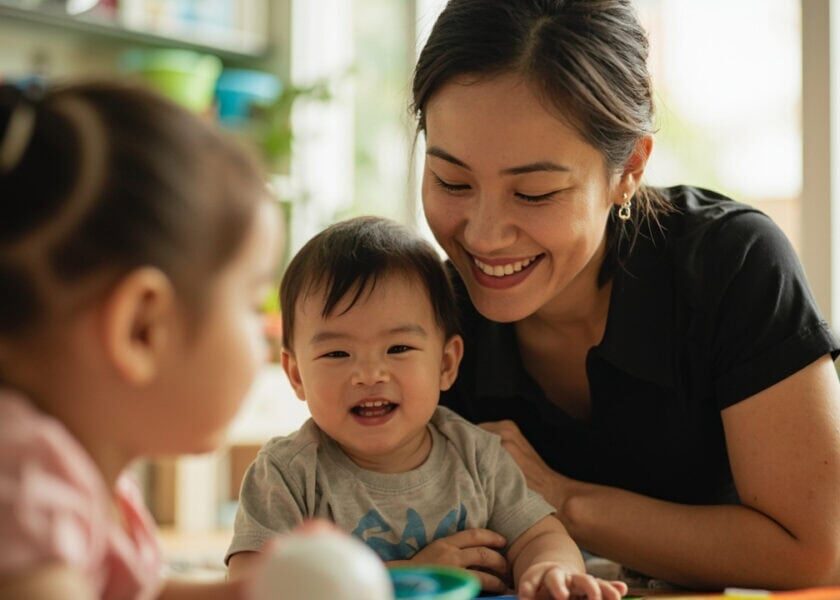
Attunement as Infrastructure The EduNanny Living Blueprint for Safe Joyful Infancy in Singapore
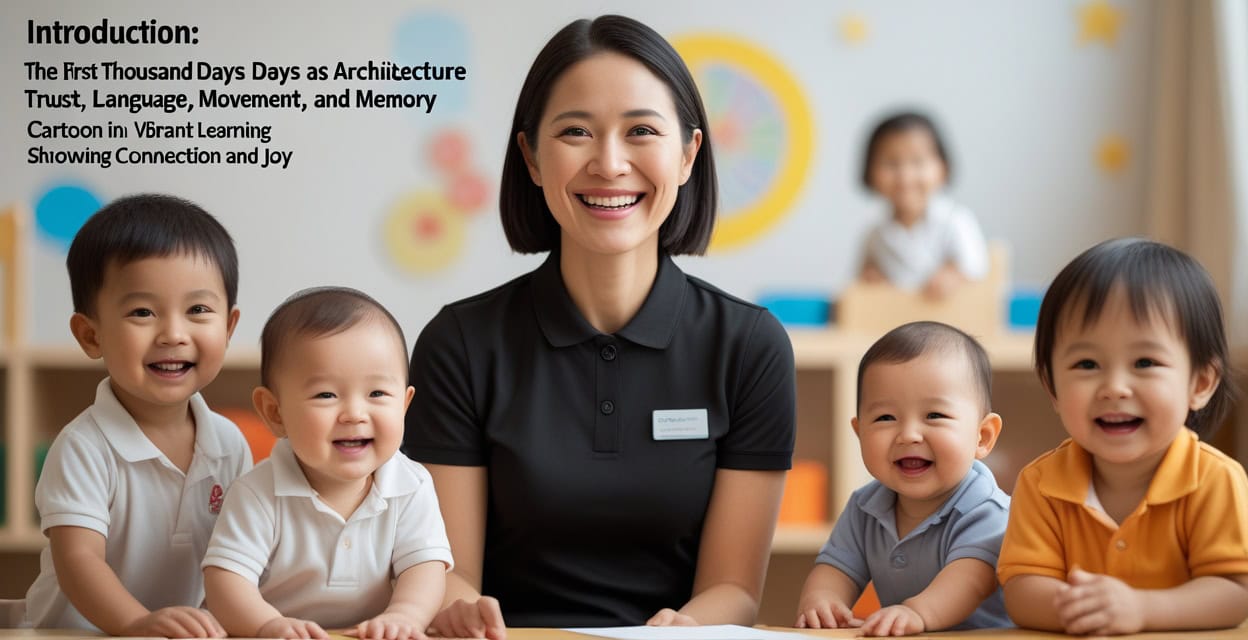
Introduction: The First Thousand Days as Architecture for Trust, Language, Movement, and Memory
Thank you for gathering to consider something both intimate and nation‑shaping: the first thousand days of a child’s life. In those thousand days, the architecture of trust, language, movement, and memory is poured and set. EduNanny was created to steward that architecture with a courageously simple premise: when we center attunement, safety, and joy, tiny moments become mighty futures.
EduNanny is introduced here as both service and stance—a Singapore‑born, science‑led, heart‑first childminding movement offering near‑home care in centre‑based, home‑based, and distance‑supported formats. We carry a 1:3 infant ratio because human beings learn best in small circles where every cue is noticed. We design spaces with modern layouts for clear sightlines and calm acoustics, and we build transparency through privacy‑safeguarded CCTV. We strive to make quality affordable—from $33 per day—with fees payable via CDA/Baby Bonus. This work unfolds under the ECDA Childminding Pilot (2024–2027) as a national social initiative by EduNanny by BUTLER that advances a Maximum Employment Mandate: dignified roles, robust training, and meaningful careers for childminders who carry our youngest forward.
Tonight I want to share four ideas at the heart of our pedagogy and practice—each a bridge between the wisdom of Montessori and Pikler, the science of Bowlby and Vygotsky, and the everyday realities of Singaporean families.
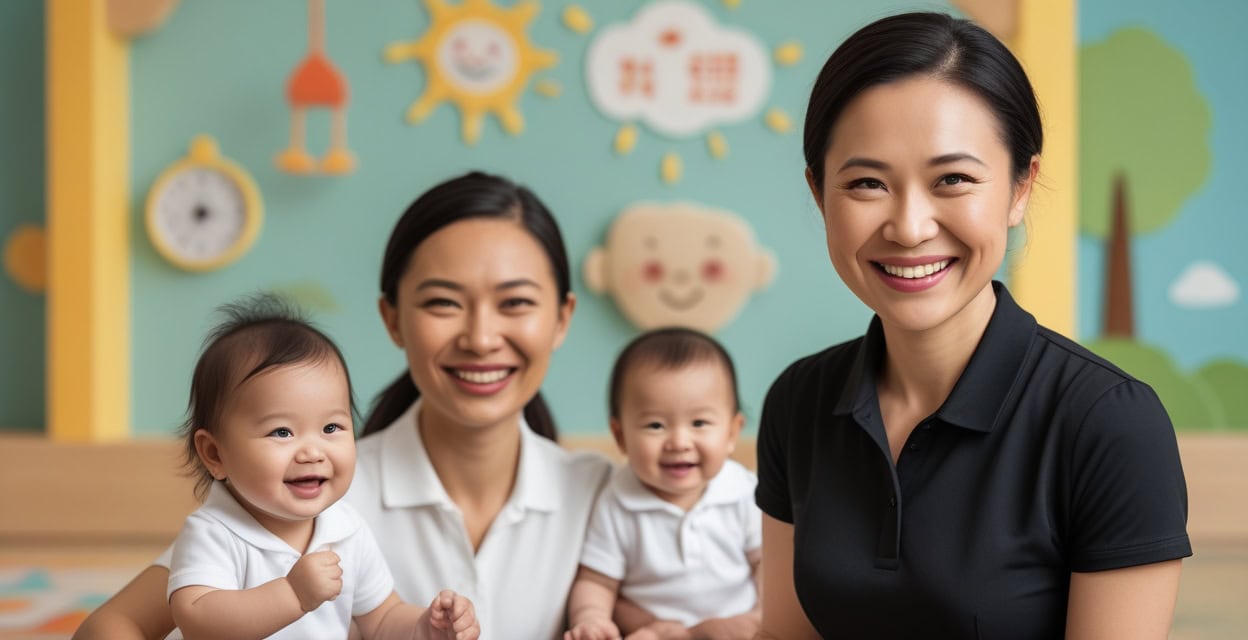
The 1:3 Advantage—Attunement as Daily Architecture
Infants don’t “use” curriculum; they invite us into one. They offer a look, a coo, a reach—each a neurological “serve.” In our small 1:3 pods, we train childminders to return that serve with timely, warm, developmentally tuned responses. This is Bowlby’s secure base made practical.
- Observe before we act. A baby’s hand opens: we name it, mirror it, and offer an object they can grasp. That tiny exchange builds motor planning, vocabulary, and trust.
- Allow time and floor space for free movement. Pikler‑inspired practice invites safe exploration without rushing milestones.
- Scaffold like Vygotsky. Provide just enough support to keep the child at the sweet edge of discovery—never overwhelmed, never under‑challenged.
- Preserve Montessori’s respect for environment. Prepare the space, follow the child, and offer real objects, natural materials, and dignified choice appropriate to age and stage.
- Translate theory into reflexes. A 1:3 ratio turns principles into everyday practice, delivering a steady, joyful, and secure atmosphere for learning.
Practical, actionable steps for Parents and Caregivers
- Implement a daily 5–10 minute attunement routine: name cues, mirror expressions, and respond with a simple object that supports exploration.
- Design a home learning corner with real, inviting materials—natural textiles, wooden objects, and containers at the child’s reach.
- Use floor time as a daily habit: set a simple safe area, introduce a movement toy (e.g., low‑weight rattle, textured cloth), and observe the child’s attempts before joining.
- Integrate language development during routine tasks—naming actions, describing textures, and narrating discoveries during play.
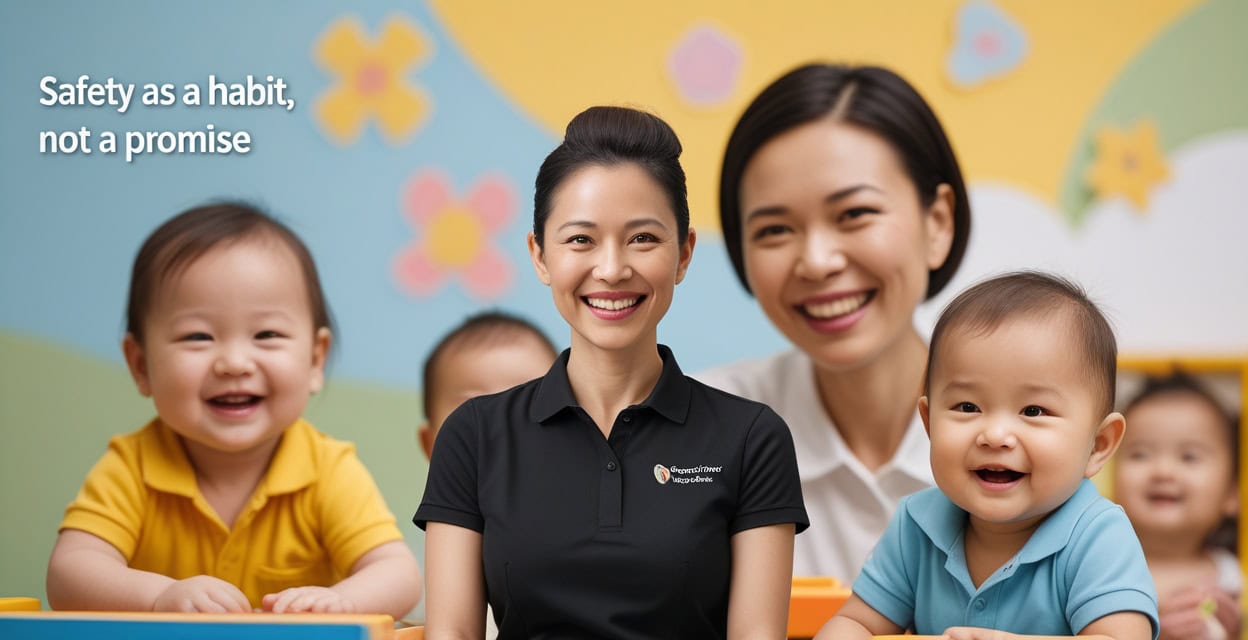
Safety as a Habit, Not a Promise
Promising safety is not enough; safety must be woven into daily routine. We embed safety in rituals that may seem routine but yield profound outcomes over time:
- Two‑person handover and name‑to‑face checks at every transition, reinforcing attention and memory formation for caregivers and parents.
- Safe sleep, every time. Firm mattress, supine position, empty cot, visible breathing checks, and documented intervals to monitor well‑being.
- Feeding protocols rooted in dignity and health. Never prop bottles; responsive, paced feeding; meticulous hygiene.
- Daily environment sweeps. Floor‑level hazard checks, sanitization cycles, and ventilation standards tuned to Singapore’s climate.
- “Eyes‑up” room design. Modern layouts create clean sightlines and reduce visual clutter; quiet zones for rest and active zones for exploration.
- Smart transparency with privacy safeguards. Innovation CCTV provides parent insight and professional accountability within strict data protections.
- Redundancy in care. Centre‑based reliability, home‑based intimacy, and distance support during travel, illness, or transition days.
Practical safety routines you can implement today
- Establish a predictable handover ritual with names and a brief, shared health check between caregiver and parent.
- Adopt a consistent sleep window and a calming pre‑naptime routine that signals rest with a gentle cue (voice, soft touch, and dim lighting).
- Create a simple hygiene protocol for feeding and cleaning that involves both caregivers and parents in the process.
- Practice a weekly “scan” of each room for hazards and create a quick checklist for transitions between activities and spaces.
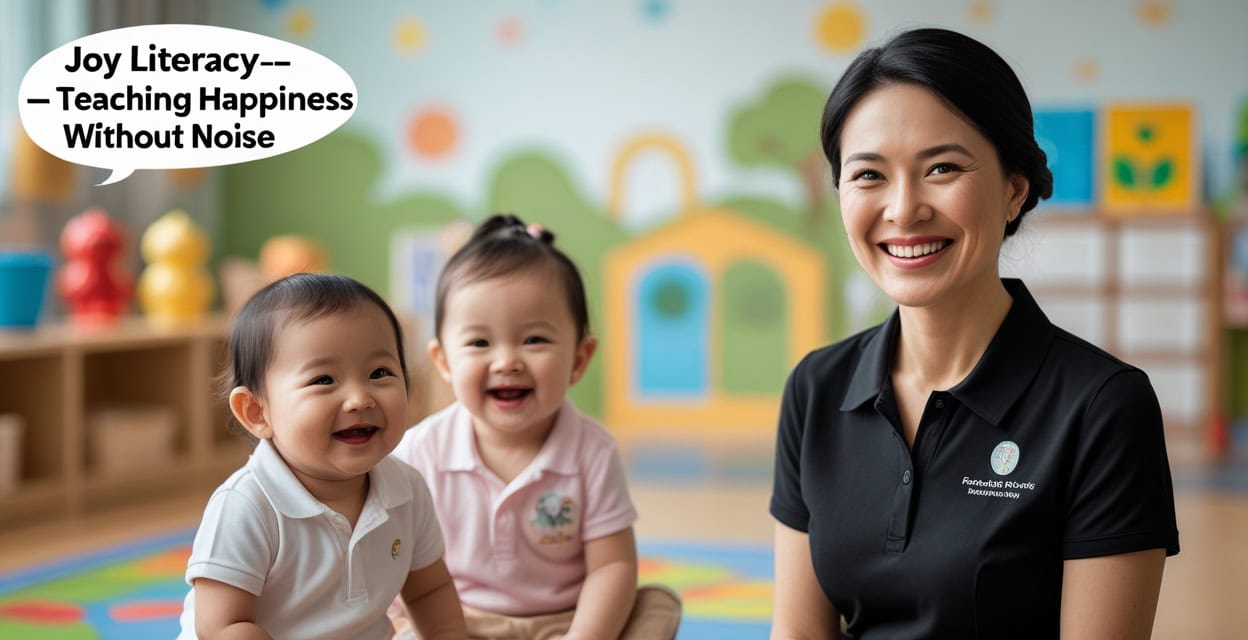
Joy Literacy—Teaching Happiness Without Noise
Happiness in infancy isn’t entertainment; it’s coherence. When routines are reliable and responses are warm, the nervous system learns it can rest and then play. We call this Joy Literacy, and it rests on four daily practices:
- Serve‑and‑return loops. Name baby cues, expand their sounds, and respond with warmth. This builds social trust and early language networks.
- Sensory rightness. Favor natural light, soft textures, fresh air, human voices, and music at a conversational volume. Avoid overstimulation and flashy, distracting toys.
- Movement as meaning. Encourage safe floor time, tummy time, reaching, rolling, cruising, and crawling; offer simple treasure baskets with varied weights, textures, and sounds.
- Rest with respect. Predictable sleep windows, unhurried settling, and waking rituals anchored in connection—eye contact, gentle voice, and naming the day.
Joy literacy in practice
- Track “joy signals” that matter: sustained eye gaze, relaxed posture, social smiles, shared giggles, and a healthy rhythm of curiosity followed by calm.
- Design a daily rhythm that balances active exploration with purposeful rest to support neural regulation and curiosity.
- Use joyful routines to scaffold early communication: pause for response, narrate outcomes, and celebrate tiny discoveries together.

The Civic Purpose of Childminding
Great childminding is not a private luxury; it is public infrastructure. When families can access excellent near‑home care, commute stress decreases, family cohesion strengthens, and workforce participation expands. When childminders are trained, fairly employed, and visibly respected, we rebalance a care economy that has too often depended on invisible labor.
EduNanny’s Maximum Employment Mandate invests in Singaporeans as early‑years professionals—traineeships, coaching, and a culture of dignity. The work is not “helping out with babies.” It is a living curriculum of attachment, movement, language, nutrition, and rest that yields secure, curious children and saner family life. That is nation‑building, one gentle routine at a time.
What this looks like for families—Monday to Friday, 7 to 7
- Clear communication. Daily notes on feeding, sleep, nappies, and highlights; fortnightly developmental snapshots aligned with first‑year milestones; immediate alerts for health concerns.
- True partnership. Parent‑nanny alignment meetings; distance consults for home routines; responsive support through transitions—return to work, weaning, nap changes.
- Access and affordability. Centre‑based and home‑based options islandwide; fees from $33 per day; CDA/Baby Bonus‑payable.
- Transparency and trust. Innovation CCTV for visibility into practice; open‑door culture for scheduled drop‑ins; consistent, named carers in small pods.
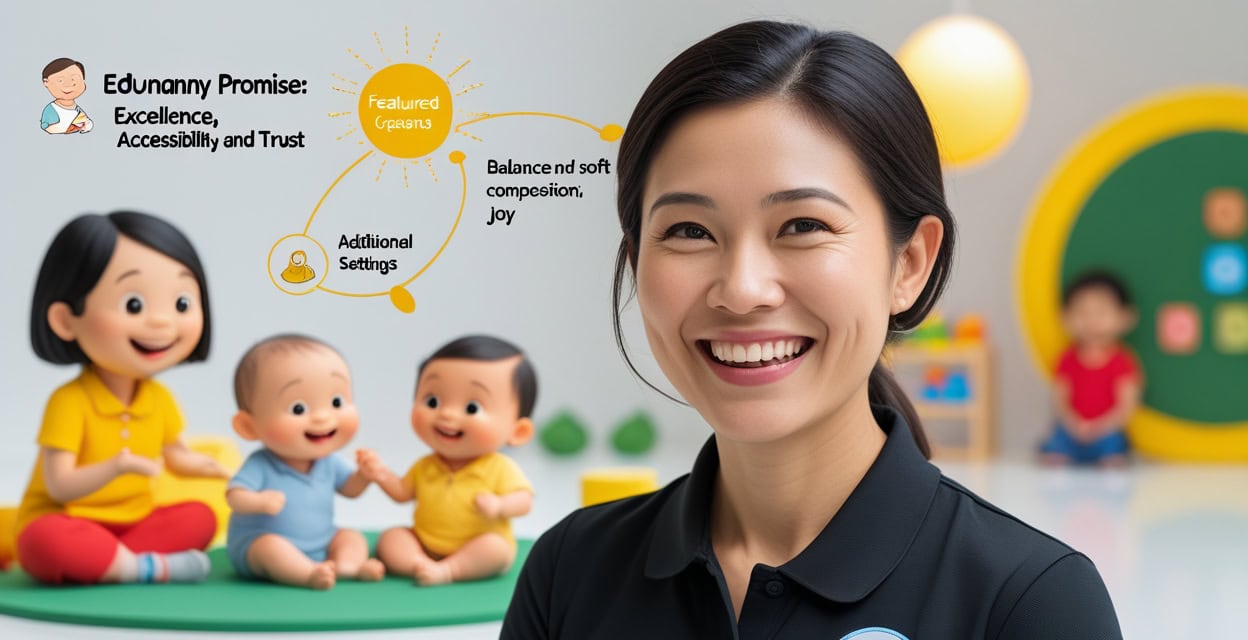
EduNanny Promise: Excellence, Accessibility, and Trust
- Excellence in practice. Ultra‑low 1:3 ratio, trained childminders, modern environments designed for calm, clarity, and safety.
- Modalities that match life. Centre‑based, home‑based, and distance‑supported care, islandwide Singapore, Monday–Friday, 7am–7pm.
- Safety engineered into the day. Rigorous protocols, safe sleep, hygiene systems, and innovation CCTV with strong privacy safeguards.
- Affordability and access. From $33/day; CDA/Baby Bonus‑payable; national social initiative under ECDA’s Childminding Pilot.
- A people‑first mission. EduNanny by BUTLER with a Maximum Employment Mandate—training, dignified work, and uplifting communities through early‑years careers.

Five Civic Questions of Childminding—Who, What, When, Where, and How
Who does childminding serve?
- The infant first—brains triple in size in the early years and require reliable, loving, skilled humans to wire security and curiosity into every circuit.
- The family—parents who deserve rest, flexibility, and partners who listen without judgment.
- The nation—future capacity shaped by how seriously we treat the quiet work of care.
What is childminding at its best?
- A living curriculum of attachment, language, movement, nutrition, and rest executed in small, stable circles.
- Professional practice—observed, documented, coached, and continually improved.
- An ethical stance: every child is worthy of time, attention, and joy.
When does it matter most?
- In every micro‑moment of the first thousand days—during feeds, diaper changes, naps, and small discoveries that are neurologically extraordinary in their simplicity.
Where should it happen?
- Near home, in community, and in well‑designed rooms where safety, sunlight, and serenity are part of the lesson plan—across neighbourhoods, islandwide.
How does EduNanny make it real?
- 1:3 ratio that translates ideals into daily practice.
- Trained, respected childminders supported to do their best work.
- Safety systems that are habits, not headlines.
- Transparent partnerships, modern layouts, and CCTV innovation with privacy protections.
- Accessible pricing and CDA/Baby Bonus pathways so excellence is not elite.

Conclusion
The EduNanny philosophy is built on steady respect for childhood, a commitment to quiet excellence, and a purposeful approach to reducing noise while increasing noticing. Our aim is to empower parents to breathe easier, to empower infants to bond deeply, and to strengthen Singapore’s future through a robust, joyful, and scientifically informed early‑years ecosystem. If this vision resonates, we invite you to walk the space, meet the people, and see the work in action. Explore EduNanny at EduNanny.com and Childminding.EduNanny.com. Inquire about centre‑based and home‑based availability near your block, and about fees payable via CDA/Baby Bonus. If you’re drawn to the profession, ask about our training pathway and the Maximum Employment Mandate—we are hiring, coaching, and elevating the art and science of care.
The first thousand days are not a race; they are a relationship. EduNanny exists to protect that relationship with excellence, safety, and joy—so that Singapore’s smallest citizens grow up secure enough to be curious, and curious enough to be brave.
Learn more at EduNanny.com and Childminding.EduNanny.com. If this vision resonates, consider joining us in the work of respectful, science‑led, heart‑first care.
Keywords for discovery: EduNanny Singapore, early childhood care, childminding, 1:3 ratio, Joy Literacy, safety in childminding, Montessori Pikler Bowlby Vygotsky, near‑home care, early‑years education, CDA, Baby Bonus, ECDA Pilot
[#EduNannySingapore, #earlychildhoodcare, #childminding, #JoyLiteracy, #1to3ratio]