
Launchpad for a Nation The EduNanny Near Home Pod Movement and the Attunement of Singapore First Thousand Days

Introduction: The Launchpad of a Human Story
Ladies and gentlemen, parents and grandparents, policymakers and neighbours, caregivers and future caregivers—good evening. The first thousand days of life are not a holding pattern; they are the launchpad of a human story. When we attune to an infant, we do more than soothe; we encode safety, curiosity, and the expectation that the world will answer back. EduNanny was born to make that promise ordinary—available near home, reliably, affordably, and at a standard worthy of every child in Singapore. This article expands on the EduNanny vision with actionable guidance for parents, caregivers, and communities alike.

EduNanny: Vision, Ethic, and Model
EduNanny is not merely a service; it is a public ethic made practical. We blend world-class developmental science with Singaporean pragmatism—an ultra-low 1:3 infant ratio; centre-based and home-based childminding options; Monday to Friday, 7am to 7pm; islandwide availability within community and home premises; modern, child-scaled layouts; and transparent, innovation-forward CCTV designed for trust and partnership with families. Under the ECDA Childminding Pilot (December 2024 to December 2027), and as part of a National Social Initiative with a Maximum Employment Mandate, we are building an ecosystem that protects infants, strengthens families, and dignifies care work. Fees are designed to be accessible—affordable from $33/day—and payable by CDA/Baby Bonus. This is care that fits life, and it lives close to you.
What follows is a deeper dive into practical, actionable practices you can adopt or assess as a parent, caregiver, or policy ally. Each section includes concrete steps, routines, and examples drawn from EduNanny’s approach.
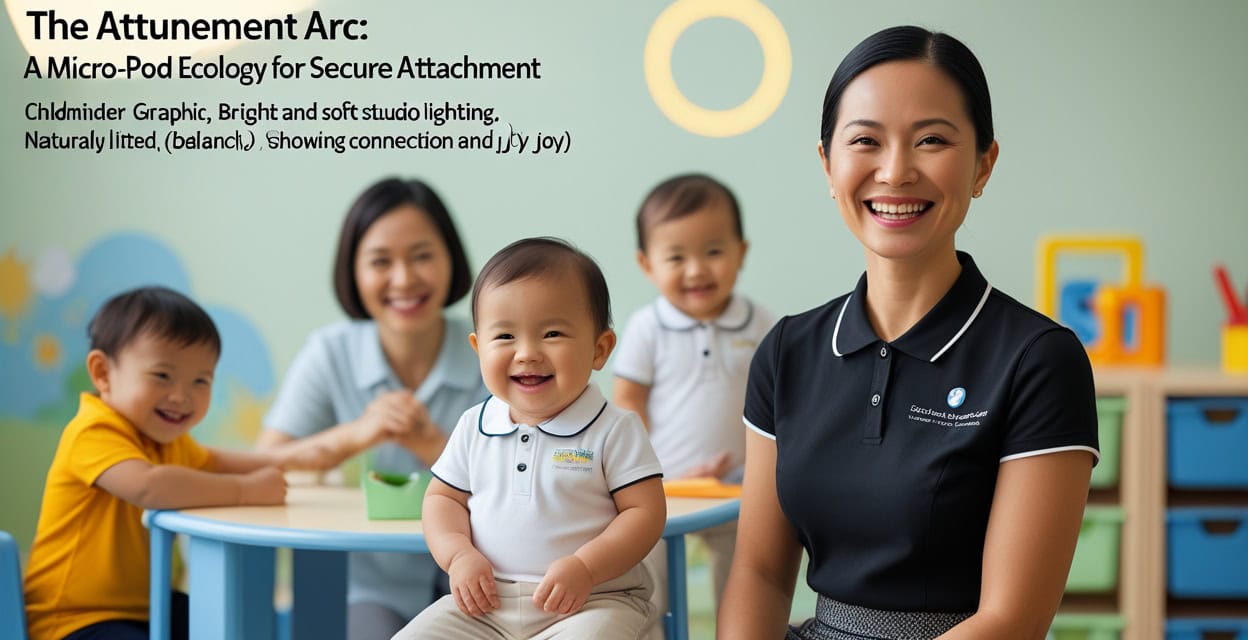
The Attunement Arc: A Micro-Pod Ecology for Secure Attachment
Attachment is the architecture of resilience. In EduNanny’s 1:3 micro-pods, the science translates into daily routines that anchor secure base moments for infants.
- Serve and Return as a measurable rhythm: When a baby coos, the educator leans in; when a gaze shifts, the caregiver follows, labels, and awaits the infant’s response. Practically, aim for at least three turn-taking cycles per minute during peak engagement times (play, feeding, or caregiving routines).
- Observe before intervening: Protect uninterrupted, self-initiated movement. Provide low platforms, varied textures, and safe exploration zones. Encourage infants to initiate movement—crawl, reach, roll—then support with timely, gentle interventions to advance skills.
- Culture and language as scaffolds: Soft soundscapes, bilingual labeling, and culturally resonant songs help embed language and social cognition. Rotate materials to reflect Singapore’s linguistic tapestry without overstimulation.
- Strategies you can echo at home: Mirror infant-led interactions, narrate actions during play, and name emotions during transitions. Create predictable cues (e.g., a gentle clap before a transition) to reduce stress and increase confidence.

Safety Without Shadow: Technology That Illuminates, Care That Holds
Safety is a system, not a checklist. EduNanny designs environments and protocols that reduce risk while preserving the child’s sense of autonomy and exploration.
- Environment and sleep safety: Open sightlines, quiet acoustics, ventilated sleep zones, and standardized sleep checks integrated into daily routines help infants rest securely and consistently.
- Transparent technology as a partner tool: CCTV is for transparency and collaboration, not surveillance. Access controls respect privacy; daily briefings and incident clarity keep families informed without eroding trust.
- Hygiene as a choreography: Colour-coded zones for clean-to-dirty flows, explicit hand hygiene rituals, and durable materials chosen for gentle infant contact—implemented as routines, not add-ons.
- What you can do as a parent: Ask for a written safety protocol, request a sample daily briefing, and inquire how incidents are tracked and addressed. Observe how caregivers discuss safety with children and families in real-time.

Learning in the Little: A Living Pedagogy for the First Thousand Days
Infants learn through living, not through a rigid schedule. EduNanny presents a living weave of sensory, motor, language, and social-emotional experiences that your child experiences day by day.
- Sensorimotor mastery: Nested baskets, soft rings, floor mirrors, and varied textures promote reaching, grasping, rolling, crawling, and early locomotion—each activity linked to brain integration and confidence in movement.
- Attention and curiosity: Treasure baskets, cause-and-effect objects, and rotating provocations invite infants to test, repeat, and discover patterns—supporting executive function and problem-solving from infancy.
- Language and connection: Warm narration, labeling feelings, actions, and people, plus small-group songs nurture expressive and receptive language. Practice at home: narrate routines, label emotions, and pause to listen to the infant’s response.
- Emotional literacy and co-regulation: Treat every transition as a teachable moment. Preview changes, narrate what will happen, and use gentle touch and eye contact to regulate states—self-regulation starts with co-regulation.
- Practical at-home integration: Create a “story of the day” during dinner, share a photo or trace a small symbol that marks milestones (first steps, new words), and align your home routines with the infant’s learning pace.

Care That Works for Work: Family Partnership as Daily Practice
Parents carry dual callings—work and parenting. EduNanny is designed to sustain both through practical, partnership-based care.
- Predictable hours: Monday to Friday, 7am–7pm, with clear expectations around late shifts or emergencies. Build a contingency plan with your educator for rare flexibility needs.
- Near-home options: Centre-based and home-based care reduce transfers and travel time, easing transitions for infants and parents alike. Plan a near-home trial period to compare routines, staff gentleness, and handover warmth.
- Affordability and dignity: From $33/day with CDA/Baby Bonus acceptance, explore subsidy or grant options early. Use the daily update to monitor progress and to justify ongoing investment in the child’s development.
- Daily feedback loops: Expect micro-milestones, eating and sleep patterns, and “three moments that mattered.” Use these updates to anchor conversations with your child and to tailor routines at home.
- Practical home-school collaboration: Create a shared digital notebook or weekly family meeting to discuss goals, concerns, and celebrations. Invite your educator to your home for a live demo of routines that strengthen routines at both places.
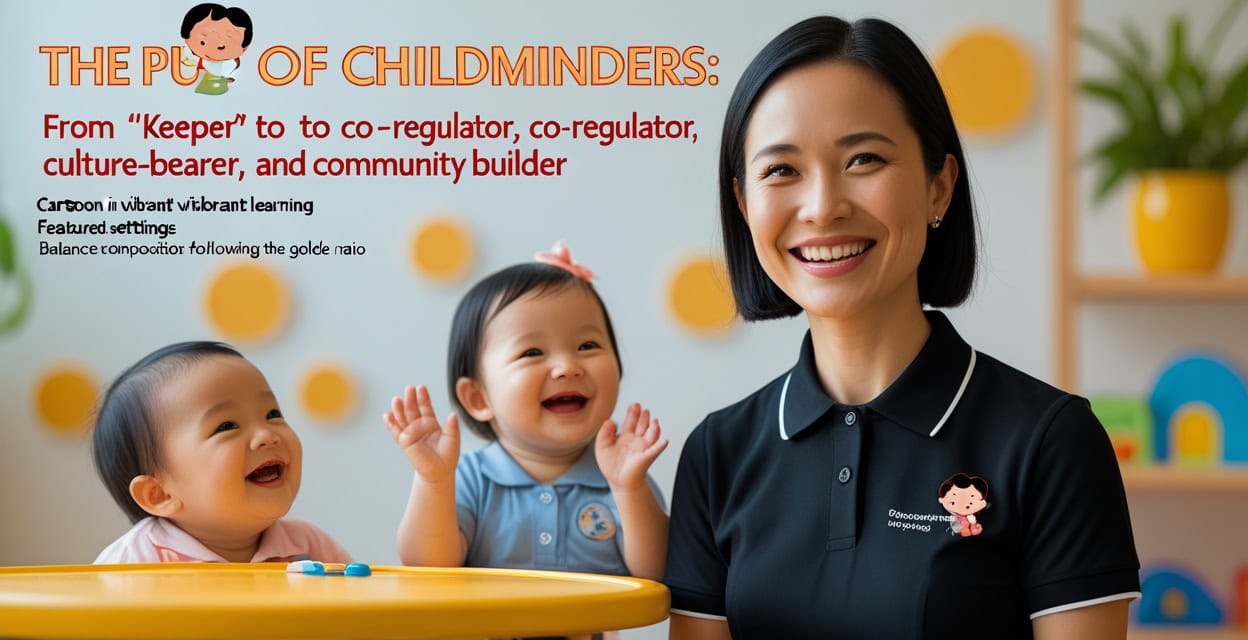
The Purpose of Childminders: From “Keeper” to Co-Regulator, Culture-Bearer, and Community Builder
A professional childminder is a civic asset. EduNanny recruits for heart, trains for skill, and advances for excellence.
- The Maximum Employment Mandate: A national initiative that grows skilled care workers, with pathways for training, coaching, and mastery. Families benefit from professional, stable relationships with caregivers who understand child development deeply.
- Continuous learning and mentorship: Educators engage in reflective practice, daily observation, and iterative improvement, grounded in Montessori respect, Vygotskian scaffolding, and trauma-informed attunement.
- Community integration: Near-home operations turn neighbours into a safety net. Children grow within a network of trust, not a single caregiver, reinforcing social cohesion and shared responsibility.
- What to look for in a childminder: Ask about training, ongoing mentorship, and a system for parent feedback. Look for documented routines that demonstrate attunement and a track record of safety and warmth.

What Parents Can Expect on Day One
A clear picture helps families feel confident from the start. Here is what EduNanny aims to deliver on day one and beyond:
- 1:3 infant ratio: Attentive, age-appropriate care with a focus on individual needs and responsive interaction.
- Modern, light-filled spaces: Environments designed for visibility, movement, and calm, with zones for play, rest, and meals.
- Innovation-forward CCTV with privacy safeguards: Transparent monitoring that respects consent and data privacy, paired with open dialogue about practice.
- Two pathways near your doorstep: Choose Centre-Based or Home-Based Childminding according to what feels like “us.”
- Islandwide operations, weekday schedule: 7am–7pm across Singapore, with consistent routines across locations.
- Affordability and subsidies: From $33/day; CDA/Baby Bonus accepted; guidance on subsidies provided at enrollment.
- A living partnership: Daily updates, educator responsiveness, and collaborative goal-setting that keeps you connected to your child’s day.

How EduNanny Makes Infant Care and Childminding Great in Singapore
We translate theory into practice with a focus on equity, safety, and joy. Here are concrete pillars and actions you can implement or assess:
- Excellence and Quality: Fidelity to developmental science with warmth. Practice tip: request a monthly practice highlight where educators demonstrate a milestone and explain the reasoning behind the activity.
- Access and Convenience: Near-home locations, predictable hours, and simplified handovers reduce parental stress. Home-near checks: visit a pod at different times of day to experience transitions first-hand.
- Equity and Affordability: Transparent pricing and subsidies make high-quality care accessible. Action: prepare a budget and subsidy plan early; track changes in family income and adjust care options accordingly.
- Safety by Design: A culture of safety anchored by clear protocols and transparent technology. Practice: review a real-world incident scenario with your caregiver and role-play how you would communicate concerns.
- Civic Purpose: The ECDA pilot and employment mandate elevate care as essential infrastructure. Action: engage with local policymakers by sharing family experiences and suggesting enhancements in care networks.
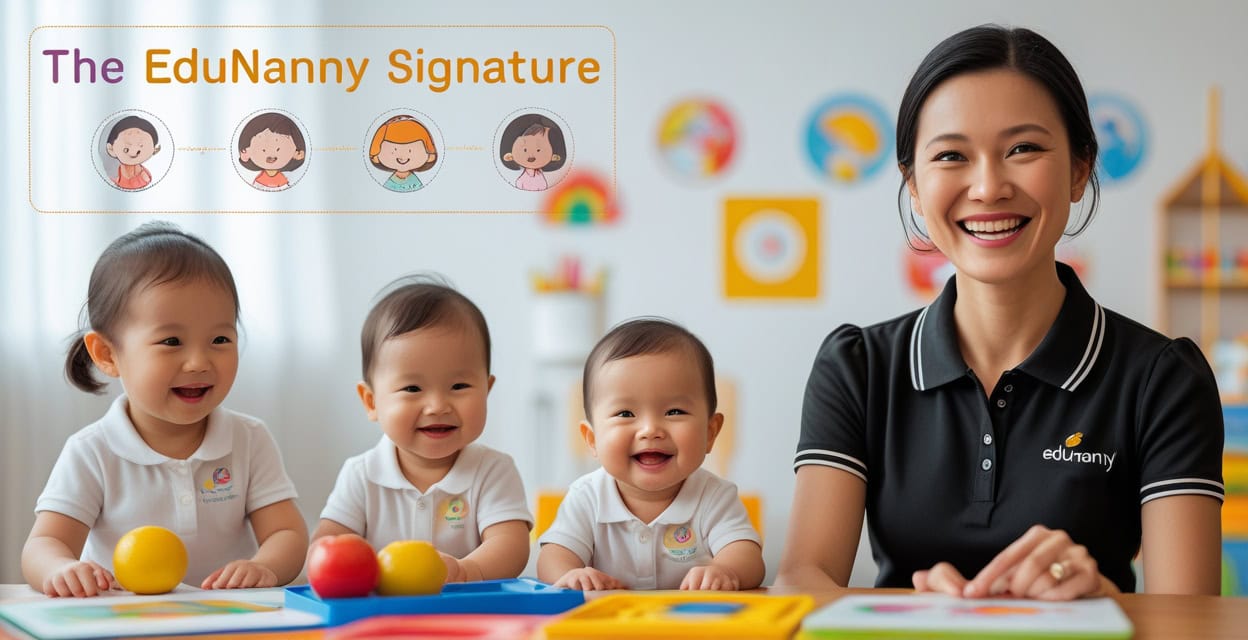
The EduNanny Signature—A Few Quiet, Powerful Practices
These practices are designed to feel like quiet constants in a child’s day—rituals that build predictability, peace, and belonging.
- The Two-Minute Arrival: A simple handover ritual—eye level, gentle naming, and a short continuity moment. Example: “Good morning, Kai. Mum’s coat is on the hook; we’ll read your favorite book after you hang your hat.”
- The Uninterrupted Meal: Unhurried, seated, relational meals. Narrate textures, hunger cues, and preferences. Practically, introduce one new texture per week and document acceptance or reluctance to guide future meals.
- The Restorative Nap: Sleep is supported, not imposed. Observe cues, protect the environment, and practice co-regulation to help infants settle. Create a consistent nap routine with dim lights, quiet routines, and a gentle lull.
- The Three Keeps: Keep it Slow, Keep it Simple, Keep it Seen. Reduce clutter and noise; maintain clear observation points; preserve routines that provide comfort and predictability.

A Word on Technology and Trust
CCTV is an innovation, not intimacy. It makes the work visible, reduces uncertainty, and invites partnership, but it never replaces human connection. Knowing comes from dialogue, practitioners who can explain the reasoning behind practices, and parents who feel included in the day-to-day learning. EduNanny’s promise is to keep the line open and the child at the center.

A Word on Place
Centre-based childminding offers the hum of a shared space—light, movement, and a widening social world. Home-based childminding provides the intimacy of a small, homelike pod with same standards and heart. Both options are designed to feel like “us” because your family’s sense of place shapes your child’s sense of safety and belonging.

Conclusion: Why Childminding Matters—And Why Now
Infants, parents, childminders, and neighbours form Singapore’s first community of care. Daily acts of attunement, safety, and discovery compound into character. Care happens Monday to Friday, 7am–7pm—and it echoes in every memory a child keeps. The nation’s temperament begins in miniature—within a held gaze and a gentle hand, and the creativity we prize begins in a safe place to try, fail, and try again. EduNanny braids heart and science until excellence feels like care and care feels like home. Let us build this together. Visit EduNanny.com and Childminding.EduNanny.com. Come see a pod. Meet the people. Ask the questions that matter to you. If we do our work well, your infant will feel it before you read it, and you will see it in the quiet confidence of a child who expects the world to be safe, interesting, and kind.
This is our public promise: attunement you can feel, safety you can trust, development you can see, and access you can afford. In the first thousand days, little things are not little. They are everything. And together, through EduNanny, they can be everything—for every family—across Singapore. Thank you.
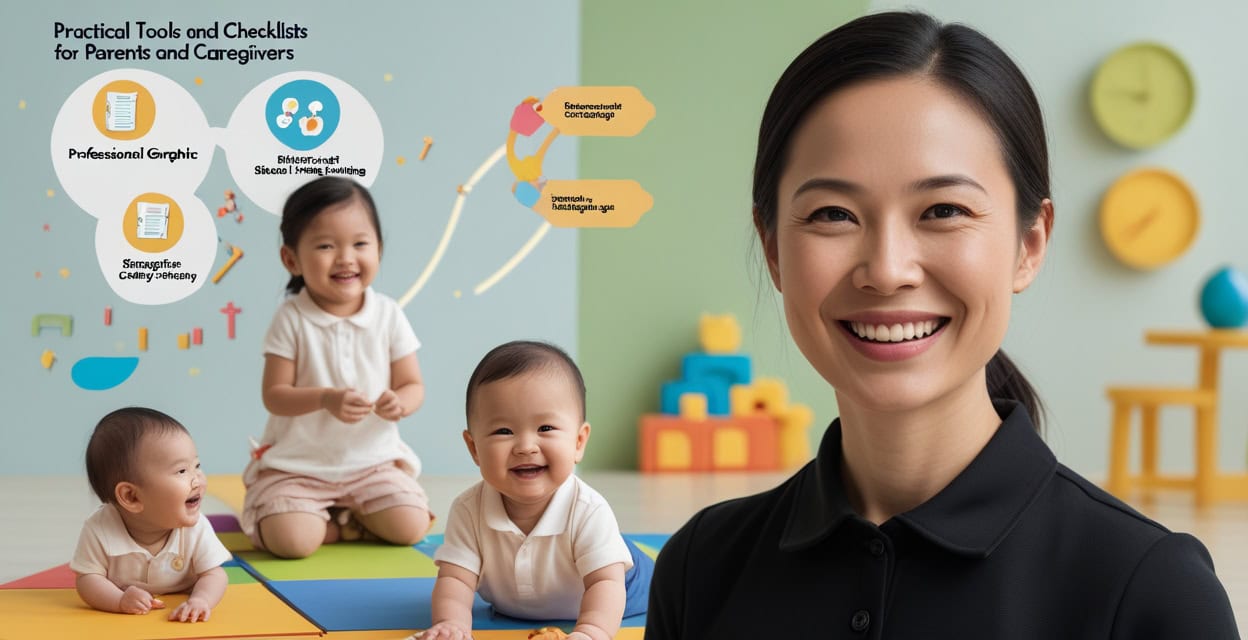
Practical Tools and Checklists for Parents and Caregivers
Below are ready-to-use templates and checklists you can adopt or adapt to support your child’s earliest development and daily rhythm with EduNanny or any quality caregiver in Singapore.
- Daily Attunement Checklist: Three serve-and-return interactions per hour, three opportunities to label emotions, one culture-language activity (song or story), and one moment of uninterrupted infant-led movement.
- Home-Care Coordination Sheet: A shared document with feeding times, sleep cues, milestones, and any concerns. Include a “three matters that mattered” note for quick parent-teacher conversations.
- Two-Minute Arrival Script for Parents: Prepare a simple, consistent greeting that your child recognizes to ease transitions (e.g., “Kai, it’s morning. We’ll read your book after you hang your hat.”).
- Meal-Time Playful Textures Guide: Weekly textures (smooth puree, mashed, crunchy) with notes on acceptance to guide the next meal plan and avoid food aversions.
- Nap Readiness Plan: A 3-step cue system to help caregivers recognize sleep readiness and to support a smooth transition from activity to rest.

FAQ: Common Questions from Parents
- What if my child has special needs? EduNanny’s model emphasizes individualized attunement, continuous observation, and collaboration with families and healthcare professionals to tailor activities and routines that support development.
- How is privacy protected with CCTV? Access is controlled, logged, and limited to families and authorized staff. Clear policies govern data retention and usage, with ongoing reviews to protect child privacy.
- Can I switch between Centre-Based and Home-Based? Yes. EduNanny provides options near home, with the same standards and support, to accommodate changing family needs.
- What if I need to adjust hours occasionally? We support flexible arrangements within the 7am–7pm window and discuss a plan that minimizes transitions for the child.

Closing Call to Action
Join us in writing a new chapter in early childhood care for Singapore—one that respects science, fosters community, and dignifies care work. Discover a pod near you, meet the educators, and witness how EduNanny translates attunement, safety, and development into daily life for your child. Visit EduNanny.com and Childminding.EduNanny.com to learn more, book a tour, or begin your enrollment journey today.
Note: This article reflects EduNanny’s public commitments, practices, and evidence-informed approaches to infant care and childminding in Singapore.
[#keyword1, #keyword2, #keyword3, #keyword4, #keyword5]