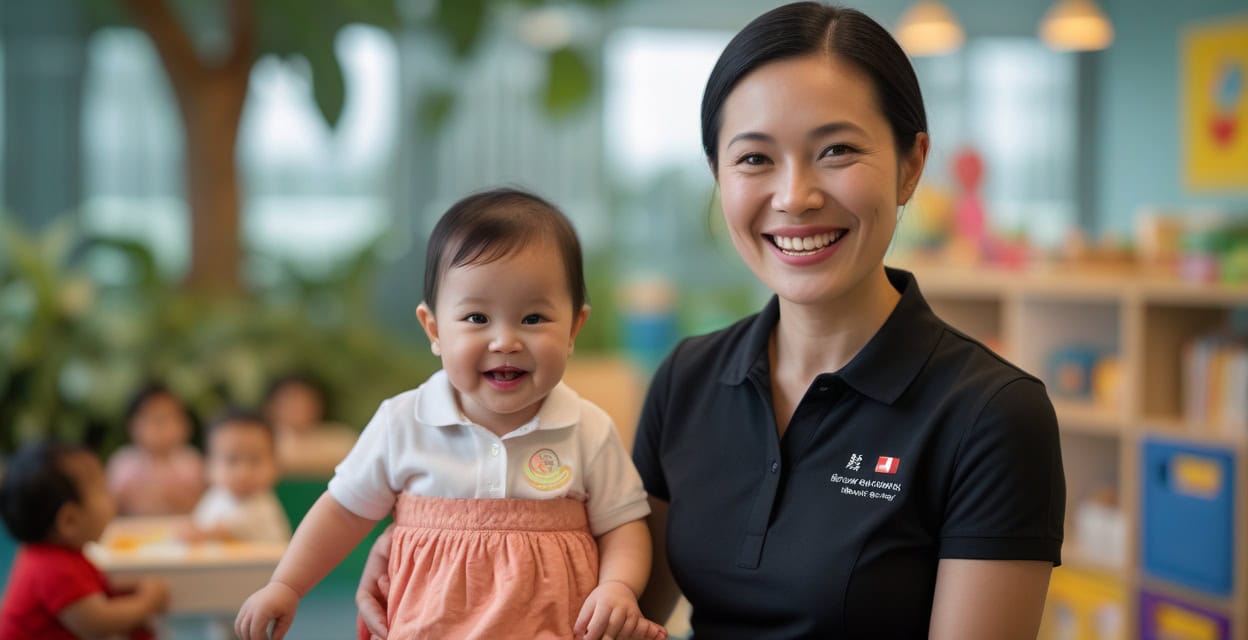
Cradling a Nation: A Public Infrastructure for Singapore’s First Thousand Days Rooted in Attunement Safety and Joy

Introduction: A Clear, Evidence-Rich Vision for Singapore’s First Thousand Days
In the intimate work of caring for newborns and infants, there lies a public mandate: when the cradle is held with knowledge and heart, a nation stands taller. EduNanny Singapore presents a science-grounded, caregiver-led movement designed for the first thousand days—an era where attachment is formed, language is born, and trust becomes the lifelong compass. This article offers an in-depth, practical expansion of that vision, with actionable guidance for families, caregivers, and policymakers alike.
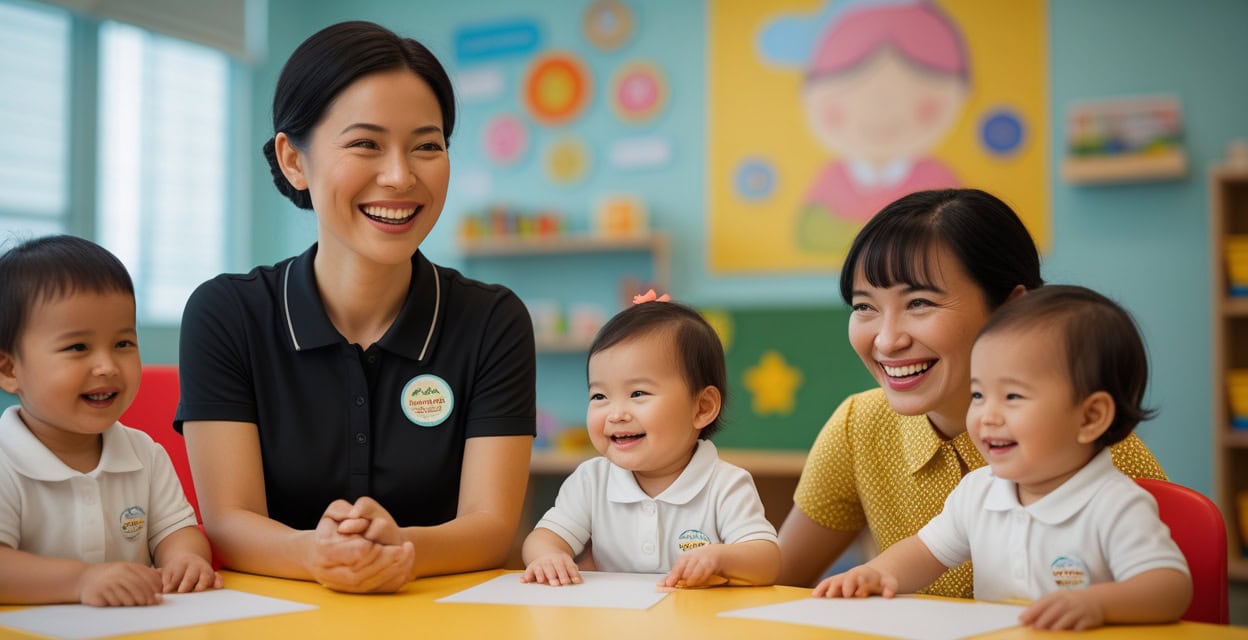
EduNanny’s Promise: A Thousand Days, A Public Good with Private Tenderness
EduNanny is a Singapore-born program that integrates world-class infant pedagogy into neighbourhood homes and thoughtfully designed micro-centres. It operates Monday through Friday, 7am to 7pm islandwide, with an ultra-low 1:3 infant ratio. By blending centre-based and home-based care with distance check-ins, EduNanny makes high-quality care accessible, affordable, and scalable. The initiative is grounded in national partnerships—ECDA’s Childminding Pilot, with support through the CDA/Baby Bonus—and aligned to a Maximum Employment Mandate that dignifies both care work and childhood itself.
Topic 1: A Pedagogy of Attunement—Where Science Meets the Everyday
Core principle: daily caregiving is teaching when guided by attachment science and child development theory. Practical steps include:
- Slow, relational routines: treat diapering as dialogue, feeding as partnership, and rest as a protected rhythm. Schedule is predictable but flexible to the child’s cues.
- Reading subtle cues: caregivers interpret gaze, breath, posture, and affect to offer just-right challenges (the Zone of Proximal Development in action).
- Language as a relationship: narrate actions, label emotions, and encourage a rich language environment—home languages welcome to support identity and cognitive growth.
- Attunement zones: maintain eye-level interactions, use gentle touch, and foster autonomy through safe choices (e.g., selecting which toy to explore).
- 1:3 ratio as a practice standard: ensures depth of engagement, safety, and responsive learning, not just a slogan.
Topic 2: Safety as a Designed System, Not a Wish
Safety is built into every layer of EduNanny—from architecture to ongoing practice. Key elements include:
- Environment design: modern layouts with clear sightlines, calm colours, and resources that invite exploration.
- Transparency and privacy: approved CCTV in centres and careful handling of data with consent in home premises.
- Proactive risk management: daily hazard sweeps, sleep safety checks, and allergy protocols that are standard, not optional.
- Health training: all caregivers are trained in infant first aid and safe sleep practices; naps occur on firm surfaces, face-up, with vigilant supervision.
- Structured handovers: accountable logs and digital check-ins ensure continuity of care across shifts.
Topic 3: Development as a Living Curriculum—From Wonder to Will
Infancy is foundational learning. A developmentally aligned micro-curriculum supports neural growth, language, and early social skills:
- Sensorimotor mastery: intentional opportunities for reaching, grasping, transferring, and exploratory actions that promote neural network development.
- Language as relationship: rich, responsive talk; songs; encouragement of home languages; and sign support to reduce early-frustration.
- Motor freedom through floor time: prioritise safe, supervised exploration; avoid over-reliance on screens; facilitate movement rather than direct every action.
- Social learning in tiny circles: small-group interactions that model turn-taking, empathy, and comforting rituals.
- Continuous observation: caregivers document progress through journals and rubrics that translate scientific insight into practical daily practice.
Topic 4: Happiness and the Ethics of Care
Joy is a developmental nutrient, not an afterthought. Three conditions cultivate happiness in infancy:
- Predictability: reliable routines create security and calm.
- Respect: permission-based handling, patient transitions, and a slow pace that honours infant autonomy.
- Mastery: celebrate effort and curiosity; prioritise intrinsic motivation over entertainment and excessive stimulation.
Caregivers are coached to nurture infant agency, regulate the nervous system, and maintain a calm, dignified atmosphere. Less flashy stimulation; more presence, rhythm, and relational depth.
Topic 5: The Purpose and Profession of Childminding
Childminders are early-life professionals who bridge home and world with skill, science, and heart. EduNanny elevates this profession through:
- Structured coaching and observation cycles that convert practice into measurable growth.
- Standards-aligned practice rubrics for consistent quality across homes and centres.
- Peer learning, reflective journals, and ongoing professional development.
- Transparent parent communication with live updates that reflect growth as a narrative, not a checklist.
- Pathways linked to a Maximum Employment Mandate, ensuring quality care translates into meaningful careers.

EduNanny: How It Works for Families and for Singapore
EduNanny operates through multiple, complementary modalities designed to fit diverse family needs while maintaining high standards of care and development.
Centre-Based Childminding
- Architected for visibility, calm, and flow; spaces designed for safe, independent exploration and guided interactions.
- Hygiene-forward protocols and clear routines that align with infant safety standards.
Home-Based Childminding
- Approved home premises that meet the same safety and pedagogy standards as centres.
- Small, familiar settings that reduce stress for infants while enabling close caregiver-child relationships.
Distance Support
- Tele-coaching and digital check-ins to provide continuity of care when in-person sessions are not possible.
- Digital tools are used to share daily updates, progress notes, and goals with families in real-time.
Islandwide Availability and Scheduling
- Monday–Friday, 7am–7pm, across neighbourhoods to ensure near-home access and convenience.
- Predictable scheduling that supports working families and reduces caregiving friction.
Ultra-Low Ratio and Accessibility
- 1:3 infant ratio to prioritise attunement, safety, and responsive learning in every setting.
- Affordability from $33/day with CDA/Baby Bonus support to ease financial barriers to high-quality care.
Assurance-by-Design
- Innovation CCTV and robust onboarding processes to maintain transparency and safety.
- Health and hygiene protocols, sleep-safety audits, and allergy-aware kitchen practices baked into daily routines.
A Public Purpose
- EduNanny by BUTLER operates under the ECDA Childminding Pilot as a national social initiative—driving early-life infrastructure while expanding meaningful employment opportunities.
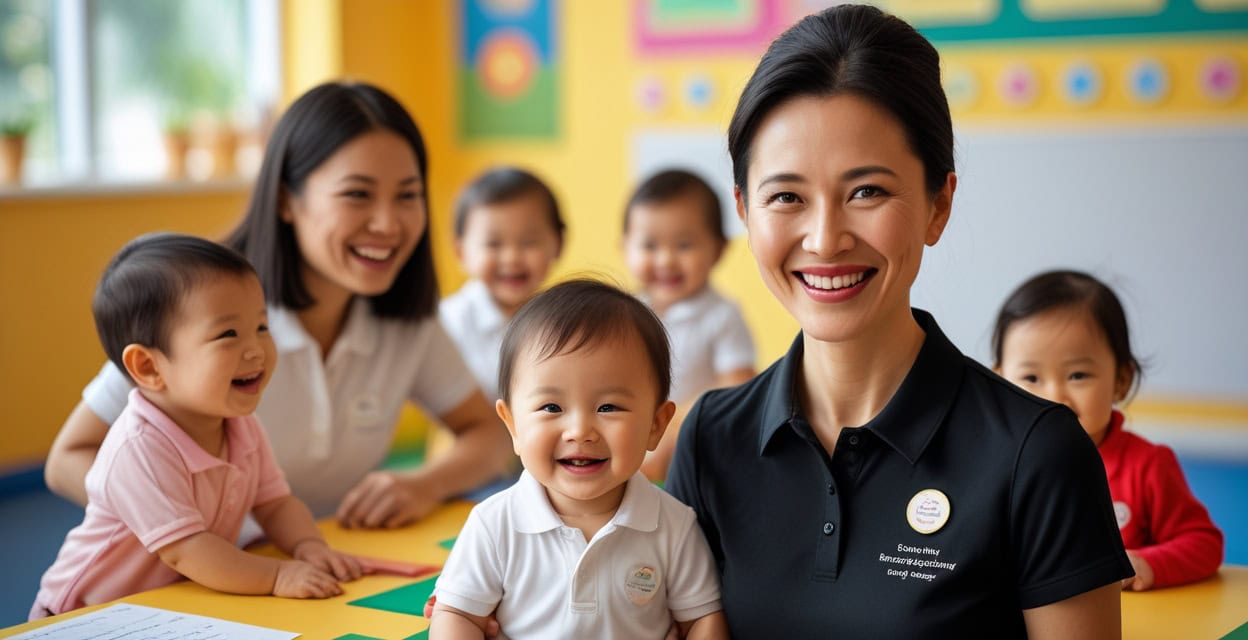
Our Five Daily Vows: A Practical Ethic for Every Day
To every child, EduNanny commits five daily vows that shape routines and relationships:
- 1) I will see you before I teach you—attunement first.
- 2) I will keep you safe with my presence and with our systems.
- 3) I will make room for your discovery—movement, language, and wonder.
- 4) I will honour your rhythms—feeding, sleeping, playing with dignity.
- 5) I will walk with your family—clear communication, shared goals, open doors.
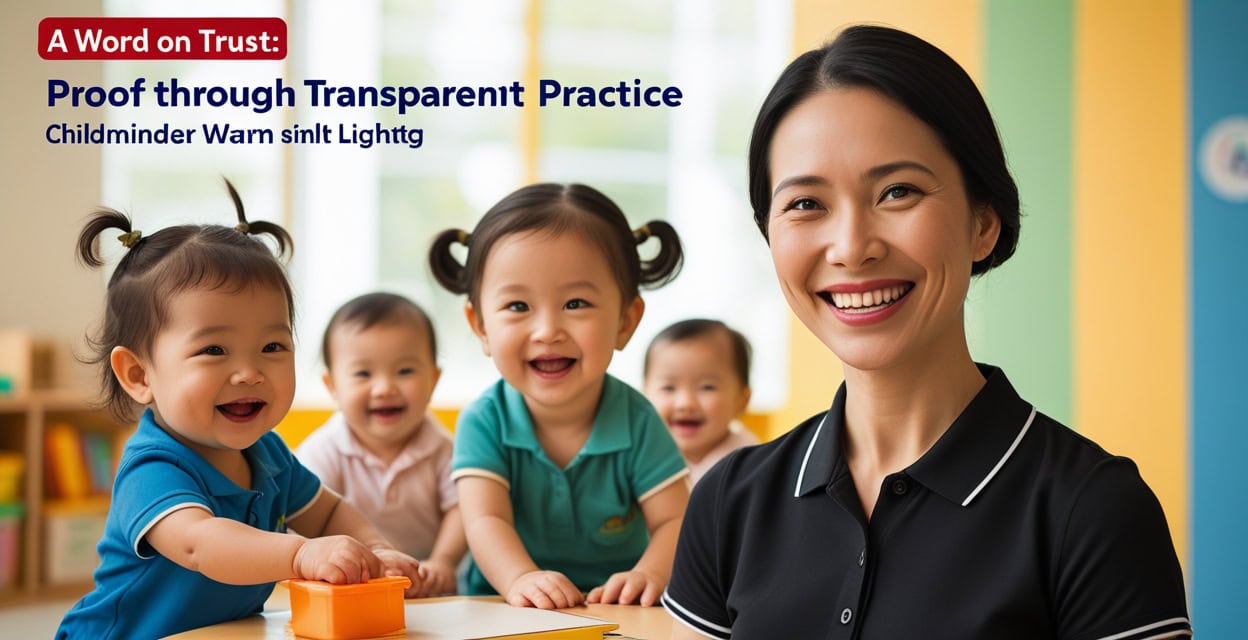
A Word on Trust: Proof Through Transparent Practice
Parents deserve more than promises. EduNanny pairs relational transparency with operational clarity. Families will know who is with their child, what training they have, what the child experienced today, and what the team is working on next. Development is read as a story—yours, ours, and your child’s—rather than a checklist, creating a narrative of growth that families can own and celebrate.

A Civic Invitation: Care as Public Infrastructure
Infant care is not a private puzzle but a shared promise. When childminding becomes a respected, well-trained, and well-supported profession, family well-being improves, workforce participation increases, and the resilience of our youngest citizens strengthens. Treating the cradle as foundational infrastructure is not merely policy; it is daily practice that shapes long-term national prosperity.

Closing: Who, What, When, Where, How—and Why It Matters
Who: Singapore’s infants, their families, and a rising community of professional childminders.
What: Attuned, safe, joyful, and developmentally rich childminding at a 1:3 ratio—home-based, centre-based, and distance-supported.
When: Monday through Friday, 7am–7pm, during the precious first thousand days when trust, language, and secure attachment are formed.
Where: Islandwide—near home, in community and home premises designed for clarity, calm, and care.
How: Through a science-backed, heart-led model; innovation CCTV and modern layouts; rigorous training; clear parent partnerships; affordability from $33/day with CDA/Baby Bonus; and alignment with the ECDA Childminding Pilot as a national social initiative with a Maximum Employment Mandate.
Why: Because a nation that cradles well grows well. A baby held in competence and love becomes a child who trusts, a teen who explores, and an adult who contributes. Every gentle, knowledgeable touch in the first thousand days is policy made personal—and a future made possible.
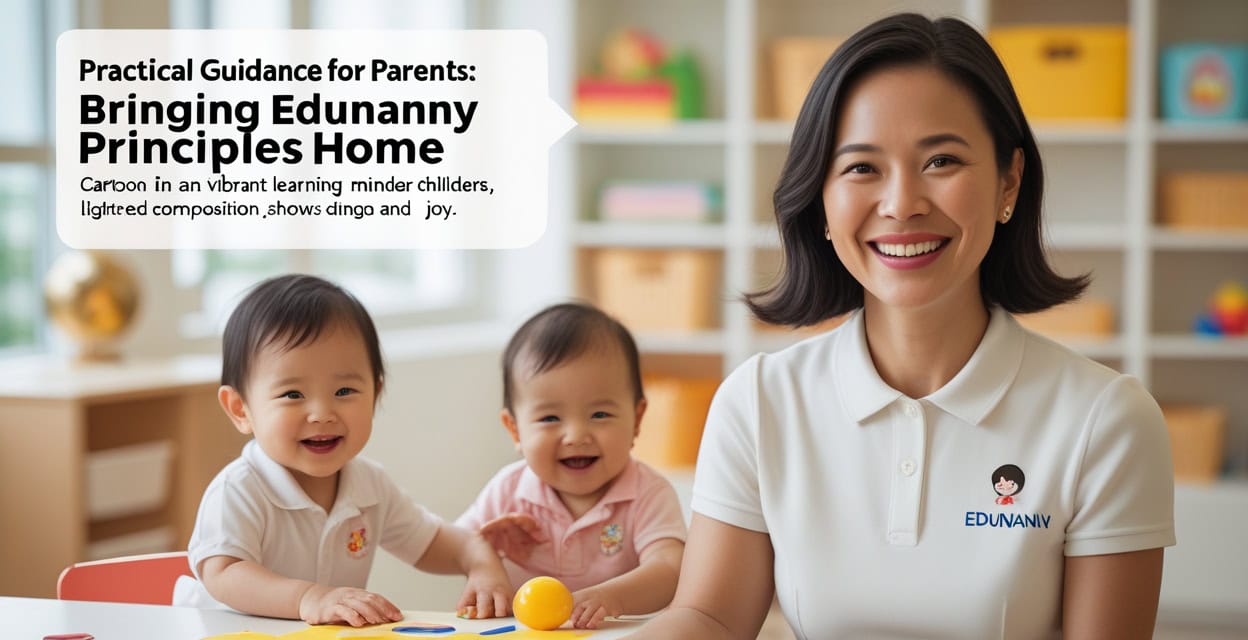
Practical Guidance for Parents: Bringing EduNanny Principles Home
Choosing a Care Model That Fits Your Family
- Assess whether your family needs centre-based, home-based, or hybrid care. Consider your commute, your infant’s temperament, and the times you work.
- Ask about caregiver training and ongoing coaching. Look for explicit rubrics and documentation that show progress over time, not just daily counts.
- Inquire about safety systems: sleep environments, food safety, allergy protocols, and daily hazard checks. Demand transparent reporting and routine audits.
Preparing for Your Infant’s EduNanny Experience
- Share your child’s routines, cues, and preferred soothing strategies. Write a simple one-page guide for caregivers (bedtime song, favourite comfort item, and a smoke-free environment).
- Set up a home-language plan that allows your child to hear and respond in their primary language, with support for bilingual development where appropriate.
- Agree on a communication rhythm: daily notes, weekly summaries, and monthly developmental conversations to track progress and set goals.
What to Observe: Quality Indicators in Practice
- Caregiver responsiveness: do staff notice subtle cues and respond promptly with calm, meaningful interactions?
- Attunement in routine: are diapering, feeding, and rest integrated with talk, eye contact, and gentle touch?
- Environment cues: are spaces designed for safe exploration, with materials rotated to maintain interest?
- Safety culture: are there daily logs, hazard checks, food safety measures, and clear nap procedures?
- Family partnership: is there openness to feedback, clear updates, and collaborative goal-setting?
Partnering with EduNanny: A Practical Plan
- Attend orientation sessions to understand the pedagogy and safety protocols before your child starts.
- Establish a trial period with defined milestones (e.g., weight of self-feeding, first words, or new motor milestones) and plan for a family-teacher conference after the first four weeks.
- Maintain open channels: use the distance-support tools when needed, but also schedule in-person visits when possible to observe routines and ask questions.
Policy, Practice, and Community: The Bigger Impact
EduNanny is positioned to demonstrate how high-quality infant care can scale responsibly within a national framework. By integrating the ECDA Childminding Pilot and a Maximum Employment Mandate, the model supports workforce participation, gender equality in family life, and resilient early development outcomes. This isn’t merely care—it’s a structured system of support that strengthens families and communities across Singapore.

Join the Movement: How to Engage with EduNanny
Interested families, caregivers, and policymakers are invited to experience the EduNanny model in action. Visit the EduNanny and Childminding EduNanny sites to observe a morning circle, a quiet nap, a curious crawl, a first sign, and a shared smile. See how excellence feels when it is small, near, and yours. Your involvement helps redefine what it means to cradle a nation’s future.
Conclusion
In the first thousand days, careful attention to attachment, language, safety, and joyful learning lays the groundwork for a lifetime of growth. EduNanny offers a scalable, evidence-informed approach that treats infant care as a public good with private tenderness—centered near home, grounded in science, and oriented toward the dignity of every child and the dignity of every caregiver. By embracing these principles, families lift one another, communities strengthen, and Singapore advances as a nation that protects, values, and enables its youngest citizens to thrive. Join us in making the cradle the strongest foundation for a brighter future.
[#EduNanny, #SingaporeChildminding, #First1000Days, #EarlyChildhoodEducation, #InfantCareSingapore]