
EduNanny Singapore, A Civic Movement in Infant Care Attunement at the Cradle and the City

EduNanny Singapore: A Civic Movement in Infant Care
Good evening, friends, parents, caregivers, and partners in the future of Singapore. Thank you for gathering here where the smallest handshakes can shape our largest hopes. This article expands the vision behind EduNanny—a movement in infant care and childminding, born of science, shaped by community, and designed for the everyday realities of Singaporean families. Read on for practical, actionable guidance you can use today as a parent, caregiver, or policymaker.

What is EduNanny? The Vision in Practice
EduNanny is more than a brand; it is a practical framework for elevating early care near where families live and work. It blends excellence, affordability, and a pedagogy of attunement to ensure every baby is seen, heard, and known. The model operates through Centre-Based and Home-Based Childminding, with distance-based parent connection and guidance. As a participant in the ECDA Childminding Pilot, EduNanny aligns with a National Social Initiative and a Maximum Employment Mandate. Key operational truths include:
- Centre-Based and Home-Based Childminding across islandwide Singapore, with a predictable Monday–Friday, 7am–7pm rhythm.
- Ultra-low 1:3 infant ratio for richer attention, safer supervision, and deeper attunement.
- Transparency through innovation-grade CCTV for training, supervision, and accountability.
- Affordability from $33/day, with fees payable via CDA/Baby Bonus proudly supporting families.
- Near-home care that reduces commutes, strengthens routines, and supports workforce participation.
Practical takeaways for families and practitioners: your care should fit your life, not the other way around. EduNanny demonstrates how rigorous safety and development can coexist with accessibility and dignity.
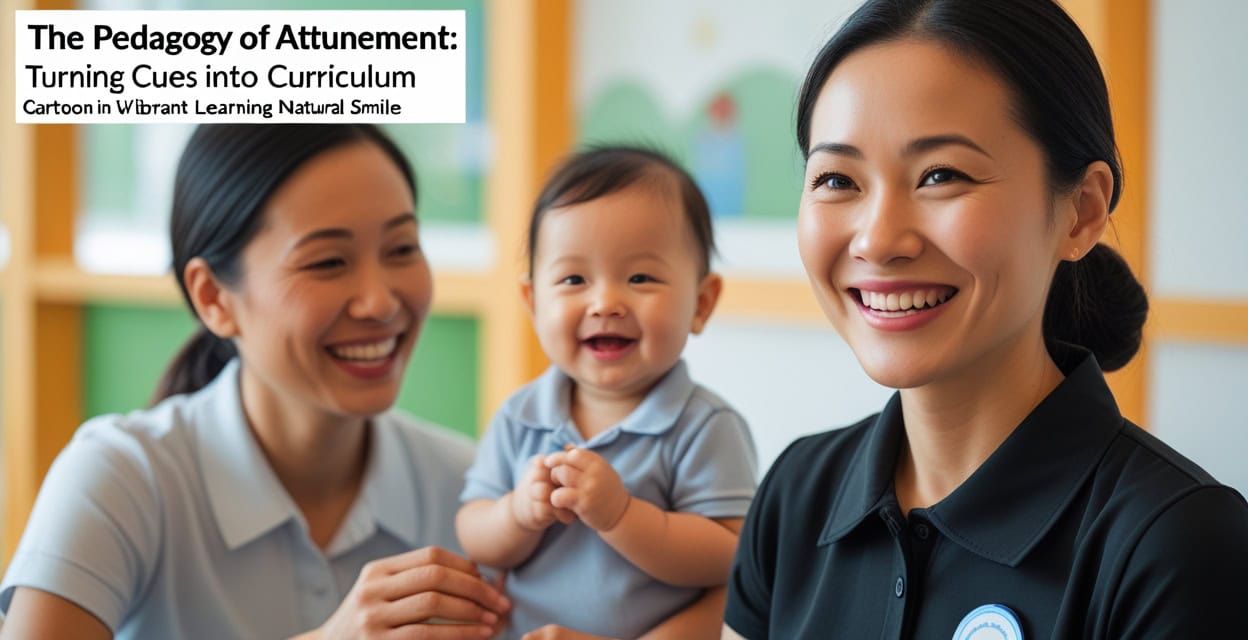
The Pedagogy of Attunement: Turning Cues into Curriculum
The first thousand days offer the most honest syllabus a child can provide. EduNanny translates micro-signals into meaningful, everyday learning. We draw from respected theories—Montessori, Piaget, Vygotsky, Bowlby, and Pikler—to inform a responsive practice that respects the child’s pace.
Listening Before Leading
- Observe feeding, changing, and resting routines as windows into a child’s state and needs.
- Practice “pause and respond”: when a cue arises, pause to interpret before action, and narrate your choices to the child when appropriate.
- Practical example: during a bottle feed, slow the pace, maintain gentle eye contact, and narrate “I’m lifting you up so you can see my face” to support social referencing.
Time Made Visible
- Adopt predictable cycles—eat, relate, move, rest, explore—to create a comforting metronome for infants.
- Use simple routines that balance structure with flexible responsiveness, allowing natural variation in each child’s day.
- Practical example: a standard morning sequence (diaper change, feed, floor play, quiet cuddle) provides security and stimulates curiosity.
Turning Everyday Moments into Inquiry
- Equipment and environments act as learning partners: a spoon becomes a grip lesson; a mirror supports self-recognition and early language.
- Caregivers are researchers: pose gentle questions, observe responses, and adapt activities to the child’s interests.
- Practical example: a small mirror during tummy time invites baby to track reflections, fostering joint attention and early social cognition.
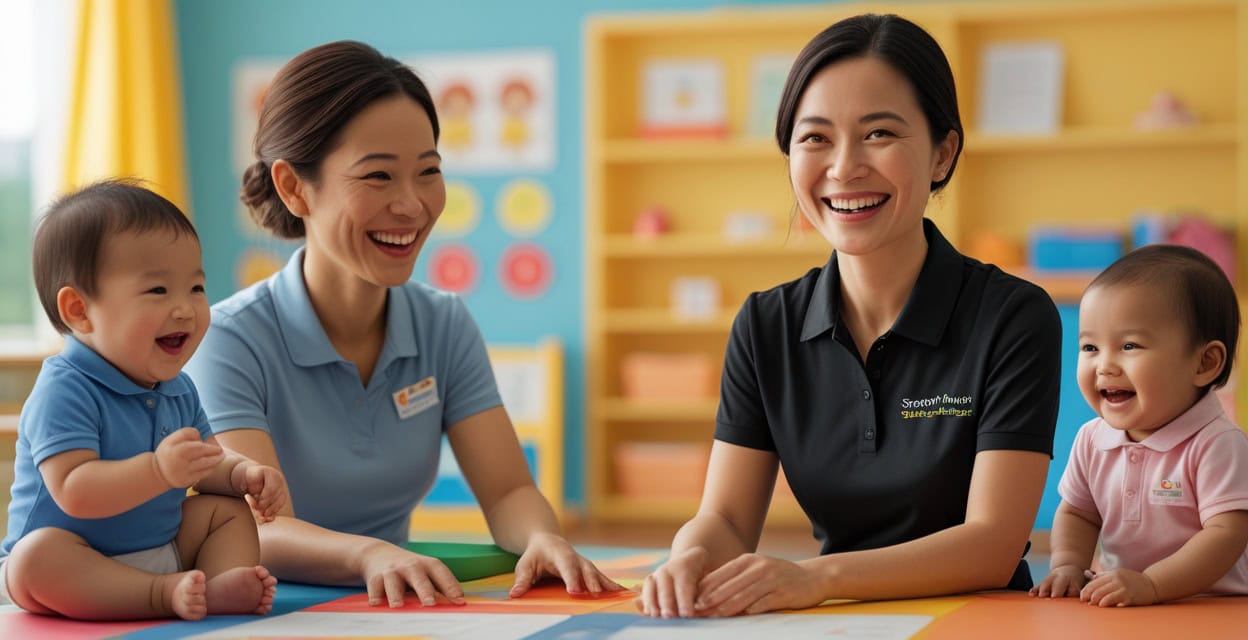
Safety as a Design Language: Layers, Not Lines
Safety at EduNanny is an architecture—environment, protocols, and culture woven together. It is designed, practiced, and refined through daily routines and ongoing training.
Environment
- Modern layouts with clear sightlines and soft zones reduce noise and risk while inviting exploration.
- Sleep surfaces follow best-practice safe sleep guidelines; clutter-free floors support confident mobility and reduce tripping hazards.
- Practical tips: designate a quiet corner for calm-down time, maintain low-height storage for easy access to age-appropriate toys, and rotate materials to sustain interest without clutter.
Ratios and Roles
- The 1:3 ratio is a pledge: caregivers can notice subtle cues, provide timely comfort, and prevent overstimulation or under-stimulation.
- Staggered teams and consistent caregivers build trust and continuity, essential for healthy attachment.
- Practical tip: use a simple daily handover checklist so any caregiver stepping in is up to speed on feeding cues, sleep schedule, and notable changes in mood or routine.
Transparent Systems
- Innovation-grade CCTV supports training, supervision, and safety by design, with an emphasis on privacy-respecting practices.
- Data-informed practice: periodic reviews of incidents and safe-sleep adherence help refine routines and training content.
- Practical tip: share monthly safety reflections with families, including outcomes of emergency drills and updates to policies.
Drills and Culture
- Regular, calm, rehearsed safety checks—feeding safety, temperature hygiene, and emergency readiness—are practiced, not improvised.
- A culture of pause and recheck is encouraged: anyone can say, “Pause. Let’s recheck,” and be thanked for it.
- Practical tip: run quarterly tabletop emergency scenarios with caregivers and a representative from each family so responses are familiar and confident.
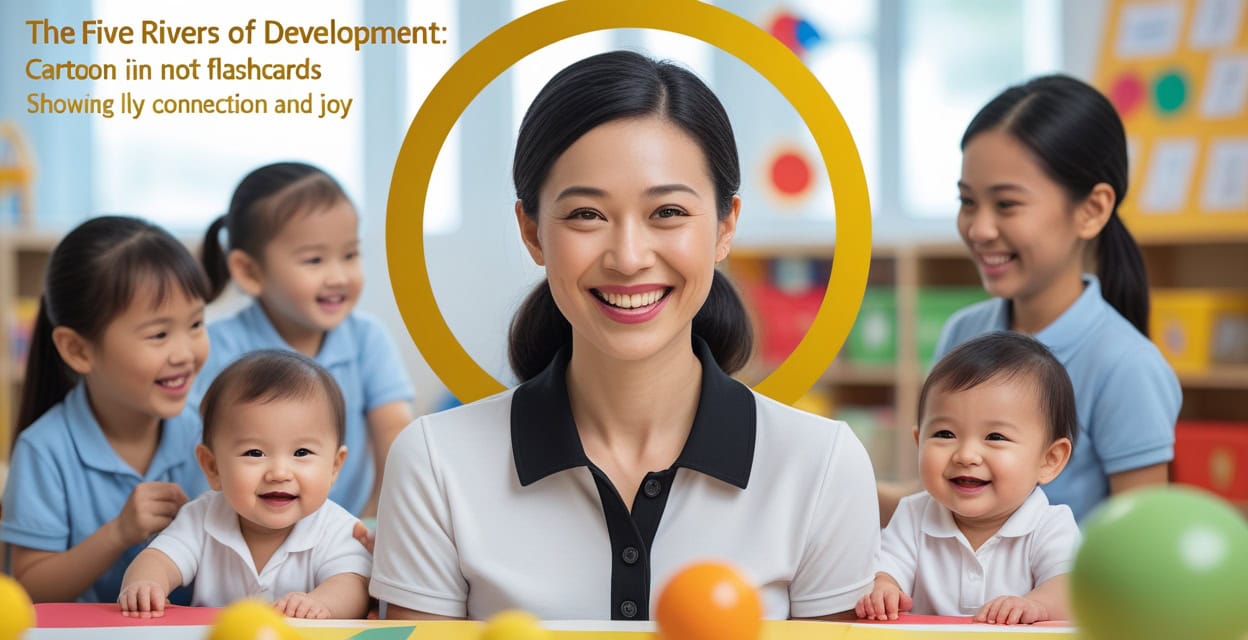
The Five Rivers of Development: Flow, Not Flashcards
Development is a holistic flow of interdependent domains. EduNanny centers on five rivers that nourish each other: attachment, movement, language, cognition, and self-regulation.
Attachment
- Secure bonds unlock curiosity and resilience. Regular caregiver returns reduce distress and increase exploration.
- Practical example: consistent arrival rituals (hi, hug, and a simple hello-ahead cue) help infants feel safe when caregiver transitions occur.
Movement
- Floor time and safe, unconfined movement support physical development and cognitive mapping.
- Practical tip: incorporate short, child-led movement sessions into the day with simple mats, mirrors, and soft blocks to encourage gross motor exploration.
Language
- Describe, narrate, wait, and respond. The “look—sound—reply” loop sets foundations for literacy and social communication.
- Practical example: label actions during play (“I see you stacking blocks—one, two, three. Awesome!”) to build vocabulary and turn-taking.
Cognition
- Cause-and-effect play and problem-solving activities strengthen executive function without pressure.
- Practical tip: use simple cause-and-effect toys (press-and-release, nesting cups) and “peek-a-boo” to teach object permanence and prediction.
Self-Regulation
- Co-regulation today grows into self-regulation tomorrow. Diaphragmatic breathing, soothing touch, and predictable transitions cultivate resilience.
- Practical example: practice pairing a short calm-down ritual with a transition cue (e.g., “Time to move to the play mat—three slow breaths”).
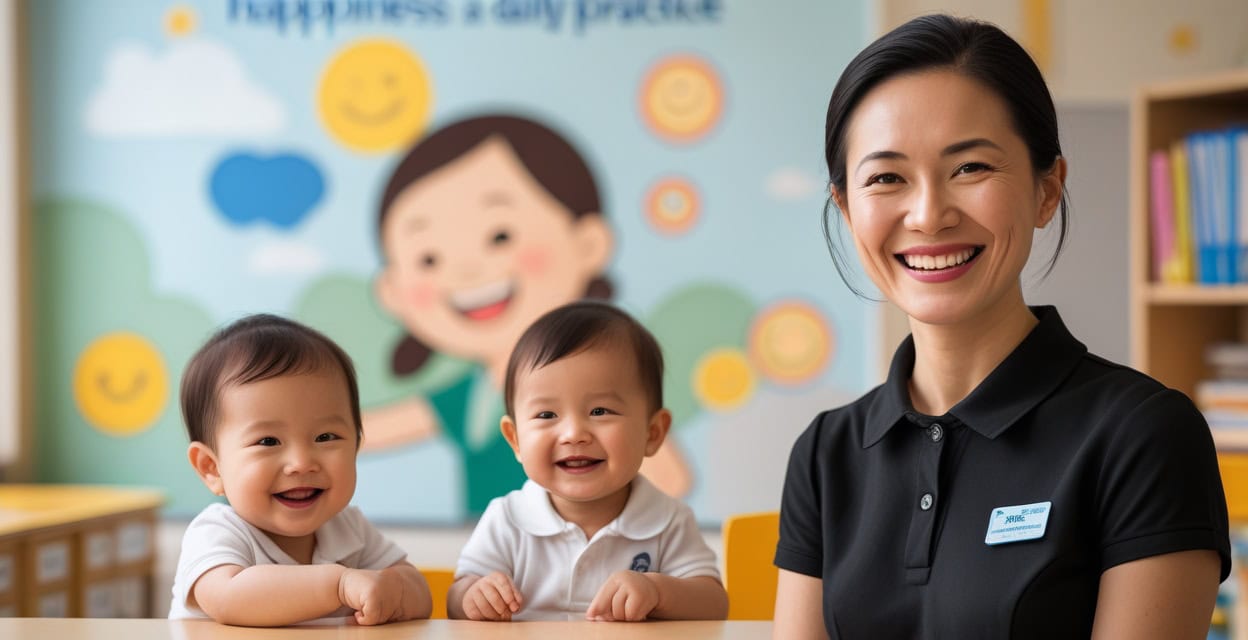
Joy Literacy: Teaching Happiness as a Daily Practice
Happiness in infancy is not luck; it can be taught, practiced, and shared. Joy Literacy builds a positive emotional climate for learning.
Attention as a Gift
- Provide full, undivided attention during critical moments to reinforce that the child matters.
- Practical tip: during feeding or changing, minimize distractions and use eye contact and gentle narration to reinforce safety and belonging.
Play as Purpose
- Open-ended objects, music, gentle sensory experiences, and neighborhood nature walks invite curiosity and autonomy.
- Practical tip: maintain a “sensory basket” with safe, varied textures and sounds; rotate items weekly to sustain interest.
Rest as Respect
- Protected nap times and calm transitions reduce stress and support healthy sleep habits.
- Practical tip: create a soothing nap routine with dim lighting, soft music, and a consistent lullaby or cue for daytime sleepers.
Community as Comfort
- Near-home settings foster familiar faces, reducing separation anxiety and building a sense of security.
- Practical tip: coordinate occasional “family days” where parents visit to participate in baby-led activities, fostering trust and collaboration.
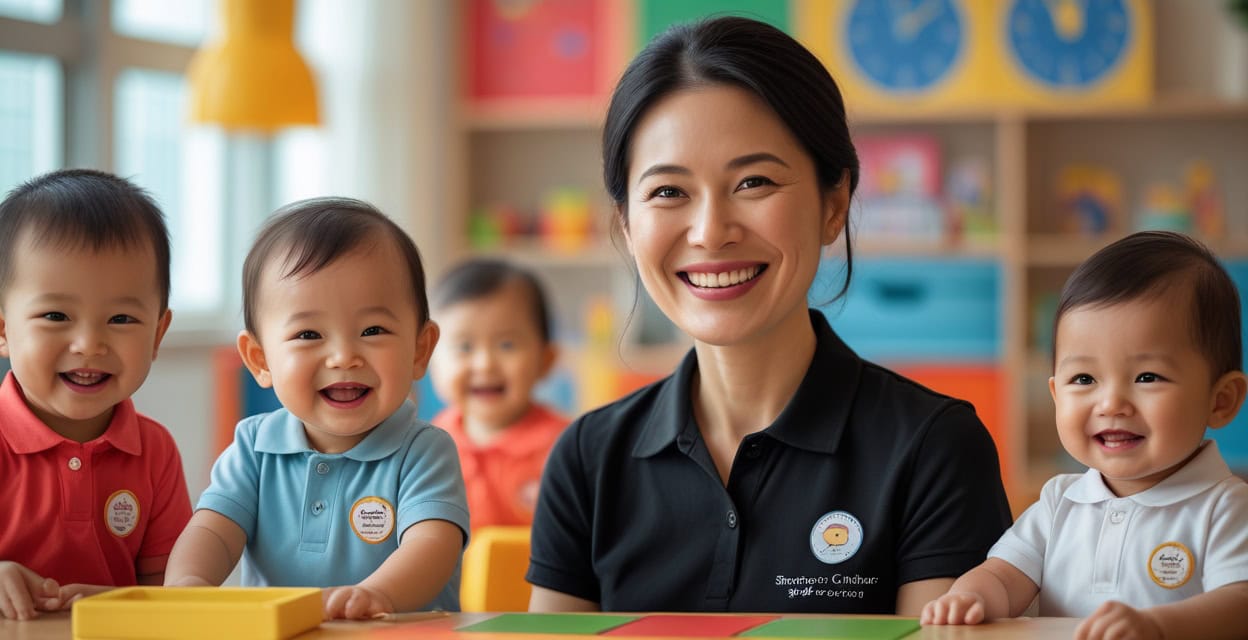
The Calling of the Childminder: A Third Anchor for the Family
A great childminder stands with parents, not in place of them. In a bustling city like Singapore, time matters, and a reliable caregiver becomes the third anchor in family life—linking home to community, work to well-being, and weekdays to weekends.
- Consistent hours (7am–7pm, Monday–Friday) create reliability as a standard, not a favor.
- Near-home care reduces distance between intention and action, making daily routines smoother and more sustainable.
- Daily reflections and photos provide parents with a transparent story of growth and skill development—without staging moments.
- Honor cultural rhythms: meals, songs, and language reflect heritage, reinforcing belonging as a developmental need.
EduNanny elevates childminders as quiet professionals of public good, with a Maximum Employment Mandate recognizing and elevating this vocation and creating dignified work that builds dignified childhoods.
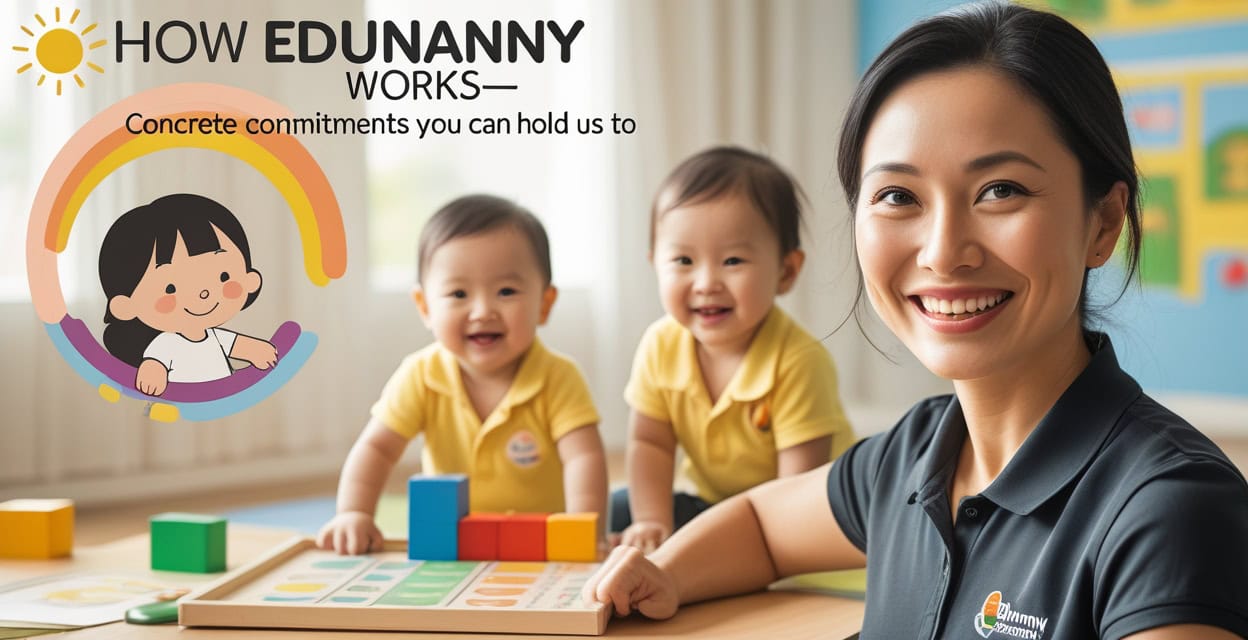
How EduNanny Works—Concrete Commitments You Can Hold Us To
- Excellence and quality without compromise, delivered Centre-Based, Home-Based, with distance connection and guidance for families.
- Convenience with dignity: Monday to Friday, 7am to 7pm, islandwide Singapore, in community and home premises.
- Ultra-low 1:3 infant ratio that protects attention and attunement.
- Innovation CCTV and modern layouts for transparency, training, and safety by design.
- Affordable access from $33/day, with fees payable by CDA/Baby Bonus.
- EduNanny by BUTLER, a proud participant in the ECDA Childminding Pilot—built as a National Social Initiative that also advances local employment.
- Simple onboarding and clear information at EduNanny.com and Childminding.EduNanny.com.

A Brief Explainer—Why This Model Fits Singapore Now
Singapore’s compact, fast-paced, and highly connected environment demands care that is close, consistent, and humane. EduNanny braids three strands to fit this moment:
- Near-home distribution reduces commute stress and separation anxiety for families and caregivers.
- A human-science pedagogy ensures every routine is developmental, rooted in attunement and evidence.
- A social mission keeps care affordable and dignified, while creating meaningful, skilled work for childminders.
The Closing Promise: Who, What, When, Where, and How Childminding Matters
- Who: Infants and toddlers in their first thousand days; parents and caregivers who deserve support, not strain; childminders who deserve training, respect, and fair work.
- What: High-quality childminding—a secure base where safety, development, and joy are not competing priorities but a single ecosystem.
- When: Monday to Friday, 7am to 7pm—reliably consistent, the way trust must be.
- Where: Islandwide Singapore, in centres and homes, embedded in real communities and reachable without long travel.
- How: Through an attunement-first pedagogy, an ultra-low 1:3 ratio, safety architecture with innovation CCTV and modern layouts, affordability via CDA/Baby Bonus, and the accountability of the ECDA Childminding Pilot and a National Social Initiative with a Maximum Employment Mandate.
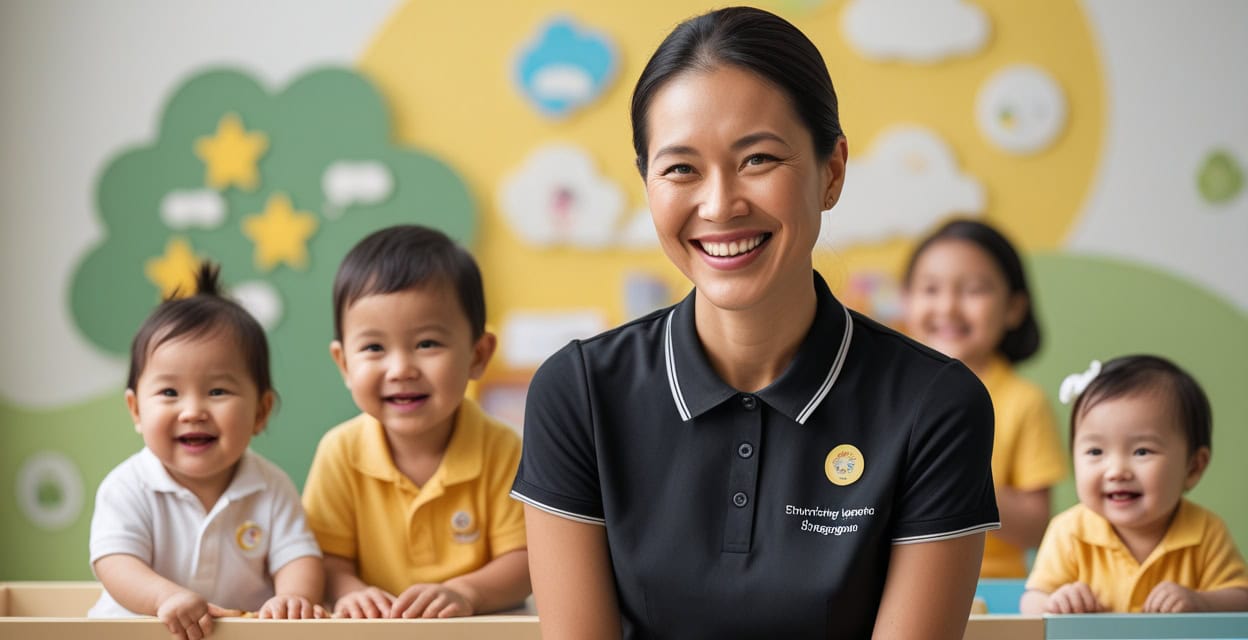
Practical Guidance for Parents: Turning Vision into Everyday Practice
Below are concrete steps families can take to engage with EduNanny principles in daily life and during initial onboarding with a provider.
- First 30 days checklist: observe caregiver-child interactions, note cues, and request weekly updates with photos or short notes on development milestones (language, movement, self-regulation).
- Routines that support attunement: establish a simple morning and evening routine that includes a predictable transition cue and a brief, soothing closings ritual.
- Safety routines at home: designate a safe sleep area, maintain a clutter-free play space, and practice emergency response basics with the caregiver (e.g., a basic choking-rescue message, who to call, and where supplies are kept).
- Developmental play ideas: use open-ended objects (fabric, blocks, cups) to invite exploration; keep a small development log to celebrate progress (crawling, babbling, grip changes).
- Communication with caregivers: use a standardized shared diary for daily highlights, questions, and concerns to strengthen collaboration with the childminder.
- Subsidy and access planning: identify eligibility for CDA/Baby Bonus early; plan finances to sustain consistent care as incomes and benefits change.

Sample Day: A Practical Blueprint for a 6–10-Month-Old
Morning (7:00–9:00):
- Gentle arrival routine with a brief greeting, face-to-face interaction, and a quick diaper check.
- Solid or milk feeding with sensory engagement (narrating taste and texture).
- Floor time with supported movements (tummy time on a mat, reachable toys at eye level).
Midday (9:00–12:00):
- Controlled nap environment with consistent sleep cues; monitor room temperature and noise levels.
- Language-rich play: mirror play, peek-a-boo, and simple signs for routine words (more, all done, sleep).
Afternoon (1:00–5:00):
- Outdoor exposure if possible (short walk, sensory exploration in a safe yard or garden).
- Quiet independent play with caregiver support to scaffold self-regulation and problem-solving.
- Ending with a transition routine and a brief family update to help prepare for caretaking handover.
Evening (5:00–7:00):
- Final feeding and bath time with gentle, predictable sequences; story or lullaby to encourage calm readiness for home.
- Handover notes and questions for parents to review the next day.
Implementation Toolkit for Centres and Home-Based Settings
- Staff training plan: incorporate attunement principles into onboarding, with quarterly refreshers and live demonstrations.
- Family communications framework: weekly updates, photo sharing, and a child progress log that aligns with development milestones.
- Safety audit schedule: monthly spot checks, quarterly drills, and biannual policy reviews to integrate new evidence and local regulations.
- Quality assurance metrics: caregiver responsiveness, child engagement levels, incident reports, and parent satisfaction scores—tracked and acted upon.
- Community integration: partner with local health and education resources for parent workshops, early literacy nights, and family wellness events.

Conclusion
EduNanny offers a practical, research-informed approach to infant care and childminding that is tailored to Singapore’s unique urban landscape. By centering attunement, safety as design, developmental fluidity, joy, and the essential role of childminders, EduNanny seeks to turn early care into civic infrastructure—supporting families, empowering caregivers, and elevating the early years for every child. If this vision resonates, explore EduNanny resources, engage with partner providers, and consider joining the movement to make the first days the best days for every child in Singapore.
[#EduNannySingapore, #InfantCareSingapore, #ChildmindingSingapore, #AttunementPedagogy, #NearHomeCare]