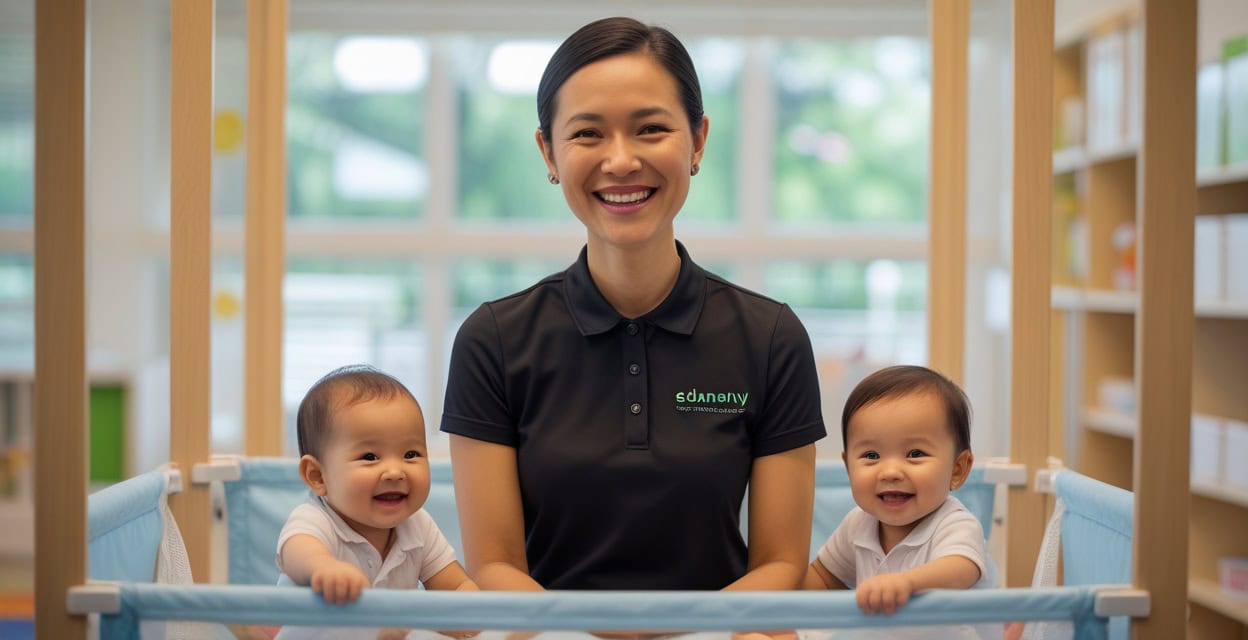
Tiny Pods Big Futures EduNanny Near Home Infant Pods Pilot Transforming Singapore First Thousand Days 1 December 2024 to 31 December 2027

Introduction
Thank you for welcoming EduNanny into your neighborhoods and into the first thousand days of your child’s life. Those early days are not a blur to us—they are the blueprint. They are where attachment becomes confidence, where safety becomes curiosity, and where daily routines become the quiet architecture of a lifelong love of learning. EduNanny by BUTLER was appointed by ECDA to serve in Singapore’s national Childminding Pilot (1 December 2024 to 31 December 2027), and we approach that responsibility with both science and heart.
This article expands on the principles, practices, and practicalities you can use to navigate early care with confidence. It translates a bold vision into actionable steps, so families, caregivers, and communities can partner effectively for every infant’s development.

EduNanny Infant Childminding: What It Is
EduNanny delivers relationship-rich infant care in tiny pods of one to three infants near your home, Monday to Friday, 7am to 7pm. Care runs in two settings:
- Home-based care: a calm, familiar environment purposely prepared for infants.
- Community-based pods: modern, centre-style layouts inside community spaces that feel open, clean, and predictable.
All EduNanny childminders are certified, background-checked, and trained in infant first aid and basic infant care before caring for any infant. Under the ECDA Pilot, SingaporeCitizen infants aged 2 to 18 months who are not concurrently enrolled in ECDA-licensed infant care centres may participate. Parents choose half-day (5-hour) or full-day (10-hour) blocks, with fees before GST at $16.50 (half-day) and $33.00 (full-day), subsidised during typical working hours. CDA/Baby Bonus funds can be used for these subsidised hours.
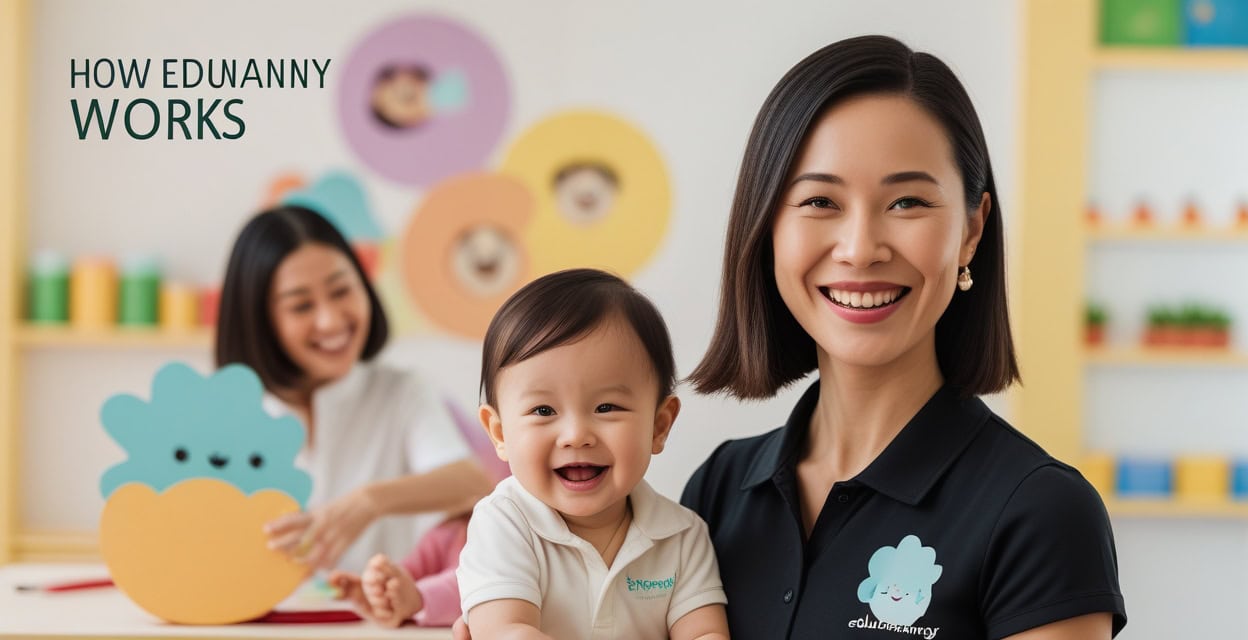
How EduNanny Works: Pod-based Care Near Home
Two Premise Types
- Home-based care: intimate, familiar surroundings with a caregiver who builds a private attachment with your infant.
- Community-based pods: shared spaces designed for safety, predictability, and social learning among a small group.
Key Staffing and Safety Principles
- Ultra low ratios: 1:3 to ensure constant, responsive attention and individualized care.
- Background checks and training: all caregivers complete infant-first-aid, hygiene, and safety training; ECDA checks apply to caregivers with access to the home for home-based care support.
- Transparent monitoring: CCTV in community pods (as required). For home-based care, opt-in caregiving-area CCTV during care hours is available to families, with privacy and written agreements in place.
How to choose between these options: consider travel time, your infant’s temperament, and your family’s daily rhythms. Community pods can offer social exposure and structured spaces, while home-based care can provide deeper familial familiarity and quiet routines.
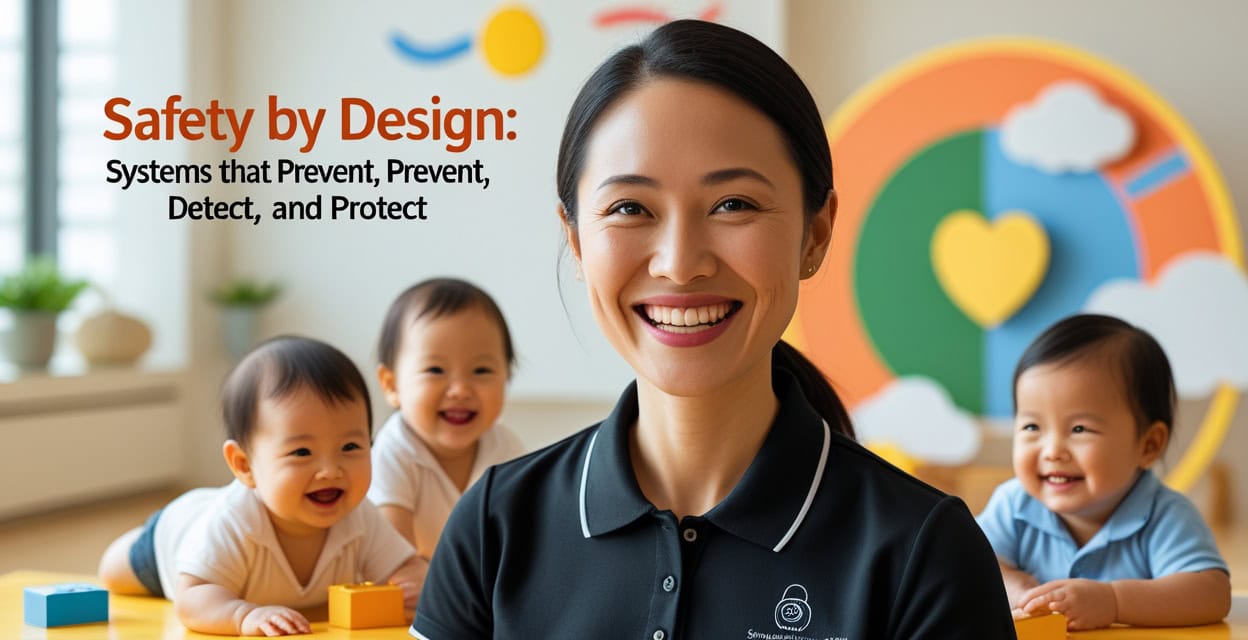
Safety by Design: Systems That Prevent, Detect, and Protect
EduNanny emphasizes practical safety embedded in daily life:
- Prepared environments: covered outlets, anchored furniture, gated play areas, safe flooring, age-appropriate toys, and safe-sleep practices with individual sleep surfaces and no loose bedding.
- Hygiene and training: mandatory infant-first-aid certification, hygiene protocols, and food safety practices for all caregivers.
- Transparent monitoring: community pods use CCTVs; home-based care offers privacy-respecting, opt-in monitoring in caregiving areas during care hours.
- Health protection: a clear no-sick-child policy during care hours with guidance on return-to-care timing.
- Incident-ready culture: documented handover protocols, medication administration only with written parent instructions, and immediate, transparent incident reporting and learning.

Development as Daily Life: A Living Micro-Curriculum
Learning happens through daily, meaningful interactions. EduNanny builds a micro-curriculum into ordinary routines:
- Observation-led planning: caregiver responses are guided by the infant’s signals, interests, and thresholds, following a flexible, developmentally appropriate approach.
- Sensorimotor learning: tummy time, rolling, supported sitting, cruising, object exploration, and safe, age-appropriate play build motor skills and early cognition.
- Language and social connection: frequent narration, singing, and responsive pauses; bilingual songs foster vocabulary without pressure.
- Independence with respect: small choices—such as reaching for a bottle or choosing between two toys—support confidence and agency.
- Documentation that matters: brief, thoughtful updates on sleep, feeding, mood, and milestones give you meaningful context about your infant’s day.

Joy and the Emotional Climate: Happiness as a Safety Feature
Emotional climate shapes development:
- Calm is contagious: steady transitions, predictable routines, and mindful pacing reduce stress.
- Playful learning: gentle, purposeful play—treasure baskets, sensory scarves, soft music—fosters joy without overstimulation.
- Boundaries with warmth: predictable routines and gentle limits support safety and fairness in tiny groups.
- Parent peace of mind: transparent communication and respectful partnerships reinforce trust in the infant’s world.

A Civic Promise: Childminding as Public Good
EduNanny operates within ECDA’s national Childminding Pilot, aligning with national standards while serving neighborhood needs:
- National initiative, neighborhood scale: up to three infants per caregiver to maintain quality and affordability islandwide.
- Work-life support: flexible half-day and full-day blocks align with real working lives and reduce commuting burdens.
- Economic dignity: the program elevates the professional status of trained childminders and raises industry standards.
- Social trust: oversight, background checks, and clear standards ensure a secure, trusted care ecosystem.
- A shared standard: practices in tiny pods strengthen the broader early-childhood system and future outcomes for families and communities.

What Parents Receive: The EduNanny Benefits at a Glance
- Ultra low ratio: maximum 1:3 caregiver-to-infant ratio.
- Ultra low density pods near home for quieter, healthier days.
- Certified EduNanny childminders trained in infant care and first aid.
- Background checks under the ECDA Pilot; for home-based care, checks extend to regular home-access caregivers.
- CCTV: available in community pods; opt-in home-based CCTV during care hours with privacy safeguards.
- No sick-child policy protects all infants and staff.
- National initiative alignment: part of ECDA’s 2024–2027 Pilot with industry standards.
- Modern, safe layouts: dedicated safe-sleep zones and clean feeding areas.
- Home-based and community-based options islandwide: Monday to Friday, 7am–7pm.
- Affordable subsidised hours: $33/day (full-day, 10 hours) or $16.50 (half-day, 5 hours) before GST; CDA/Baby Bonus accepted.
- Flexible scheduling: choose days per week and blocks to fit your family’s needs.
- EduNanny by BUTLER: supported by a concierge and operations team for smooth service and rapid responses.

The Signup Process Is Simple
Follow these steps to begin your EduNanny journey:
- 1) Visit the EduNanny page at edunanny.com/edunanny-ecda-childminding-service/ or inquire via WhatsApp.
- 2) Our EduNanny Concierge Team will respond, understand your needs, and share nearby options.
- 3) Confirm an appointment for a site visit—in a community pod or a home-based setting.
- 4) Enrol. We’ll guide you through eligibility, schedules, and CDA/Baby Bonus payment setup for subsidised hours.

A Brief Explainer on Eligibility and Fees
Practical guidance to avoid guesswork:
- Who: Singapore Citizen infants, 2 to 18 months old, not concurrently enrolled in ECDA-licensed infant care centres.
- When: Monday to Friday, 7am–7pm (excluding public holidays).
- Where: Your childminder’s home or a nearby community pod.
- How much: Subsidised hours are $16.50 for half-day (5 hours) or $33.00 for full-day (10 hours), before GST. CDA/Baby Bonus can be used; other hours may be arranged at regular rates.

Why Small Pods Build Big Futures
The first thousand days are not about rushing milestones; they are about layering trust. With one caring adult, three infants, and predictable days, neurodevelopment has room to breathe. When an infant knows who will comfort them, how their day will flow, and what their world smells, sounds, and feels like, the brain assigns energy to learning instead of guarding. Safety is not merely the absence of harm; it is the presence of steady, responsive care.

Our Philosophy in One Line
Attachment first, safety always, development everywhere, joy every day.

Closing: Why Childminding Matters—Who, What, When, Where, and How
EduNanny envisions a safe, warm, expertly guided infant care landscape that supports families and strengthens communities. Here’s a practical takeaway for families considering enrollment:
- Who: Families across Singapore seeking safe, nurturing care and childminders prepared to serve with heart and skill.
- What: Tiny, ultra low-ratio pods that convert everyday care into secure attachment and gentle learning experiences.
- When: ECDA’s Pilot from 1 December 2024 to 31 December 2027, with operations Monday to Friday, 7am–7pm.
- Where: In your neighborhood—childminders’ homes and community-based pods islandwide.
- How: ECDA standards, training, background checks, CCTV in community pods, optional home-based CCTV during care hours, and a transparent parent-provider partnership.
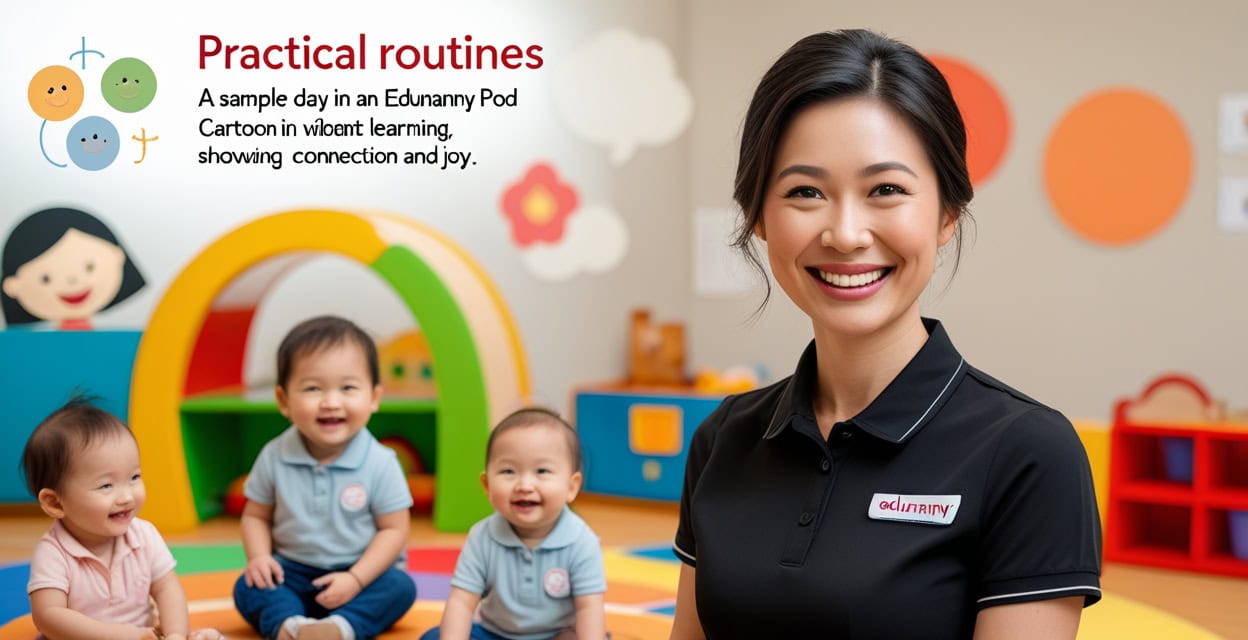
Practical Routines: A Sample Day in an EduNanny Pod
Use this sample timetable as a guide to discuss daily flow with your caregiver. Times are flexible to suit your family’s needs and infant cues.
- 7:00–7:30: Arrival, warm greeting, diaper change, and calm settling in.
- 7:30–9:00: Breakfast and free play; caregiver observes cues for feeding, sleep readiness, and interest in exploring.
- 9:00–9:30: Tummy time and sensorimotor play; respond to motor readiness and comfort.
- 9:30–11:00: Structured activity block: song, simple sign language, and language-rich interactive play.
- 11:00–11:30: Lunch or bottle, with gentle self-feeding opportunities when appropriate.
- 11:30–13:00: Nap/quiet time with a predictable routine and soothing environment.
- 13:00–15:00: Outdoor time or indoor gross-motor play; exploration with safe equipment.
- 15:00–16:00: Snack, gentle story/narration, and social interaction with peers.
- 16:00–18:00: Free play, close observation notes, and transition to pick-up routines.
- 18:00–19:00: End-of-day handover, feeding cues, and parental briefing for the next day.

Common Questions: Quick Guidance for Parents
- What happens if my child is sick? We pause care, provide guidance on return-to-care timing, and ensure caregivers follow health protocols to protect everyone.
- How are updates communicated? Expect brief, thoughtful updates on sleep, feeding, mood, and milestones, with context to help you understand your infant’s day.
- Can I visit before enrolling? Yes. Site visits in either a community pod or home-based setting help you observe routines and ask questions.
- What if I need irregular hours? EdUNanny offers flexible scheduling with options for the number of days per week and blocks to fit your family’s needs.
- How is safety balanced with privacy? CCTV in community pods is required and opt-in for home-based care; written agreements ensure privacy and dignity are protected.

Conclusion: A Reflective Ending and Call to Action
The first thousand days deserve a standard of care that is both human and extraordinary. EduNanny invites you to partner in building a future where infants feel seen, safe, and inspired to learn every day. If you’re ready to explore how tiny pods can fit into your neighborhood and your family’s rhythm, begin your journey with EduNanny today by visiting the EduNanny site or contacting our Concierge Team for a personalized options briefing. Together, we will raise Singapore’s future with safety, joy, and dignity—one tiny pod at a time.
Begin your journey: visit edunanny.com or the ECDA-supported page at edunanny.com/edunanny-ecda-childminding-service/ today. Our Concierge Team will walk beside you—from enquiry, to site visit, to enrolment.
[#InfantCareSingapore, #UltraLowRatio, #EarlyChildhoodDevelopment, #ParentPartnership, #ECDAPilot]