From Handover to Hope EduNanny Near Home 1 to 3 Infant Pods December 2024 to December 2027 A Living Pedagogy for Singapore First Thousand Days

Introduction: EduNanny in Singapore’s Childminding Pilot
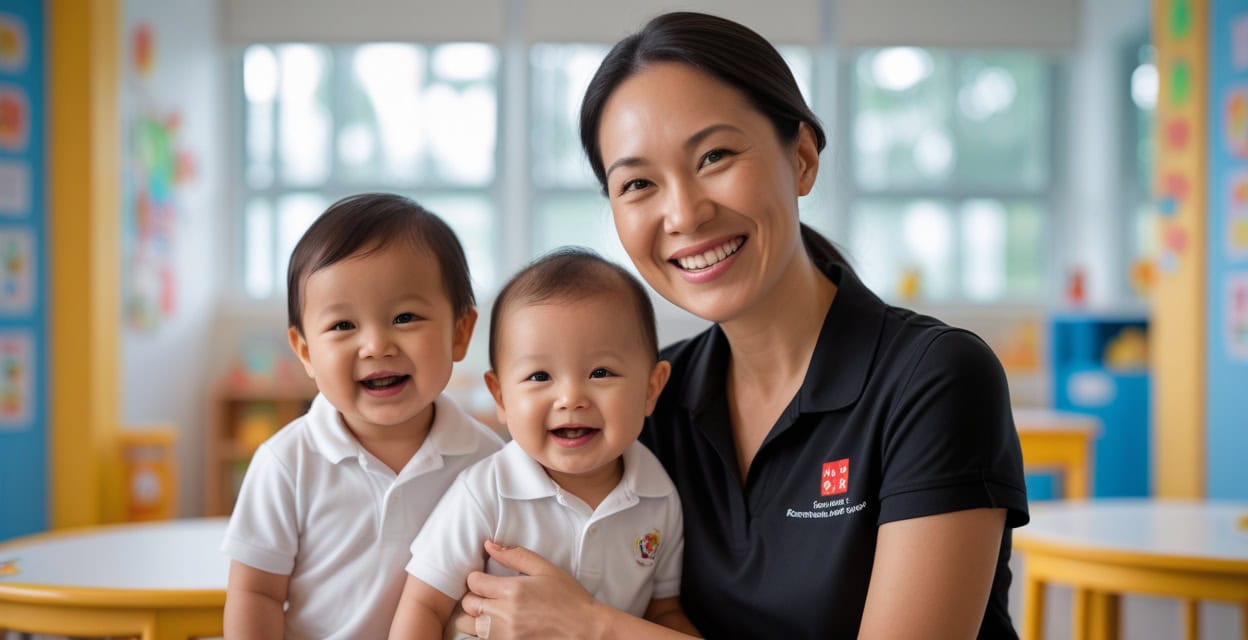
Thank you for gathering—physically and in spirit—around the most important project a society can undertake: the care of its infants. EduNanny by BUTLER is an ECDA-appointed operator participating in Singapore’s three-year Childminding Pilot (1 December 2024 to 31 December 2027). We exist to make infant care near home safe, joyful, dignified, and attainable. If the first thousand days are the quiet architecture of a life, then childminding is the scaffolding that helps that architecture rise—steady, secure, and beautiful.
This article expands on our living pedagogy and practical framework, offering parents concrete guidance, actionable routines, and EduNanny insight drawn from our near-home, ultra low-ratio model. Our approach weaves Montessori’s respect, Pikler’s gentle autonomy, Bowlby’s secure attachment, and Vygotsky’s social learning into everyday rituals families can trust.

EduNanny Philosophy: A Living Pedagogy for Infants
The Attuned Day: Care as Curriculum
An infant’s day is not scheduled around activities; it is woven from relationships. We organize care around four gentle cycles—Soothe, Nourish, Explore, Rest—so that every essential need becomes a learning moment.
- Soothe: Responsive, predictable comfort. We practise the 3R approach—Respectful, Responsive, Reciprocal—so infants are not “managed” but met.
- Nourish: Unhurried feeding with attentive pacing, eye contact, and language, building trust and oral-motor development.
- Explore: Floor-based play for gross motor progress, safe sensory setups, open-ended objects for cause-and-effect, early book-sharing, and song.
- Rest: Protected nap windows in low-stimulation environments. Rest is the scaffold of learning.
The 1:3 ratio allows us to notice micro-signals—a turned head before a cry, a tiny fist unclenching—and to respond before distress escalates. That responsiveness is the heart of early pedagogy.
Safety as a System, Not a Slogan
- Environment: Ultra low-density layouts, anchored furniture, safety-gated zones, daily hazard sweeps, and sanitisation routines that prioritise tiny hands and big curiosity.
- Practice: Trained childminders in infant first aid, choking response, safe sleep, food safety, and hygiene. No Sick Child policy to protect pods from contagion.
- Visibility: CCTV in community sites; optional caregiving-zone CCTV in home settings during hours of care, by mutual consent; timestamped incident reporting and parent updates.
- Accountability: ECDA background checks on childminders and household members with regular access; clear incident protocols; audit trails; and removal from the pilot for any breach of standards.
Development That Is Real, Not Rushed
Infants thrive on attunement, not acceleration. We design experiences around authentic development milestones.
- Motor: Plenty of supervised floor time and open space for rolling, reaching, crawling, and cruising—no devices that restrict movement.
- Language: Constant warm narration, sing-alongs, nursery rhymes, finger plays, and book rituals that build phonological awareness and secure attention.
- Social-Emotional: Primary childminder assignments for each infant, gentle transition rituals, and predictable micro-routines to build secure-base behaviour.
- Cognition: Object permanence games, cause-and-effect play, and simple, repeated experiences that wire attention and memory.
- Documentation: Brief daily notes, photos (with consent), and monthly developmental snapshots—so parents see what we see and we align on goals.
Joy as the Safest Place in the Room
- The Hello: Warm, consistent greetings, familiar voices, and named handovers to reduce cortisol at drop-off.
- The Rhythm: Pods observe infants’ natural tempos; days flow around cues, not schedules.
- The Close: Gentle reunions and quick debriefs with moments of pride—“Today your child reached for a book and waited for the page turn.”
Joy is not an add-on; it is a measurable, protective practice that supports secure attachment and lifelong learning.
Childminding with Civic Purpose
- Public Good: Under the ECDA pilot, childminding becomes a dignified form of neighbourhood care and a reliable public service.
- Family Resilience: Near-home care reduces commute stress and helps infants stay connected to their communities.
- Public Standards: The pilot harmonises affordability, safety, and quality with national oversight, elevating the standard of near-home infant care.
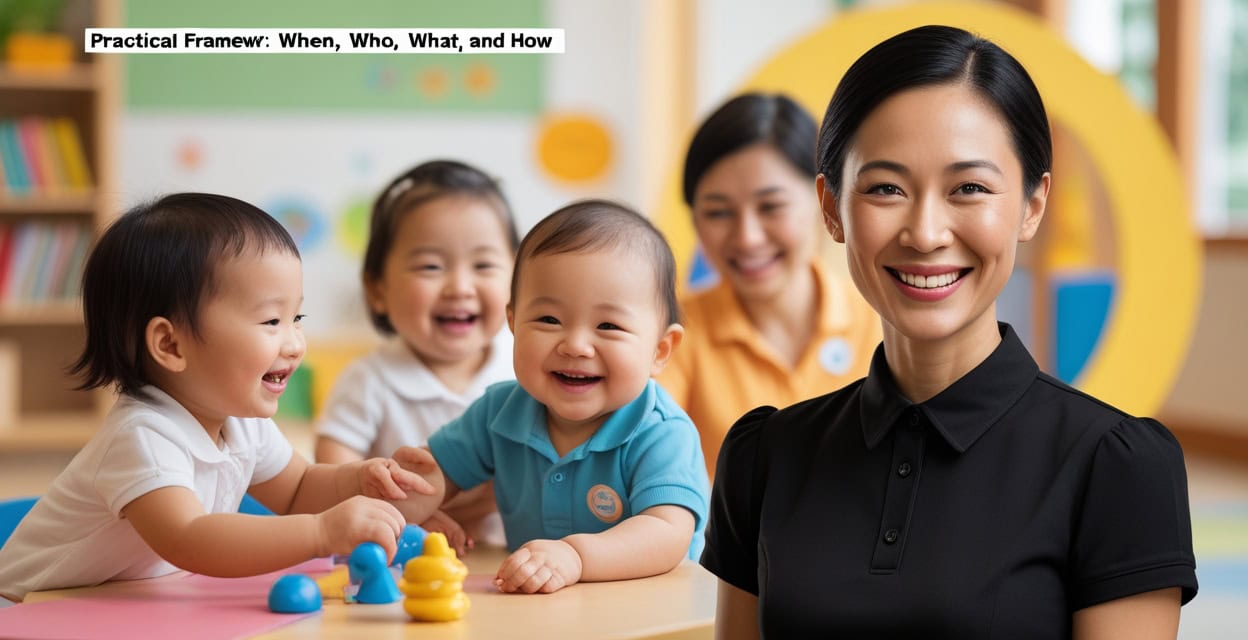
Practical Framework: Where, When, Who, What, and How
- Where: Home-based pods and community-based premises designed for ultra low density and modern safety layouts, islandwide.
- When: Monday to Friday, 7am to 7pm, excluding public holidays. Choose half-day (5 hours) or full-day (10 hours) blocks.
- Who: Singapore Citizen infants aged 2 to 18 months not concurrently enrolled in ECDA-licensed infant care centres. Each pod cares for 1 to 3 infants at a time.
- What: Certified EduNanny childminders delivering a living curriculum of attachment, care routines, and play-based exploration—supported by CCTV in community spaces and optional caregiving-zone CCTV in homes.
- How: ECDA subsidies make services affordable at $16.50 for half-day and $33.00 for full-day before GST; CDA/Baby Bonus can be used for subsidised hours. Additional care beyond subsidised hours can be discussed at regular rates.

The EduNanny Advantage at a Glance
- Ultra Low Ratio 1:3 and Ultra Low Density environments
- CCTV provided in community spaces; optional in home caregiving zones by agreement
- Certified and background-checked childminders; household checks for home-based care
- No Sick Child policy during care hours to protect the pod
- National initiative under ECDA Childminding Pilot, 2024–2027
- Centre-based (community) and home-based options; islandwide convenience
- Modern layouts, safe sleep practice, and calm design
- Affordable from $33/day (10 hours) and $16.50/half-day (5 hours) before GST; CDA/Baby Bonus accepted
- Monday–Friday, 7am–7pm flexibility
- EduNanny Concierge support and site visits before enrolment
- A living pedagogy that treats care as curriculum and joy as a safety practice
A Day in an EduNanny Pod: What It Feels Like
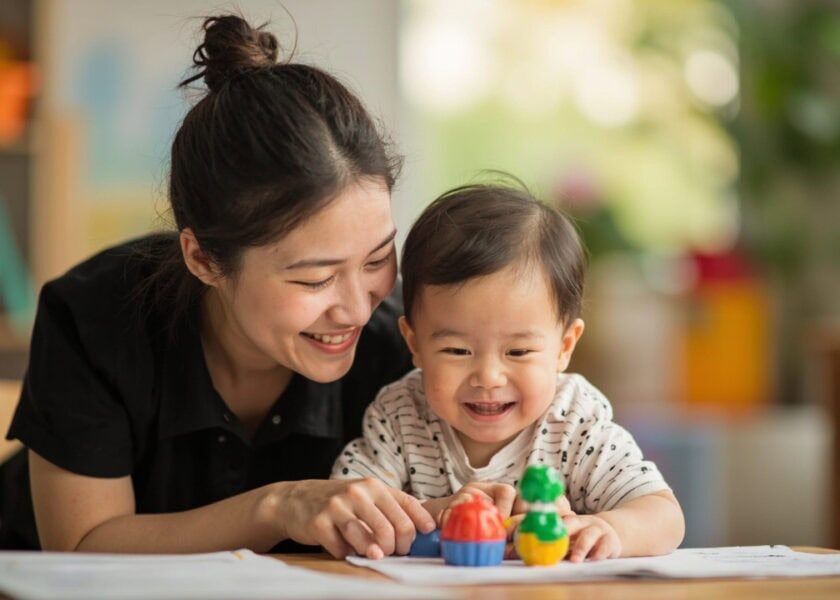
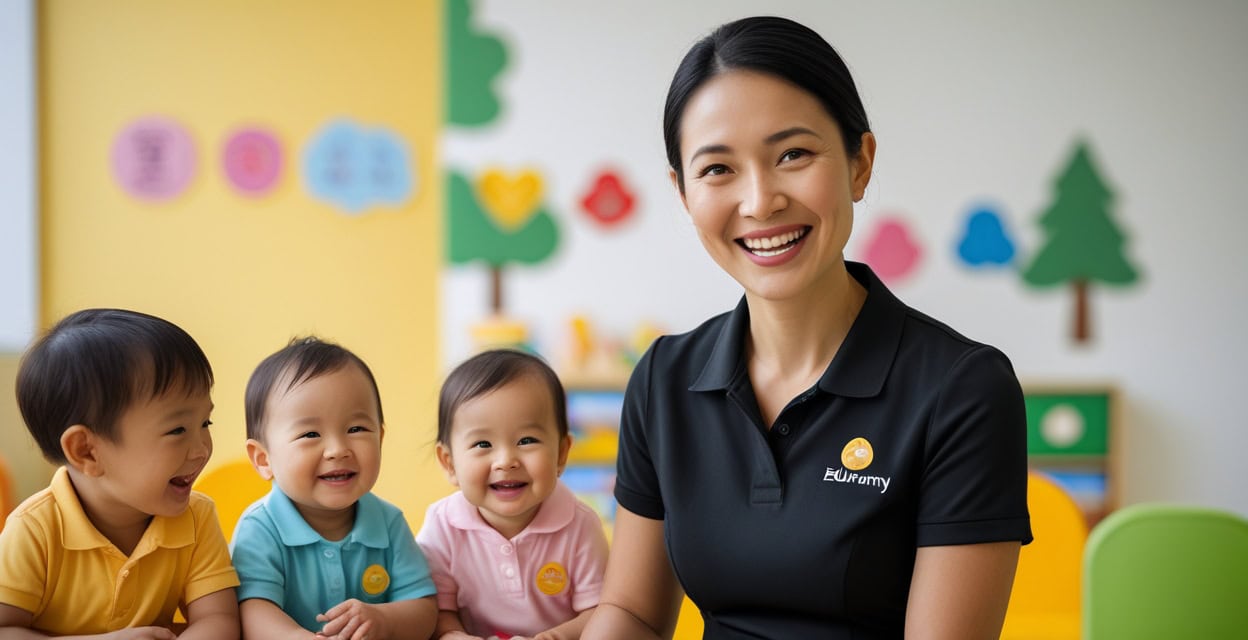
Imagine a quiet, sunlit room with soft mats and a few open-ended objects. Your child’s primary childminder greets you by name and reviews overnight sleep, feeds, and new cues. A familiar book waits for your child—continuity that respects attachment. After a calm feed, there is unhurried floor time with gentle narration and songs. A protected nap follows with regular checks. Before pick-up, a quick wind-down and a short, specific parent report: “Today she turned toward her name and gripped the ring with both hands.” The room is simple; the care is sophisticated; the feeling is trust.
Common Questions from Parents
Will my child be safe?
Yes. Safety is systemic: training, environment, hygiene, visibility, and national oversight. Community premises have CCTV; home-based caregiving zones can be camera-enabled during care hours by consent.
Will my child be known?
Yes. The 1:3 ratio and primary childminder model ensure deep familiarity with your child’s cues and rhythms, supported by regular documentation and parent updates.
Will it be affordable and flexible?
Yes. ECDA-subsidised blocks, weekday hours, and the use of CDA/Baby Bonus reduce costs while preserving quality. Our concierge team helps match you to a pod near you and guides you through subsidies and transition planning.
Sign-Up and Onboarding: How to Enrol with EduNanny
Begin your journey with EduNanny by BUTLER today. Visit the sign-up pages, and let our Concierge guide you through a personalised experience:
- Visit https://edunanny.com/edunanny-ecda-childminding-service/ and submit the short form, or enquire via WhatsApp from the same page.
- Our EduNanny Concierge will respond, understand your needs, and match you with suitable home-based or community-based pods near you.
- Confirm your site visit to meet the childminder and see the environment.
- Enrol, choose your blocks (half-day or full-day), and begin with a gentle transition plan.
You can also explore additional information at edunanny.com or the dedicated sign-up page at https://edunanny.com/edunanny-ecda-childminding-service/.
Closing: Why Childminding Matters—Who, What, When, Where, How
Childminding is not “informal care.” Under the ECDA pilot, it is a public good delivered locally. It strengthens family resilience, grows dignified neighbourhood caregiving roles, and creates a national standard that makes care near home both reliable and affordable. By integrating a living pedagogy with robust safety systems, EduNanny transforms infant care into a community-wide partnership—one child, one caregiver, one neighbourhood at a time.

Conclusion
EduNanny by BUTLER invites families to experience near-home infant care that respects attachment, fosters early learning, and anchors safety in everyday practice. Our 1:3 ratio, community and home-based options, transparent safety measures, and a concrete day-by-day living curriculum offer a practical path for parents seeking dependable, humane care during the first thousand days. If you are a parent seeking a trusted partner to share in the wonder of your child’s early development, we welcome you to explore EduNanny, meet the EduNanny Concierge, and begin with a transition plan that fits your family’s rhythm. Visit our sign-up pages today to start your journey—near home, near heart.
Visit edunanny.com/edunanny-ecda-childminding-service or edunanny.com, or contact the EduNanny Concierge to arrange a site visit and match you with a suitable pod.
[#earlychildhoodcare, #infantcare, #childminding, #SingaporeECDA, #EduNanny]