
Near Home Ultra Low Ratio Infant Pods Safe Joyful Development for Singapore Families

Introduction: A Calming Beginning for Singapore’s Infants and Families
Good evening, families, caregivers, neighbors, and every pair of hands that has ever steadied a newborn’s head. This article expands on EduNanny’s vision for infant care—a national, near‑home, ultra–low‑ratio model designed for Singapore’s babies and Singapore’s way of life. Infancy is not a prelude; it is the first chapter. How we cradle this chapter determines how the story unfolds. EduNanny’s approach blends timeless wisdom with practical design to create safe, relational, and developmentally rich everyday care.

EduNanny Infant Childminding Service: Model and Rationale
EduNanny operates as an appointed operator under Singapore’s ECDA Childminding Pilot. Our model centers on small, calm circles of care—one childminder to a maximum of three infants—delivered in home and community settings, Monday to Friday, 7am to 7pm. We exist to make the everyday—feeds, naps, diapering, tummy time, and first babbles—safe, relational, and developmentally rich. Parents gain peace of mind to work, and infants gain a dignified, joyful start in life.
We link science and neighborhood through a “micro‑attuned” approach that blends attachment‑informed caregiving with practical safety architecture. The result is a modern care system that fits Singapore’s daily rhythms and neighborhoods.

What EduNanny Offers — At a Glance
- Ultra low ratio: 1 childminder to a maximum of 3 infants, ensuring every child is seen, heard, and held.
- Near‑home locations: Childminders’ homes and community premises reduce commutes, increase continuity, and strengthen neighborhood bonds.
- CCTV and safety: CCTV installed in community premises; opt‑in CCTV in caregiving zones within home settings during hours of care.
- Certified EduNanny childminders: Training includes infant first aid, basic infant care, and food safety; background checks through ECDA.
- Transparent safety practice: Written protocols on hygiene, safe sleep, bottle preparation, medication administration, incident reporting, and a no‑sick‑child policy during hours of care.
- Affordability and subsidies: Government‑subsidised half‑day (5 hours) or full‑day (10 hours) blocks, 7am–7pm, Mon–Fri, at $16.50 or $33.00 before GST; CDA (Baby Bonus) can be used during subsidised hours.
- Islandwide access: A national initiative with near‑home pods across Singapore.
- Continuous partnership: Daily logs on feeds, sleep, diapers, play, and mood; ongoing coaching and site visits.

Five Themes That Define Our Work
1) Attunement as Pedagogy: the science of being seen
Attachment theory guides our practice. Secure attachments become the first classroom. The “Attunement Loop” follows Observe → Name → Respond → Repeat. From two months to eighteen months, consistent attunement builds trust and emotional regulation. Pikler’s respectful handling shapes every moment: slow, narrated, and collaborative care—so babies remember care as a lived practice, not a separate moment. Vygotsky reminds us that learning is social; our 1:3 circle enables modeling of gestures, sounds, and turn‑taking, gently expanding each infant’s zone of proximal development.
2) Safety by Design: five rings of protection
Safety is multi‑layered: People (certified, background‑checked, trained caregivers); Place (prepared spaces with hazard minimisation and CCTV in community premises; opt‑in caregiving‑area CCTV in homes); Practice (written protocols on hygiene, safe sleep, bottle prep, medication with signed instructions, incident reporting, and a no‑sick‑child policy); Partnership (daily logs and shared language for continuity); Proof (routine audits and data‑driven improvements).
3) Development in Motion: a sensory diet for the first years
We design for motor, language, cognition, social‑emotional growth, and care rhythms. Practical examples include:
- Motor: “Yes spaces” for tummy time, rolling, reaching, and safe cruising; prioritise floor play over excessive equipment.
- Language: Full‑sentence talking, repeated key words, story baskets, finger plays, and nursery rhymes to seed phonological growth.
- Cognition: Peek‑a‑boo, object permanence boxes, and simple schemas (fill/empty; in/out; up/down) to build early logic.
- Social‑emotional: Name feelings, model gentle touch, and provide words/gestures for inner experiences; joy and soothing routines support neural development.
- Care rhythms: Predictable feed‑play‑sleep sequences tailored to each infant’s cues to protect the nervous system and enable learning.
4) Happiness as the Daily Baseline
We measure the climate of care by sensory and relational cues: calm rooms, slow transitions, mutual gaze, and frequent laughter. Micro‑rituals—welcome songs, nap lighting, goodbye rhymes—build trust and curiosity. Nourishing feeding, safe sleep, and unhurried meals sustain a rested, happy learner; we celebrate tiny triumphs and share them with families as they happen.
5) The Civic Purpose of Childminding
Childminders are neighbors who act as developmental first responders. They provide a secure base and grant parents flexible, reliable work opportunities. By organizing care in homes and community spaces, we keep childhood anchored in neighborhoods where families are known and supported. As part of the ECDA Pilot, EduNanny advances quality, creates dignified jobs, and raises the floor for infant care standards across Singapore.
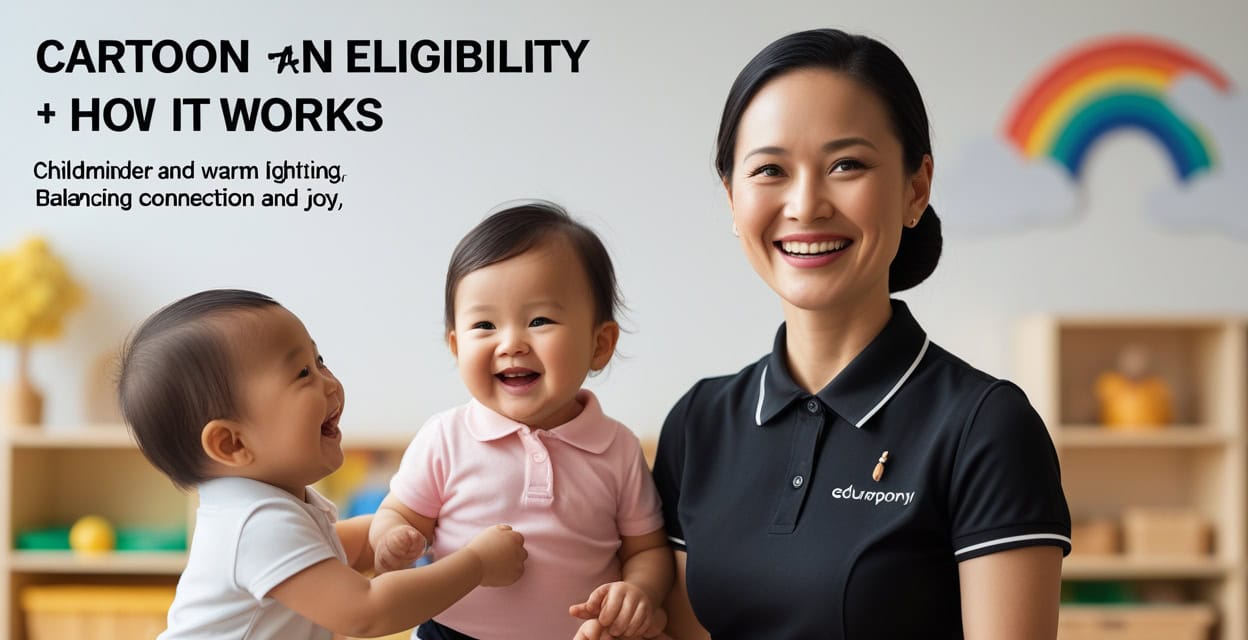
Eligibility and How It Works
- Infants: Singapore Citizens aged 2 to 18 months, not concurrently enrolled in ECDA‑licensed infant care centres.
- Subscribed hours: Half‑day (5 hours) or full‑day (10 hours) blocks, 7am–7pm, Monday to Friday.
- Fees before GST: $16.50 (half‑day) or $33.00 (full‑day); CDA usable during subsidised hours.
- Locations: Childminders’ homes and community premises.
- Ratios: One to a maximum of three infants per childminder.

How to Sign Up
- Visit the EduNanny page: https://edunanny.com/edunanny-ecda-childminding-service/ and complete the enquiry form, or message via WhatsApp.
- EduNanny Concierge Team responds promptly to assess needs and eligibility.
- Book a site visit to your preferred pod or childminder’s home/community space.
- Confirm placement, complete onboarding, and enrolment.
Tip for families: prepare a concise care profile that includes infant routine, feeding preferences, sleep cues, and any medical or dietary considerations. Bring this to the site visit to accelerate alignment with the caregiver.

Why This Matters Now: Who, What, When, Where, and How
- Who: Singapore Citizens’ infants aged 2–18 months; parents seeking safe, relational, affordable care; trained childminders embedded in communities.
- What: A standards‑based, near‑home infant childminding service with ultra‑low ratio, trained caregivers, and rigorous safety practices.
- When: Mondays to Fridays, 7am–7pm, during the ECDA Pilot period (1 December 2024 – 31 December 2027), with flexible blocks to suit working days.
- Where: In childminders’ homes and community premises across Singapore—close to daily life and family routines.
- How: Through small circles of care, certified personnel, prepared spaces, transparent practices, and government subsidies—delivered with ongoing family partnership.

Our Philosophy and Promise
We believe care is curriculum. Every diaper change is language; every feed is trust; every nap is brain building. We believe safety is love you can measure—background checks, CCTV in community spaces, clear protocols, and opt‑in tools in home settings so you can breathe easier and your baby can focus on growing. We believe joy is serious work—laughter and calm are the soil in which cognition, language, and self‑regulation take root. We believe families are the first teachers: we partner, we narrate, and we return your child settled, nourished, and seen.

Conclusion
EduNanny invites families to join circles of care that are close to home and close to heart—where safety is steady, learning is gentle, and joy is daily. If you seek an infant care option that respects early development, honors caregivers, and fits Singapore’s neighborhood fabric, explore EduNanny’s approach, request a site visit, and begin a conversation that could redefine your child’s first years.