
First Thousand Days Reimagined with EduNanny Near Home Pods in Singapore December 2024 to December 2027

EduNanny: Nurturing the First Thousand Days in Singapore
Good caregiving for infants is more than daily routines; it is the quiet collaboration that shapes trust, curiosity, and resilience. EduNanny by BUTLER stands as a steward of the first thousand days, offering near‑home, high‑trust infant care that is both scientifically grounded and deeply human. This article expands on EduNanny’s approach, provides practical guidance for parents, and shares insights drawn from our lived experience within the ECDA Childminding Pilot.

Introduction to the EduNanny Infant Childminding Service
EduNanny is an appointed operator under the ECDA Childminding Pilot—a three‑year national initiative running from 1 December 2024 to 31 December 2027. The Pilot provides Singapore Citizen infants aged 2 to 18 months with an affordable, safe, and reliable option for infant caregiving in small, near‑home pods. Care runs Monday to Friday, 7 a.m. to 7 p.m. (excluding public holidays) in home‑based or community‑based settings islandwide. Fees are subsidised during pilot hours: $16.50 for a half day (5 hours) and $33.00 for a full day (10 hours), before GST, with payments accepted through the Child Development Account (CDA) or Baby Bonus. Eligibility requires that infants are not concurrently enrolled in ECDA‑licensed infant care centres.

What makes EduNanny distinctive?
EduNanny brings an ultra‑low ratio model—one childminder to three infants—into your neighbourhood. We pair this with rigorous safety and training and weave in a living curriculum inspired by Montessori, Pikler, Bowlby, Piaget, Vygotsky, Froebel, Malaguzzi, Spock, Erikson, and contemporary infant research. We call it the science of warm hands: careful design, respectful care, and the steady rhythm of predictable, loving routines.

How EduNanny Makes Infant Care and Childminding Great in Singapore
- Near‑home, ultra‑low density pods: 1:3 infant ratio enables deep attunement, fewer transitions, and faster trust formation.
- Two setting types for real convenience: home‑based childminding and community‑based micro‑centres with modern layouts and CCTV in caregiving areas (required in community spaces; encouraged and supported in home settings during care hours for added transparency).
- Safety and quality baked in: ECDA background checks (including household members who have regular access, where applicable), mandatory training (infant first aid, basic infant care, food safety), and adherence to industry standards.
- Affordable access: Government‑subsidised hours within 7 a.m.–7 p.m., Mon–Fri; CDA/Baby Bonus accepted; transparent fees from $33.00 per full day before GST.
- A respectful care philosophy: No rushed handling, no over‑stimulation, no one‑size‑fits‑all. Every infant’s cues are seen, named, and answered.

Five Topics that Define the EduNanny Way
1) Attachment Architecture: The Three Circles
Attachment is the operating system for EduNanny. We observe three circles of security each day:
- Circle One: Infant and Childminder — With a 1:3 ratio, childminders provide prompt, predictable responses—soothing, feeding, diapering, and play—at a tempo that respects the infant’s signals. The caregiving moments are the curriculum itself, grounded in Pikler’s dignity, Bowlby’s secure base, and Ainsworth’s responsiveness.
- Circle Two: Infant and Parent — A daily 90‑second handover ritual aligns sleep cues, feeding notes, and mood so home rhythms harmonise with the pod rhythm.
- Circle Three: Parent and Childminder — Transparent communication, shared language, and a common plan. Timely updates, developmental observations, and consistent routines reduce infant stress.
Practical tip for parents: create a short, consistent handover script with your childminder. Include sleep cues, recent feeding patterns, and notable mood signals. Build continuity across home and pod so the infant experiences a stable world.
2) Micro‑Pedagogy for Tiny Minds: Six‑Minute Learning Loops
Development is a sequence of six‑minute wonders, guided by active discovery and scaffolding. Our loops are designed to be simple, repeatable, and deeply engaging:
- Observe: What is the infant seeking—sound, face, texture, movement?
- Mirror: Respond with a matching cue and name the rhythm, e.g., “I see you reaching for the red block.”
- Name: Language nutrition—label objects and actions: “soft ball,” “blue cup,” “roll, roll.”
- Extend: Add a gentle challenge—reach, grasp, pivot, roll.
- Pause: Space for the infant’s own exploration and experiment.
- Close: A calm transition and a warm smile—the feeling of mastery and security.
Practical tip for parents: weave six‑minute loops into daily routines—tummy time, object exploration, or sensorimotor play. Keep sessions short, focused, and end with a soothing transition to sleep or rotation of activities.
3) Safety and Dignity by Design: The Four Gates
Safety is both structure and culture. Our Four Gates ensure nothing is left to chance:
- Gate 1—Environment: Hazard audits in homes/community spaces; safe‑sleep practices (firm, flat surface; back to sleep; clutter‑free cot); temperature checks; sanitisation; and sightlines that reduce overstimulation.
- Gate 2—Practice: Mandatory training (infant first aid, basic care, food safety); safe feeding protocols; allergy management; and hygiene routines. A cautious attendance policy protects community health; unwell infants are supported per ECDA guidelines.
- Gate 3—People: ECDA background checks on childminders (and household members with regular access); ongoing supervisory spot checks, coaching, and incident‑ready protocols. Maximum of three infants per childminder at any time.
- Gate 4—Transparency: CCTV in community spaces; privacy‑sensitive options encouraged for home caregiving hours; clear escalation pathways, timely incident reporting, and an open‑door mindset with parents.
Practical tip for parents: request a simple safety checklist for your chosen pod, and review it quarterly with the childminder. Ensure you understand how safety incidents are reported and followed up.
4) The Craft of Calm: Building Health and Happiness
Joy in infancy is quiet, rhythmic, and safe. Our approach emphasizes calm, connected care:
- Respectful care: Slow down during caregiving tasks, narrate actions, and invite cooperation—Pikler’s dignity in every diaper change and bath.
- Sensory right‑sizing: Gentle light, soft voice, predictable transitions. Prefer face‑to‑face interaction, singing, and simple objects over excessive screens or noisy stimuli.
- Language nutrition: Rich, warm talk throughout the day; song backs, peekaboo, and naming feelings to support self‑regulation and early communication.
- Rest you can trust: Sleep cues matter; support healthy sleep routines with consistent patterns and safe sleep practices.
- Outdoors and movement: If possible, fresh air, nature textures, and pram walks to build balance and vestibular strength.
Practical tip for parents: establish a consistent daily rhythm that values meals, play, and rest in a predictable order. Use a simple family routine chart to align home and pod expectations.
5) The Purpose and Promise of Childminders: A Civic Craft
EduNanny views childminders as guardians of early attachment and community trust. We invest in them as professionals:
- Certified EduNanny childminders: Trained, coached, observed, and supported with reflective practice and quality circles.
- Maximum Employment Mandate: Creating meaningful, flexible work in neighbourhoods islandwide, while upholding excellence.
- Career pathways: Ongoing upskilling, mentoring, and progression. Care work is presented as a noble, high‑trust profession central to nation‑building.
Practical tip for parents: engage with your childminder as a learning partner. Share developmental observations, bring in age‑appropriate activities from home, and participate in reflective practice sessions when invited.

Key Benefits of EduNanny at a Glance
- Ultra‑low density pods with a 1:3 infant ratio
- CCTV provided in community caregiving areas; privacy‑sensitive options encouraged for home caregiving hours
- Certified, background‑checked childminders under ECDA oversight
- No‑sick‑child attendance policy to protect community health, with case discussions per ECDA guidance
- A national ECDA Pilot (1 Dec 2024–31 Dec 2027) with structured oversight
- Modern layouts, safety audits, and a living curriculum for attuned care
- Centre‑based (community) and home‑based options near home for convenience
- Affordable from $33/day (10‑hour block) and $16.50 (5‑hour block) before GST; CDA/Baby Bonus accepted
- Islandwide availability, Mondays–Fridays, 7 a.m.–7 p.m. (excluding public holidays)
- EduNanny by BUTLER service ecosystem; learn more at EduNanny.com and Childminding.EduNanny.com
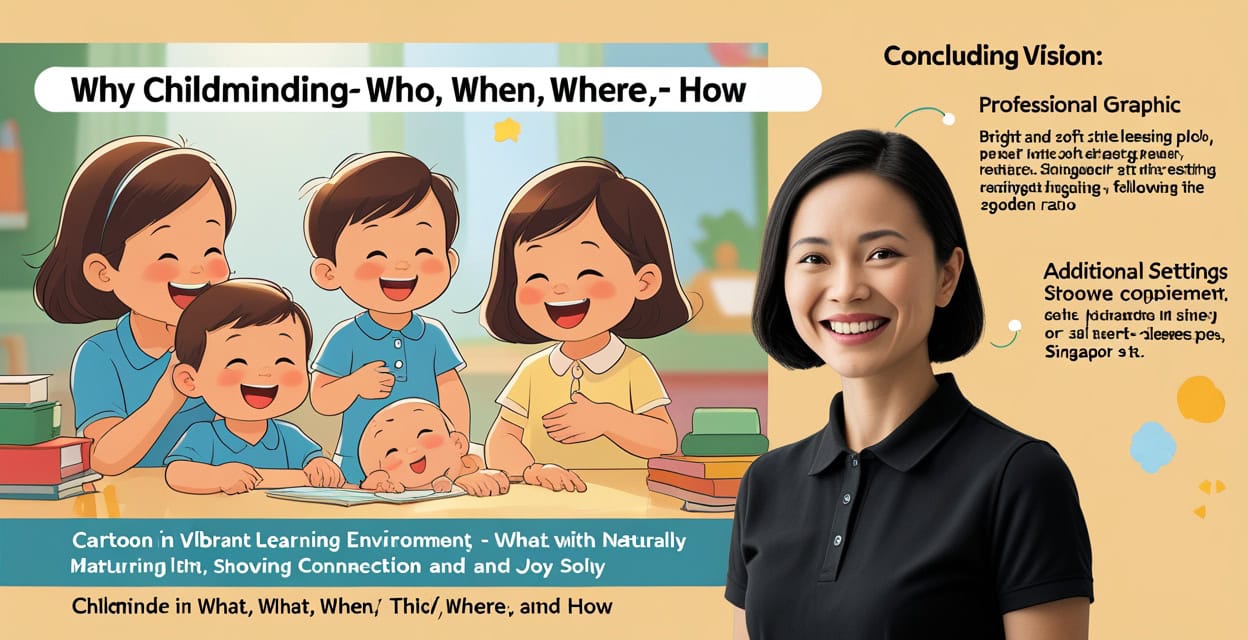
Concluding Vision: Why Childminding Matters—Who, What, When, Where, How
Who
Singapore Citizen infants aged 2–18 months, and the loving parents who nurture them. Childminders who choose the dignity of care as a profession. Communities ready to raise the next generation with steadiness and heart.
What
An ECDA‑endorsed, ultra‑low ratio childminding pilot delivering safety, attachment, and joyful micro‑learning within daily, near‑home pods—both in homes and community spaces.
When
Mondays to Fridays, 7 a.m.–7 p.m., during the Pilot period (1 December 2024–31 December 2027).
Where
Across Singapore—in prepared home settings and in community‑based micro‑centres with modern layouts and CCTV in caregiving areas.
How
Through a covenant of trust—ECDA background checks and training, industry standards, transparent practices; through a living curriculum of attuned care; through affordability that respects family realities; and through a professionalised childminder workforce that elevates cradle care to a civic calling.

The EduNanny Promise in Practice: Building Trust, Learning, and Citizenship
Our philosophy is simple: the safest place for an infant is in the arms of a confident, loving adult who has the time to be present. Ultra‑low ratio care returns that time to the child. The right environment reduces noise and sharpens attention. The right routines nurture sleep, feeding, exploration, and language. The right partnership with parents turns every handover into continuity, not disruption. In that steady circle, babies learn the first lesson of all: the world can be trusted. From that trust, everything else grows—curiosity, empathy, perseverance, and joy.

Call to Action: How to Sign Up
Step 1: Visit the EduNanny ECDA Childminding Service page and fill out the form or inquire via WhatsApp. The link is: https://edunanny.com/edunanny-ecda-childminding-service/
Step 2: Receive a response from our EduNanny Concierge Team with next steps and availability.
Step 3: Confirm your appointment for a site visit to explore near‑home pods or community micro‑centres.
Step 4: Enrol and begin your EduNanny journey—where safety, attachment, and joyful learning combine in your child’s first thousand days.

Conclusion
The first thousand days are a relationship, not a race. EduNanny exists to make that relationship safer, warmer, and beautifully ordinary in the best sense: meals on time, naps in peace, play with purpose, and adults who are fully present. Ultra‑low ratio care gives that time back to the child. The right environment quiets noise and sharpens attention. The right routines nurture sleep, feeding, exploration, and language. The right partnership with parents turns every handover into continuity. In that steady circle, babies learn to trust the world—and from that trust, a nation’s future grows with curiosity, empathy, perseverance, and joy.
Ready to join a movement that places babies at the center of a thriving, respectful, and scientifically informed early‑years ecosystem? Visit EduNanny’s sign‑up page, speak with our concierge, and begin your journey today.
[#keyword1, #keyword2, #keyword3, #keyword4, #keyword5]