
December 2024 to December 2027 The EduNanny Near Home Infant Pods Pilot Building Safe Joyful Foundations for Singapore’s First Thousand Days

EduNanny Infant Care in Singapore: A Professional, Near-Home Approach to the First Thousand Days
Good evening to families across Singapore who believe that the future begins with how we greet and care for our youngest citizens. This article expands on the EduNanny vision—a thoughtful, research-informed infant childminding service designed for safety, learning, and joy in small, close-to-home pods. Read on for practical guidance, real-world examples, and actionable steps you can take to prepare for, choose, and thrive with high-quality near-home infant care.

What is EduNanny Infant Childminding?
EduNanny by BUTLER delivers infant childminding in two carefully designed settings: care in prepared childminders’ homes and supervised community premises. Families access safe, joyful care where life happens—near home, in your neighbourhood, Monday to Friday, 7am to 7pm (excluding public holidays). We operate at an ultra-low density with an ultra-low ratio of 1:3. Government-subsidised fees during typical working hours help keep care affordable: from $16.50 per half-day (5 hours) or $33.00 per full day (10 hours), before GST. Parents may pay during subsidised hours using the Child Development Account (CDA/Baby Bonus). Central to trust is certified, background-checked EduNanny childminders who nurture small, stable relationships with your child.
EdU Nanny’s model supports two core environments:
- Home-based care: childminders’ own homes prepared as safe, infant-friendly spaces.
- Community-based hubs: modern, centre-inspired spaces designed for infant exploration and safety, with close supervision.
Key features you’ll notice in practice:
- Ultra-low density: one to three infants per pod.
- Certified, background-checked caregivers with ongoing professional development.
- Transparent health and safety policies, including a No Sick Child policy to protect the immune systems of all infants.
- Clear, simple documentation of routines, feeding, naps, and mood to keep families confidently in the loop.

How EduNanny Makes Infant Care Great in Singapore
We blend the best of human development science with practical, near-home care. The EduNanny model fuses five core strands to create an integrated, developmentally sensitive environment:
- Attachment-first caregiving (Bowlby, Pikler): one consistent adult who really knows your baby.
- A prepared environment (Montessori, Froebel): floor-level independence, safe exploration, and beautiful simplicity.
- Language and social scaffolding (Vygotsky): serve-and-return talk, shared attention, songs, and stories in multiple languages.
- Developmental observation (Piaget, Erikson): learning through movement, play schemas, and secure curiosity.
- Civic purpose: childminders as community anchors, professionally trained and continuously supported.
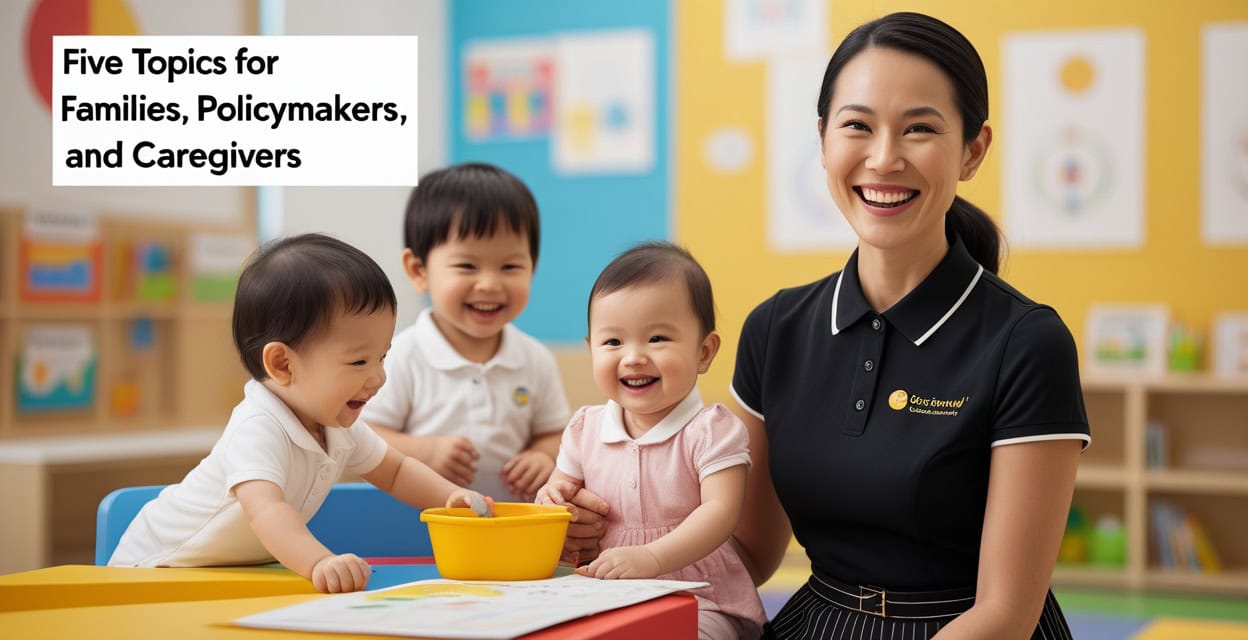
Five Topics for Families, Policymakers, and Caregivers
These topics frame what “care that builds foundations” looks like in practice. Each topic includes practical steps you can apply at home, with EduNanny guidance, and in conversations with policymakers and providers.
1) The Attunement Pedagogy: Tiny routines that teach trust
Infants learn through relationships. Our caregivers are trained in a rhythm we call “Look—Wait—Wonder.”
- Look: Observe the baby’s cues—breath, gaze, hand movements. For example, during feeding, a caregiver notices a turn of the head indicating readiness to pause.
- Wait: Provide a brief space for the baby’s initiative. A wall clock or a quiet pause helps the infant lead the interaction.
- Wonder: Respond with warmth and words that name the moment: “I see you reaching for your toy; let’s explore together.”
Practical home tips:
- Replace rushed routines with short, predictable cues (e.g., a gentle song cue before diaper changes).
- Narrate daily activities in your home language and in community songs to build language-rich environments.
- Use safe, open-ended objects (rings, scarves, simple fabric toys) to support exploration and hand-mouth coordination.
2) Safety by Design: Five rings of protection around every infant
EduNanny’s safety architecture is designed to be visible, disciplined, and easy to understand for families.
- Environment: Prepared homes and community premises with gates, socket covers, anchored furniture, safe sleep surfaces, and hygienic food prep zones.
- People: ECDA background checks, regular access checks for household members, and mandatory caregiver training (infant first aid, basic infant care, food safety) before deployment.
- Health: “No Sick Child” policy, sanitisation protocols, safe bottle handling, allergy-aware practices; caregiving plans for unwell infants in collaboration with families.
- Visibility and accountability: CCTV in community premises; optional CCTV in home settings with consent; clear incident protocols.
- Emergency readiness: Safe sleep practices, safe feeding positions, clear evacuation routes, and easy-to-understand documentation for parents.
Actionable home steps:
- Regular checks of play areas for loose items and choking hazards; create a daily safety checklist for caregivers and parents.
- Agree on a simple sign-in/sign-out system with photo updates for each pod and a 24-hour incident reporting process.
3) Personalised Development: Micro-observations, micro-plans, macro-love
We translate observations into action. Each infant maintains a living profile updated monthly, detailing sleep patterns, feeding preferences, emerging motor skills, early communication, and attachment notes. From this, micro-plans are co-created with families for the upcoming weeks.
- Examples of micro-plans: more side-lying play to support head-turning symmetry; trial of simple finger foods when developmentally ready; use of black-and-white visual cards for newborns; vestibular-friendly pram walks.
- Progress updates use plain language and photos (with parental consent). Celebrate effort, not speed; development is a conversation, not a competition.
Practical home applications:
- Maintain a simple two-page infant progress log that includes mood, routines tried, and successful soothing strategies.
- Share a short weekly plan with your caregiver to align home and pod routines (sleep windows, feeding cues, preferred comforting methods).
4) Joy as a Developmental Need: The daily architecture of happiness
Joyful infants learn best. Our “Joy Index” tracks daily indicators of well-being and engagement:
- Bright eyes and relaxed shoulders during play
- Frequent vocalisations and shared smiles
- Steady feeding and predictable naps
- Comfort with brief separations and quick recovery on reunion
- Curiosity during transitions
Practical routines to boost daily joy:
- Incorporate infant-safe music, gentle movement, and outdoors (pram time) when weather allows.
- Use sensory baskets with safe textures and natural materials to spark exploration.
- Offer short, predictable routines with flexibility to accommodate a baby’s mood and needs.
5) The Childminder’s Purpose: A civic profession in small circles
Our childminders are professionals, neighbours, and nation-builders. EduNanny provides training, practice mentoring, and regular quality audits. In the ECDA Pilot, each childminder cares for one to three infants at any time, prioritising stability and deep knowledge of each child.
- Home-based care: we help households understand routines, safety requirements, and the social importance of consistent caregiving.
- Community spaces: infant zones designed with soft flooring, natural light, and clear emergency plans—while preserving a welcoming, home-like atmosphere.
Practical benefits for families:
- A stable, skilled caregiver who grows with your child, reducing transitions and promoting secure attachment.
- Professional development pathways and regular quality checks to ensure ongoing excellence.

What Parents Can Expect, Every Single Day
- Warm handovers with eye contact and clear updates about the day’s events.
- Personalised routines that respect your infant’s cues and family values.
- Clean, uncluttered spaces designed to minimise risk and maximise safe exploration.
- Consistent documentation on feeding, naps, diapers, activities, and moods.
- Rapid, respectful communication whenever plans change or concerns arise.
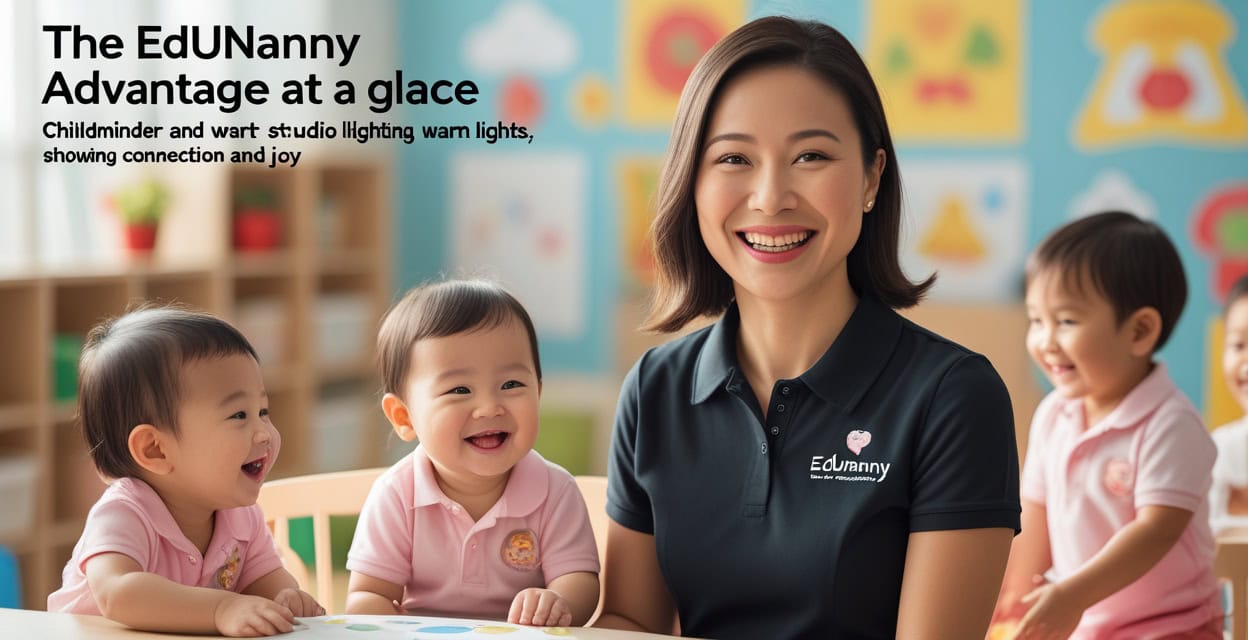
The EduNanny Advantage at a Glance
- Ultra Low Density, Ultra Low Ratio (1:3 infant pods).
- Certified EduNanny Childminders trained in infant first aid, basic infant care, and food safety.
- Thorough Background Checks (including regular access for home-based care).
- Safety First: CCTV in community premises; optional CCTV in home settings with mutual consent.
- No Sick Child Policy to protect all infants.
- Modern, centre-inspired layouts in community spaces; warm, prepared environments in homes.
- National Social Initiative under the ECDA Childminding Pilot (1 Dec 2024–31 Dec 2027).
- Affordable fees during subsidised hours: from $16.50 half-day and $33.00 full-day, before GST.
- Monday–Friday, 7am–7pm, islandwide (excluding public holidays).
- Flexible choice of days and blocks (5-hour or 10-hour) to fit your workweek.
- Fees payable via CDA/Baby Bonus during subsidised hours.
- Home-based childminding and community-based hubs near you.
- Clear incident protocols, regular quality checks, and a parent-first concierge.
- A commitment to maximise meaningful local employment through training and professional pathways.

A Quick Guide to the Pilot: What You Need to Know
Understanding the Pilot helps families plan with confidence:
- Places of care: Childminders’ homes and community spaces (small, prepared environments). Each childminder can care for one to three infants at any time.
- Hours: Mondays to Fridays, 7am–7pm; choose half-day (5 hours) or full-day (10 hours) blocks during subsidised hours.
- Fees: $16.50 half-day; $33.00 full-day, before GST. CDA may be used during subsidised hours.
- Extended hours: Discuss directly with EduNanny for options outside subsidised hours, subject to regular rates.

How to Enrol with EduNanny
Begin your journey to near-home, high-quality infant care with these steps:
- Visit the EduNanny enrolment page (short form) or inquire via WhatsApp on the same page.
- Our EduNanny Concierge Team responds to understand your location, schedule, and your infant’s needs.
- Book a site visit to a nearby community pod or meet an available home-based childminder.
- Confirm your spot and enrol. Simple, transparent, reassuring.

Why This Matters—Who, What, When, Where, How
EduNanny is designed to support working, studying, and caregiving families by providing trustworthy, nearby support that fosters healthy development:
- Who: Singapore Citizen infants aged 2 to 18 months and their working or studying families seeking trustworthy, nearby support.
- What: An attachment-first, professionally guided childminding service with a 1:3 ratio in small, stable pods.
- When: Weekdays, 7am–7pm, during the ECDA Pilot (1 Dec 2024 to 31 Dec 2027); flexible 5-hour or 10-hour blocks.
- Where: In childminders’ homes and community premises islandwide—near home, near family, near daily life.
- How: Certified childminders, rigorous safety policies, clear health practices, thoughtful pedagogy, transparent fees, and a concierge that prioritises dignity and speed.

Our Philosophy and Promise
“Three quiet gifts change a childhood: time, touch, and trust.” Time is the unhurried space for babies to discover their hands. Touch is the gentle certainty that someone will comfort, bathe, and feed with respect. Trust is the bridge that carries a child from today’s cuddle to tomorrow’s confidence.”
EduNanny organises its entire service around those gifts to ensure safety and joy are not competing values, and to make excellence affordable and accessible. This is more than childcare; it is a civic practice. Every morning you hand us your hopes with a diaper bag; every evening we return them a little more curious, a little more comfortable, and a little more ready for tomorrow.

Conclusion
EduNanny offers a practical, compassionate, and evidence-informed path to infant care that is close to home, affordable during subsidised hours, and grounded in attachment, safety, and joyful development. If you are ready to explore near-home, high-touch infant care that prioritises trust and stability, consider EduNanny as your partner—from enquiry to first day and beyond.
Visit EduNanny.com or Childminding.EduNanny.com for an overview, or enrol at https://edunanny.com/edunanny-ecda-childminding-service/. Our concierge will guide you from enquiry to visit to a confident first day.
Because the first thousand days are not a countdown—they are a compass. And with EduNanny, your child’s compass points to safety, to joy, and to a future held by many caring hands. Thank you.
[#EduNannySingapore, #InfantCareSG, #EarlyChildhoodDevelopment, #ECDA, #ChildmindingPilot]