
Near Home 1 to 3 Infant Pods A Living Model for Safe Joyful Attachment and Development in Singapore First Thousand Days
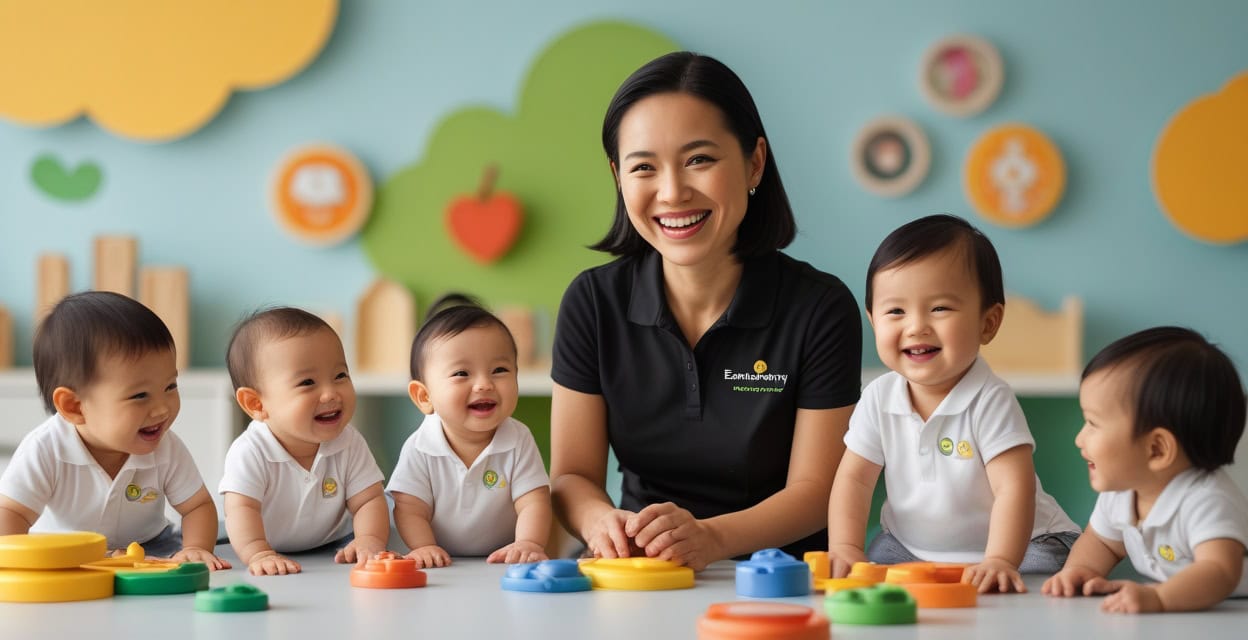
EduNanny Singapore: A Living Model for Infant Care in the First Thousand Days
Good evening, parents, caregivers, neighbours, and friends of Singapore’s youngest citizens. I am EduNanny by BUTLER, presenting a simple promise grounded in science and everyday love: we will make the first months of life safer, calmer, and more joyful—right where families live and work. As an ECDA-appointed operator in the national Childminding Pilot for Infants, our program runs from 1 December 2024 to 31 December 2027, designed for Singapore Citizen infants aged 2 to 18 months who are not concurrently enrolled in ECDA-licensed infant care centres. This plan matters now because families need reliable support without compromising tenderness, and infants deserve intimate care with boundless opportunity. Our answer is a small-scale, high-trust model: ultra-low ratio, one childminder to three infants, delivered in home and community spaces across the island. This is modern infantcare that remembers the oldest truth: babies grow best in small, secure circles with responsive adults.

How EduNanny Makes Infantcare and Childminding Great in Singapore
We pair heart and evidence, neighbourhood access and national standards to give every child a quiet, steady start. Our approach rests on four simple pillars that you can reference as you plan care for your little one:
- Safety you can see, systems you can trust.
- Deeply responsive pedagogy in micro-pods of one to three.
- Transparent partnership with families.
- Dignity for the profession of childminding.

Topic 1: The Attachment Architecture—why a 1:3 ratio changes everything
Attachment is the invisible infrastructure of a healthy mind. In a pod of three infants, a trained childminder can notice, name, and meet needs within seconds—a serve-and-return cadence that wires the brain for security, language, and self-regulation. To put it into practice, consider these actionable steps you can observe or request from a pod:
- One consistent caregiver: a trusted, familiar adult who knows your child’s routines and cues.
- Attuned routines: predictable feeding, diapering, sleep, and soothing sequences that reduce stress hormones.
- Unhurried moments: unbroken eye contact during feeds, narration at diaper changes, and belly-down play with reassuring presence.
- Daily micro-skills: gentle handling, patient pacing, and opportunities for self-regulation built into every hour.
- Practical example schedule: a calm morning greeting, 15 minutes of hand-eye play, 20 minutes of tummy time with guided interaction, a nap, and a supervised, language-rich activity before reuniting with families.
Our practice draws from attachment theory and respectful care traditions. We design every hour to maximise connection—because resilience begins as relationship.

Topic 2: The Silent Safety Net—designing for prevention, readiness, and calm
Safety is a living system, not a slogan. Here is how we operationalise safety in homes and community spaces:
- Environments: Clean, hazard-minimised caregiving zones with safe-sleep layouts, secure storage, soft floor zones, and clear walkways. Daily safety checklists prevent near misses; weekly audits maintain standards.
- Training: All EduNanny Childminders complete mandatory infant first aid, basic infant care, and food safety training before deployment; ongoing coaching, refreshers, and scenario drills keep skills current.
- Health shield: A No Sick Child Policy protects tiny immune systems. Mild discomforts are assessed case-by-case; fever or contagious symptoms rest at home. Medication is administered only with written parental instructions.
- Transparency: CCTV installs in community spaces as required. For in-home pods, optional CCTV in caregiving areas during care hours balances caregiver privacy with parental peace of mind, in line with ECDA guidance.
- Background checks: ECDA conducts checks on all childminders and, for home-based services, checks with regular access to the home. Safety is a sequence of verifications, not a slogan.

Topic 3: A Living Curriculum for the First Thousand Days—tiny play, big learning
Our living curriculum is simple, sensory-rich, language-filled, movement-forward, and culturally warm. It translates into practical, everyday actions that parents can reinforce at home:
- Play with purpose: Floor time, tummy time, and object exploration that build core strength, hand-eye coordination, and curiosity.
- Language-rich routines: Narration during activities, rhymes, songs, and dialogic talk to tune the ear to speech. Even simple bath-time chatter becomes a language moment.
- Open-ended materials: Sensory boxes, textured fabrics, safe mirrors, and culturally resonant storybooks that invite exploration without rushing growth.
- Respect for rhythm: Following each infant’s tempo—no pushing ahead, no skipping steps; celebrate bilingualism by incorporating family languages and songs.
- Documentation: Short notes and photos that show not just what happened, but why it matters in terms of milestones such as exploration, communication, and regulation.

Topic 4: The Joy Index—measuring happiness as seriously as milestones
Joy is a sign of well-regulated development. We treat joy as a measurable, nurtured experience. Parents can expect:
- Co-regulation that models calm breathing, gentle tone, and patient pacing to ease transitions.
- Predictable routines that create security and reduce cortisol surges during changes in activity.
- Language of temperament: recognizing a watcher, a wiggler, and an eager explorer, and tailoring responses to each child’s needs.
- Parental partnership: aligning sleep cues, feeding preferences, and soothing rituals across home and pod for consistent experiences.

Topic 5: The Civic Craft of Childminding—professional, purposeful, proud
Childminding is a public good and a skilled profession. Here’s how EduNanny treats it as such—and what parents can look for when choosing care:
- Professional standard: Certifiable, background-checked childminders with ongoing mentorship and access to safe-sleep science, respectful caregiving, and inclusive practices.
- Local focus: Jobs close to home strengthen neighbourhood bonds and offer flexible support for working parents.
- Quality assurance: Regular coaching, peer learning, and operator oversight ensure continual improvement year by year.

What Parents Can Count On with EduNanny
Our service is designed to be practical, transparent, and reliable for families navigating Singapore’s busy landscape. You can count on:
- Ultra-low ratio and density: One childminder to a maximum of three infants.
- Certified, trained professionals: Childminders trained in infant first aid, basic care, and food safety; background-checked.
- Safety and transparency: CCTV in community spaces; optional CCTV in in-home pods during care hours; clear incident protocols and reporting.
- No Sick Child Policy: Thoughtful health safeguards; medication only with written parental instructions.
- Islandwide pilot access: Centre-based and home-based pods in community and neighbourhood settings.
- Convenient hours and subsidised blocks: 7am–7pm, Mondays to Fridays (public holidays excluded); choose half-day (5 hours) or full-day (10 hours) subsidised blocks.
- Affordability and subsidies: Fees are subsidised (Half-day $16.50, Full-day $33.00 before GST); CDA/Baby Bonus (CDA) can be used for subsidised hours.
- Infant-ready spaces: Clean, calm layouts that support safe sleep, movement, and play.
- Convenient enrollment: Near-home availability, predictable hours, and proactive parent communication.
- A national social effort you can trust: EduNanny is appointed under ECDA’s Childminding Pilot to deliver safe, reliable services.
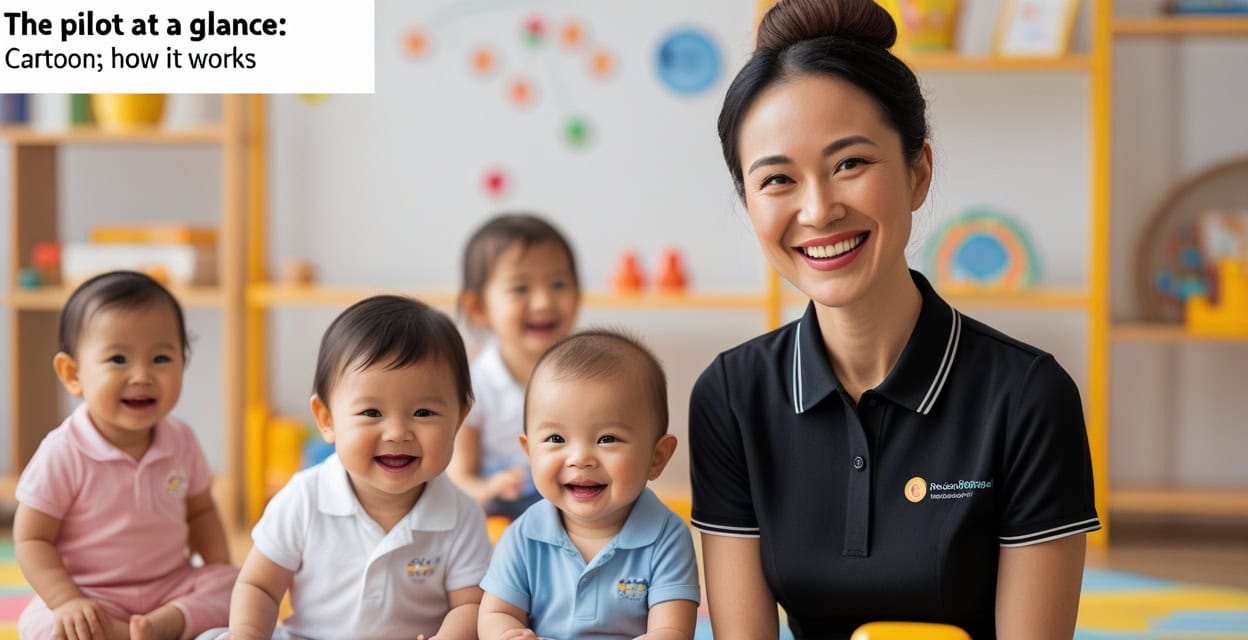
The Pilot at a Glance: How It Works
Here is a concise snapshot of the Pilot’s practical framework:
- Who is eligible: Singapore Citizen infants aged 2–18 months, not concurrently enrolled in ECDA-licensed infant care centres.
- When and where: Monday–Friday, 7am–7pm; care occurs in childminders’ homes and community spaces, with up to three infants per pod.
- Hours and subsidised blocks: Half-day (5 hours) or full-day (10 hours); hours are subsidised; public holidays excluded.
- Fees (before GST): Half-day $16.50; Full-day $33.00; CDA may be used for subsidised hours.
- Safety systems: ECDA background checks; mandatory training; standard incident protocols; operator oversight.

A Day in an EduNanny Pod (a quiet portrait)
Imagine a typical day that blends warmth with structure:
- Morning hello: A familiar caregiver greets your child, narrating the handover with warmth and clarity.
- Gentle movement: Tummy time, soft stretches, and floor play with graspable objects, set to songs in familiar languages.
- Nourish and rest: Unhurried feeds with eye contact, followed by safe sleep in a calm, dim space.
- Language and songs: Rhymes, finger plays, and dialogic talk that evolve with your child’s sounds and gestures.
- Outdoor time: If appropriate and permitted, a brief pram stroll or shaded outdoor respite to reset.
- Closing the loop: A concise update for parents—feeds, sleeps, play highlights—so you end the day with clarity.
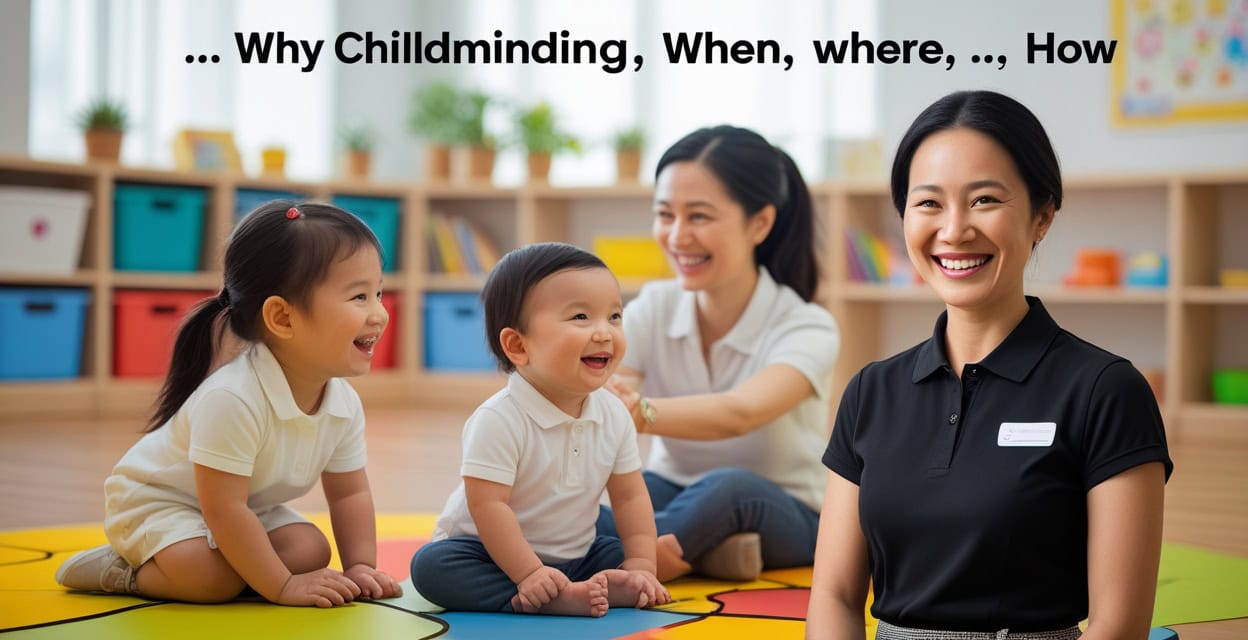
Why Childminding Matters—Who, What, When, Where, How
To frame the purpose clearly:
- Who: Parents who deserve dependable support; infants who deserve devoted attention; childminders who deserve professional dignity.
- What: Ultra-low ratio caregiving with a living curriculum that blends safety, attachment, and play.
- When: In the decisive first thousand days, the period of rapid brain development and many milestones.
- Where: In neighbourhood homes and community spaces to reduce travel stress and keep support close.
- How: Through professional training, rigorous safety systems, transparent communication, and micro-pods that enable responsiveness.

The Philosophy and Purpose Behind EduNanny Childminding
Our philosophy is simple: Relationship is the road; safety is the guardrail; play is the fuel; dignity is the driver. Parents are partners, not bystanders. Childminders are professionals, not placeholders. Infants are protagonists in their own gentle story of growth. We believe care is not a compromise to work; it is the foundation that lets families flourish. We believe small circles shape big futures. We believe transparency builds trust, and trust builds calm, and calm builds brains.

How to Enrol with EduNanny
Getting started is straightforward. Follow these practical steps to begin your EduNanny journey:
- Visit the enrollment page: https://edunanny.com/edunanny-ecda-childminding-service/ and complete the short form, or inquire via WhatsApp on the same page.
- Connect with EduNanny Concierge: Expect a prompt response to understand your needs and location.
- Site visit: Schedule an appointment for a home-based or community setting view to meet the childminder and see the environment.
- Enroll and tailor hours: Confirm days and hours (half-day or full-day blocks between 7am and 7pm, Monday–Friday) and navigate CDA/Baby Bonus subsidy options.
For more information, you may also explore EduNanny.com and Childminding.EduNanny.com.

Closing: A Quiet Victory for Infants, Families, and Communities
If we do our work well, you’ll notice the small, meaningful changes: calmer drop-offs, longer naps, new sounds, steadier gaze—a baby who is held with care, not hurried; a child who is engaged rather than overwhelmed. That is the quiet victory of great infant care. And that is the public promise of EduNanny under Singapore’s Childminding Pilot: to turn science into solace, logistics into ease, and ordinary days into the architecture of secure, joyful minds.
Thank you for trusting us with what matters most. Let’s cradle the beginning—together.
Enrolment quick links: Visit https://edunanny.com/edunanny-ecda-childminding-service/ and fill the form, or inquire via WhatsApp on the same page.
[#keyword1, #keyword2, #keyword3, #keyword4, #keyword5]