
Redefining the First Thousand Days with EduNanny Ultra Low Ratio Infant Care in Singapore ECDA Pilot December 2024 to December 2027
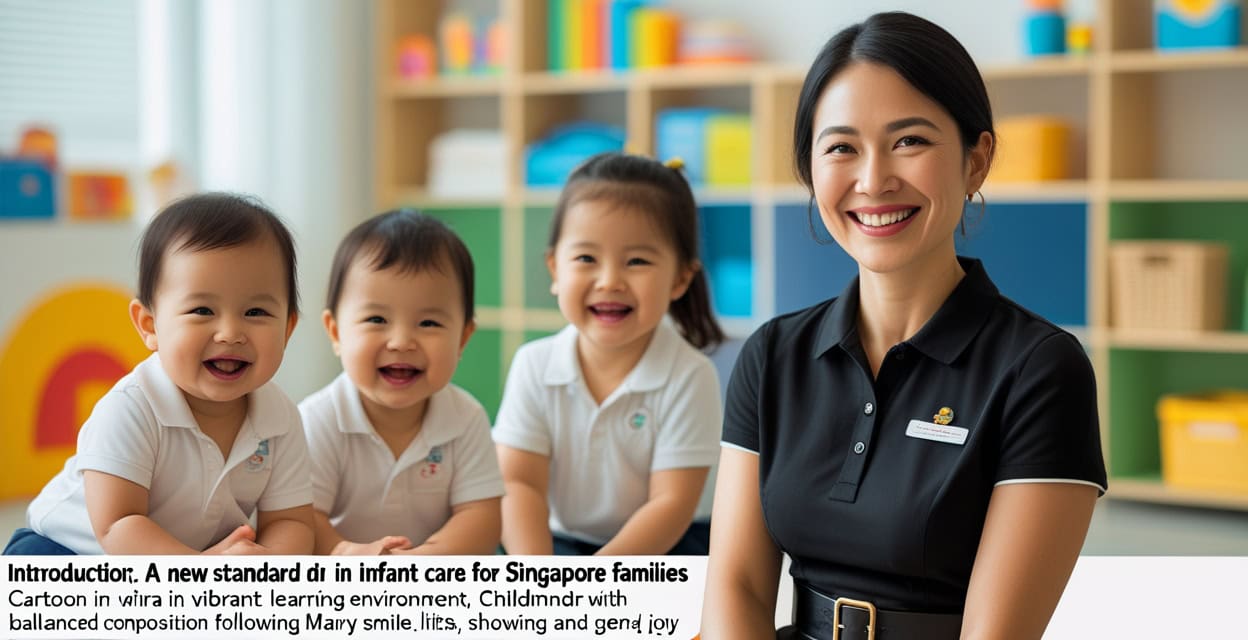
Introduction: A new standard in infant care for Singapore families
Welcome to EduNanny, where science meets heart and policy informs practice. This article expands on our approach to infant care within Singapore’s ECDA Childminding Pilot, outlining how ultra‑low ratio care, close alignment with families, and intentional pedagogy create a secure base for the earliest years. Here, you’ll find practical guidance, real-world examples, and actionable steps to help families evaluate, prepare for, and participate in high‑quality infant minding that is intimate, dignified, and near home.
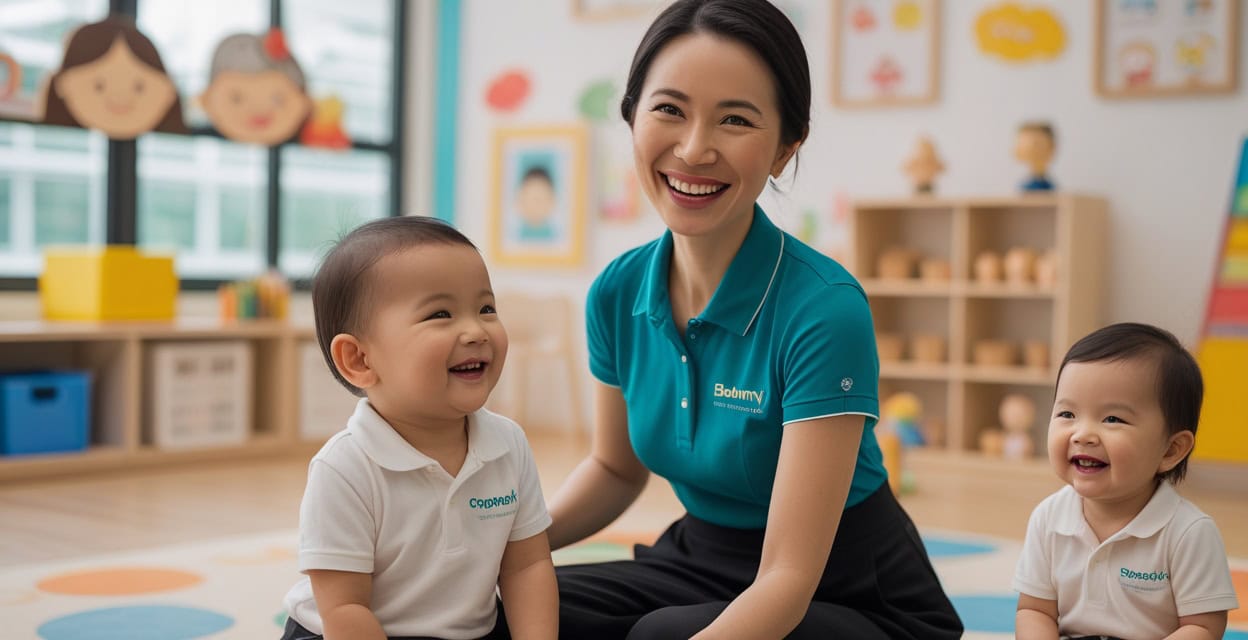
EduNanny Infant Childminding Service: Model and reach
EduNanny operates a network of small, ultra‑low ratio infant pods—one caregiver to a maximum of three infants. Services run Mondays through Fridays, 7am to 7pm, across community spaces and approved childminders’ homes islandwide, with care for Singapore Citizen infants aged 2 to 18 months. The program is designed to be affordable, reliable, and purpose‑built for the first thousand days when the brain grows fastest, attachment forms, and curiosity begins.
- Ultra‑low ratio: 1:3 to ensure individualized attention and responsive caregiving.
- Placement in community rooms or vetted home settings with safety and visibility in mind.
- Subsidised options during ECDA pilot hours, with CDA/Baby Bonus support where eligible.
- Transparent daily communication, including notes on meals, naps, mood, and developmental highlights.
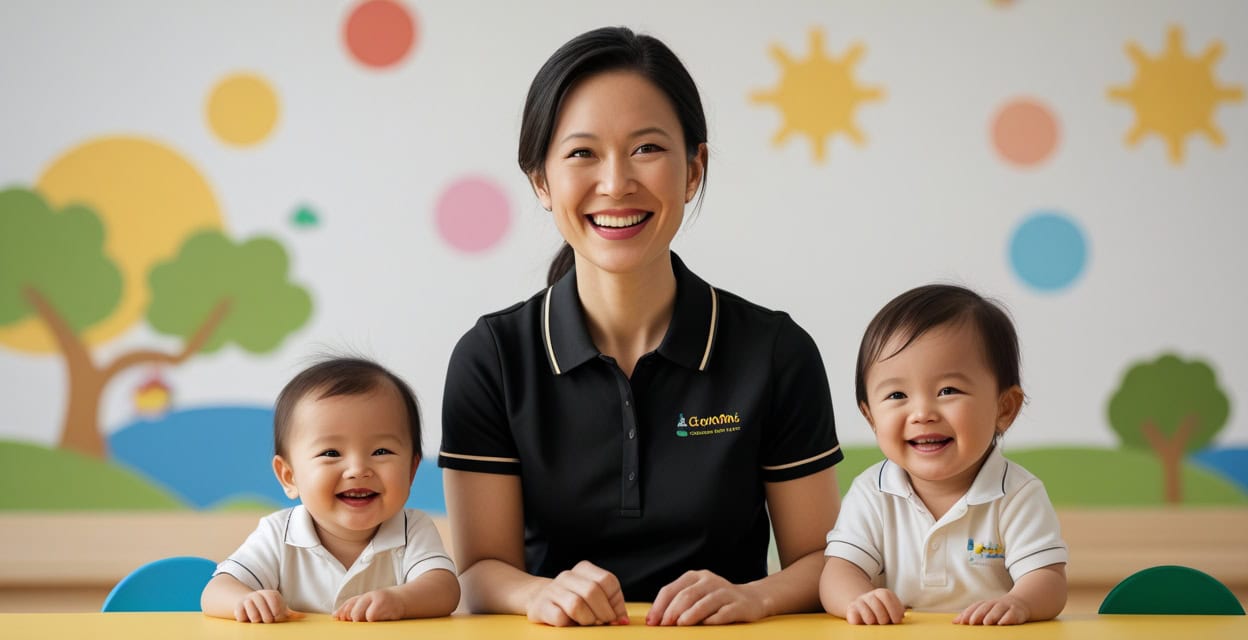
Four forces that shape our practice
Relationship as curriculum
The most powerful learning for an infant arises from a caregiver’s calm, attuned presence. Our pedagogy draws on attachment theory (Bowlby), Pikler’s respectful caregiving, Montessori’s prepared environments, and Vygotsky’s guided interaction. Practical implementations include:
- Dedicated primary caregiver within a pod to foster secure attachment and consistent routines.
- Slow, intentional interactions: calm diaper changes, face‑to‑face feeding, and unhurried tummy time.
- Micro‑rituals: repeatable, respectful moments—like a gentle pause before a lullaby or a softly offered toy—that wire the brain for trust and curiosity.
- Documented observations shared with parents to support continuity between home and care settings.
Safety by design
Safety is integrated into every choice, from environment to practice. Key elements include:
- Environment checks, hazard reduction, age‑appropriate equipment, and clear safe sleep practices.
- Infant first aid trained caregivers and mandatory background checks for all staff.
- Clear “no sick child” policy during subsidised hours to protect all infants.
- Visible safety features, including CCTV in community spaces and privacy safeguards in home‑based settings where feasible.
- Structured incident reporting and proactive feedback loops to drive continuous improvement.
Development without hurry
Every infant’s timetable is respected. Practices support progressive development at a comfortable pace:
- Physical development: floor time for gross motor skills; supervised, developmentally appropriate object exploration.
- Cognitive and language growth: narrated caregiving, responsive turn‑taking, and exposure to rich vocal language and song.
- Social‑emotional growth: predictable routines, a stable primary caregiver, and comforting routines that nurture secure attachment.
- Daily observations shared with families to illustrate growth trajectories and evolving interests.
Partnership with parents
Families are integral to the caregiving alliance. Our approach centers on transparency, collaboration, and mutual respect:
- Transparent routines, daily notes, and responsive channels for questions and feedback.
- Structured communication plans to ensure parents stay informed and connected.
- Co‑planning for routines that align with each infant’s needs, home practices, and family values.
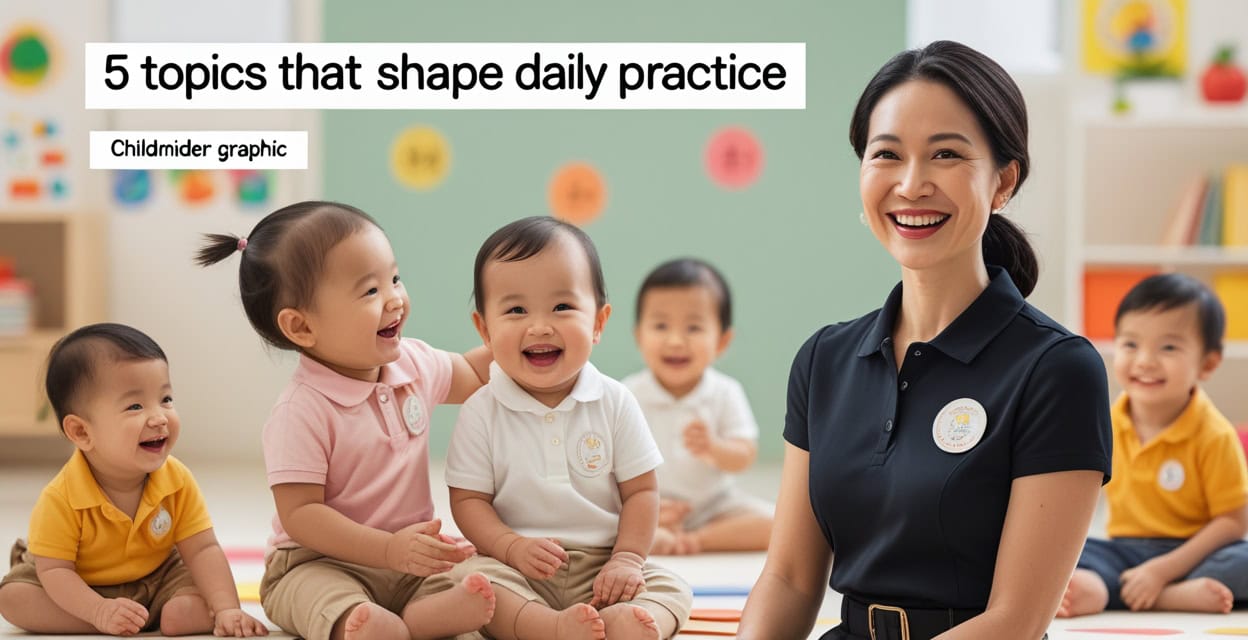
Five topics that shape daily practice
1) The Listening Pedagogy: Observe, Attune, Invite
Great infant care hinges on attention rather than constant activity. Our three‑step discipline:
- Observe: Track cues (gaze, feeding patterns, sleep states) and transitions between states (asleep, drowsy, alert, fussy).
- Attune: Match tone, timing, and touch to regulation needs. Favor unhurried diapering, face‑to‑face feeding, and deliberate tummy time.
- Invite: Offer appropriate challenges gently—just‑out‑of‑reach toys, moments of quiet musical pauses, and opportunities for micro‑mastery.
We call these moments “micro‑rituals”—each one contributing to secure attachment and the brain’s growing map of trust.
2) Safety as a Culture: Predictable, Visible, Accountable
Safety is practiced, not preached. Concrete practices include:
- People: Certified, background‑checked caregivers; infant‑first‑aid training and ongoing professional development.
- Places: Hazards minimized, clear sightlines, and age‑appropriate equipment; safe sleep environments that meet guidelines.
- Practices: Strict hygiene, proper bottle handling, and careful medication administration when needed (with written instructions).
- Oversight: CCTV in community spaces; optional CCTV in home settings with parental consent during care hours; privacy safeguards in place.
- Feedback: Clear escalation paths for concerns and a culture of learning from every incident.
3) Development that Respects the Pace of Growth
Infants thrive when development is supported as a holistic process, not a checklist. We focus on:
- Physical: Floor‑based exploration, supported rolling, safe transitions between play and rest.
- Cognitive and language: Narration, responsive dialogue, and age‑appropriate language exposure; use of objects to support object permanence.
- Social‑emotional: Secure attachment to a primary caregiver, predictable routines, and gentle, consistent regulation during transitions.
- Documentation: Daily snapshots that capture milestones and emerging interests to share with families.
4) Joy as a Vital Sign
Joy is a regulated state that supports learning and resilience. We cultivate it through:
- Co‑regulation: Timely soothing to calm the nervous system and build trust during transitions.
- Tempo: Balanced windows of quiet and activity with protected nap times for growth and recovery.
- Music, rhythm, and language: Simple songs, finger plays, and movement to support language development and motor coordination.
- Nature and light: Safe outdoor time and exposure to natural light to promote circadian rhythms and curiosity.
5) The Profession of Presence: Why Childminders Matter
Childminders are the custodians of a nation’s earliest bonds. We honor this through:
- Selection and certification: Thorough screening, ongoing training, and reflective supervision.
- Ultra‑low density: A 1:3 ratio to enable deep attention and individual responsiveness.
- Career pathways: Professional development, mentoring, and a thriving community of practice for sustained excellence.
- A social promise: A dignified, local caregiving workforce that strengthens families and neighborhoods.
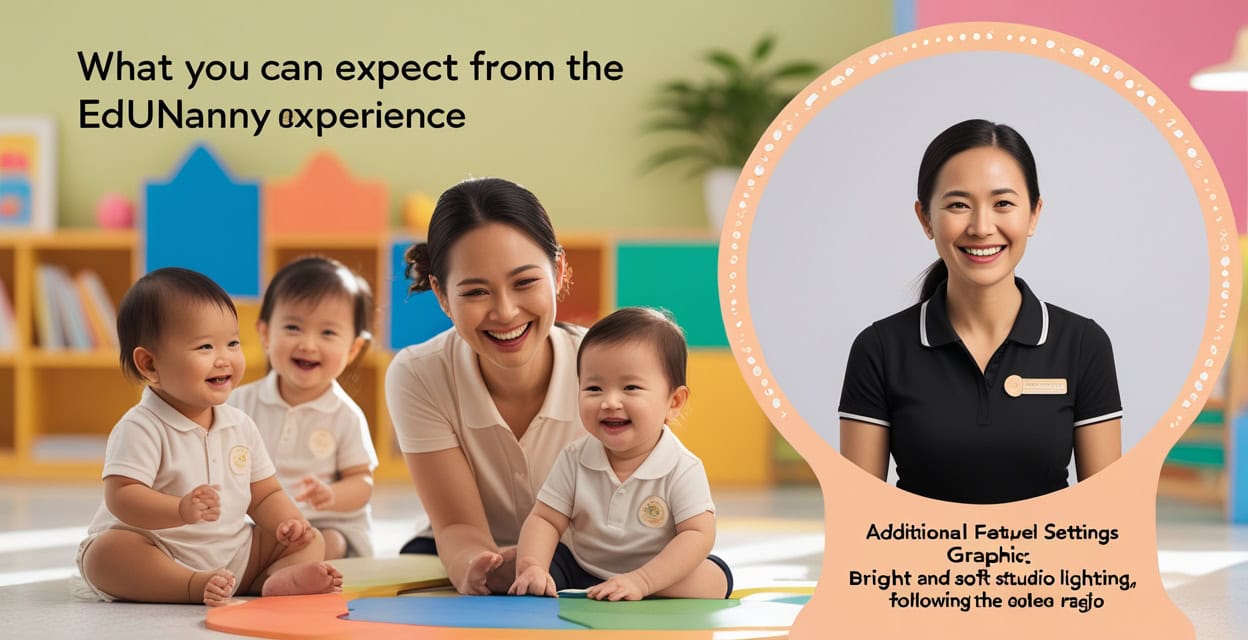
What you can expect from the EduNanny experience
- Ultra‑low ratio (1:3) and ultra‑low density pods for focused, individualized care.
- Certified EduNanny childminders who are trained, background‑checked, and supervised.
- Safety systems: CCTV in community spaces; optional CCTV for home‑based care during care hours with consent.
- No Sick Child Policy during subsidised hours to protect all infants.
- National ECDA Pilot alignment and adherence to industry standards.
- Centre‑style community rooms and home‑based options near you for distance and convenience.
- Monday–Friday, 7am–7pm availability islandwide; half‑day (5 hours) or full‑day (10 hours) blocks.
- Affordability: from $33/day (full‑day, before GST) or $16.50 (half‑day, before GST); CDA/Baby Bonus may be used during subsidised hours.
- Transparent communication and daily updates; a living curriculum of attachment, play, and gentle inquiry.
- Clear incident management and feedback processes.
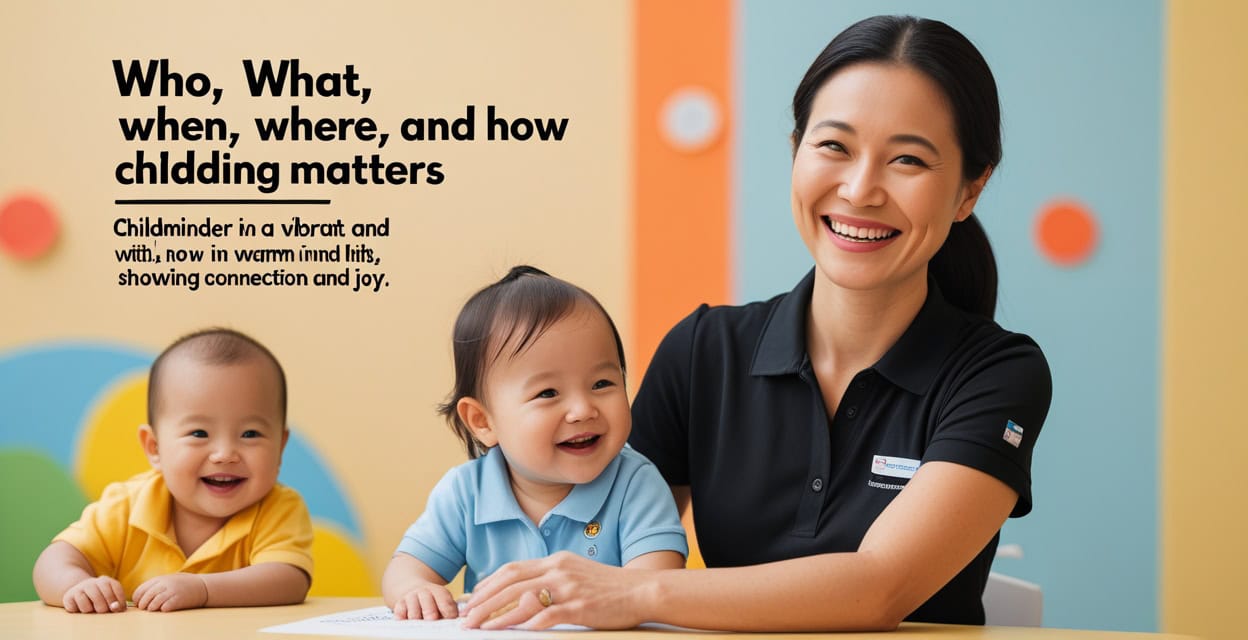
Who, what, when, where, and how childminding matters
- Who: Singapore Citizen infants aged 2 to 18 months and families seeking safe, reliable, near‑home care; trained and supported childminders.
- What: Infant childminding with a maximum 1:3 ratio, designed for safety, joy, and development—delivered in small pods at community venues or approved homes.
- When: Mondays to Fridays, 7am–7pm, in half‑day or full‑day blocks during the ECDA Pilot (1 Dec 2024–31 Dec 2027).
- Where: Near home. Community spaces with CCTV and modern layouts; or home‑based spaces assessed for safety, visibility, and flow.
- How: With certified and background‑checked childminders, mandatory infant first aid and care training, clear standards, ongoing supervision, and a pedagogy that honours attachment and discovery.

Our philosophy in practice
EduNanny’s core belief is simple and demanding: every infant deserves a secure base, every parent deserves a trusted partner, and every caregiver deserves the training, tools, and respect to deliver excellence. Our success is measured not only by compliance but by the quiet signals that matter most: deep, restful naps; steady feeds; growing curiosity about textures, sounds, and faces; and the confident reach of a baby’s hand toward a familiar caregiver.

For families considering enrolment
Eligibility
- Singapore Citizen infants aged 2 to 18 months
- Not concurrently enrolled in ECDA‑licensed infant care centres
Hours and fees (before GST)
- Half‑day (5 hours): $16.50
- Full‑day (10 hours): $33.00
- Mon–Fri, 7am–7pm, excluding public holidays
- CDA/Baby Bonus may be used during subsidised hours
- Other options may be discussed with EduNanny based on regular rates
How to sign up
- Visit the EduNanny ECDA Childminding Service page and fill out the form, or enquire via WhatsApp.
- Receive a response from the EduNanny Concierge Team.
- Schedule and complete a site visit (home‑based or community space).
- Enrol and secure your infant’s place.
Where to learn more
EduNanny information is available at:
EduNanny.com and Childminding.EduNanny.com. You may also contact the EduNanny team for guidance on eligibility, funding, and the enrollment process.

Closing: A civic craft for Singapore’s youngest citizens
Singapore will be judged by how we care for those who cannot yet advocate for themselves. Childminding is not a stopgap; it is a civic practice—a space where policy becomes holding, where science becomes song, and where the labour of love becomes a public good. EduNanny stands ready to offer infants a safe embrace and space to grow, through ultra‑low ratios, trained and supported caregivers, thoughtful safety systems, and a partnership with families that honours attachment and discovery. Come and see the care. Meet the caregiver who will know your child’s sleepy sighs and bright‑eyed moments. Walk the space where the day unfolds with rhythm and delight. Ask the hard questions, then let us do the quiet work that helps little lives flourish. The future of Singapore begins with how we greet our youngest citizens—gently, safely, and near home.
Learn more about the EduNanny Infant Childminding Service and the ECDA Pilot program in Singapore.
[#InfantCareSingapore, #EduNannySingapore, #ECDAChildmindingPilot, #UltraLowRatio, #ParentalPartnership]