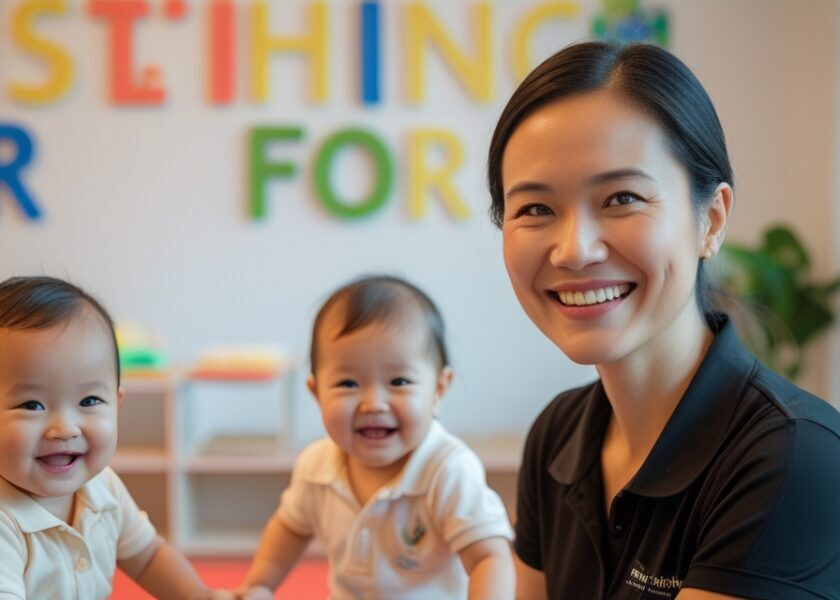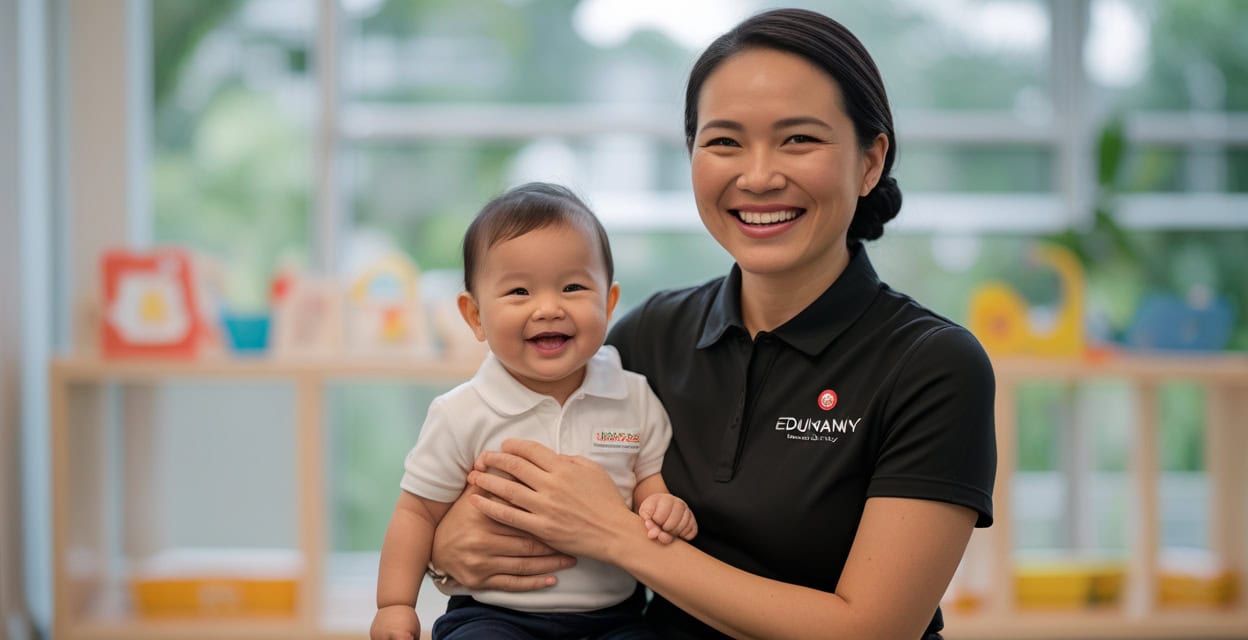
Cradling a Nation EduNanny Near Home Ultra Low Ratio Pods Redefining Singapore First Thousand Days December 2024 to December 2027

Introduction: EduNanny in Singapore’s First Thousand Days
Thank you for welcoming EduNanny by BUTLER into your homes, your neighbourhoods, and most importantly, into the first thousand days of your child’s life. Those early days are not a waiting room for “real learning” to begin; they are the learning. They are the years when trust, curiosity, language, and self-regulation take root. The adults who surround an infant in those moments—parents and childminders—are the architects of that foundation. EduNanny’s Infant Childminding Service, appointed by ECDA under the national Childminding Pilot (1 December 2024 to 31 December 2027), is designed to be affordable, safe, reliable, and near home—delivered in tiny 1:3 micro‑pods across Singapore, Mondays to Fridays, 7am to 7pm. We exist to make everyday care as wise as it is warm; as safe as it is joyful; as practical as it is purposeful.
In this article, we deepen understanding of our model, translate child development science into practical guidance for families, and share actionable strategies you can use at home to support your child’s growth between EduNanny sessions.

The Four Truths That Guide EduNanny Infant Care
1) The first relationships shape the brain
Attachment is not a luxury; it is survival and scaffolding. EduNanny’s ultra‑low 1:3 infant ratio enables a childminder to be emotionally present, reading cues, timing responses, and co‑regulating big feelings. Practically, this means:
- Maintain consistent, soothing responses during periods of distress, so infants learn to trust that support will come when they need it.
- Establish predictable routines (feeding, diapering, napping) and narrate actions to build early language and understanding of what comes next.
- Provide a warm, responsive touch (holding, gentle patting, soft rocking) that signals safety and containment.
2) Environments teach before adults speak
Montessori and Pikler show that a thoughtfully prepared “yes‑space” invites agency. Our micro‑pods and home‑based spaces are designed to be modern, uncluttered, and scaled to the infant—facilitating exploration with safety at the core. Practical tips for parents include:
- Set up a safe, low‑risk play area with floor‑level activities that invite reaching, grasping, and movement.
- Rotate a small selection of age‑appropriate materials to sustain curiosity and focus.
- Provide clear sightlines and minimal hazards to support sustained attention and independent exploration.
3) Learning is social
Vygotsky reminds us that development accelerates in the space between child and caregiver. EduNanny pods become social micro‑worlds where language, turn‑taking, and joint attention flourish. At home, you can foster this by:
- Engaging in “parallel talk” during play, narrating actions and emotions as they occur (e.g., “You’re stacking blocks—clack, clack—big smile!”).
- Modeling turn‑taking through simple songs and hand‑gestures, inviting the child to respond in kind.
- Welcoming home languages and family songs, validating multilingual identities as a strength rather than a barrier to learning.
4) Joy sustains growth
Froebel placed play at the heart of early learning. A calm daily rhythm—songs, finger plays, and sensory invitations—turns routine caregiving moments into a living curriculum. In practice:
- Incorporate playful, age‑appropriate activities during feeding, dressing, and resting times without rushing milestones.
- Preserve a predictable, soothing pace to the day that creates a secure environment for exploration.
- Celebrate small wins and curiosity with gentle positive reinforcement that reinforces a love of learning.
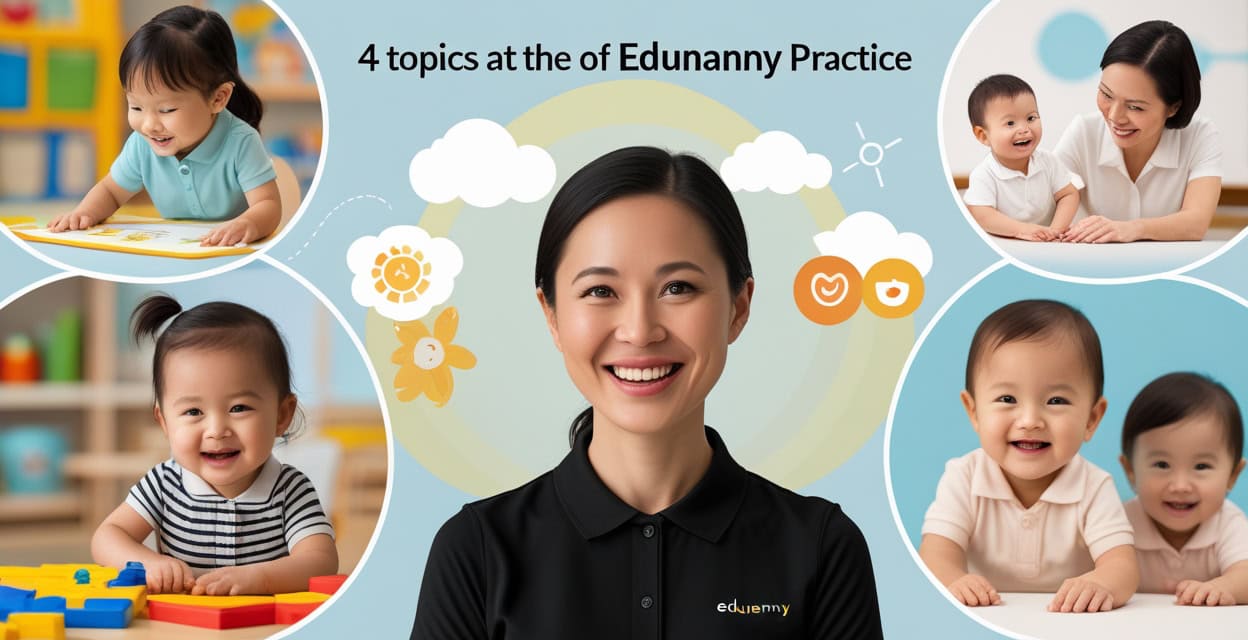
The Four Topics at the Heart of EduNanny Practice
Topic 1: Care as Curriculum—The Pikler Rhythm
In EduNanny pods, routines are learning opportunities, not interruptions. Examples include:
- During feeds: slow the pace, maintain eye contact, and narrate what’s happening to build vocabulary and trust. Example: “We’re feeding now. You’re sipping milk. You’re almost finished.”
- During diaper changes: invite participation and autonomy (e.g., “Shall we lift your legs together?”) to nurture agency and cooperation.
- During sleep transitions: protect consistent cues—dim lights, soft voice, familiar lullaby—to support self‑soothing and security.
Practical takeaway for families: map a simple daily rhythm at home that mirrors these routines, with short, meaningful interactions that reinforce attachment and self‑regulation.
Topic 2: The Prepared Surrounding—Montessori on the Floor
Education begins with the space itself. Home and community pods should be safe and stimulating without overstimulation. Design ideas include:
- Low, open shelves with a limited rotation of materials (e.g., grasping rings, textured scarves, simple containers).
- Horizontal frames for early stand‑alone exploration; firm floor mats to support rolling and crawling.
- Clear sightlines and uncluttered corners to reduce hazards and invite focused attention.
Family application: curate a small set of inviting materials at your child’s reach height and rotate them weekly to sustain interest and discovery.
Topic 3: Language in the Small Group—Vygotsky’s Zone in Miniature
A 1:3 pod creates a fertile ground for language development. Techniques include:
- Parallel talk: describe actions without directing the child’s response (e.g., “You’re tapping the drum—tap, tap”).
- Expansion: expand a baby’s attempt at speech (“Ba” becomes “Ball—blue ball”).
- Turn‑taking and social games: use songs and gestures to practice reciprocity.
- Home language inclusion: honor and incorporate family languages and songs to support identity and belonging.
Topic 4: A Safety Culture, Not Just Safety Equipment
Safety is a system built from people, places, and processes. Key components include:
- People: EduNanny childminders are assessed, certified in infant care and infant first aid, and background‑checked.
- Places: Pods are audited for hazards; safe‑sleep practices, clear walkways, anchored furniture, and secure gates are standard.
- Processes: Daily health checks, incident reporting, hygiene schedules, and a No Sick Child policy to protect the group. Medication plans are coordinated with parents for dosing, timing, and monitoring side effects.

What Parents Can Expect Day to Day
- A gentle rhythm: feed, play, rest—responsive to each infant’s cues.
- Attuned interactions: caregivers at eye level, narrating, waiting, and following the child’s lead.
- Movement milestones supported: ample floor time; avoid device‑based swings or restrictive seats as routine.
- Sensory‑rich, screen‑free care: real textures, natural light, soft music, outdoor air where appropriate and with parental consent.
- Transparent partnership: clear handovers, daily notes, and respectful communication when needs or routines change.

Trust, Technology, and Transparency
We balance safety with privacy. Key elements include:
- CCTV in community spaces: Installed as required by ECDA; balances safety with privacy considerations.
- Home pod CCTV: Available in line with ECDA guidance and arranged in consultation with parents and childminders.
- Standard operating procedures: Sleep checks, hygiene cycles, and emergency response protocols, with robust incident reporting and continuous supervision by the operator.
Our approach combines vigilant safety with respectful transparency, ensuring families feel informed and in control of their child’s care environment.

The Civic Purpose of Childminding
EduNanny answers three national challenges at once:
- Providing dignified beginnings for infants in ultra‑low‑ratio settings.
- Offering parents reliable, convenient, and affordable support near home.
- Creating meaningful employment for trained childminders—primarily women—strengthening families and neighbourhoods.
As a national initiative appointed by ECDA, EduNanny serves as a standards‑builder and a bridge between science and everyday care, work and family life, public purpose and private love.

Affordability, Access, and Eligibility under the ECDA Childminding Pilot
- Who: Singapore Citizen infants aged 2 to 18 months who are not concurrently enrolled in ECDA‑licensed infant care centres.
- When: Mondays to Fridays, 7am–7pm, excluding public holidays. Half‑day (5 hours) or full‑day (10 hours) blocks; days per week vary according to family need.
- Fees (before GST): Half‑day $16.50; Full‑day $33.00. CDA/Baby Bonus monies may be used for subsidised hours.
- Where: Near‑home micro‑pods in community spaces and childminders’ homes—consistently capped at 1:3 infant ratio.
- How: Delivered by certified, background‑checked EduNanny childminders who receive mandatory training in infant care and safety before deployment.

Benefits at a Glance with EduNanny
- Ultra Low Density micro‑pods; Ultra Low Ratio 1:3 infant care
- Certified and background‑checked EduNanny Childminders
- CCTV provided in community pods; home‑pod CCTV available in line with ECDA guidance
- No Sick Child policy to protect group well‑being
- Centre‑style community pods and home‑based pods with modern layouts
- National initiative under the ECDA Childminding Pilot (Dec 2024–Dec 2027)
- Affordable from $33/day (full‑day, subsidised hours); CDA/Baby Bonus eligible during subsidised hours
- Monday–Friday, 7am–7pm, island‑wide; distance, convenience, and near‑home access
- Clear quality standards, incident protocols, and ongoing supervision by the operator
- A pathway for dignified local employment and continuous training
- EduNanny by BUTLER, with service details at EduNanny.com and Childminding.EduNanny.com

Our Philosophy in One Sentence
Inspired by Montessori’s prepared environment, Pikler’s respectful caregiving, Vygotsky’s social learning, Bowlby’s secure base, and Erikson’s trust, EduNanny turns everyday care into the quiet engine of brain development, character, and joy.

How to Sign Up
- Visit https://edunanny.com/edunanny-ecda-childminding-service/ and fill in the form, or enquire via WhatsApp.
- Receive a response from our EduNanny Concierge Team who will confirm eligibility and preferred location, days, and hours.
- Book a site visit to your preferred community pod or meet your home‑based childminder.
- Enroll and begin—half‑day or full‑day blocks, Monday to Friday, 7am–7pm, with fees payable using CDA/Baby Bonus during subsidised hours.

A Closing Word: Who, What, When, Where, and How This Matters
Who: Singapore’s youngest citizens and the adults who love them. What: A humane, carefully designed care model—one loving professional for no more than three infants—so attachment and learning can breathe. When: The first thousand days, the critical period when trust, language, and self‑control are forming. Where: Near home, in safe, modern community pods and thoughtful home settings, island‑wide. How: By uniting science, standards, affordability, and the everyday grace of a responsive childminder.

Conclusion
EduNanny stands at the intersection of science and everyday life, translating decades of early childhood research into practical, attainable care that families can rely on. By prioritising secure attachments, purposeful environments, social language learning, and joyful, play‑led routines within ultra‑low ratios, we aim to turn ordinary moments into extraordinary developmental opportunities. If you are a parent or caregiver, consider how a near‑home EduNanny pod could complement your family’s rhythm—creating days that feel both calm and meaningful while expanding your child’s horizon of possibilities. We invite you to take the next step: explore the sign‑up process, book a site visit, and join a nationwide movement that treats the first thousand days as the foundation for a lifetime of learning, health, and happiness.
[#EarlyChildhoodSingapore, #InfantCare, #ECDA, #EduNanny, #LowRatioCare]