Singapore First Thousand Days Redefined by EduNanny Five Pillars of Safe Joyful Early Care

EduNanny Singapore: Five Living Pillars of Early Care
Thank you for joining this conversation about the quiet power that shapes a nation—the first thousand days of life. In these days, attachment is laid, language begins, trust takes root, and curiosity becomes a habit. EduNanny by BUTLER is a purpose-built childminding movement that blends deep developmental science with daily tenderness, offered centre-based, home-based, and distance childminding across Singapore. This article expands on five living pillars of our approach, with practical guidance for parents and caregivers who want to put evidence-based care into everyday action.
Our goal is excellence without elitism, quality without compromise, and care without guesswork. The following sections translate theory into practical steps you can use today to support your child’s development, whether you’re choosing a centre, arranging home-based care, or seeking tele-support from distance coaching. All guidance is grounded in global best practice and adapted to Singapore’s heartbeat.
1) The Attachment Bridge: One secure relationship can change a lifetime
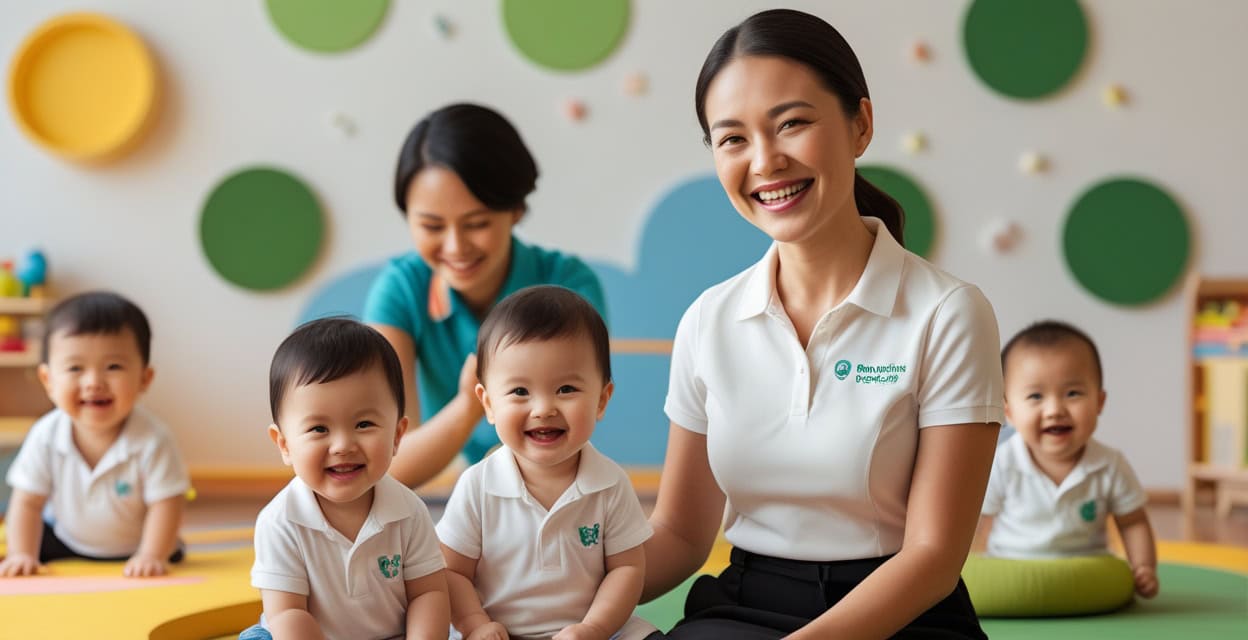
Attachment is the foundation of exploration, learning, and emotional security. We design care around a small constellation of trusted relationships—most notably a named caregiver who stays with the child across the day. A 1:3 infant-to-professional ratio ensures that caregivers can notice subtle cues and respond with calm, presence, and warmth.
- Named caregiver, consistent presence: Each child has a primary caregiver who helps them feel safe to explore, try new words, and build trust over time.
- Predictable routines: Predictability supports learning. Regular arrivals, handovers, and departures reduce distress and build a secure base.
- Gentle transitions: Slow arrivals, thoughtful handovers, and mindful goodbyes help babies learn that departures are temporary and safe.
- Floor-time for agency: Uninterrupted floor time and supported free movement let babies practice balance, reach, and exploration.
- Environment prepared for learning: The space is arranged to invite safe curiosity, with cues and activities that align with the child’s stage.
Practical tips for parents
- Request a care plan: work with the caregiver to document your baby’s cues, routines, and preferred soothing strategies.
- Ask for a daily handover note or quick video/photo update that highlights a key moment of learning or a new word.
- Discuss a gentle drop-off routine—consider a 3-minute kiss-and-stay approach or a goodbye ritual that you both agree to.
- Observe floor-time activities: look for evidence of your child actively exploring, with a caregiver who follows the child’s lead without overwhelming them.
2) Safety Without Blind Spots: A culture, not a checklist
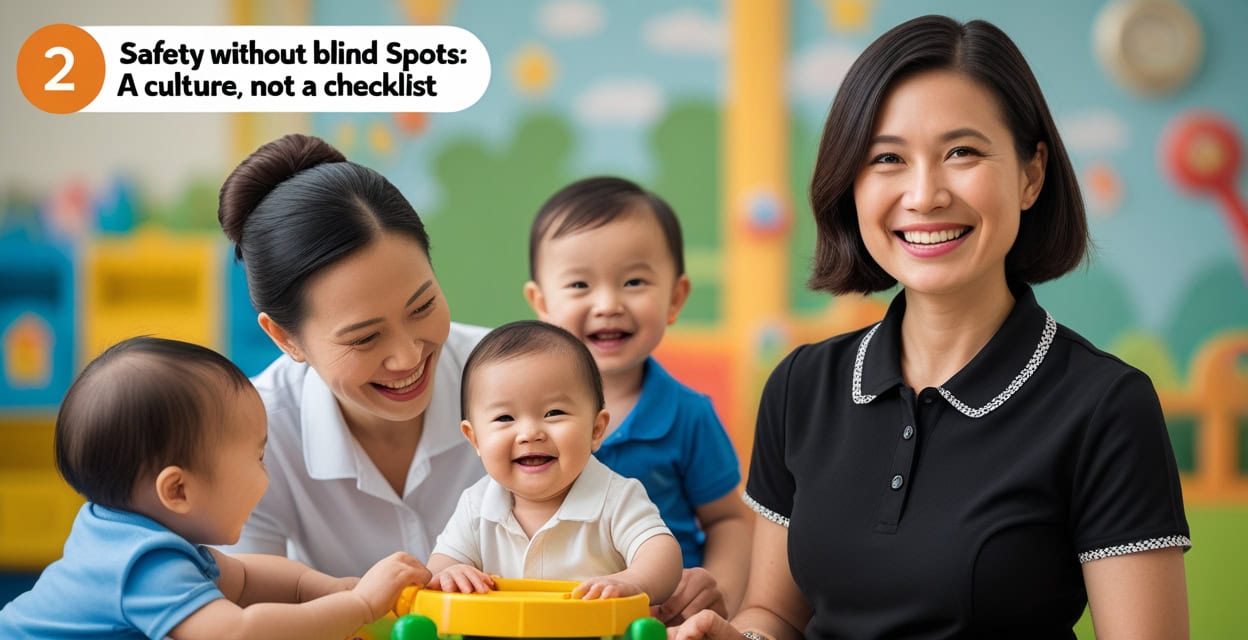
Safety is woven into the culture of EduNanny—from physical design to daily practices. We go beyond compliance to cultivate environments where safety is instinctive and reflective, not reactive.
- Age-zoned spaces and thoughtful layouts: Children play and rest in zones that reduce risk (rounded edges, low shelving, clear sight lines).
- Transparent protection: privacy-by-design CCTV: Encrypted, access-controlled cameras support coaching and accountability, while protecting family privacy.
- Hygiene as ritual: Rigorous handwashing, clean-high-touch protocols, and evidence-based sleep practices are embedded in daily routines.
- Hazard mapping and drills: Daily checks and calm drills—evacuation, medical response, allergy protocols—are practiced regularly and respectfully.
What to ask when evaluating a care setting
- How is the space designed to reduce risk for infants and toddlers?
- How is CCTV used, who has access, and how are updates shared with families?
- What are the sleep policies and how do staff respond to sick children?
- What routines exist for daily hygiene, diapering, feeding, and transitions?
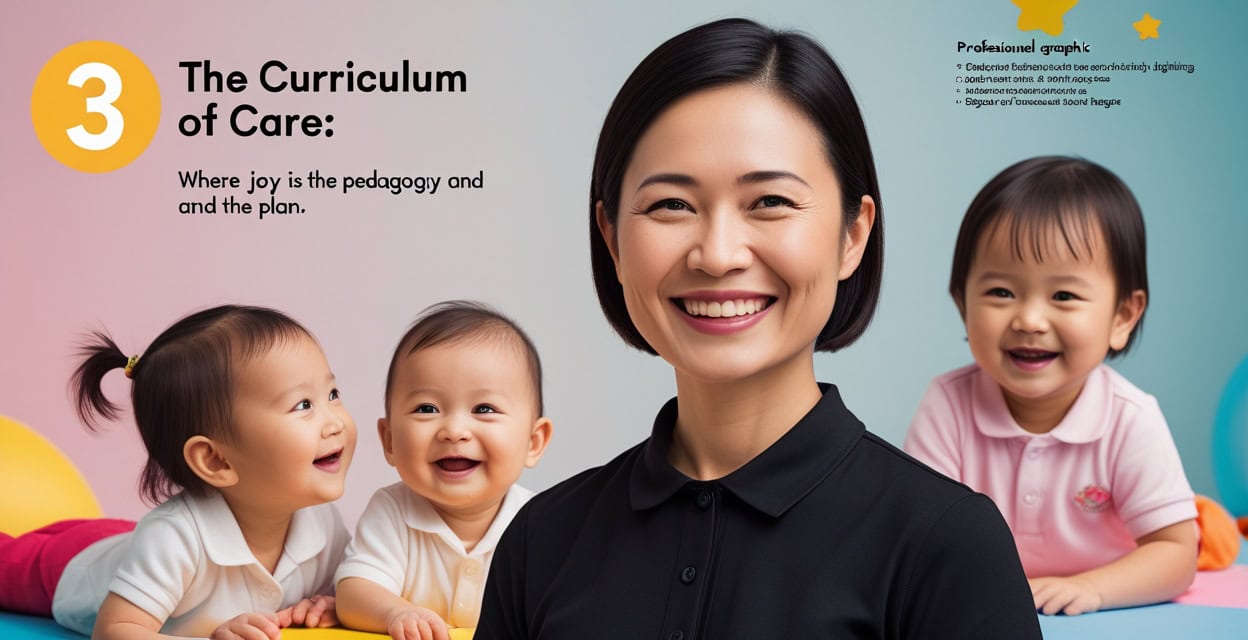
3) The Curriculum of Care: Where joy is the pedagogy and the plan
Care routines are learning opportunities. By framing feeding, diapering, dressing, and settling as teachable moments, we cultivate language, self-regulation, and trust as everyday outcomes.
- Developmentally grounded scaffolding: We utilise Piaget’s schemas and Vygotsky’s social learning to structure exploration with appropriate support.
- Open-ended materials and treasure baskets: Sensory-rich, nondirective play invites children to make meaning at their own pace.
- Language-rich environment: Bilingual songs, local stories, and cultural lullabies build identity and belonging from birth.
- Outdoor time as brain-boosting practice: Fresh air, light exposure, and movement support vestibular and proprioceptive development.
- Delight-focused observation: Daily notes capture not just milestones, but moments of calm, sustained eye contact, turn-taking, and joyful engagement.
Practical home ideas
- Incorporate daily language-building routines: narrate actions, name emotions, and introduce simple concepts during routines like bathtime or dressing.
- Use treasure baskets at home: a selection of safe, open-ended objects that encourage exploration and cause-and-effect understanding.
- Provide outdoor time in small, predictable doses—short, deliberate sessions with supervision—to support curiosity and motor development.
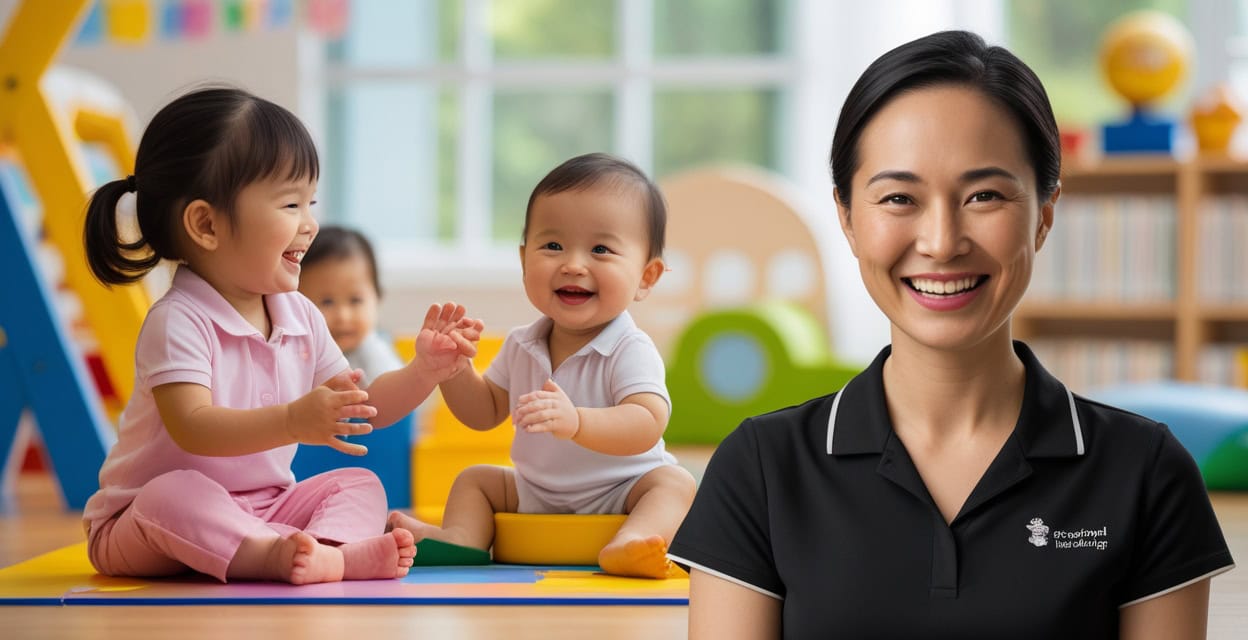
4) Emotional Health is the Hidden Engine: Happiness, security, and the science of calm
Emotion regulation begins with regulated adults. We invest in caregiver well-being so they can provide the calm that littles need. Crying is seen as communication, not disruption, and routines are designed to support consistent soothing and growth.
- Emotion coaching and reflective practice: Caregivers learn to name feelings, validate needs, and guide self-regulation with calm language and actions.
- Crying with interpretation: Identify cues (hunger, tiredness, overstimulation, needs for closeness) and respond consistently to help infants feel safe.
- Sleep as a core rhythm: Respect for each infant’s sleep rhythm, with cues-based wake windows and predictable routines to promote repose.
- Happiness Index: A qualitative-agile approach combining time-to-soothe, duration of settled play, and appetite patterns to inform conversations with families.
Supporting families at home
- Share simple self-regulation strategies during nap times and transitions—soft lighting, gentle music, and a consistent talk-down routine.
- Use a calm-down corner at home with a few safe, familiar objects to teach self-soothing skills between activities.

5) The Purpose of Childminders: Dignity, mastery, and a national good
Childminding is skilled work. We build career pathways with ongoing training, mentoring, and certification. A national framework connects meaningful jobs with meaningful outcomes—supporting families and strengthening Singapore’s caregiving profession.
- Three modes to meet families where they are: Centre-based hubs, home-based neighbourhood settings, and distance coaching that brings expert guidance into homes.
- Inclusive pricing: Fees designed for access and fairness—affordable from $33 per day—with CDA/Baby Bonus accepted.
- Public purpose and policy alignment: Participation in ECDA Childminding Pilot and national initiatives that elevate the care sector as a public good.
In practice across Singapore
- Centre-based days offer a structured environment with modern layouts, infant rooms, and community connection.
- Home-based care provides intimate, neighbourhood-integrated settings that support attachment and convenience.
- Distance support delivers tele-coaching, caregiver coaching, and guided routines for families who want expert guidance without leaving home.
A Brief Story
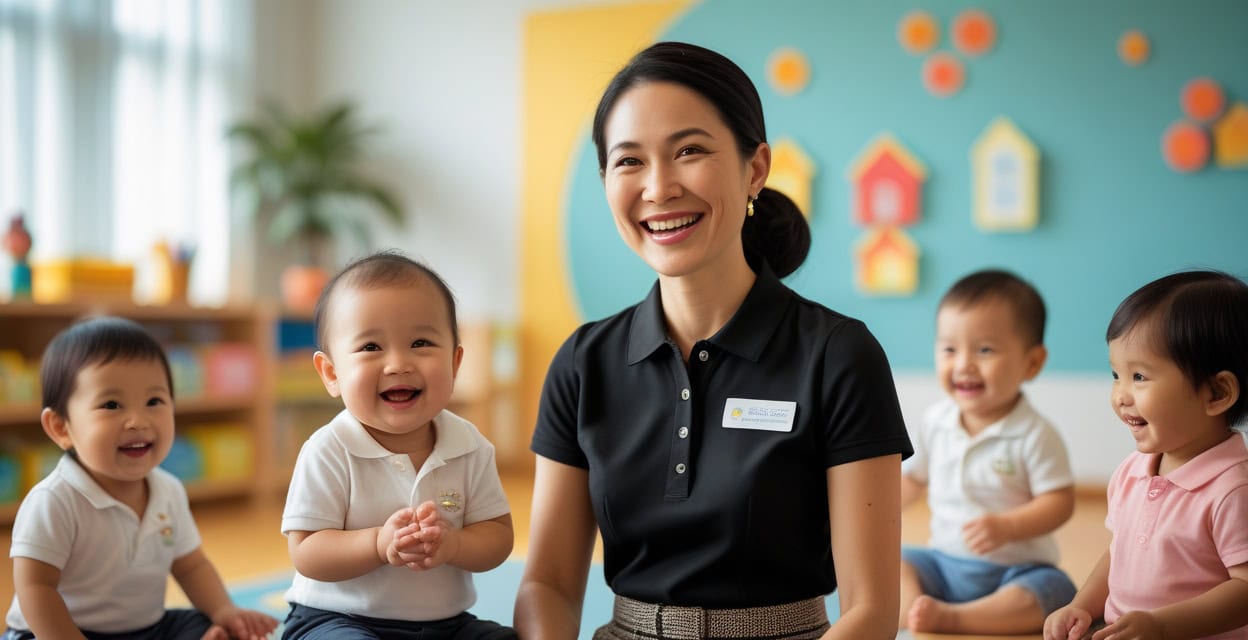
A family joined EduNanny with a baby who struggled with transitions—short naps, restless feeds, and high startle responses. We started with attachment: one primary caregiver, unhurried handovers, softer lighting during wake windows, and shorter stimulation bursts. We narrated everything we did for the family. Within three weeks, naps lengthened; within six, the baby reached for the same caregiver at drop-off. Parents reported calmer evenings. This wasn’t magic; it was method—heart held in a reliable structure.

Our Commitments, Made Practical
- Excellence and Quality: Evidence-based care, reflective supervision, and continuous improvement.
- Availability and Convenience: Monday to Friday, 7am–7pm, islandwide, across centre, home, and distance models.
- Safety and Transparency: Modern layouts, rigorous hygiene, and innovation CCTV with privacy-by-design.
- Human Scale: A 1:3 infant ratio to keep relationships at the center of every day.
- Inclusion and Affordability: Fees from $33/day with CDA/Baby Bonus accepted.
- Public Purpose: ECDA Childminding Pilot and a national initiative that elevates families and the caregiving profession together.
- Simple next steps: EduNanny.com and Childminding.EduNanny.com for information, tours, enrolment, and careers.
Why Childminding Matters — And Why Now
Who: Every infant in Singapore, with emphasis on the first thousand days when brains are most plastic and trust habits take root.
What: Childminding that sees beyond supervision to development—attachment-rich, safety-assured, play-infused.
When: Daily, reliably 7am–7pm, to align with real working rhythms and babies’ needs.
Where: In centres, neighbourhood homes, and through distance support—meeting families where they are.
How: With heart married to science, and a community that refuses to choose between love and evidence.

Philosophy That Undergirds It All
- Children deserve dignity: Every child is a full person, today, not merely a future one.
- Care is curriculum: Every routine is a lesson; every response is a message about how the world works.
- Safety is love made visible: We design it, practice it, and protect it.
- Parents are partners: Transparency, dialogue, and cultural respect strengthen families and care partners alike.
- Caregivers are nation-builders: Elevating the status of childminding lifts outcomes for every family and for Singapore’s future.
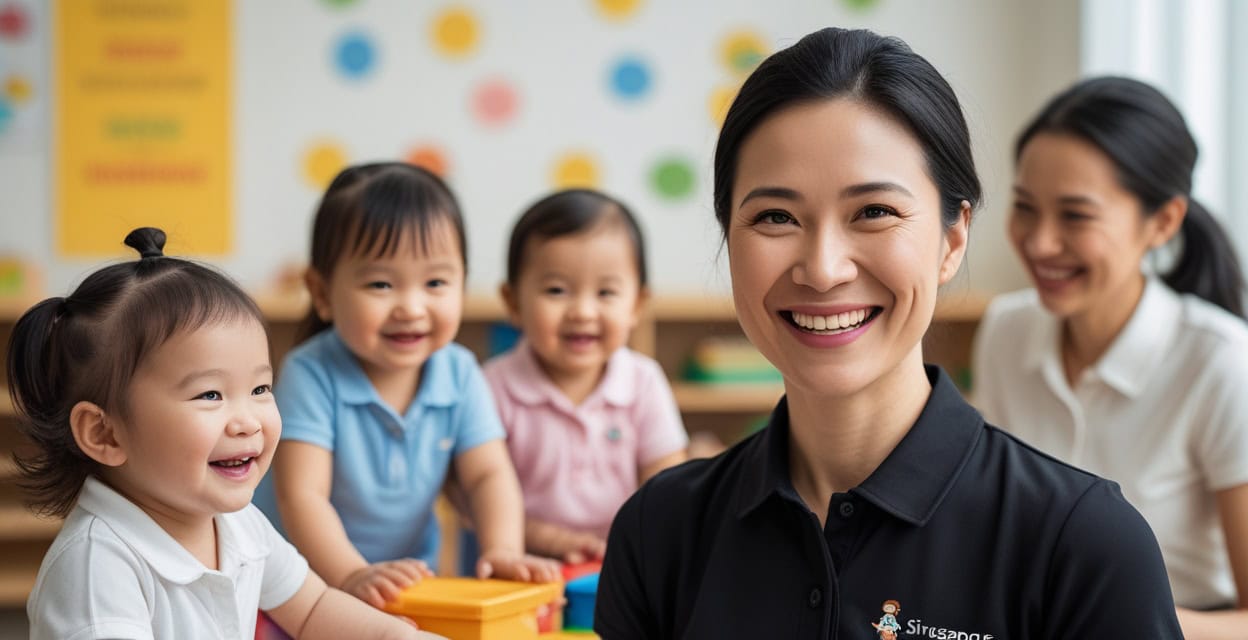
In Closing: Singapore’s Future in Quiet Rooms
Singapore’s future is being cradled in quiet rooms, sunlit corners, and the relationships that form there. Our collective task is to make those rooms safe, those corners joyful, and those relationships unbreakably strong. If this vision resonates, consider embracing EduNanny’s approach—via centre visits, home-based discussions, or distance coaching—to see how love and science can meet in daily practice.
For more information, consider exploring EduNanny.com and Childminding.EduNanny.com to learn about tours, enrolment, and career opportunities. Ask hard questions. We welcome them.

Conclusion
In the first thousand days, relationships, safety, joyful learning, emotional health, and skilled caregiving converge to shape a nation. EduNanny’s five pillars offer a practical blueprint for families, educators, and policymakers to design care that is dignified, evidence-based, and universally accessible. By placing attachment, safety, curriculum, emotional health, and professional development at the heart of childminding, Singapore can nurture resilient, curious, and confident children—and a stronger future for all of us.
[#earlychildhood, #attachmenttheory, #safetypractices, #paedagogy, #Singaporeeducation]